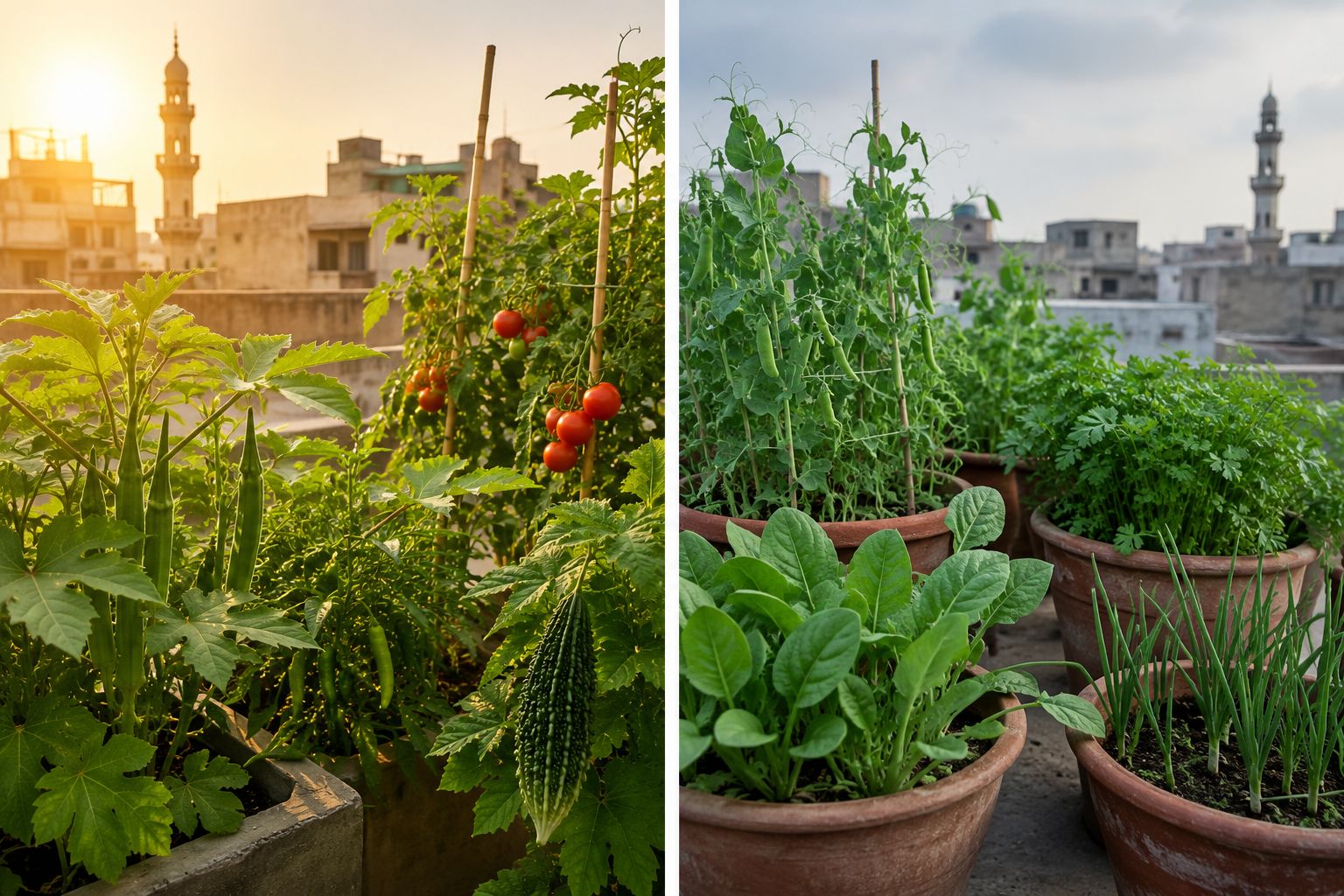
Most home gardeners in Pakistan make the same mistake. They buy seeds they like the idea of growing, plant them, and watch them either bolt immediately, refuse to germinate, or limp along producing almost nothing. Not because they did anything wrong in the garden — but because they planted in the wrong season.
Pakistan's climate does not follow the generic gardening advice you find on most international blogs. Our summers are intense — 40°C in June is not unusual in Punjab and Sindh. Our winters are genuinely cold in the north and comfortably cool in Karachi. The crops that thrive in one season are not just different from the other — they are often the exact opposite.
Pakistan agriculture divides the year into two main growing seasons — Kharif (summer/monsoon crops) and Rabi (winter crops) — plus two short transitional windows that experienced growers use to squeeze in extra harvests. Understanding this framework changes everything about how you garden here.
This guide covers both seasons completely. What to grow, when to sow, when to harvest, and what your kitchen gets from each one.
Pakistan's Four Growing Windows at a Glance
| Season | Local Name | Period | What Grows |
|---|---|---|---|
| Summer / Monsoon | Kharif — خریف | April – September | Heat-loving crops — bhindi, tamatar, hari mirch, karela, kheera, baingan, torai, ghia |
| Winter | Rabi — ربیع | October – March | Cool-weather crops — palak, dhaniya, pyaz, lehsan, gajar, matar, phool gobi, shalgam |
| Late Winter / Spring | Zaid Rabi — زائد ربیع | March – April | Fast crops before summer heat — palak, lettuce, dhaniya |
| Late Summer / Early Autumn | Zaid Kharif — زائد خریف | September – October | Early winter crops before Rabi — matar, phool gobi, mooli |
The two Zaid periods are short but valuable. A home gardener who understands all four windows can have something growing and producing in their garden almost every month of the year.
☀️ KHARIF — Summer Crops (April to September)
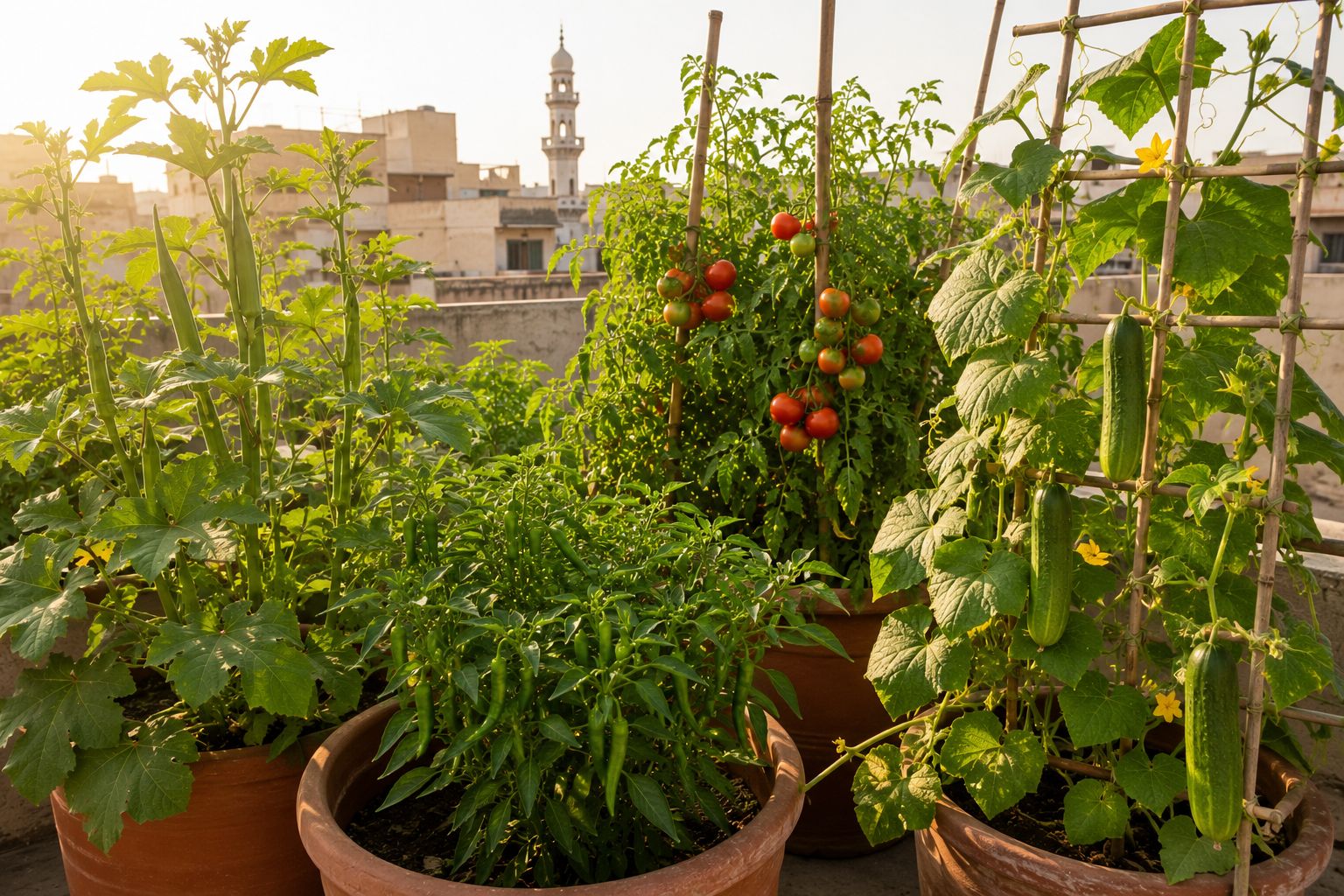
Summer in Pakistan is not gentle. Temperatures in Punjab and Sindh regularly hit 38–42°C from May through August. The monsoon brings humidity from July to September. Most garden vegetables from temperate climates simply cannot survive this.
But Pakistan's summer crops do not just survive — they produce their best harvests in exactly these conditions. These are vegetables that evolved in warm, tropical, and subtropical climates and genuinely need heat to thrive.
Sow these crops: February to April in warmer zones (Karachi, southern Punjab, Sindh), March to May in cooler zones (Islamabad, KPK, northern Punjab, Lahore).
🌱 Tamatar (Tomato) — گرمی کی بنیادی سبزی
Tomatoes are Pakistan's most consumed summer vegetable. They appear in every curry, every salad, every sauce, and beside every plate. They need full sun, regular watering, and support for their vines as they grow tall.
Sow: February – March (indoors in seed tray first)
Transplant: March – April when seedlings reach 15 cm
Harvest: May – August
Key tip: Consistent watering is critical — letting the soil dry out between waterings causes blossom end rot. Water every other day in peak heat.
👉 Read the full guide: How to Grow Tomatoes at Home
🌱 Bhindi (Okra / Ladyfinger) — بھنڈی
Bhindi loves heat more than almost any other vegetable. It germinates quickly in warm soil, grows fast, and produces continuously once it starts — sometimes needing harvest every single day at peak production or the pods become woody and unusable.
Sow: April – June directly into final pot or bed
Harvest: June – September
Key tip: Soak seeds for 12 hours before sowing to improve germination. Harvest pods when 5–7 cm long — do not let them mature on the plant.
👉 Read the full guide: How to Grow Okra at Home
🌱 Hari Mirch (Green Chilli) — ہری مرچ
Green chilli is in every Pakistani dish. One plant in a 30 cm pot gives you 50–100+ chillies over a season. It needs full sun and consistent potassium feeding when flowering to prevent blossom drop in peak summer heat.
Sow: February – April (seeds indoors, transplant after last cold nights)
Harvest: May – October (perennial if brought indoors in winter)
Key tip: Above 38°C, flowers may drop before setting fruit. Water early morning and consider afternoon shade cloth in peak heat months.
👉 Read the full guide: How to Grow Hari Mirch at Home
🌱 Kheera (Cucumber) — کھیرا
Cucumber is one of the fastest-producing summer vegetables — first harvest within 50–60 days of transplanting. A climbing vine that produces abundantly with a trellis, perfect for vertical growing on balconies.
Sow: March – May
Harvest: May – August
Key tip: Never let cucumbers overmature on the vine — yellow, swollen cucumbers signal the plant is stopping production. Harvest while still firm and green.
👉 Read the full guide: How to Grow Cucumbers at Home
🌱 Baingan (Brinjal / Eggplant) — بینگن
Baingan is genuinely heat-tolerant and one of the easier summer vegetables to grow at home. Large, glossy fruits develop on bushy plants that can stay productive from June through September. Goes into baingan bharta, curries, and baked dishes.
Sow: February – March
Transplant: March – April
Harvest: June – October
Key tip: Baingan benefits from staking as fruits become heavy. Feed with balanced fertiliser every two weeks once flowering begins.
🌱 Karela (Bitter Gourd) — کریلا
Karela thrives in Pakistan's monsoon heat — it actually produces better with humidity than without. A climbing vine that needs a trellis and produces consistently once established. Bitter but loaded with nutrients and significant in traditional medicine for blood sugar regulation.
Sow: April – June
Harvest: July – September
Key tip: Harvest karela young — when still green and firm. Left to mature, fruits turn yellow, become pithy inside, and the seeds become large and hard.
🌱 Ghia / Lauki (Bottle Gourd) — گھیا / لوکی
Ghia is one of the most productive summer crops per plant in Pakistani kitchen gardens. A single vine given space to run produces dozens of fruits. Extremely heat and humidity tolerant. Essential in Pakistani summer cooking — lauki gosht, lauki sabzi, lauki halwa.
Sow: March – May
Harvest: June – September
Key tip: Ghia vines spread aggressively — give them a wall, fence, or large trellis to climb. Harvest when fruits are 20–30 cm long, skin still smooth and pale green.
🌱 Adrak (Ginger) — ادرک
Ginger loves Pakistan's warm, humid monsoon conditions. Plant a rhizome in spring and let the monsoon do most of the watering work. Baby ginger can be harvested in 3–4 months, full mature ginger in 8–10 months.
Plant: February – April
Baby harvest: June – July
Full harvest: November – December
Key tip: Ginger needs partial shade — it is one of the few summer crops that burns in direct harsh afternoon sun.
👉 Read the full guide: How to Grow Adrak at Home
☀️ Summer Crop Quick Reference
| Vegetable | Urdu Name | Sow | Harvest | Pot Size |
|---|---|---|---|---|
| Tomato | ٹماٹر | Feb–Mar | May–Aug | Large (15L+) |
| Okra / Bhindi | بھنڈی | Apr–Jun | Jun–Sep | Medium (10L) |
| Green Chilli | ہری مرچ | Feb–Apr | May–Oct | Medium (10L) |
| Cucumber | کھیرا | Mar–May | May–Aug | Large (15L) |
| Eggplant / Baingan | بینگن | Feb–Mar | Jun–Oct | Large (15L) |
| Bitter Gourd / Karela | کریلا | Apr–Jun | Jul–Sep | Large + trellis |
| Bottle Gourd / Ghia | گھیا | Mar–May | Jun–Sep | Very large + trellis |
| Ginger / Adrak | ادرک | Feb–Apr | Nov–Dec | Wide shallow pot |
| Watermelon | تربوز | Mar–Apr | Jun–Aug | Very large or ground |
| Sweet Corn | مکئی | Mar–May | Jul–Aug | Deep pot or ground |
❄️ RABI — Winter Crops (October to March)
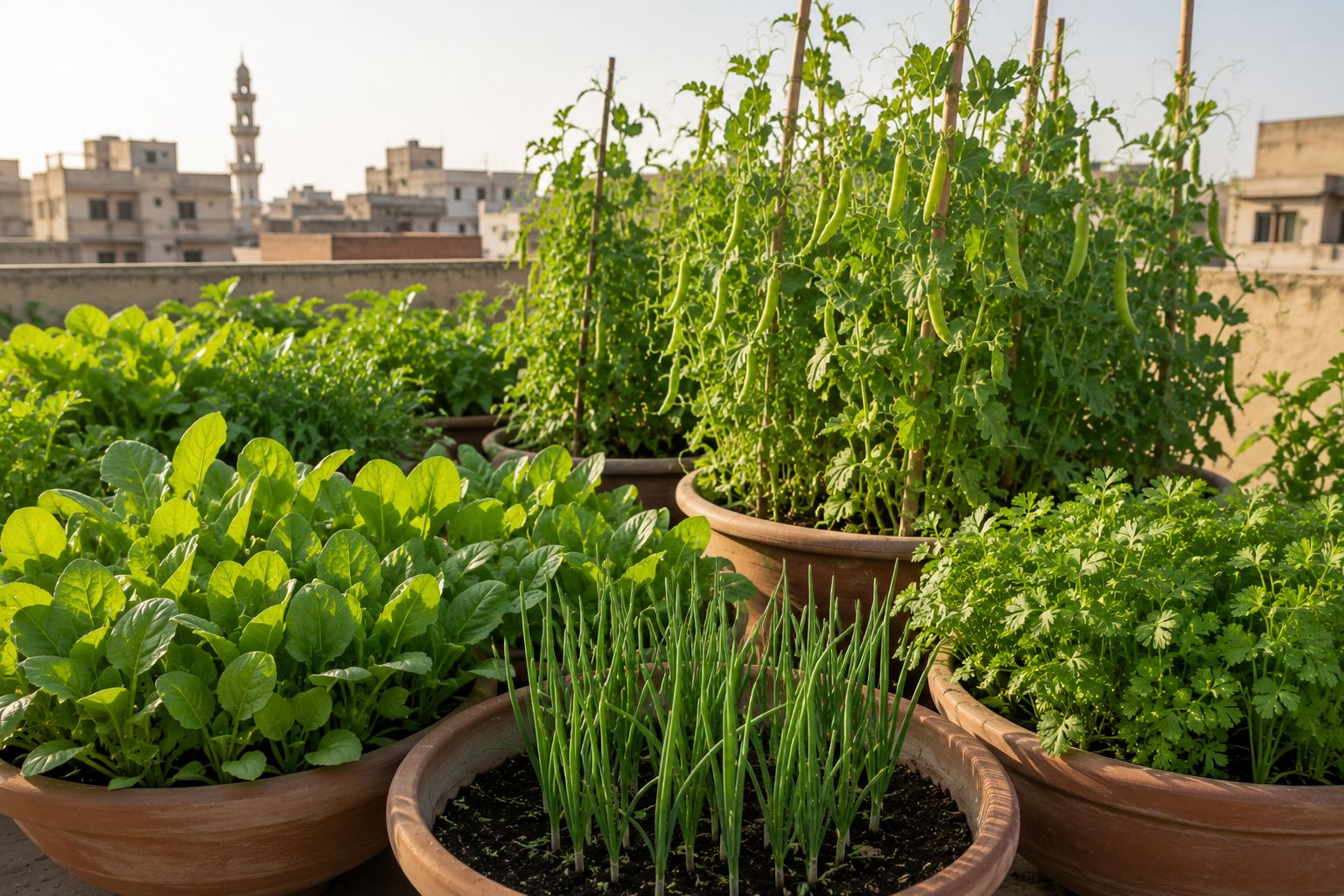
Pakistan's winter is the gardening season most home growers underestimate. October through February offers the most comfortable growing conditions in the year — temperatures between 10–22°C in most of the country, clear skies, low humidity, and minimal pest pressure compared to the monsoon months.
Cool-season crops do not just tolerate these conditions — they genuinely produce their best quality in them. Spinach grown in winter is sweeter and more tender than anything you taste in summer. Peas from December are plumper and more flavourful. Winter is when Pakistan's kitchen garden earns its keep.
Sow these crops: September – November in most regions. In Karachi and coastal areas, the window extends to December.
🌱 Palak (Spinach) — پالک
Palak is the fastest, most productive, and most forgiving winter crop in Pakistan. Seeds germinate within a week in cool soil, leaves are ready to harvest in 3–4 weeks, and the plant regrows after cutting repeatedly through the whole winter season.
Sow: September – December
Harvest: October – March (ongoing cut-and-come-again)
Key tip: Sow a new batch every three weeks for a continuous supply. In the heat of March, palak bolts quickly — harvest everything before it flowers.
👉 Read the full guide: How to Grow Spinach at Home
🌱 Dhaniya (Coriander) — دھنیا
Fresh dhaniya from your own pot is a completely different product from market bunches that have sat in the sun for two days. Fast, easy, and best grown in the cool months of October through February when bolting is much slower.
Sow: October – February
Harvest: 3–4 weeks from sowing, ongoing
Key tip: Succession sow a new batch every two to three weeks so you always have fresh dhaniya at harvest stage.
👉 Read the full guide: How to Grow Dhaniya at Home
🌱 Matar (Peas) — مٹر
Garden peas are a winter delight in Pakistan — sweet, tender, and nothing like the frozen ones from the supermarket. A climbing vine that needs a small trellis or string support. Pods develop quickly once the plant starts flowering.
Sow: October – November
Harvest: December – February
Key tip: Peas fix their own nitrogen — they actually improve soil for the next crop planted in the same spot. Do not add heavy nitrogen fertiliser; it encourages leaves over pods.
🌱 Pyaz (Onion) — پیاز
Pyaz is the foundation of Pakistani cooking. Winter is the time to plant it — onions need cool weather to build their bulbs and store them through the following year. Plant sets in October and harvest proper bulbs in April–May.
Plant sets: October – November
Harvest: April – May
Green onion harvest: December onwards (harvest young shoots)
Key tip: Green tops from thinned plants taste exactly like spring onions — never waste them.
👉 Read the full guide: How to Grow Pyaz at Home
🌱 Lehsan (Garlic) — لہسن
Lehsan is Pakistan's most patient kitchen garden crop. Plant a clove in October, leave it almost entirely alone through winter, and pull a full bulb of home-grown garlic in May or June. Properly cured, it stores at room temperature for six to nine months.
Plant: October – November
Harvest: May – June
Key tip: Stop watering entirely in the final two weeks before harvest. This helps the outer skin tighten and improves storage life significantly.
👉 Read the full guide: How to Grow Lehsan at Home
🌱 Gajar (Carrot) — گاجر
Carrots grow beautifully in Pakistan's winter and develop their characteristic sweetness in cool soil. They need deep, loose soil — a container at least 30 cm deep works well for shorter varieties. Gajar halwa from your own garden carrots is genuinely a different thing.
Sow: October – December
Harvest: January – March
Key tip: Thin seedlings to 5–7 cm apart once they reach 5 cm tall. Crowded carrots fork and twist around each other. Thinning them once is worth the effort.
🌱 Phool Gobi (Cauliflower) — پھول گوبھی
Cauliflower is a winter star in Pakistani cooking and needs genuine cold weather to form its tight white heads properly. Start seedlings in September, transplant in October, and harvest the heads from December through February.
Sow: September (indoors in seedling tray)
Transplant: October – November
Harvest: December – February
Key tip: Tie the outer leaves loosely over the developing head once it appears — this protects it from sun and keeps the white curds clean and tightly packed.
🌱 Pudina (Mint) — پودینہ
Mint grows year-round in Pakistan but slows significantly in peak summer heat and grows most vigorously in the cooler months from October through March. A cutting placed in water in October will root in days and be producing leaves within three weeks.
Plant: Year-round — best October through March
Harvest: Ongoing, year-round
Key tip: Keep mint in its own pot. It spreads aggressively through underground runners and will crowd out everything nearby.
👉 Read the full guide: How to Grow Pudina at Home
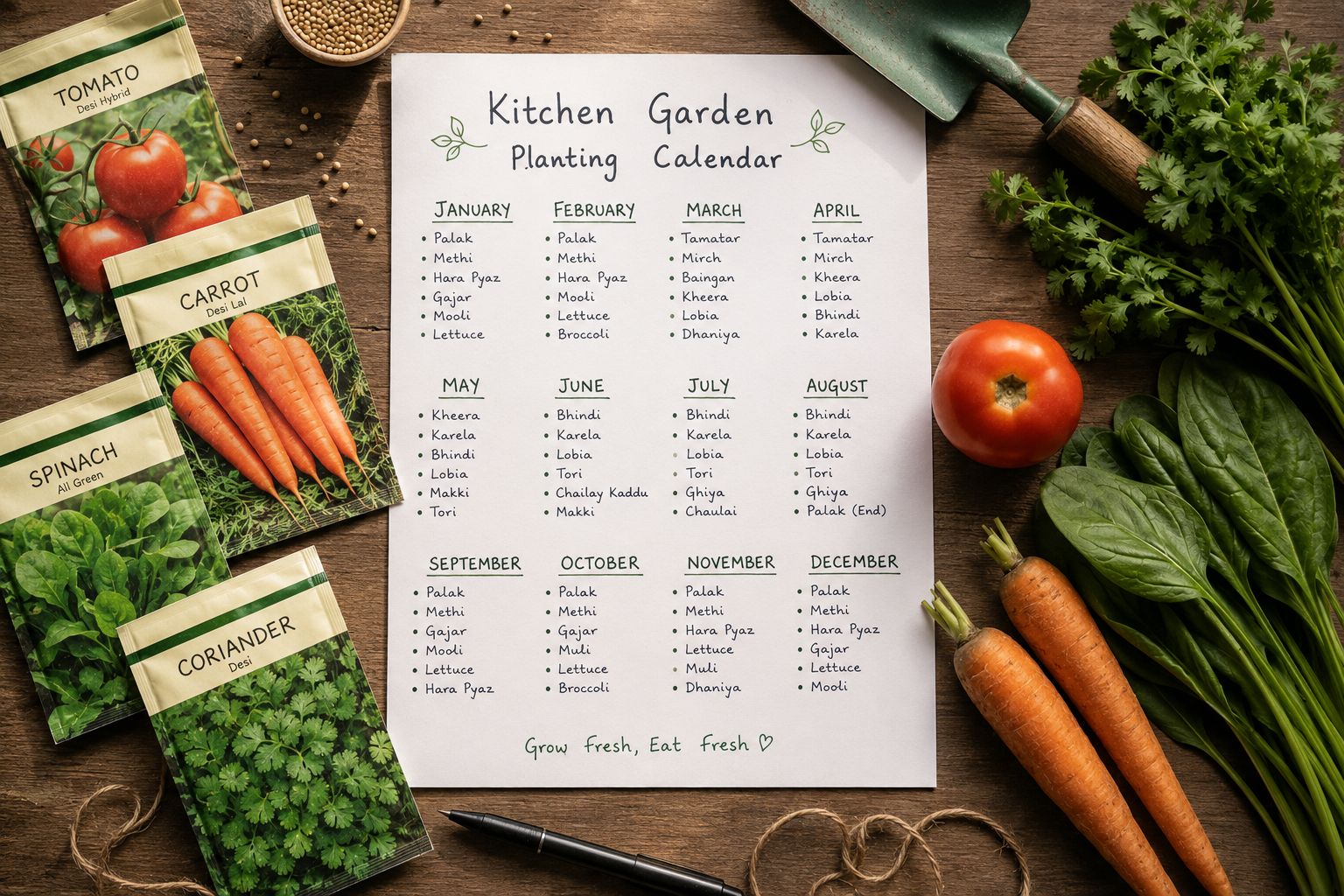
❄️ Winter Crop Quick Reference
| Vegetable | Urdu Name | Sow | Harvest | Pot Size |
|---|---|---|---|---|
| Spinach | پالک | Sep–Dec | Oct–Mar | Any size |
| Coriander | دھنیا | Oct–Feb | 3–4 weeks from sow | Medium |
| Peas | مٹر | Oct–Nov | Dec–Feb | Medium + trellis |
| Onion | پیاز | Oct–Nov | Apr–May | Wide shallow |
| Garlic | لہسن | Oct–Nov | May–Jun | Wide deep |
| Carrot | گاجر | Oct–Dec | Jan–Mar | Deep (30 cm+) |
| Cauliflower | پھول گوبھی | Sep (tray) | Dec–Feb | Large |
| Radish / Mooli | مولی | Sep–Nov | Nov–Jan | Deep |
| Turnip / Shalgam | شلجم | Oct–Nov | Dec–Feb | Deep |
| Mint | پودینہ | Year-round | Year-round | Any (own pot) |
📅 Month-by-Month Pakistan Kitchen Garden Calendar
| Month | What to Sow | What to Harvest | Season |
|---|---|---|---|
| January | Palak, dhaniya, mooli | Gajar, phool gobi, matar, palak | Rabi — peak winter |
| February | Tamatar (indoors), baingan, hari mirch (indoors) | Matar, palak, shalgam | Late Rabi |
| March | Kheera, ghia, matar (last sow) | Pyaz greens, palak, phool gobi | Zaid Rabi / transition |
| April | Bhindi, karela, tamatar (transplant), adrak | Tamatar (early), kheera | Early Kharif |
| May | Bhindi, turai, tamatar, ghia | Bhindi, kheera, tamatar | Kharif begins |
| June | Nothing new — focus on care | Bhindi, tamatar, kheera, baingan | Peak Kharif |
| July | Nothing new — monsoon active | Ghia, karela, baingan, bhindi | Peak Kharif + monsoon |
| August | Nothing new | Karela, ghia, tamatar, hari mirch | Late Kharif |
| September | Phool gobi (seedling tray), mooli, palak | Karela, ghia, last bhindi | Zaid Kharif |
| October | Lehsan, pyaz sets, matar, gajar, palak | Last kharif harvest | Rabi begins |
| November | Dhaniya, palak, shalgam, more gajar | Mooli, early palak | Early Rabi |
| December | Palak, dhaniya, spinach successions | Gajar, matar (first pods), phool gobi | Mid Rabi |
The Crops That Bridge Both Seasons
Some crops in Pakistan are flexible enough to grow in either season with the right management:
Tamatar: Primarily a Kharif crop but can be grown in winter with protection from frost in northern cities. Karachi gardeners grow tomatoes almost year-round.
Pudina: Grows year-round but best in cool weather. Goes semi-dormant in peak summer heat, resumes vigorous growth in October.
Hari Mirch: A Kharif crop but can be overwintered as a perennial if brought under shelter in November. A two-year-old chilli plant produces significantly more than a first-year plant.
Dhaniya: Best in cool months but can be grown year-round in partial shade. Succession sowing every two to three weeks makes it effectively a year-round crop.
What Ruins Crops in the Wrong Season
Planting cool-weather crops in summer heat: Palak, dhaniya, matar, and gajar bolt almost immediately when temperatures consistently exceed 25–28°C. They grow quickly and flower rather than producing usable leaves or roots. By the time they flower, the edible quality is gone.
Planting heat-loving crops in winter cold: Bhindi seeds simply will not germinate in cold soil below 18°C. Tamatar seedlings go into shock when nights drop below 10°C. Baingan stops producing and becomes stressed in cold winters, especially in Lahore and northward.
Ignoring the transition periods: The Zaid windows of March–April and September–October are short but genuinely valuable. A row of palak sown in September is producing leaves by October and continues through December. A tray of phool gobi seedlings started in September and transplanted in October gives you harvested heads by December. Using these short windows doubles the productivity of your growing space without any additional cost.
The Simple Rule for Pakistani Gardeners
Read temperatures, not calendars.
When the forecast shows nights consistently above 20°C — Kharif crops go in. When nights drop below 18°C — Rabi crops go in. The calendar dates in this guide are averages across Pakistan. Your specific microclimate — your city, your balcony orientation, your rooftop — may run slightly earlier or later than the table suggests.
A thermometer and soil that is warm or cool to the touch tells you more than any date.
Link to Your Full Seedora Growing Guides
Every crop mentioned in this blog has a full step-by-step guide in the Seedora Instantly Grow Series:
Summer Crops:
- How to Grow Tamatar (Tomato) at Home
- How to Grow Okra at Home
- How to Grow Hari Mirch (Green Chilli) at Home
- How to Grow Kheera (Cucumber) at Home
- How to Grow Adrak (Ginger) at Home
Winter Crops:
- How to Grow Pudina (Mint) at Home
- How to Grow Dhaniya (Coriander) at Home
- How to Grow Pyaz (Onion) at Home
- How to Grow Lehsan (Garlic) at Home
- How to Grow Shimla Mirch at Home
By Seedora Store — grow the right crop in the right season and your kitchen garden almost looks after itself.