Let's start with honesty. Garlic is not like mint. You will not see results in a week. You will plant a clove in October or November and you will harvest a full bulb in May or June — six to eight months later. That is a long time to wait for something.
But here is what makes lehsan worth every single day of that wait.
Homegrown garlic tastes completely different from what you buy at the market. The market gives you bland, aged, often imported bulbs that have been stored for months. Homegrown gives you fresh, intensely fragrant, deeply flavoured lehsan — the kind that makes your karahi smell like it is supposed to smell. The kind that disappears from your kitchen before you can use it all.
And from a single medium pot with twelve to fifteen cloves, you can grow enough garlic to last a Pakistani household of four for months.
Plant it once. Ignore it mostly. Harvest it right. Cure it properly. Done.
Here is everything you need to know to get it right — including the mistakes most beginners make that cost them their entire crop.
What Is Lehsan Called Around the World?
| Region | Local Name |
|---|---|
| 🇵🇰 Pakistan / Urdu | لہسن (Lehsan) |
| 🇮🇳 Hindi | लहसुन (Lahsun) |
| 🇸🇦 Arabic | ثوم (Thoom) |
| 🇮🇷 Persian / Farsi | سیر (Seer) |
| 🇫🇷 French | Ail |
| 🇮🇹 Italian | Aglio |
| 🇩🇪 German | Knoblauch |
| 🌐 Scientific | Allium sativum |
🌿 Lehsan has been used in Pakistani, South Asian, and Middle Eastern cooking and medicine for thousands of years. In Unani and Ayurvedic traditions it is considered a warming, digestive, and immune-supporting food — eaten raw in winter, cooked into almost every savoury dish, and used as a remedy for colds, cholesterol, and circulation. It is one of the oldest cultivated plants in human history and one of the most universally used flavours in Pakistani cooking.
Which Garlic Should You Grow?
| Type | Characteristics | Best For | Pakistan Availability |
|---|---|---|---|
| Softneck Garlic (A. sativum var. sativum) | White papery skin, mild-medium flavour, stores 9–12 months | General cooking, braiding, long storage | ✅ Most common in Pakistan |
| Hardneck Garlic (A. sativum var. ophioscorodon) | Purple-striped, stronger flavour, fewer but larger cloves | Intense cooking flavour, shorter storage | 🔶 Less common, specialty nurseries |
| Desi / Local Garlic | Small, very pungent, fully climate-adapted | Traditional Pakistani cooking, medicine | ✅ Best option — from local sabzi mandi |
💡 The best cloves to plant are the ones you already buy. Go to your sabzi mandi and buy a fresh, firm head of local Pakistani garlic. Select the largest, most solid cloves from the outer layers and plant those. Local desi garlic is already adapted to Pakistan's climate and soil — it will almost always outperform imported seed garlic for home gardeners here.
Why Lehsan Belongs in Every Pakistani Kitchen Garden
🍳 In Every Savoury Dish — Karahi, qorma, nihari, daal, chana, aloo gosht, biryani masala, stir-fry, chutney, marinades. There is almost no Pakistani dish that does not start with lehsan and adrak hitting hot oil. It is the foundation of our entire cuisine.
💊 Genuinely Medicinal — Garlic contains allicin — a powerful antimicrobial and anti-inflammatory compound that releases when cloves are crushed or chopped. Research consistently supports its role in lowering blood pressure, reducing LDL cholesterol, supporting immunity, and fighting bacterial and viral infections. It is one of the few foods that is both a daily ingredient and a medicine.
❄️ A Winter Crop for Pakistani Conditions — Garlic loves cool weather. Pakistan's winter from October to March is nearly perfect for garlic growth. While your garden or balcony sits relatively idle in winter, lehsan is quietly building underground. It is the crop that uses the season everyone else ignores.
💰 Stores for Months — No Running Out — Properly cured garlic lasts 6 to 9 months at room temperature. Plant once in winter and you have homegrown lehsan through the entire following year. No buying, no running out mid-cooking, no market trips for a single head of garlic.
🌱 Replants Itself Infinitely — Each bulb you harvest contains multiple cloves. Save the largest cloves from your best bulbs to replant next season. Every year your stock gets better, bigger, and more adapted to your exact soil and microclimate. Within two to three seasons you are genuinely self-sufficient in garlic — for free.
🧄 Green Garlic Bonus — Before the bulb fully develops, the green shoots that emerge are edible — milder, fresh, and perfect sliced into omelettes, daal, or raita. You get two harvests from one planting. Most people do not know about green garlic until they grow their own.
Step 01 — Choose and Prepare Your Cloves
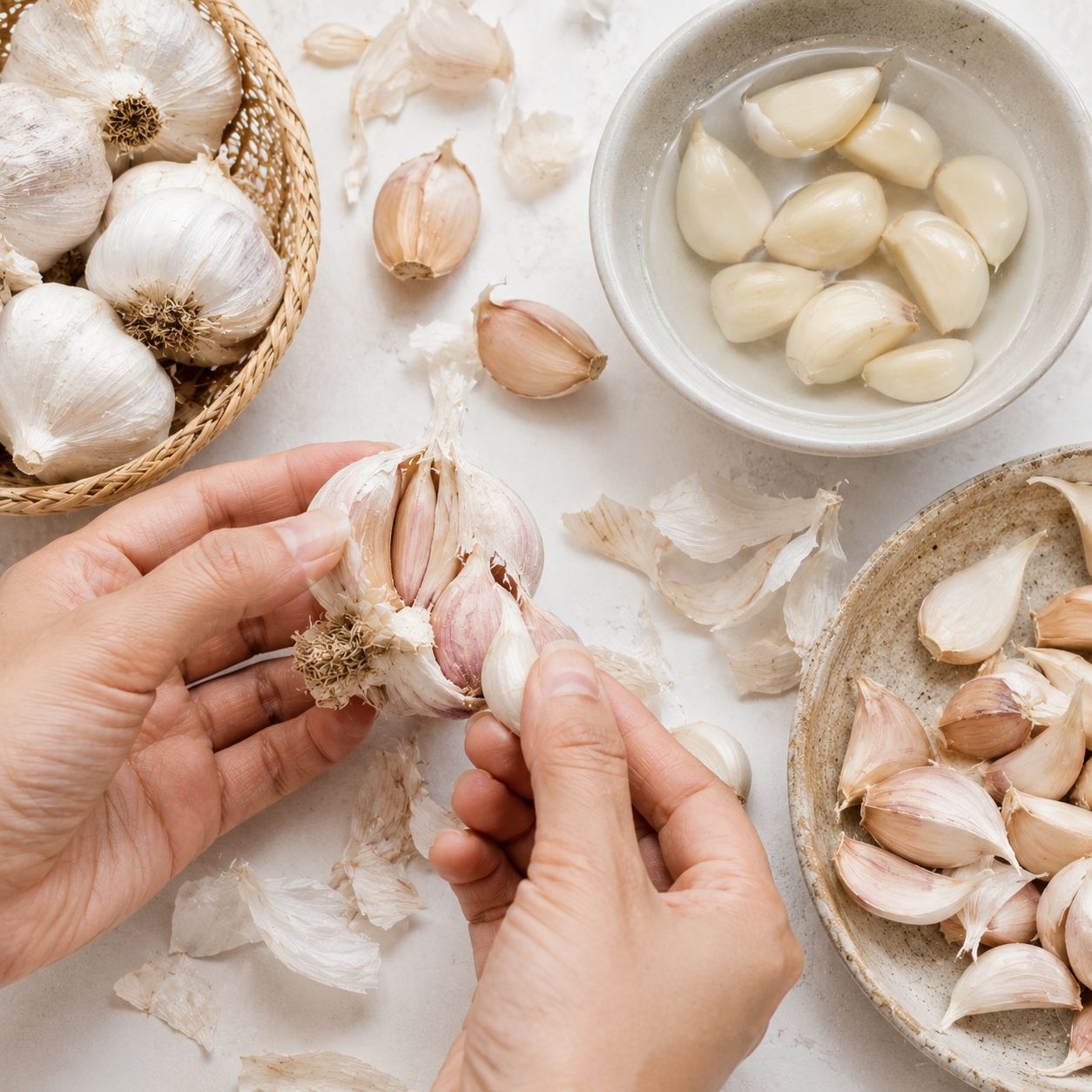
Go to your sabzi mandi or any grocery store and buy the freshest, firmest heads of garlic you can find. Look for bulbs with tight papery skin, no soft spots, no mould, no sprouting. Firm and heavy is what you want.
Separate the head into individual cloves. Only plant the large outer cloves — the big ones from the outermost layer of the bulb. The small inner cloves will produce small bulbs. Save those for cooking. Large clove in = large bulb out.
You need cloves that are:
- Firm and solid — no softness or sponginess
- Intact — skin ideally still on (protects against rot)
- Large — at least as big as a full thumbnail
The overnight soak — this is a step most beginners skip and it genuinely makes a difference. Before planting, soak your cloves for 12 to 24 hours in diluted liquid fertiliser. A tablespoon of seaweed solution or any liquid fertiliser in a cup of water works perfectly. This stimulates root development and gives the cloves a head-start. If you have nothing else, plain room-temperature water still helps.
🌱 Timing for Pakistan: Plant garlic between late October and late November — when temperatures drop to a consistent 10–20°C. This is the critical window. Too early and the heat prevents proper root establishment. Too late and the bulbs do not get enough growing time before summer arrives and forces premature harvest.
Step 02 — Pot, Soil, and Planting
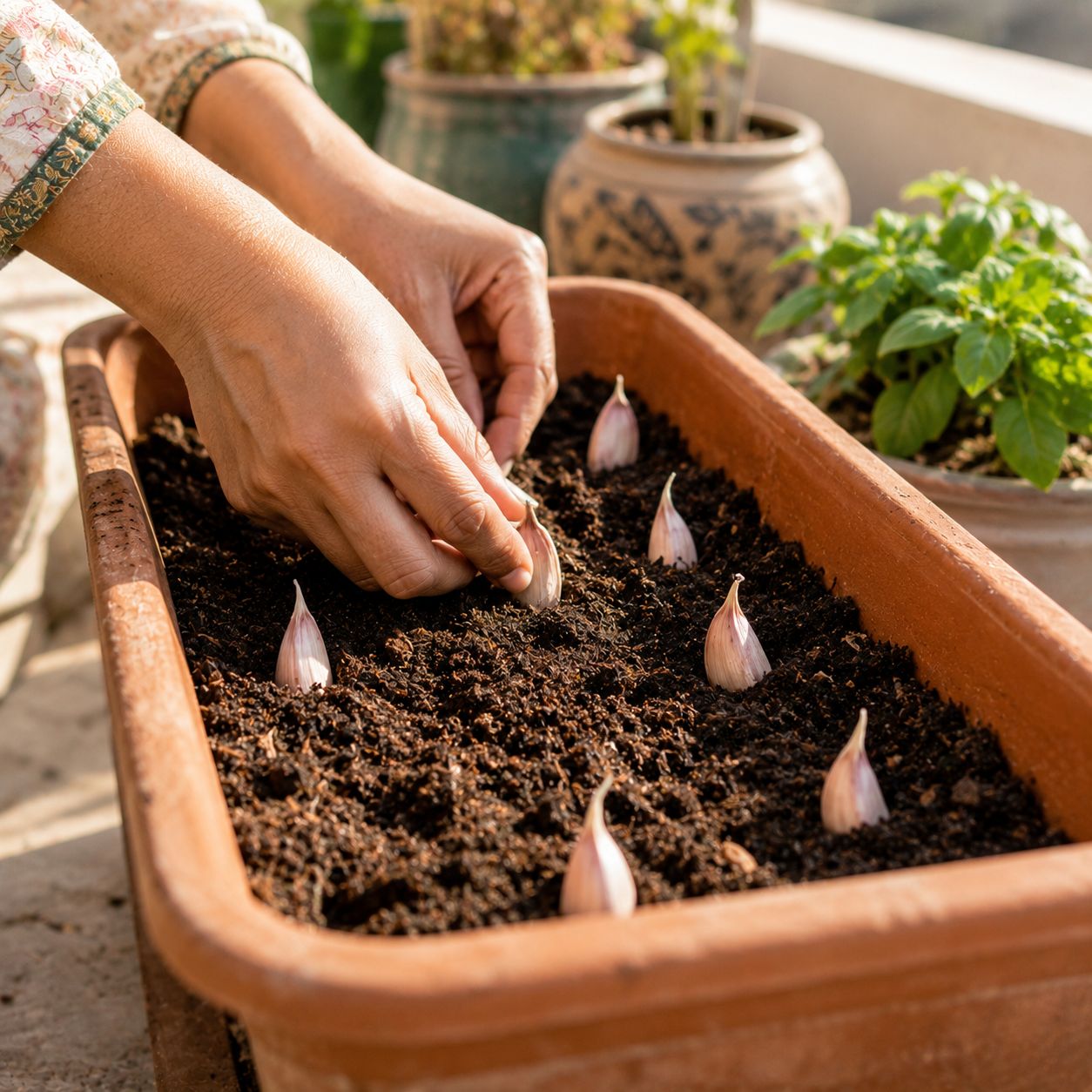
Garlic needs depth. The clove goes down, the roots go deeper, and the bulb develops below the soil surface. A shallow pot means shallow roots means small bulbs.
Use a pot that is minimum 25–30 cm deep. Width matters more than you think — the wider the pot, the more cloves you can plant without competition. A long rectangular window box or a wide round pot both work well. One pot can hold 10 to 15 cloves planted 12–15 cm apart.
Soil is everything with garlic. Garlic is a heavy feeder — it pulls significant nutrients from soil over its long growing period. Poor soil means poor bulbs, guaranteed.
Mix:
- 50% good garden soil or potting mix
- 30% well-rotted compost or decomposed manure (gobar khaad)
- 20% coarse sand or perlite for drainage
Garlic hates waterlogged roots more than almost any other vegetable. Drainage is non-negotiable. Ensure the pot has drainage holes and never lets water pool at the bottom.
Planting depth and spacing:
Push each clove 5 cm deep into the soil — pointed end up, flat root end down. This single detail trips up more beginners than anything else. Pointed end up. Always.
Space cloves 12 to 15 cm apart in every direction. This feels like a lot of space when the cloves are tiny, but each one will become a full bulb the size of a golf ball or larger. Crowding means competition means small bulbs.
After planting, water in well and then add a layer of mulch — dried leaves, straw, or even torn newspaper — about 3–4 cm thick. Mulch retains moisture, suppresses weeds, and protects the cloves from cold snaps.
| Care | Requirement |
|---|---|
| ☀️ Sunlight | 6–8 hours direct sun — non-negotiable |
| 💧 Watering | Every 5–7 days in winter — keep moist, never wet |
| 🌡️ Temperature | 10–20°C for growth — 15–25°C for bulbing |
| 🪴 Pot | 25–30 cm deep minimum |
| 🌱 Soil | Rich, well-draining — compost essential |
| 📅 Best time to plant (Pakistan) | October – November |
Step 03 — Care Through the Season (Mostly Leave It Alone)
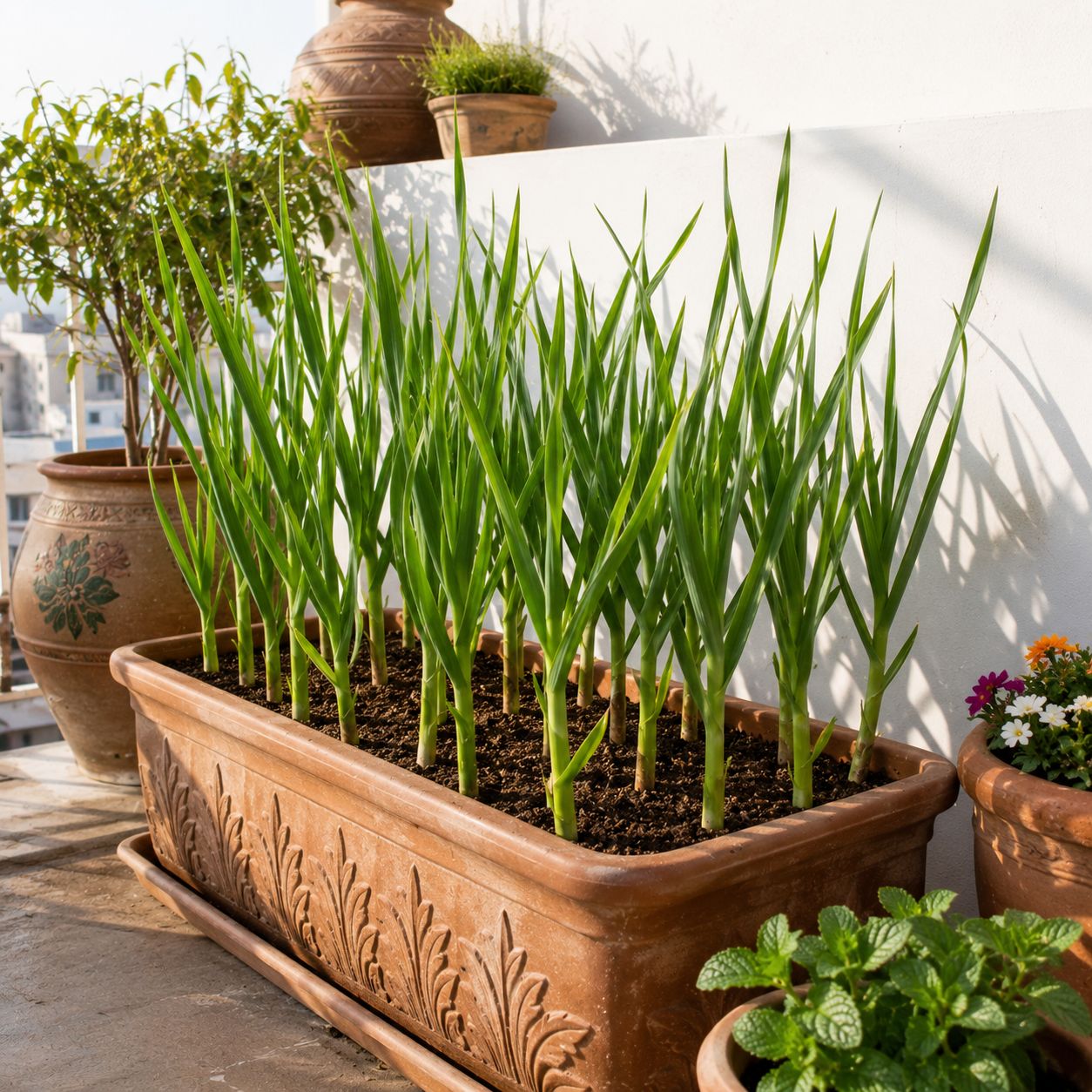
Within 2 to 3 weeks of planting, green shoots will push through the soil. This is garlic telling you it has rooted and is growing. From here, your job is mostly patience and basic maintenance.
Watering in winter — garlic barely needs water in Pakistan's cool, sometimes rainy winters. Water every 5 to 7 days and check soil moisture before watering. The top 3 cm should feel dry before you water again. Overwatering in winter causes root rot faster than any pest.
Watering in spring — as temperatures rise in February and March and the plants grow rapidly, water more frequently — every 3 to 5 days. This is the bulbing phase when the plant needs consistent moisture to develop the size of the underground bulb.
Feeding:
- January to February: Apply a balanced fertiliser or diluted compost tea every 3 to 4 weeks to support leaf growth.
- March to April: Switch to a high-potassium feed (banana peel water works excellently — soak dried banana peels overnight, dilute, and apply). This directs the plant's energy from leaves into building the bulb underground.
- May — stop feeding entirely. The plant is finishing. Additional fertiliser at this stage can actually reduce bulb quality.
Harvesting green garlic — when shoots reach 20–25 cm you can harvest a few of the thinner ones as green garlic. Treat exactly like spring onions — slice thin into omelettes, daal, raita. The flavour is milder and greener than mature garlic. A genuinely underrated ingredient.
🌿 Garlic scapes — if you are growing hardneck garlic, curling flower stems called scapes will appear in spring. Cut them off immediately. Removing scapes directs the plant's energy back into building the bulb rather than flowering. And scapes themselves are delicious — sauté in butter or blend into chutney.
Step 04 — Knowing When to Harvest
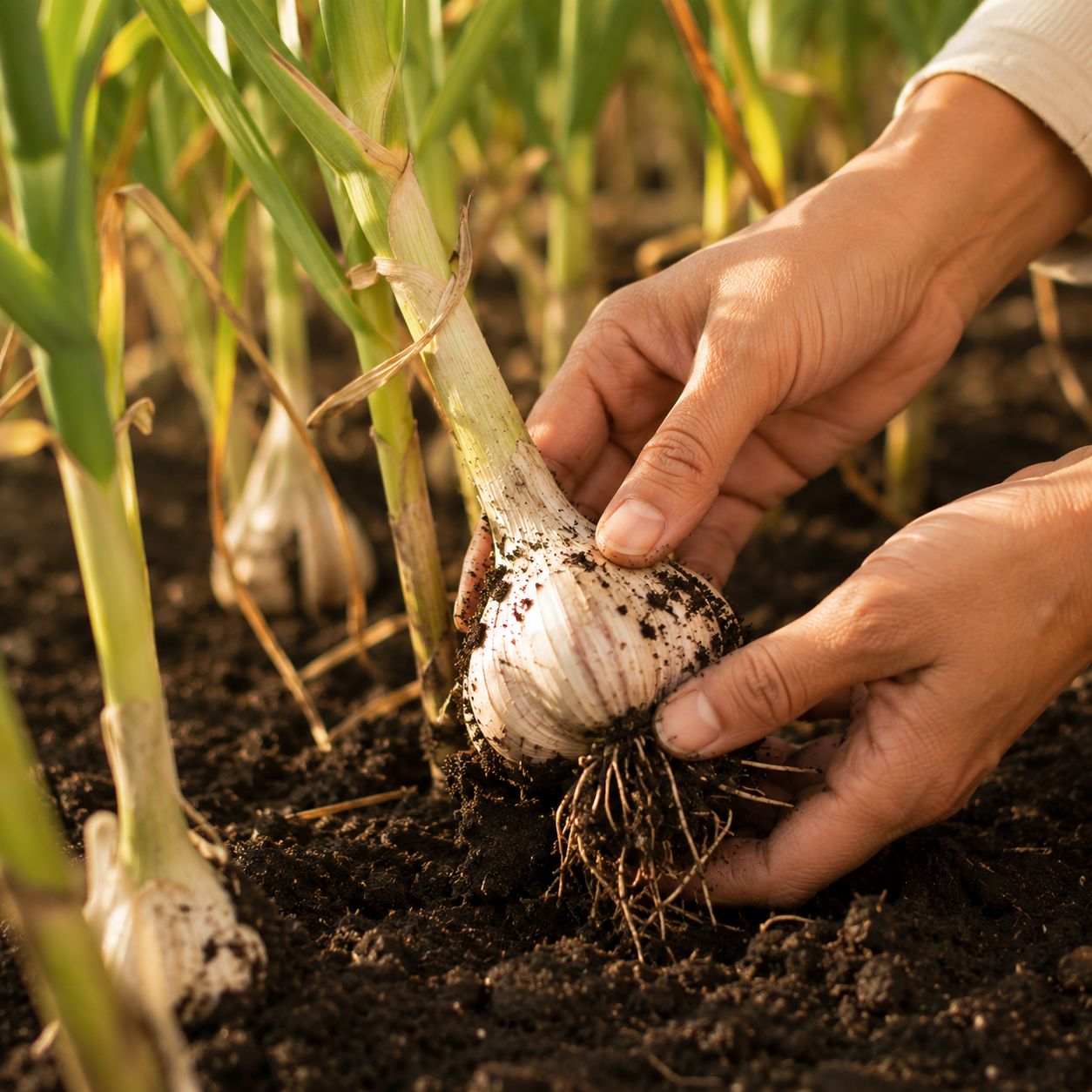
This is the part where patience is most tested — and where most first-time growers go wrong in one direction or the other.
The sign garlic is ready: The lower leaves begin to turn yellow and dry while the upper leaves remain green. When roughly half the leaves are yellow and the plant looks like it is starting to die — that is harvest time. In Pakistani conditions this typically happens May to June.
Do not wait too long. Fully yellowed, collapsed plants mean the outer wrapper layers of the bulb have already broken down underground. You will pull up bulbs with loose, damaged skins that will not store well.
Do not harvest too early. Green, fully upright plants with no yellow leaves mean the bulb is still developing. Early harvest means small, underdeveloped bulbs with thin skins that rot quickly.
How to harvest:
Loosen the soil around each plant with a hand trowel or fork before pulling — never yank straight up, which can snap the stem from the bulb. Loosen, then lift gently. Shake off loose soil. Leave the stems and leaves completely intact — do not trim anything yet.
Step 05 — Curing: The Step That Saves Your Entire Harvest
This step is what separates a harvest that lasts nine months from one that goes mouldy in three weeks. It is the most important thing in this entire guide and the most commonly skipped.
Freshly harvested garlic is wet inside. The skins are not yet papery and protective. The bulbs cannot be stored yet — they need to cure.
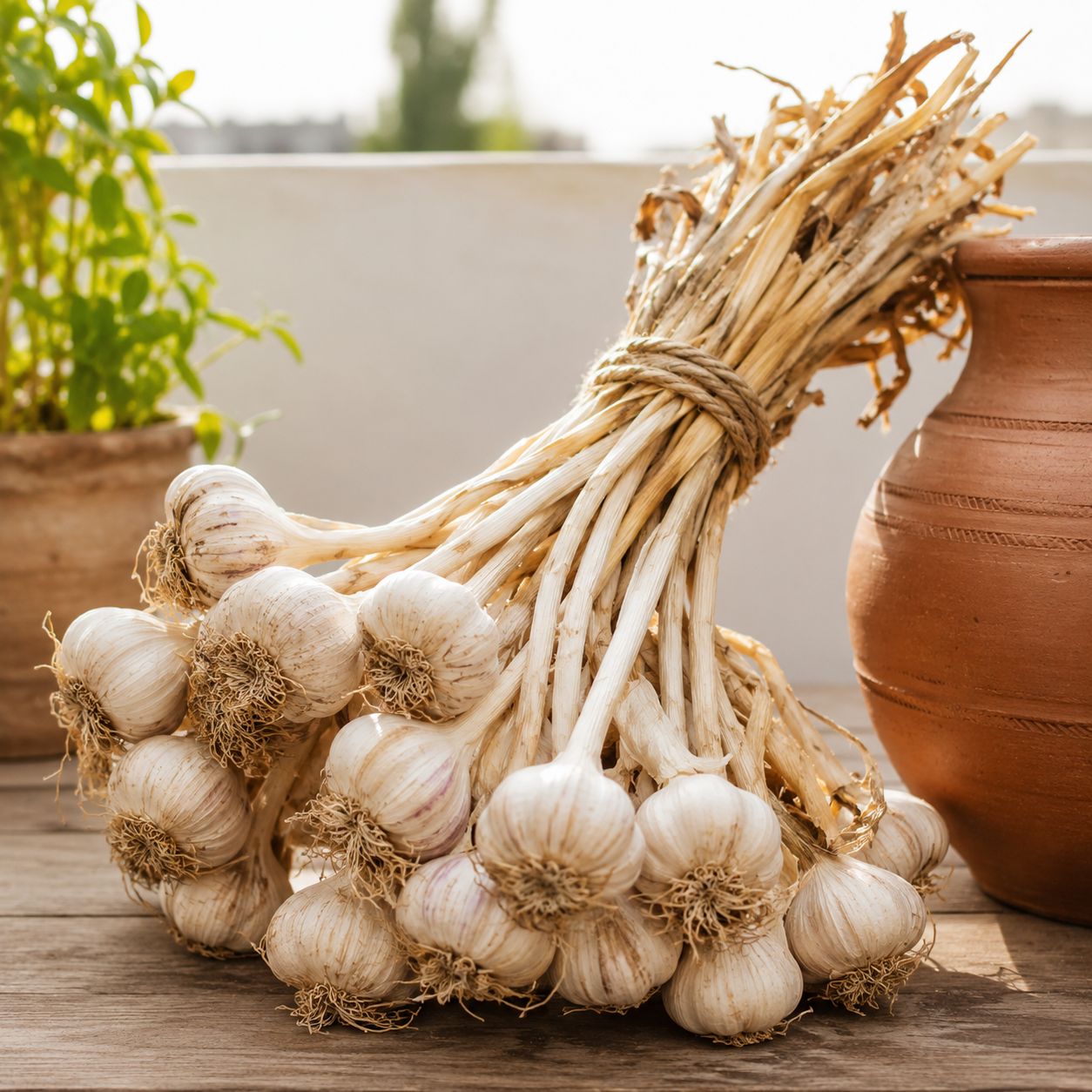
Hang or lay your garlic somewhere shady, dry, and well-ventilated for a minimum of two to three weeks. A shaded balcony, a covered rooftop area, a dry room with good airflow. Not in direct sun, which bleaches and damages the skins. Not in a closed room with no air circulation, which causes mould.
The stems and leaves will dry and shrink. The outer skin will turn papery and tight. The necks will feel dry and hard. That is cured garlic. Only then is it ready to store.
After curing:
- Trim roots to about 1 cm
- Trim stems to 3–5 cm (or braid softneck varieties — traditional and beautiful)
- Store in a cool, dry, well-ventilated spot — a mesh bag, a basket, a clay pot with holes
- Never store in the refrigerator or in plastic bags (humidity causes rot)
- Properly cured and stored: 6 to 9 months at room temperature
✂️ Save the best for replanting. Before you use your harvest, set aside the largest, most perfect bulbs. Save those to replant the following October. Each generation of garlic grown in your soil becomes slightly more adapted to your conditions. By year three, your homegrown lehsan is a completely different product from anything in the market.
How to Use Fresh and Stored Lehsan Every Day
- 🍳 2–3 cloves crushed into hot oil as the base of every karahi, qorma, or daal
- 🧆 Whole roasted cloves alongside seekh kebabs or lamb chops — caramelised, sweet, incredible
- 🫙 Blended with coriander, green chili, and lemon for the most flavourful chutney you have made
- 🥗 One clove rubbed inside a salad bowl before adding ingredients — background depth without overpowering
- 💊 One raw clove crushed and swallowed with water every morning in winter — the traditional Unani cold and flu remedy that actually works
- 🍞 Crushed into softened butter with parsley for the best desi garlic bread
- 🫙 Fermented in raw honey for 4 weeks — a traditional remedy for immunity and digestion, genuinely delicious
Common Mistakes to Avoid
| Mistake | What Happens | The Fix |
|---|---|---|
| Planting small inner cloves | Tiny disappointing bulbs | Only plant the large outer cloves |
| Pointed end down | Twisted, struggling growth | Pointed end always up |
| Too shallow planting | Poor root anchoring, small bulbs | 5 cm depth — use a stick to measure |
| Cloves too close together | Competition, small bulbs | 12–15 cm spacing minimum |
| Not enough sun | Spindly leaves, no bulb development | 6–8 hours direct sun |
| Overwatering in winter | Root rot before the plant establishes | Every 5–7 days only |
| Harvesting too early | Thin skins, no storage life | Wait for half the leaves to yellow |
| Skipping the curing step | Mould within 2–3 weeks of harvest | 2–3 weeks hanging in dry, ventilated shade |
| Storing in plastic or fridge | Rot and sprouting | Mesh bag or basket, room temperature |
Lehsan vs Other Home Garden Crops
| Lehsan (Garlic) | Shimla Mirch | Coriander | Mint | Tomato | |
|---|---|---|---|---|---|
| Time to harvest | 6–8 months | 60–80 days | 3–4 weeks | 3–4 weeks | 60–80 days |
| Season | Winter crop | Summer/Spring | Year round | Year round | Summer/Spring |
| Stores after harvest | 6–9 months | 2–3 weeks fresh | Days | Days | 1–2 weeks |
| Difficulty | ⭐⭐ Easy-Medium | ⭐⭐ Easy-Medium | ⭐ Easiest | ⭐ Easiest | ⭐⭐ Easy-Medium |
| Pakistan kitchen use | ✅ Every dish | ✅ Daily | ✅ Daily | ✅ Daily | ✅ Daily |
| Grows in pot | ✅ Yes | ✅ Yes | ✅ Yes | ✅ Yes | ✅ Yes |
| Replants itself | ✅ Every year | ❌ | ❌ | ✅ Forever | ❌ |
Garlic is the most patient crop in this series. It asks you to wait longer than anything else. But it rewards you with something no other plant does — a harvest that lasts the entire following year, gets better every season you replant it, and costs you nothing after the first year. Start it this October. You will understand by June.
Part of the Instantly Grow Series by Seedora Store — grow the vegetables your kitchen actually uses, every single day.