Most of us spend the majority of our day indoors — home, office, car, back home again — with the windows shut against dust, heat, or noise. That sealed-in air is where paint fumes, furniture off-gassing, cooking smoke, cleaning product residue, and everyday dust quietly build up. According to the U.S. EPA, indoor air can be two to five times more polluted than the air right outside your window, and in a country where air conditioning means windows stay closed for months at a time, that number matters even more.
In 1989, NASA ran a now-famous experiment called the Clean Air Study, sealing common houseplants inside airtight chambers filled with pollutants like formaldehyde, benzene, and trichloroethylene — and measuring how much each plant's leaves and root-zone microbes absorbed over time. Several ordinary houseplants turned out to be genuinely good at pulling these toxins out of the air.
It is worth being honest about what that study does and does not prove. NASA's chambers were small, sealed, and monitored — nothing like an open living room with doors, fans, and airflow. To match those lab results in a real house, you would realistically need dozens of plants in a single room. So no single pot is going to replace a HEPA filter or an open window. What the study does prove is which plants have the biological capacity to filter specific pollutants — and a well-chosen group of them, placed where you actually spend your time, gives you a real (if modest) boost in air quality, plus higher humidity, more oxygen, and a room that simply feels more alive.
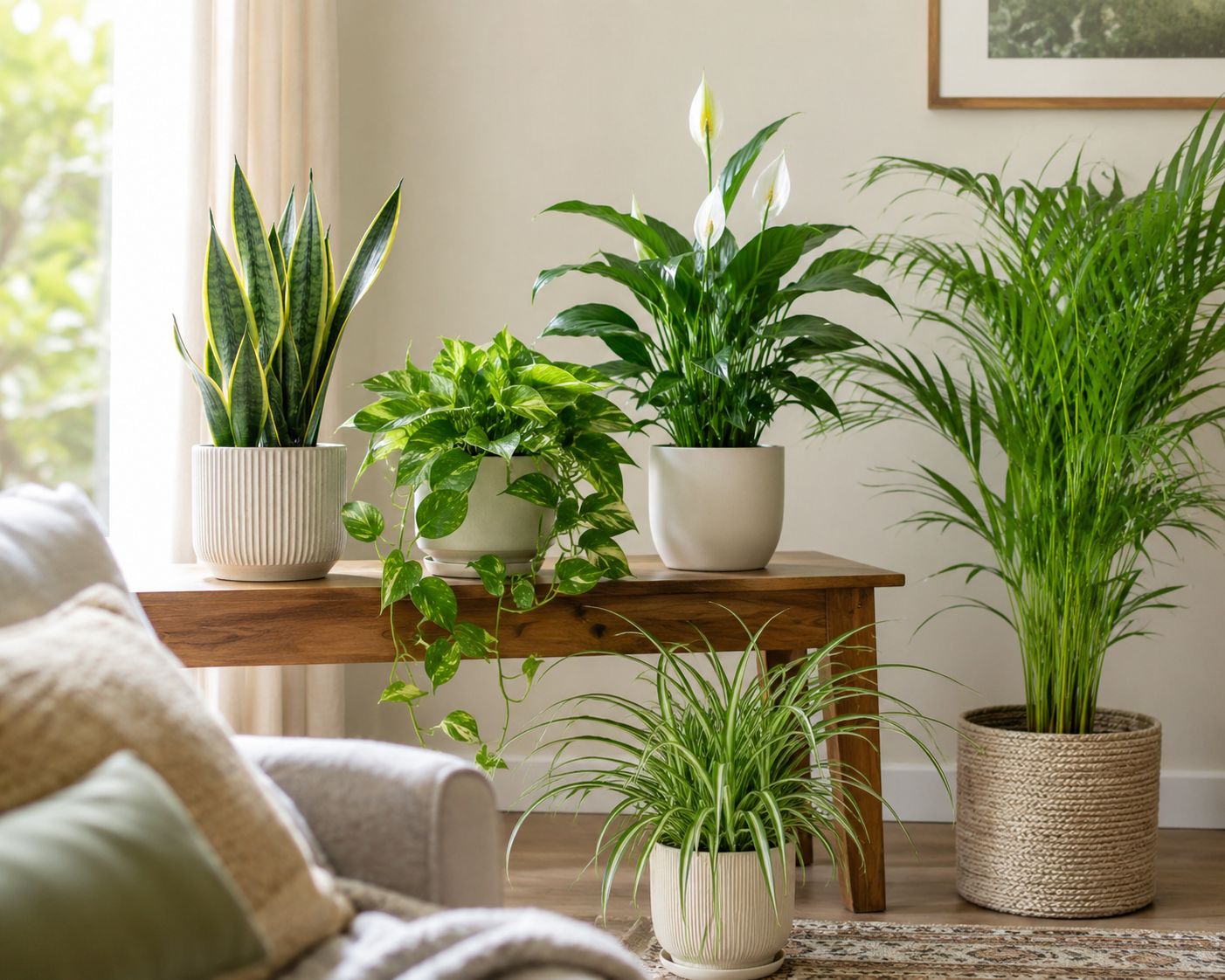
That is the idea behind this bundle. Five plants, each targeting a different set of pollutants, each easy enough to keep alive in an average Pakistani home, and together forming a small, functional air-purifying setup for one room.
What's Inside the Bundle
| Plant | Local / Common Name | Best Room | Difficulty |
|---|---|---|---|
| Snake Plant | Sansevieria / Mother-in-Law's Tongue | Bedroom | ⭐ Easiest |
| Money Plant (Pothos) | Money Plant | Living room, office | ⭐ Easiest |
| Peace Lily | Peace Lily | Bedroom, bathroom | ⭐⭐ Easy-Medium |
| Areca Palm | Areca Palm | Living room, balcony corner | ⭐⭐ Easy-Medium |
| Spider Plant | Spider Plant | Kitchen, hanging baskets | ⭐ Easiest |
🌿 Why these five specifically: each plant on this list was directly tested in NASA's Clean Air Study or in the peer-reviewed research that followed it, and each one targets a slightly different pollutant profile — so together they cover more ground than five of the same plant would. They were also chosen because they are genuinely low-maintenance and forgiving, since an air-purifying plant that dies in three weeks purifies nothing.
Plant 01 — Snake Plant
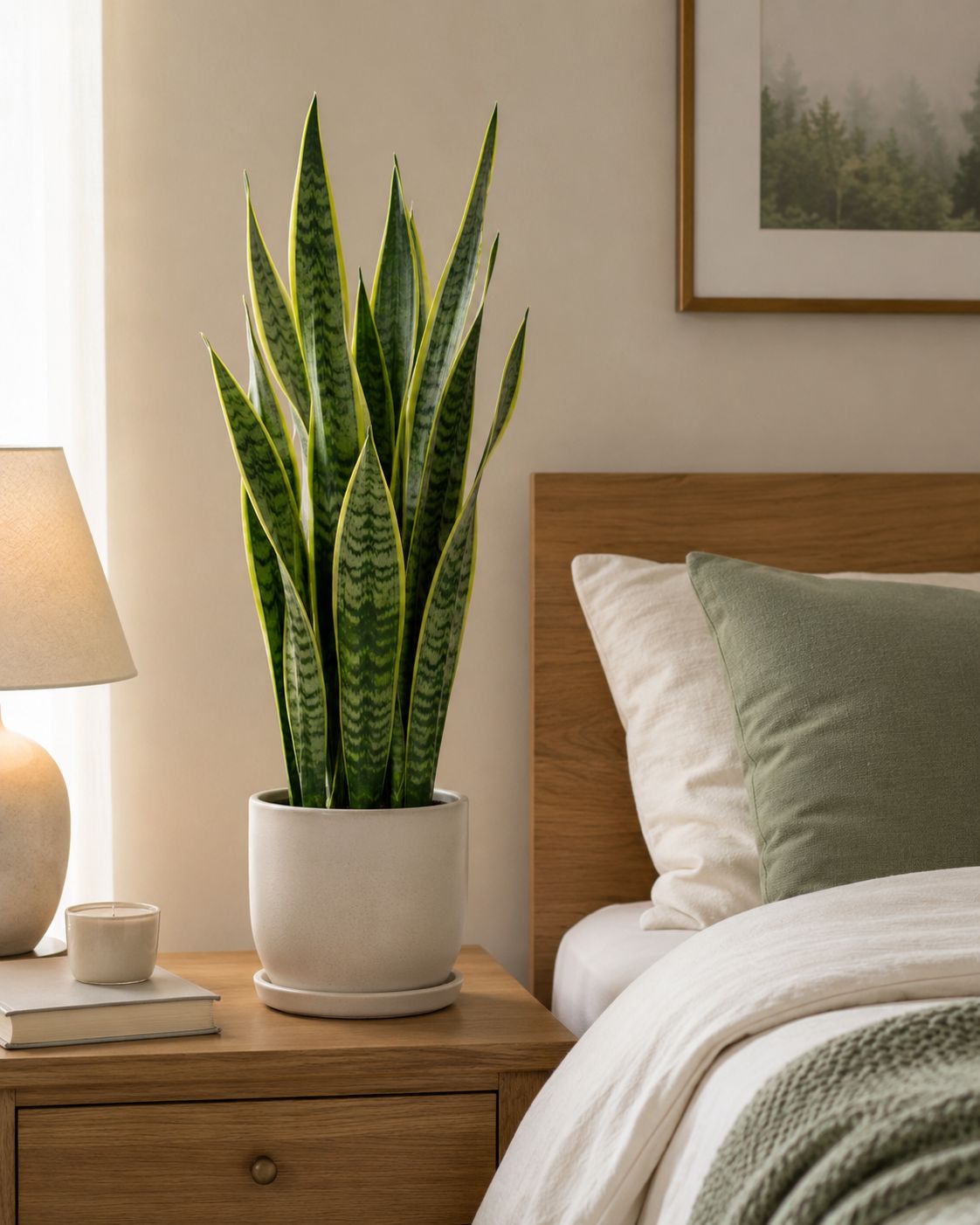
The snake plant is the plant people recommend to someone who insists they "can't keep anything alive." It tolerates low light, irregular watering, and being genuinely ignored for weeks — and it keeps growing anyway.
Air-purifying role: Removes formaldehyde, benzene, trichloroethylene, and xylene — common off-gassing compounds from furniture, paint, and synthetic fabrics. It is also one of the few plants that continues releasing oxygen at night rather than during the day, which is exactly why it is placed in bedrooms rather than living rooms.
Care:
- Light: Tolerates low light, thrives in bright indirect light
- Water: Every 2–3 weeks — let soil dry out fully between waterings
- Soil: Well-draining, sandy mix; avoid overwatering above all else
- Pet note: Mildly toxic if chewed — keep away from cats and dogs
→ Complete Snake Plant Care Guide
Plant 02 — Money Plant (Pothos)
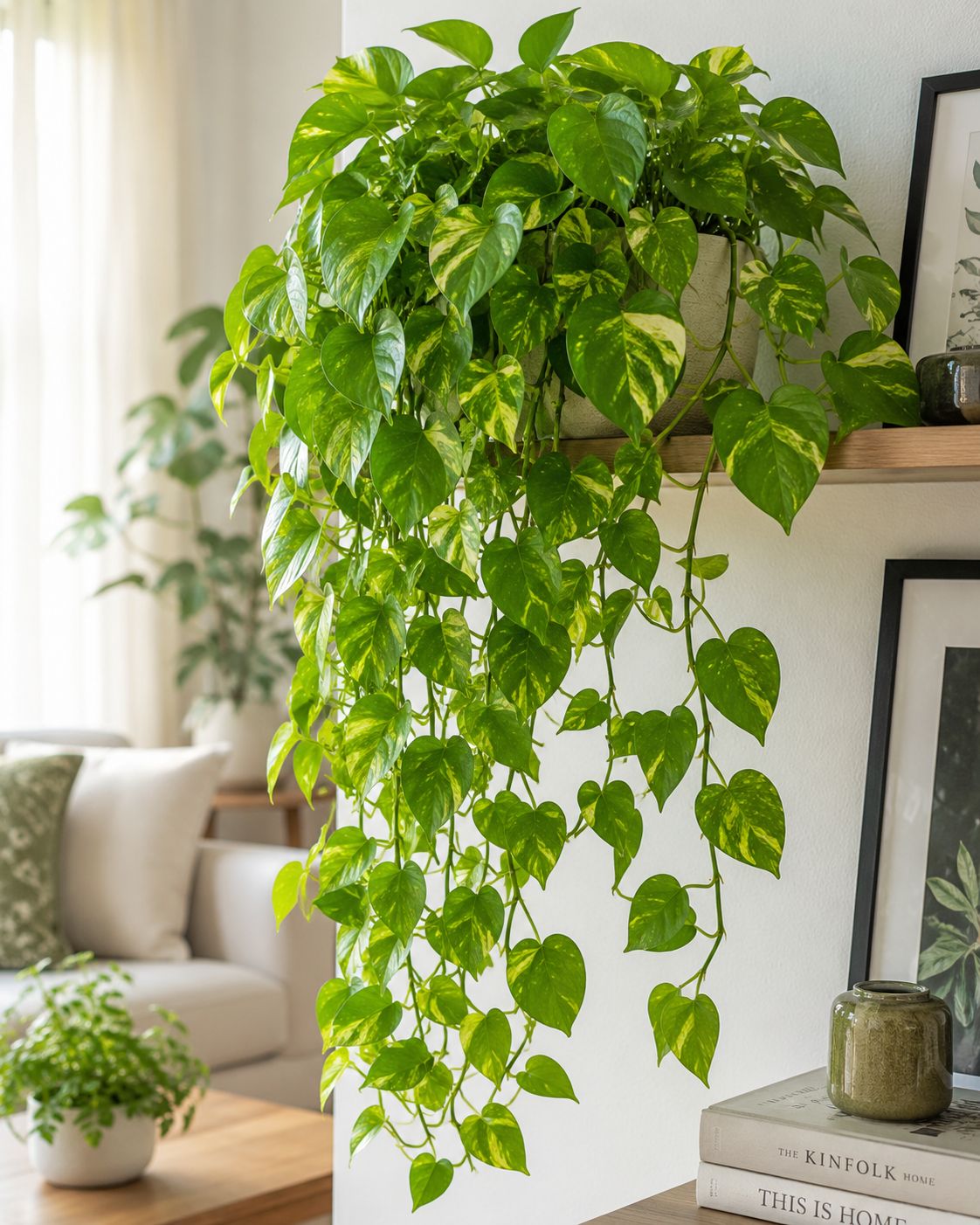
Money plant earns its spot through sheer resilience. It trails happily off a shelf, climbs a moss pole, or sits in a simple jar of water, and forgives almost every beginner mistake.
Air-purifying role: Pulls formaldehyde, benzene, and xylene from the air — pollutants commonly released by synthetic carpets, new furniture, and printer or photocopier toner in home offices.
Care:
- Light: Low to bright indirect light — very adaptable
- Water: Weekly, allowing the top layer of soil to dry between waterings
- Soil: Any standard well-draining potting mix
- Pet note: Toxic if ingested — keep out of reach of pets and small children
💡 In Pakistani households, money plant is grown almost as often in a simple glass or plastic bottle of water as in soil — and it purifies air just as effectively either way, as long as the water is changed regularly.
→ Complete Money Plant Care Guide
Plant 03 — Peace Lily
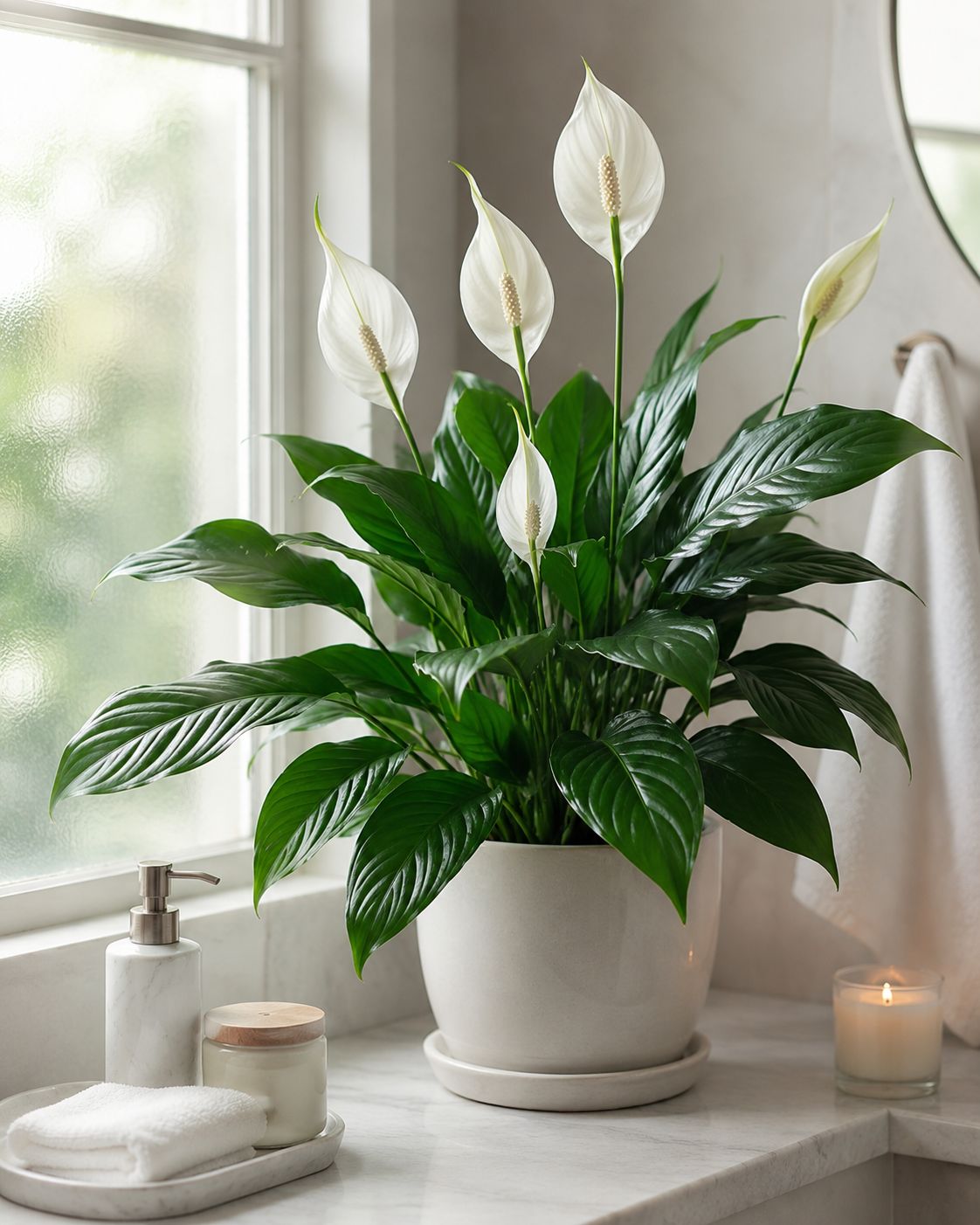
Peace lily is one of the very few plants in this bundle that actually flowers indoors, and it does something useful with those looks: it tells you exactly when it needs water by drooping slightly, then perking back up within hours of a drink.
Air-purifying role: In NASA's original study, peace lily removed all five of the tested pollutants — formaldehyde, benzene, trichloroethylene, xylene, and ammonia — making it one of the single most effective plants on the list. It also handles indoor mould spores unusually well, which is why it is a strong pick for bathrooms and humid kitchens.
Care:
- Light: Low to medium indirect light — avoid direct sun, which scorches leaves
- Water: Weekly, or whenever leaves begin to droop slightly
- Soil: Rich, moisture-retentive potting mix
- Pet note: Toxic if ingested — keep away from pets and children
→ Complete Peace Lilly Care Guide
Plant 04 — Areca Palm
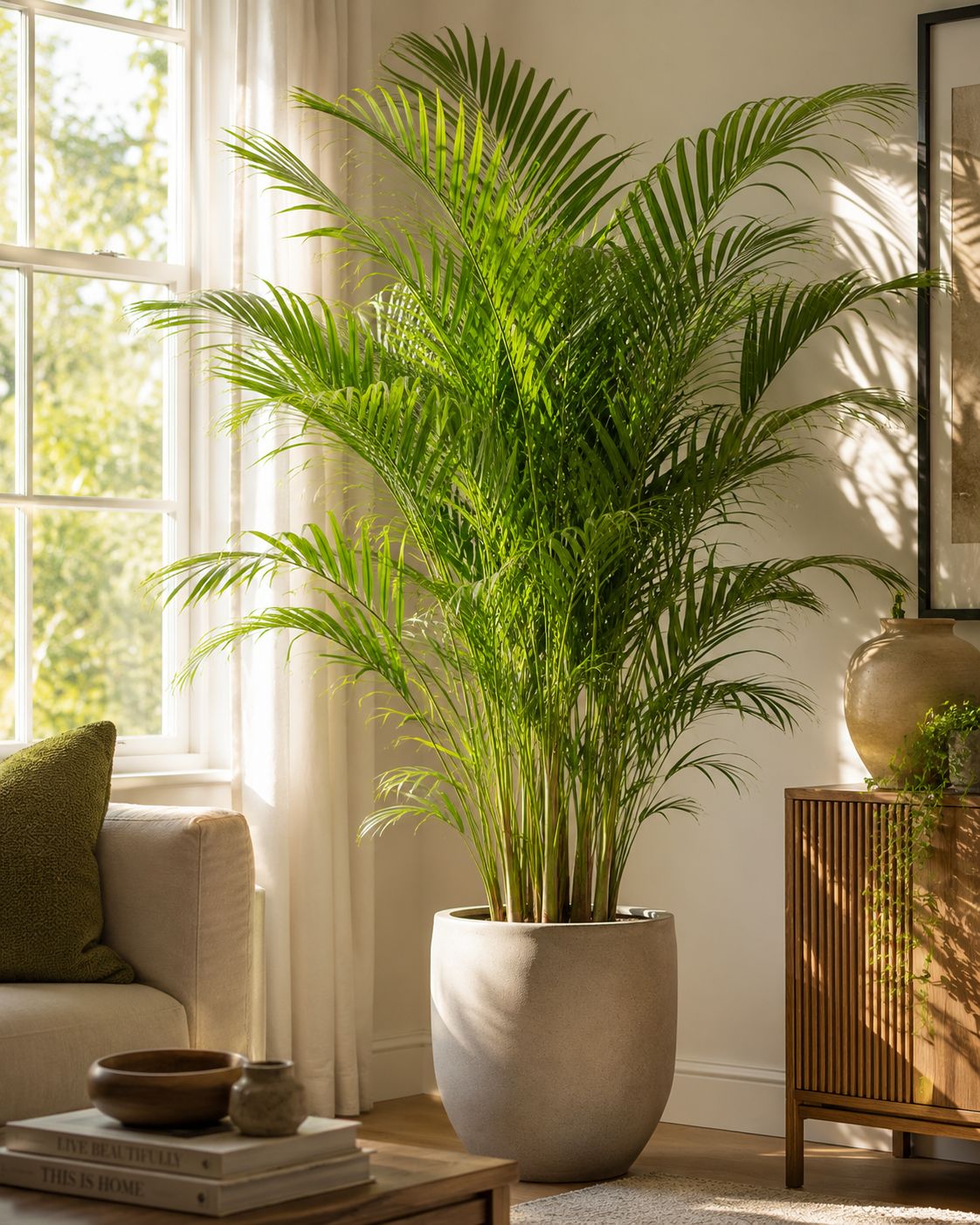
Areca palm is the largest, most visually striking plant in the bundle — a full, feathery presence that does double duty as both décor and a working air filter for a bigger room.
Air-purifying role: One of the most efficient plants for adding humidity to dry, air-conditioned rooms, and a strong general remover of formaldehyde and xylene. Its larger leaf surface area means more total filtration capacity per plant than most smaller houseplants.
Care:
- Light: Bright indirect light — avoid harsh direct afternoon sun
- Water: Twice weekly in summer, weekly in winter — keep soil consistently moist, not soggy
- Soil: Well-draining, slightly sandy potting mix
- Pet note: Completely non-toxic — one of the safest large plants for homes with pets and children
→ Complete Areca Palm Care Guide
Plant 05 — Spider Plant
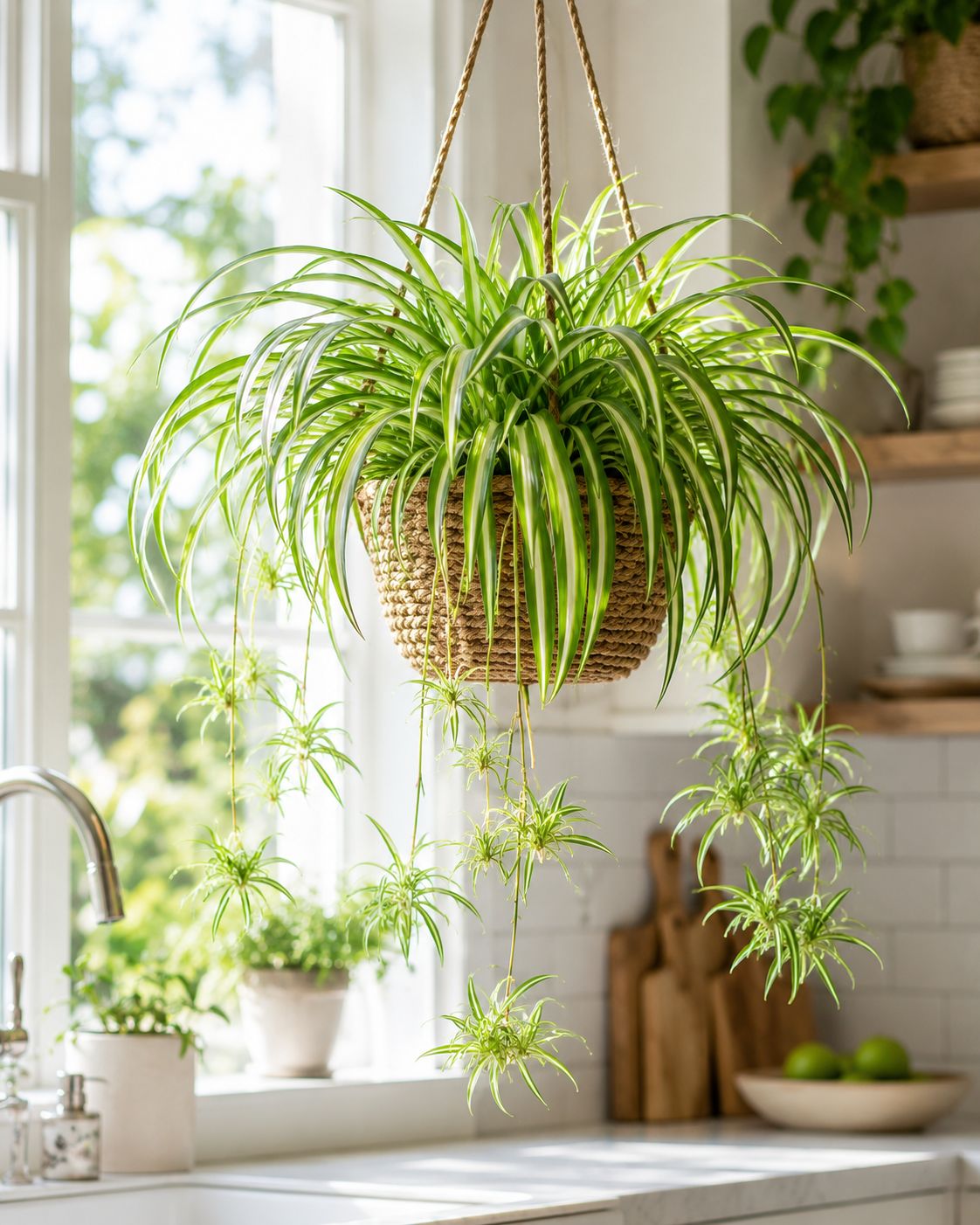
Spider plant is the fastest-growing, most forgiving plant in the bundle, and it comes with a built-in bonus: it constantly sends out small baby plantlets on long runners, which you can snip and root into new pots for free.
Air-purifying role: Strong remover of formaldehyde and xylene, and one of the most efficient plants tested for carbon monoxide — a useful quality for kitchens near a gas stove.
Care:
- Light: Bright indirect light, tolerates partial shade
- Water: Weekly, keep soil lightly moist but not waterlogged
- Soil: Standard well-draining potting mix
- Pet note: Completely non-toxic — safe for homes with pets and children
→ Complete Spider Plant Care Guide
Which Plant Goes Where
| Room | Recommended Plant | Why |
|---|---|---|
| 🛏️ Bedroom | Snake Plant, Peace Lily | Night-time oxygen release, calming low light tolerance |
| 🛋️ Living Room | Areca Palm, Money Plant | Larger presence, higher air volume to filter |
| 🍳 Kitchen | Spider Plant | Handles carbon monoxide near gas stoves, tolerates temperature swings |
| 🚿 Bathroom | Peace Lily | Thrives in humidity, resists mould well |
| 🖥️ Home Office | Money Plant | Filters toner and off-gassing from electronics and furniture |
Pet and Child Safety at a Glance
| Plant | Pet/Child Safe? | Note |
|---|---|---|
| Snake Plant | ⚠️ No | Mildly toxic if chewed |
| Money Plant | ⚠️ No | Toxic if ingested |
| Peace Lily | ⚠️ No | Toxic if ingested |
| Areca Palm | ✅ Yes | Completely non-toxic |
| Spider Plant | ✅ Yes | Completely non-toxic |
🐾 For homes with curious pets or toddlers, place the Areca Palm and Spider Plant within reach, and keep the Snake Plant, Money Plant, and Peace Lily on higher shelves or in rooms pets don't frequent.
What This Bundle Realistically Does — and Doesn't Do
- Adds real, measurable humidity to dry, air-conditioned rooms
- Actively absorbs a portion of common VOCs like formaldehyde, benzene, and xylene from paint, furniture, and cleaning products
- Improves the general "feel" of air in a closed room — fresher, less stale, less flat
- Adds oxygen to your space, with Snake Plant and Peace Lily continuing this overnight
- ❌ Does not replace a HEPA air purifier or proper ventilation for serious pollution or allergy concerns
- ❌ Will not noticeably change air quality with just one plant in a large open room — the effect scales with plant density and room size
Think of this bundle as one meaningful layer in a healthier indoor space, not a stand-alone fix — the same way one good decision doesn't replace a whole healthy routine, but it moves things in the right direction.
Common Mistakes to Avoid
| Mistake | What Happens | The Fix |
|---|---|---|
| Overwatering snake plant or peace lily | Root rot, yellowing leaves | Let soil dry between waterings for snake plant; water peace lily only when it droops |
| Placing areca palm in direct harsh sun | Scorched, browning fronds | Bright indirect light only |
| Expecting one plant to purify a whole room | Disappointment, plant gets blamed | Group 3–5 plants per room for a noticeable effect |
| Ignoring pet toxicity | Illness in curious pets or children | Check the safety table before placing each plant |
| Using heavy, waterlogged soil | Root rot across all five plants | Use well-draining potting mix for every plant in this bundle |
| Keeping money plant water un-changed for weeks | Root rot, algae, smell | Change water weekly if growing in a jar or vase |
Bundle vs Buying Individually vs an Air Purifier
| This Bundle (5 Plants) | Buying One Plant | Electric Air Purifier | |
|---|---|---|---|
| Pollutant coverage | Broad — formaldehyde, benzene, xylene, ammonia, CO | Narrow — depends on single plant | Broad — HEPA + carbon filter |
| Adds humidity & oxygen | Yes | Minimal | No |
| Ongoing cost | Water & light only | Water & light only | Electricity + filter replacement |
| Décor value | High | Limited | None |
| Best for | General home wellness, décor + function | A single room accent | Allergies, smoke, serious pollution |
| Realistic expectation | Modest, cumulative improvement | Very limited on its own | Fast, measurable improvement |
The honest answer is that these two solutions work best together, not as competitors — plants for the everyday layer of freshness, humidity, and oxygen, and a purifier for anything more serious like allergies, smoke, or heavy pollution days.
Caring for the Whole Bundle Together
Keep the routine simple and the five plants will genuinely take care of themselves:
- Check soil weekly — water only what feels dry an inch below the surface, not on a fixed schedule
- Rotate pots every couple of weeks so all sides get even light and grow evenly
- Wipe leaves occasionally with a damp cloth — dusty leaves absorb less light and filter less air
- Feed lightly with a diluted balanced fertiliser once a month during spring and summer growth months
- Repot once roots start showing through drainage holes, usually once a year for the faster growers like money plant and spider plant
Part of the General Series by Seedora Store — plants that do more than sit in a corner.