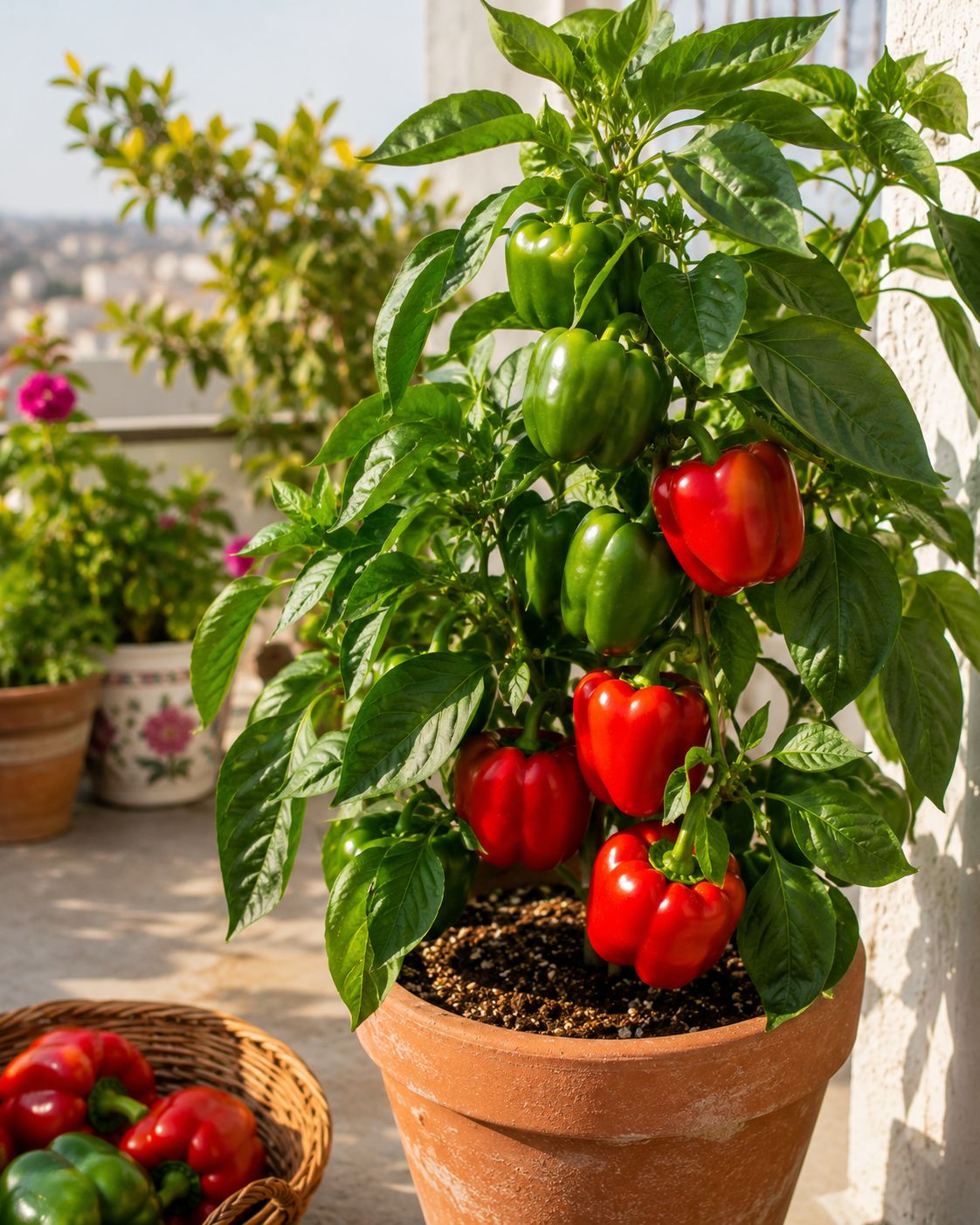
Walk through any sabzi mandi in Pakistan and shimla mirch is everywhere — bright green, thick-walled, piled in glossy heaps next to the tomatoes and onions. It goes into qorma, biryani, desi pasta, stir-fries, omelettes, and kebab stuffing. It is one of the most used vegetables in the Pakistani kitchen.
It is also one of the most satisfying things you will ever grow at home.
A single shimla mirch plant in a medium pot on your balcony or rooftop will produce 10 to 20 capsicums per season — more than most households can use fast enough. It takes about 60 to 80 days from seedling to first harvest. It asks for sun, consistent water, and very little else.
And when you grow it yourself, you can let a few fruits ripen from green to red — which is when shimla mirch becomes genuinely sweet, nutritionally dense, and completely different from what you buy at the market.
Here is exactly how to do it.
What Is Shimla Mirch Called Around the World?
| Region | Local Name |
|---|---|
| 🇵🇰 Pakistan / Urdu | شملہ مرچ (Shimla Mirch) |
| 🇮🇳 Hindi | शिमला मिर्च (Shimla Mirch) |
| 🇸🇦 Arabic | فلفل حلو (Filfil Hulw) |
| 🇮🇷 Persian / Farsi | فلفل دلمه (Felfel Dolmeh) |
| 🇫🇷 French | Poivron |
| 🇬🇧 British English | Capsicum / Sweet Pepper |
| 🇺🇸 American English | Bell Pepper |
| 🌐 Scientific | Capsicum annuum |
🌿 Shimla mirch is named after Shimla, the hill station in British India — capsicums were introduced to the subcontinent by colonial-era trade and became so associated with cooler mountain growing conditions that the name stuck. Today it is a daily vegetable in Pakistani households across every province and cuisine.
Which Colour Should You Grow?
Here is something most people do not know. Green, yellow, orange, and red shimla mirch are all the same plant — just picked at different stages of ripeness.
| Stage | Colour | Flavour | Nutrition | Time |
|---|---|---|---|---|
| Unripe | Green | Slightly bitter, firm, grassy | Good | 60–70 days |
| Half ripe | Yellow / Orange | Sweeter, milder, fruity | Better | 75–85 days |
| Fully ripe | Red | Very sweet, rich, almost fruity | Best — 3× more Vitamin C than green | 85–95 days |
💡 Grow green and be patient for red. Plant one variety and harvest some green for cooking while leaving others to ripen to red on the plant. Red shimla mirch from your own garden tastes nothing like what you buy at the market — it is genuinely sweet and rich in a way that store-bought rarely achieves.
Why Shimla Mirch Belongs in Every Pakistani Home Garden
🍳 Used in Almost Every Pakistani Dish — Qorma, biryani, karahi, desi pasta, omelettes, stuffed capsicum, stir-fry, kebabs. Shimla mirch appears across cuisines, cooking styles, and meal times in Pakistan more than almost any other vegetable.
🫑 10–20 Fruits Per Plant, Per Season — A single well-cared-for plant in a medium pot produces generously. That is enough for a household of four to cook with shimla mirch multiple times a week without buying any.
💊 Exceptional Nutrition — Shimla mirch is one of the richest sources of Vitamin C of any vegetable — red capsicum has nearly three times the Vitamin C of an orange. It also contains Vitamins A, B6, K1, potassium, and powerful antioxidants including lutein and zeaxanthin that protect eye health.
❄️ Natural Cooling Properties — Unlike its spicy cousins, shimla mirch contains no capsaicin. It is a cooling, anti-inflammatory vegetable — important in the Pakistani diet during summer months where heat and inflammation are real concerns.
💚 Green to Red for Free — Buying red or yellow capsicum at Pakistani markets costs significantly more than green. Growing your own and simply leaving fruits on the plant longer to ripen is the easiest cost saving in home vegetable gardening.
🌱 Grows Perfectly on Pakistani Balconies — Shimla mirch is a container-friendly plant. It does not sprawl or take over. One plant, one pot, one sunny balcony spot. It fits the reality of how most urban Pakistani households live.
Step 01 — Start from Seed or Seedling
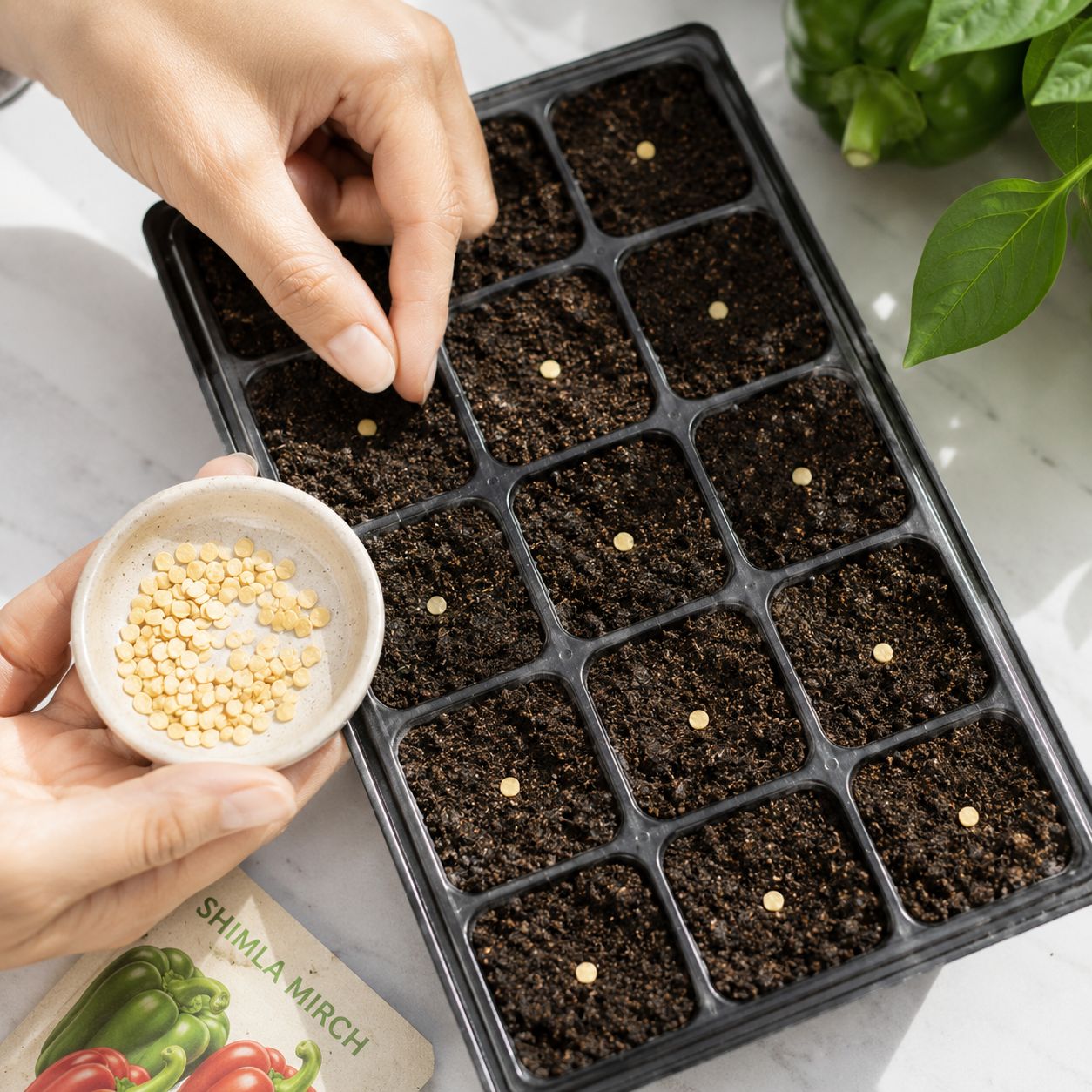
You have two paths into shimla mirch. Both work. Choose based on how much time and patience you have.
Option A — From Seed (Slower, More Satisfying)
Seeds are available from Seedora and most nurseries across Pakistan. Shimla mirch seeds need warm conditions to germinate — ideally 20–30°C — which makes March through April and September through October the best sowing windows.
Fill a small seedling tray or cup with seed mix or fine potting soil. Sow seeds 0.5–1 cm deep, two seeds per cell. Water gently. Cover loosely with plastic wrap or a plastic bag to hold humidity. Place somewhere warm — a kitchen counter or a sunny spot. Seeds germinate in 10–14 days. Once seedlings reach 5–7 cm with two real leaves, they are ready to transplant.
Option B — From Seedling (Faster, Easier)
Buy an established shimla mirch seedling from any nursery — in Karachi, Lahore, Islamabad, or most major cities you can find them readily. Transplant directly into your final pot. You skip 4–6 weeks and go straight to watching the plant grow. This is the best option for beginners.
🌱 Seed saving tip: Slice open any fresh shimla mirch from the sabzi mandi, extract the seeds from the white inner core, rinse, dry completely for 3–4 days on a paper towel, and sow. Pakistani-local market seeds often germinate extremely well — they are already acclimated to local conditions.
Step 02 — Choose the Right Pot and Soil
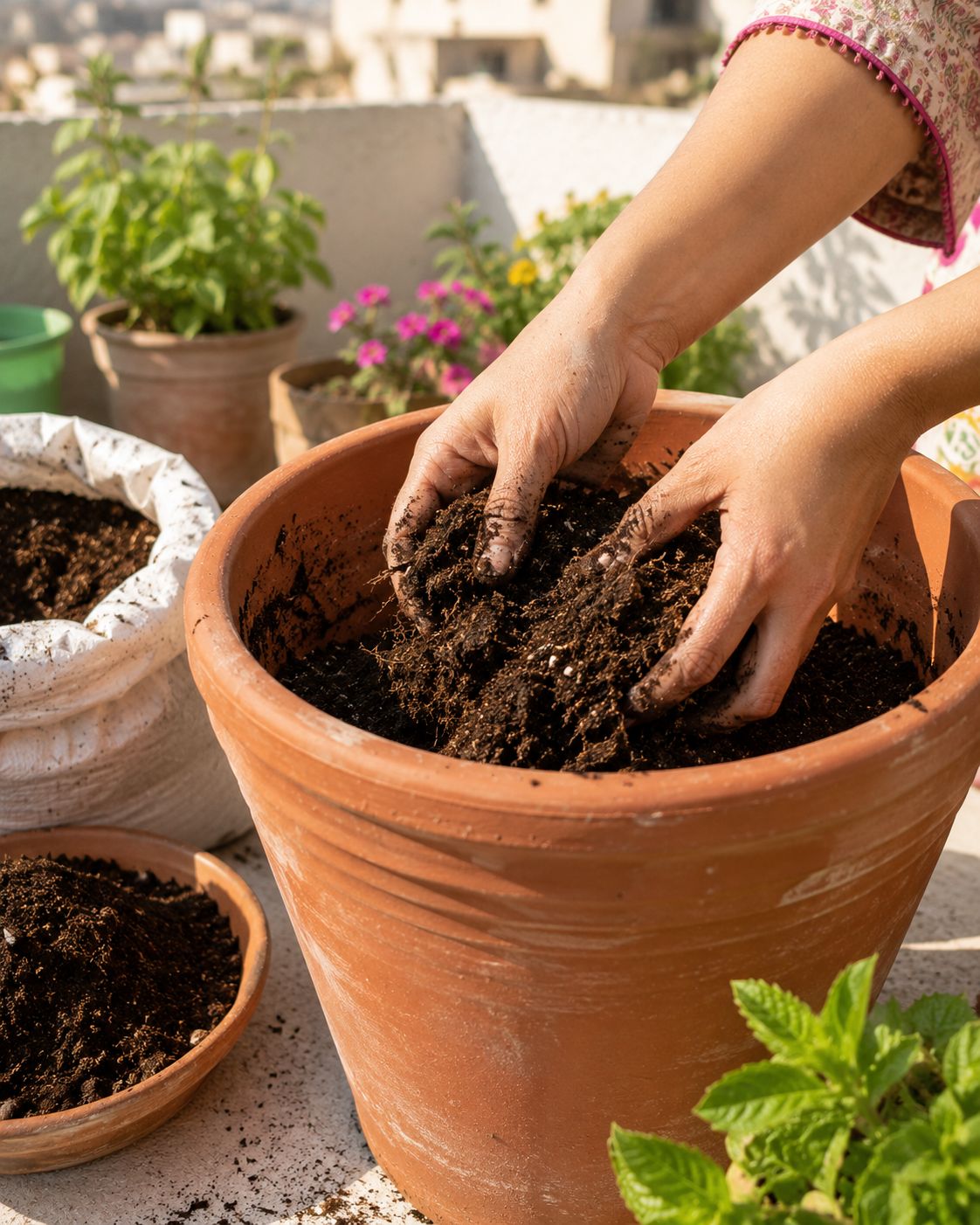
Shimla mirch has a deep root system. This is not like mint or basil — it needs real depth to anchor the plant and support the weight of its fruit.
Use a pot that is at minimum 30–35 cm deep and 30 cm wide — roughly a 10 to 12 litre pot. Bigger is always better with shimla mirch. The more root space it has, the more fruit it produces. One plant per pot — do not crowd them.
Terracotta pots are ideal in Pakistan's climate — they breathe, prevent waterlogging, and handle our temperature swings well. Plastic pots work fine but can overheat roots in peak summer. If using plastic, place in a shaded or partially shaded spot during the hottest months.
Soil matters more with shimla mirch than with herbs. Mix:
- 50% good potting mix or garden soil
- 30% compost or decomposed manure (gobar khaad)
- 20% coarse sand or perlite for drainage
Shimla mirch will grow in plain garden soil but it will be slower and produce less. Give it rich, well-draining soil and it becomes a different plant entirely.
Ensure the pot has drainage holes at the bottom. Waterlogged roots are the fastest way to kill a shimla mirch plant.
| Care | Requirement |
|---|---|
| ☀️ Sunlight | 6–8 hours full sun — non-negotiable |
| 💧 Watering | Every 2–3 days — keep moist, never waterlogged |
| 🌡️ Temperature | 20–30°C ideal — protect from frost |
| 🪴 Pot | 30–35 cm deep minimum — one plant per pot |
| 🌱 Soil | Rich, well-draining — compost essential |
| 📅 Best time to plant (Pakistan) | Feb–April / Sept–Oct |
Step 03 — Position, Water, and Feed
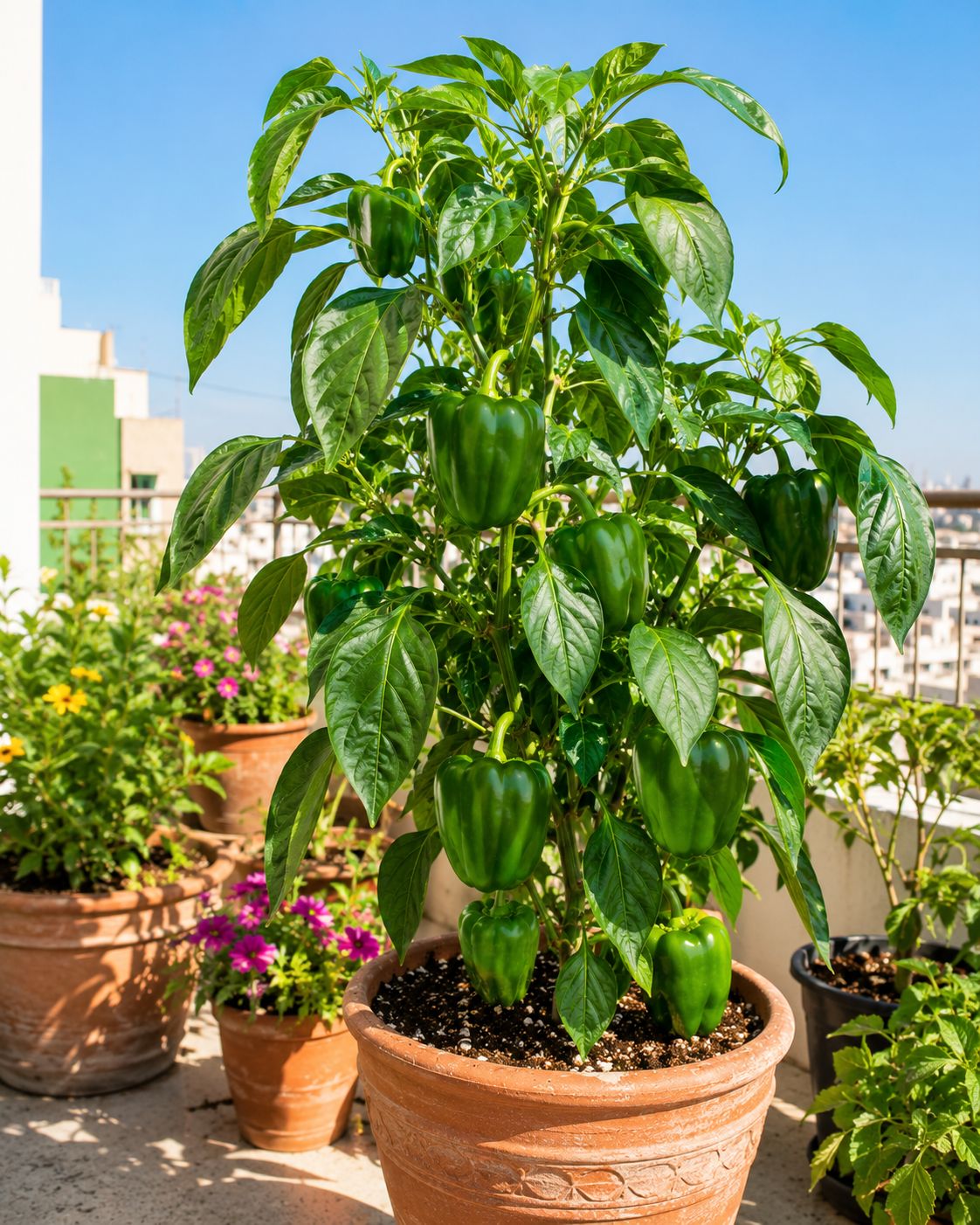
Shimla mirch is a sun-hungry plant. Unlike herbs that tolerate partial shade, shimla mirch needs 6 to 8 hours of direct sunlight daily. Put it in the sunniest spot on your balcony, rooftop, or windowsill. If it does not get enough sun, it will grow leaves but produce very little fruit — or none at all.
Watering is consistent but not excessive. Check the soil every day — when the top 2–3 cm feels dry, water thoroughly until it drains from the bottom. In Pakistani summers this likely means watering every day or every other day. In winter, every 3–4 days. Never let the pot sit in a tray of standing water.
Feeding separates a good shimla mirch plant from a great one. Start feeding four weeks after transplanting.
- During leaf and stem growth: Feed every 2 weeks with a balanced fertiliser or diluted compost tea. Any general vegetable fertiliser works.
- When flowers appear: Switch to a low-nitrogen, high-potassium fertiliser — this directs the plant's energy into fruit rather than more leaves.
- Organic option: Banana peel water (soak dried banana peels overnight, dilute and apply) gives an excellent potassium boost during fruiting — free, effective, and locally available in every Pakistani kitchen.
🌿 Yellowing lower leaves early in the season usually mean the plant needs nitrogen. Blossom drop (flowers fall before becoming fruit) usually means temperature stress, inconsistent watering, or lack of potassium. Both are easy to fix once you know what you are looking at.
Step 04 — Flowers, Fruit, and Harvest
Shimla mirch flowers appear 4 to 6 weeks after transplanting — small white star-shaped flowers that will each become a capsicum. The moment you see flowers is the moment to switch your feeding to high-potassium and make sure water is absolutely consistent.
Pollination — In outdoor pots on balconies, wind and insects handle this naturally. If your plant is indoors with very little airflow, lightly shake the flowering stems every few days or use a soft paintbrush to transfer pollen between flowers. This dramatically increases fruit set.
Fruit development takes 8 to 12 weeks from flower to full-sized green capsicum — and longer if you want red. Be patient. The plant will hold multiple fruits at different stages simultaneously once it gets going.
How to harvest:
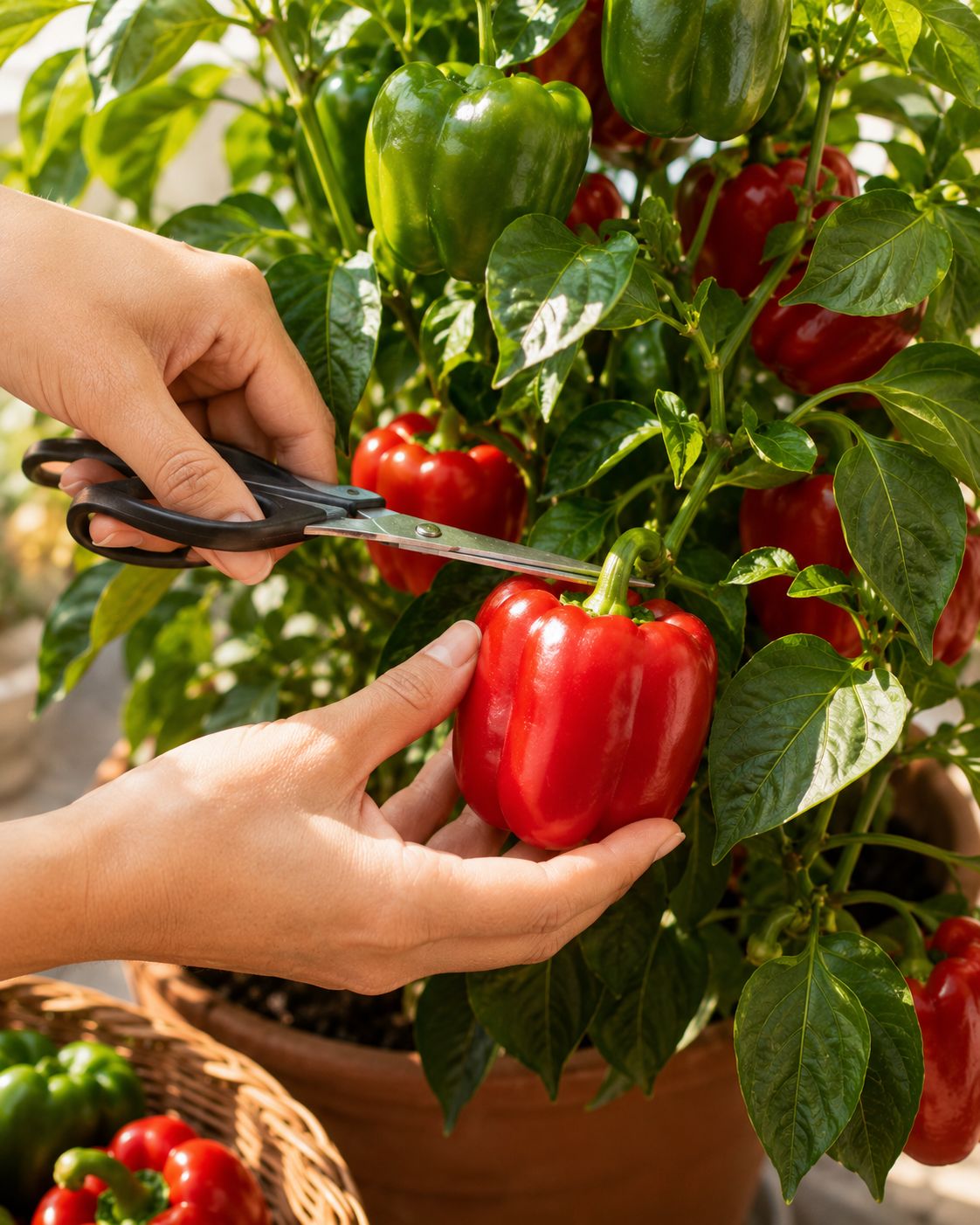
Use sharp scissors or a knife — never pull or twist fruits off, which damages stems and can destabilise the entire plant. Cut the fruit with a short length of stem attached. Harvesting regularly encourages the plant to produce more fruit continuously.
Harvest green for cooking use or leave on the plant for yellow, orange, and red. Once a capsicum starts colouring, it takes 2 to 4 additional weeks to reach full red. Watch for the colour to deepen uniformly before cutting.
How to use fresh shimla mirch every day:
- 🍳 Chopped into morning omelettes with onion and green chili
- 🍚 Sliced into biryani or karahi in the last 5 minutes of cooking
- 🫑 Stuffed whole with spiced keema or rice and baked
- 🥗 Raw in salads with cucumber, tomato, and chaat masala
- 🧆 Grilled on tawa with seekh kebabs as accompaniment
- 🍝 Diced into desi pasta or macaroni with white sauce
✂️ The golden rule: Harvest fruits as they mature rather than leaving them all to ripen simultaneously. A plant that keeps getting harvested keeps producing. A plant left to fully ripen all its fruit at once may slow down significantly afterward.
How to Store Shimla Mirch After Harvesting
Fresh shimla mirch from the garden stores differently from market-bought because it has not been coated in wax or cold-chain handled.
Method 1 — Refrigerator (Best)
Whole, unwashed capsicums in the vegetable drawer last 2 to 3 weeks. Do not wash until you are ready to use — moisture accelerates softening.
Method 2 — Room Temperature
On a cool kitchen counter away from direct sunlight, shimla mirch stays fresh for 5 to 7 days. In Pakistani summers, the fridge is better.
Method 3 — Freeze for Cooking
Slice, remove seeds, spread on a tray and freeze for 2 hours, then bag. Frozen shimla mirch goes directly into cooked dishes — karahi, pasta, stir-fry — from frozen. Lasts 4 to 6 months. Texture softens but flavour is fully preserved.
Common Mistakes to Avoid
| Mistake | What Happens | The Fix |
|---|---|---|
| Not enough sun | Lots of leaves, very little fruit | 6–8 hours minimum — move if needed |
| Pot too shallow | Stunted growth, early stress | 30 cm depth minimum |
| Overwatering | Root rot, wilting despite wet soil | Water only when top soil is dry |
| No fertiliser during fruiting | Flowers drop, few capsicums | Switch to high-potassium feed at flowering |
| Pulling fruit off | Stem damage, plant destabilised | Always cut with scissors |
| Wrong season (peak summer) | Heat stress, blossom drop | Plant Feb–April or Sept–Oct |
| One large plant per small pot | Root competition, low yield | One plant per 10–12 litre pot |
Shimla Mirch vs Other Easy Home Vegetables
| Shimla Mirch | Tomato | Coriander | Mint | Chili | |
|---|---|---|---|---|---|
| Time to first harvest | 60–80 days | 60–80 days | 3–4 weeks | 3–4 weeks | 70–90 days |
| Fruit per plant | 10–20 | 20–40 | — | Infinite | 50+ |
| Pot size needed | Medium-large | Large | Small | Small | Medium |
| Pakistan kitchen use | ✅ Daily | ✅ Daily | ✅ Daily | ✅ Daily | ✅ Daily |
| Grows on balcony | ✅ Yes | ✅ Yes | ✅ Yes | ✅ Yes | ✅ Yes |
| Needs staking | Sometimes | ✅ Yes | ❌ | ❌ | Sometimes |
| Difficulty | ⭐⭐ Easy-Medium | ⭐⭐ Easy-Medium | ⭐ Easiest | ⭐ Easiest | ⭐⭐ Easy-Medium |
Shimla mirch is the right next step after you have mastered herbs. It is the first real vegetable — one that produces serious, substantial fruit from a single pot — and it gives you a taste of what a kitchen garden can actually deliver.
Part of the Instantly Grow Series by Seedora Store — grow the vegetables your kitchen actually uses, every single day.