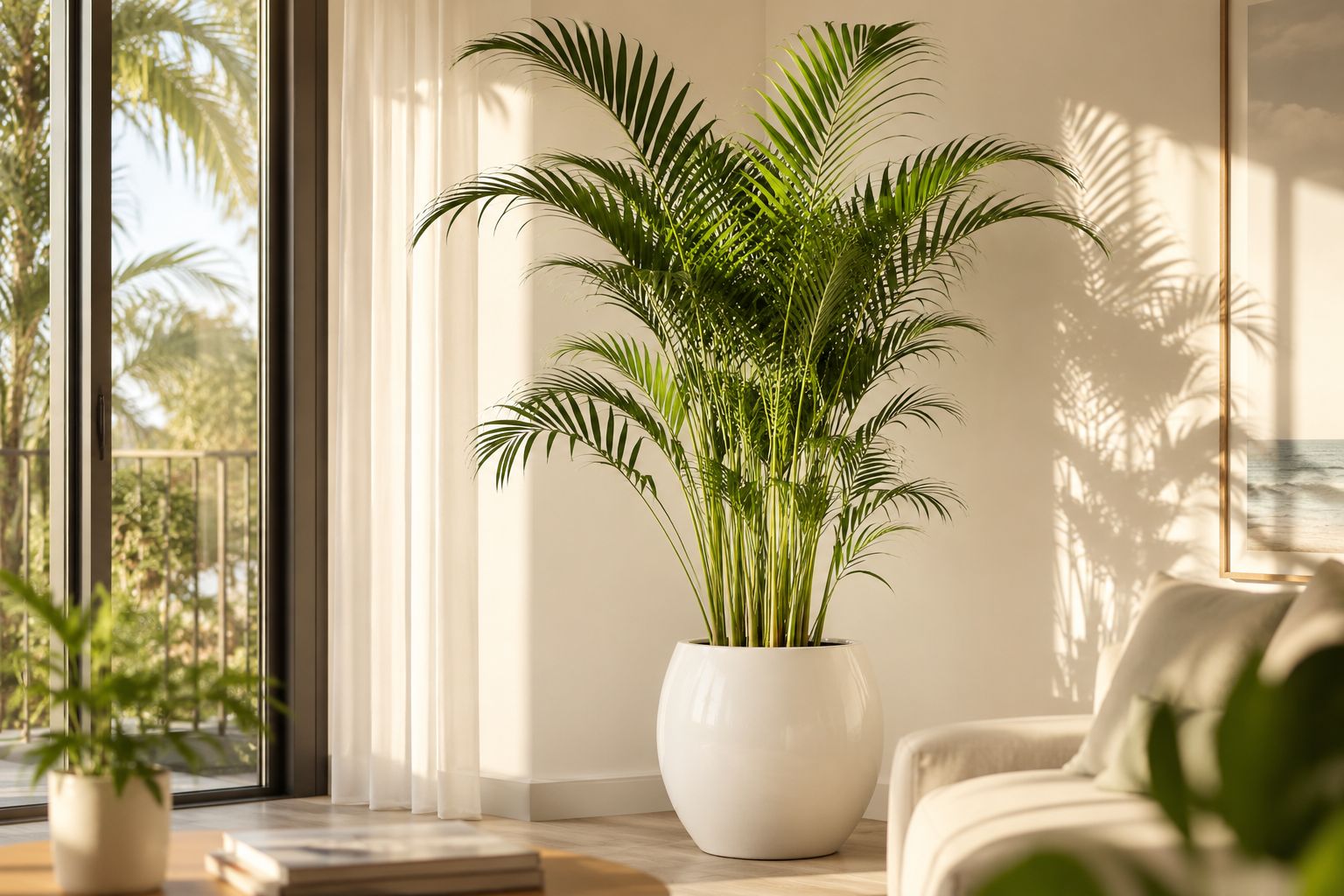
Walk into a hotel lobby, a well-decorated apartment, a spa, or an airport lounge almost anywhere in the world — and somewhere in that space there is almost certainly an areca palm. Tall, arching, feathery fronds spreading outward in every direction. Multiple golden-green stems rising from the base like a small grove of tropical canes. A density and lushness that makes the whole space feel like it is somewhere warmer and more tropical than it actually is.
The areca palm (Dypsis lutescens) is one of the most sold and most recognised houseplants in the world. And for good reason — there is almost no other indoor plant that delivers the same scale of visual impact, the same genuine tropical atmosphere, while remaining manageable for a home grower.
But here is something most people who buy one do not know: the areca palm is also one of the best natural humidifiers you can keep indoors. A large, well-watered areca palm releases significant amounts of moisture into the surrounding air through transpiration — enough to meaningfully raise the humidity level in the room it occupies. In dry winter air or air-conditioned summer spaces, this is not just a visual benefit. It is a functional one.
The care is not complicated. But there are a few things — particularly around brown tips and watering — that catch almost every beginner out. This guide covers all of it.
What Is Areca Palm Called Around the World?
| Region | Local Name |
|---|---|
| 🇬🇧 English | Areca Palm / Butterfly Palm / Golden Cane Palm |
| 🇩🇪 German | Goldfruchtpalme / Zimmerpalme |
| 🇫🇷 French | Palmier dorée / Palmier papillon |
| 🇮🇹 Italian | Palma Areca / Palma dorata |
| 🇪🇸 Spanish | Palma areca / Palma mariposa |
| 🇵🇹 Portuguese | Palmeira areca / Palmeira dourada |
| 🇧🇷 Brazil | Palmeira-bambu / Areca |
| 🇯🇵 Japanese | アレカヤシ (Areka yashi) |
| 🇨🇳 Chinese | 散尾葵 (Sǎn wěi kuí) |
| 🇰🇷 Korean | 아레카야자 (Areka yaja) |
| 🇳🇱 Dutch | Areca palm / Goudvruchtpalm |
| 🇵🇱 Polish | Palma Areka |
| 🌐 Scientific | Dypsis lutescens (formerly Chrysalidocarpus lutescens) |
🌿 Areca palm is native to Madagascar — the large island off the southeastern coast of Africa — where it grows in humid tropical forests at low elevations. Despite being enormously popular in cultivation worldwide, the wild areca palm is actually listed as endangered on the IUCN Red List due to habitat loss and deforestation in its native range. The plant you buy in a nursery or garden centre is almost certainly nursery-propagated rather than wild-sourced — but the wild population's precarious status is worth knowing. The name Dypsis lutescens refers to the plant's golden-yellow colouring — lutescens from the Latin for yellowish — visible in the stems and sometimes the frond bases in good light.
Understanding the Areca Palm Before You Buy
Areca palm is sold at many sizes. Understanding what you are actually buying changes how you set it up and what you expect from it.
| Size at Purchase | Expected Mature Size | Growing Speed | Best Placement |
|---|---|---|---|
| Small — 30–60 cm | Up to 180–240 cm (6–8 ft) indoors | Moderate | Tabletop, shelf — will outgrow this in 2–3 years |
| Medium — 60–120 cm | Up to 180–240 cm | Moderate | Floor beside furniture — will continue growing |
| Large — 120 cm+ | Already approaching mature indoor size | Slower at this stage | Statement floor plant — corner, hallway, living room |
One important expectation to set: Areca palm grows steadily but not explosively. It is not a plant that dramatically changes size from month to month. It adds new fronds gradually over years. A large, impressive areca palm typically represents years of growth — which is part of why large specimens command higher prices at nurseries.
The Pet-Safe Advantage
Before the care guide — one fact that matters for many households.
Areca palm is confirmed non-toxic to cats and dogs by the ASPCA. In a world where most dramatic tropical statement plants — Monstera, philodendron, pothos, snake plant — are at least mildly toxic to pets, the areca palm's clean safety record makes it one of a small number of genuinely striking large indoor plants that pet owners can place anywhere without concern.
It is also considered non-toxic to humans, making it appropriate for homes with curious toddlers.
Step 01 — Finding the Right Light
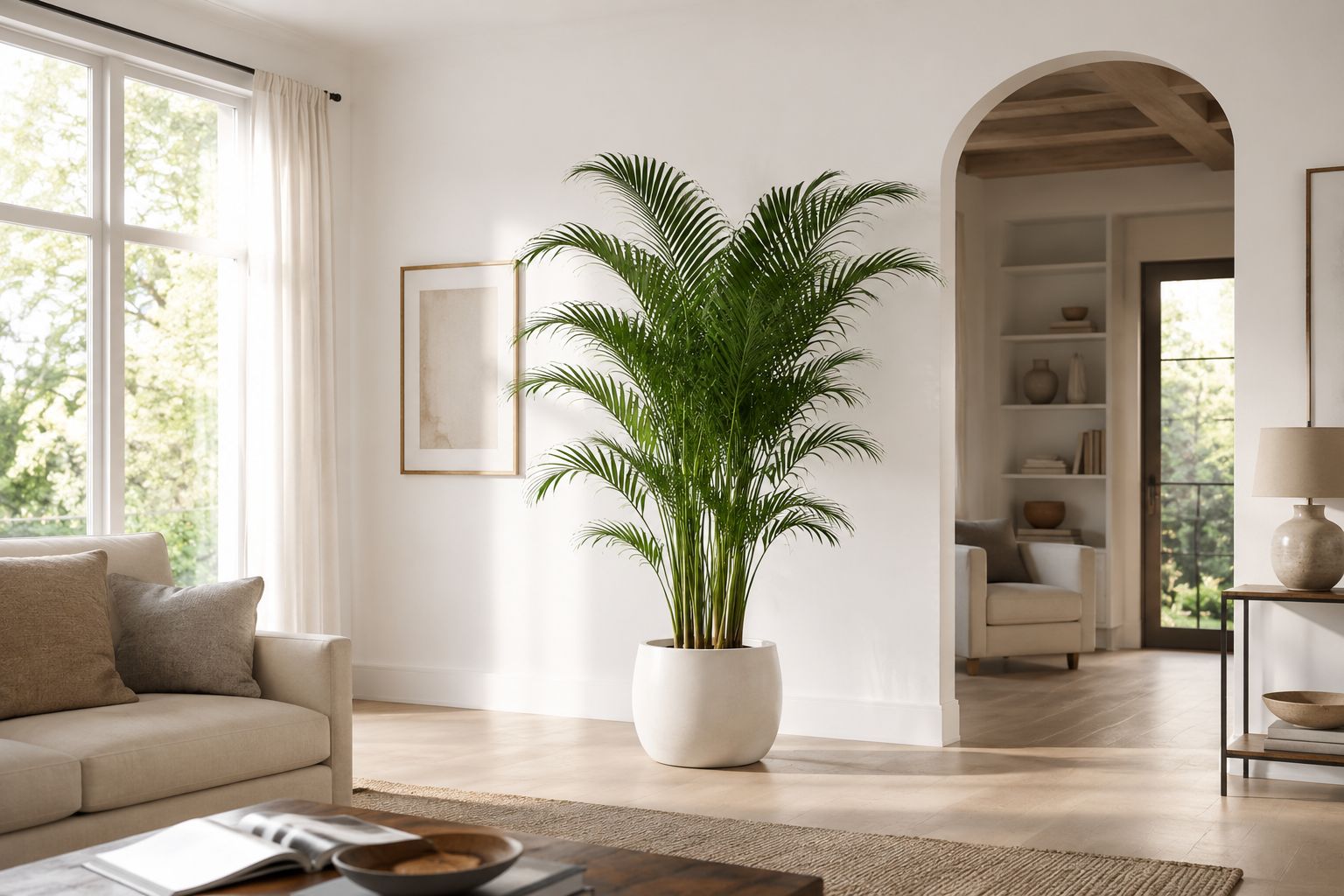
Light is the single most important factor in successful areca palm care indoors. Get this right and everything else becomes significantly easier. Get it wrong and the plant will slowly decline regardless of how well you water and feed it.
Areca palm wants bright indirect light — the kind of light found a few feet back from a well-lit window, or directly at an east or north-east facing window where morning light is gentle and no direct sun hits the leaves. This mimics the filtered light of a tropical forest canopy, which is where areca naturally grows.
What it cannot handle is prolonged direct sunlight — particularly harsh afternoon sun. Direct sun causes bleaching and scorching on the fronds. The delicate leaflets turn yellow, then brown and crispy along the edges, in a way that is permanent and cannot be reversed once it has happened. A sheer curtain between the plant and a south or west-facing window filters the intensity adequately.
What it also struggles with is genuinely low light — dim corridors, north-facing rooms with minimal window area, or positions several metres from any window. In very low light, areca grows extremely slowly, produces fewer new fronds, and gradually loses its lush density. It will survive in moderate low light for a time, but it will not thrive.
The practical placement guide:
East-facing windows are ideal — soft morning light with no harsh afternoon exposure. A few feet back from a large south or west-facing window, with a sheer curtain, works well in most homes. If your home is genuinely dim, areca is not the right plant — consider snake plant or ZZ plant, which genuinely tolerate low light.
Rotate regularly: Areca palm grows toward its light source and can become noticeably asymmetric without rotation. Turn the pot a quarter turn every two to three weeks to encourage even, balanced frond development on all sides.
Step 02 — Watering: Consistent Moisture Without Sogginess
Improper watering is the most common reason areca palms decline indoors. Both overwatering and underwatering cause problems — but overwatering is more dangerous because it leads to root rot that can kill the plant quickly.
The balance to maintain: evenly moist but never soggy. Think of the soil moisture level as consistent and stable — not wet, not dry, but somewhere comfortably between the two.
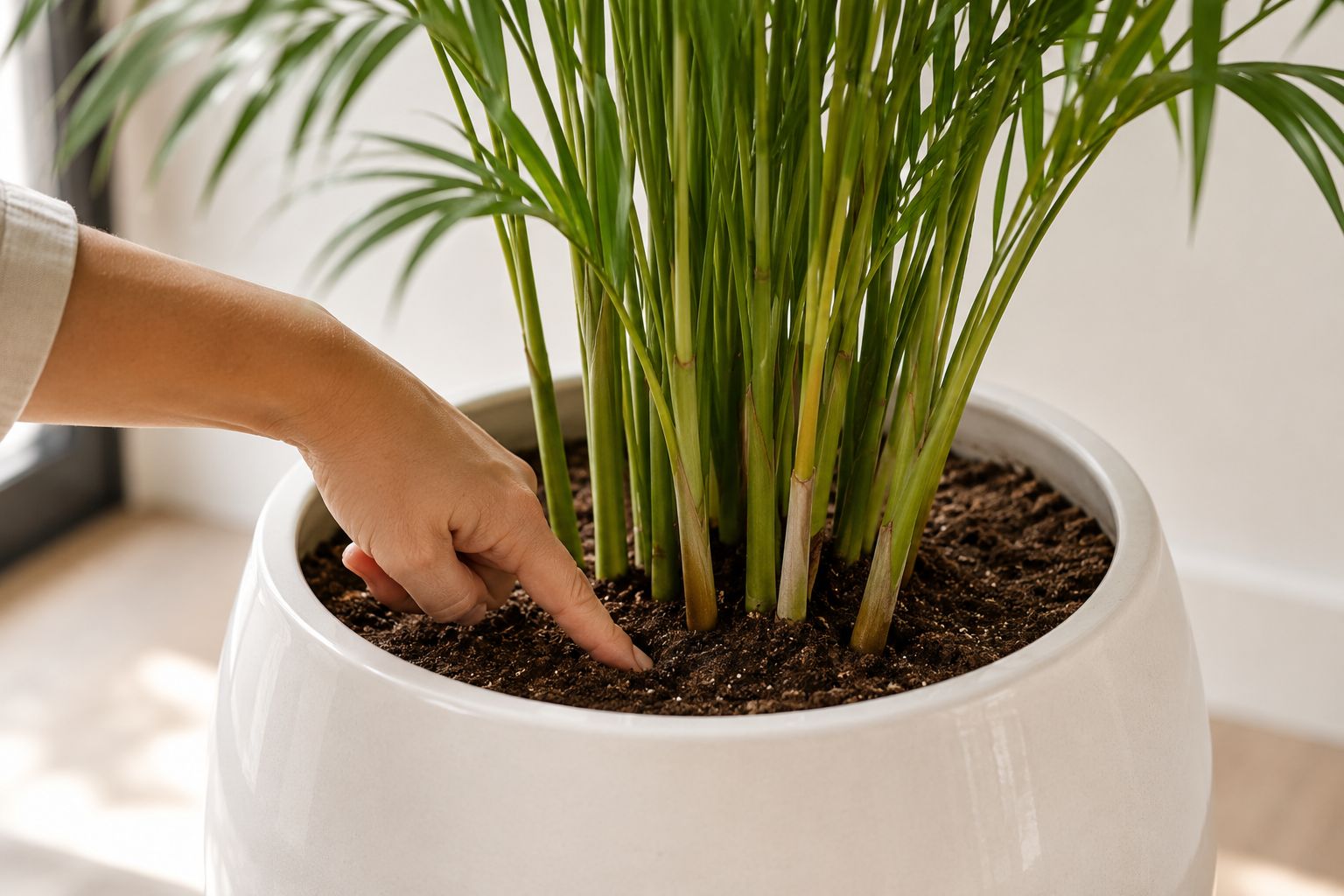
When to water: Check the top 2.5 cm (1 inch) of soil. When it feels dry to the touch — water. When it still feels moist — wait and check again in a day or two. Never water on a fixed schedule without checking the soil first. The same plant may need water every 5 days in a bright warm room in summer and every 14 days in a cooler room in winter.
How to water: Water thoroughly, pouring slowly until water flows freely from the drainage holes at the base. This ensures the entire root zone is hydrated evenly and prevents dry pockets forming in the root ball. Then stop, let it drain completely, and empty the saucer so the pot is not sitting in standing water. Roots sitting in pooled water develop rot very quickly.
Water quality: Areca palm is sensitive to fluoride and salts commonly found in tap water — these accumulate in the soil over time and cause the brown leaf tips that frustrate most areca palm owners. Using filtered water, rainwater, or tap water that has been left open for several hours significantly reduces this problem. Additionally, flush the soil thoroughly with clean water every one to two months — pour a generous amount through the pot and allow it to drain completely — to wash out accumulated mineral salts.
Seasonal adjustment:
| Season | Soil Drying Speed | Water Frequency |
|---|---|---|
| Spring — growth resuming | Moderate | Every 7–10 days |
| Summer — active growth, warm | Fastest | Every 5–7 days |
| Autumn — slowing | Moderate | Every 10–14 days |
| Winter — near dormant | Slowest | Every 14–21 days |
Step 03 — Humidity: Where Areca Palm Earns Its Reputation
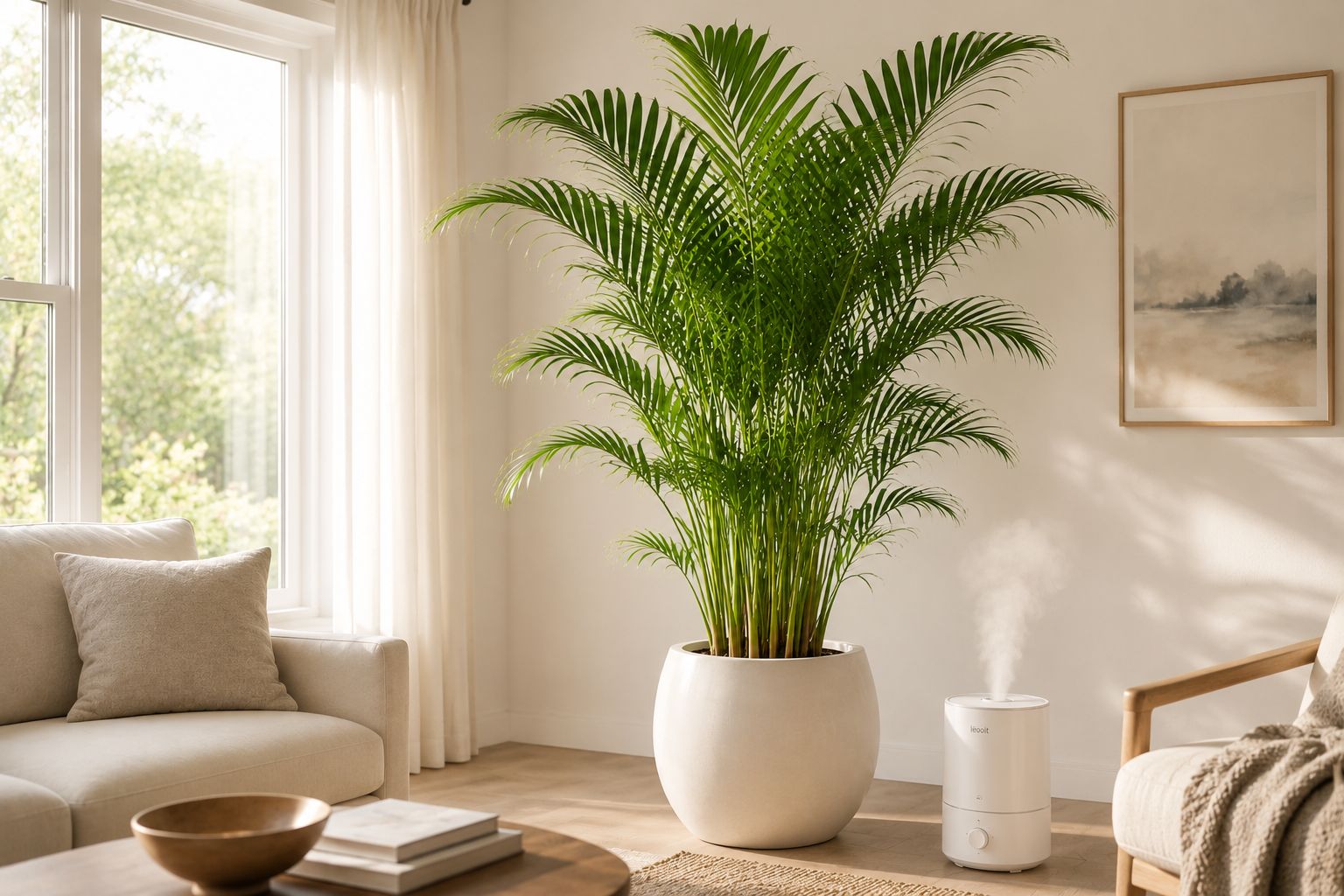
This is where areca palm distinguishes itself from most houseplants — and where most of its common problems originate.
Areca palm is a tropical plant that genuinely thrives in humidity above 50%. In its native Madagascar, humidity is consistently high. Indoors — especially in winter with central heating running, or in air-conditioned spaces — average household humidity often drops to 30–40%. This is the most common cause of the brown leaf tips that seem to appear no matter how carefully you water.
The natural humidification benefit: A large, healthy, well-watered areca palm releases significant moisture into the air around it through transpiration. In a reasonably enclosed room, this is genuinely noticeable. It is not a replacement for a dedicated humidifier, but it meaningfully raises local humidity — particularly helpful in dry winter months or in climates with very low ambient moisture.
Ways to boost humidity for the plant:
Pebble tray: Place the pot on a wide, shallow tray filled with pebbles and water — the waterline kept just below the pebble surface so the pot sits above water, not in it. As water evaporates it raises local humidity around the fronds. Refill as needed.
Group with other plants: A cluster of large plants creates its own microclimate with noticeably higher humidity at foliage level than a single isolated plant. If you have multiple large houseplants, grouping them together benefits all of them.
Humidifier: In particularly dry conditions — heated winter rooms, arid climates, or heavily air-conditioned spaces — a small humidifier placed near the plant is the most effective solution. Aim to maintain 50–60% relative humidity in the space.
Misting: Light misting of the fronds every few days provides a temporary humidity boost. Use room-temperature, filtered water and avoid misting so heavily that water drips into the crown of the plant where the new fronds emerge.
One important note: Do not place areca palm near heating vents, radiators, or air conditioning outlets. The direct blast of dry hot or cold air from these sources desiccates the fronds within days and causes rapid widespread browning that is very difficult to reverse.
Step 04 — Soil and Pot
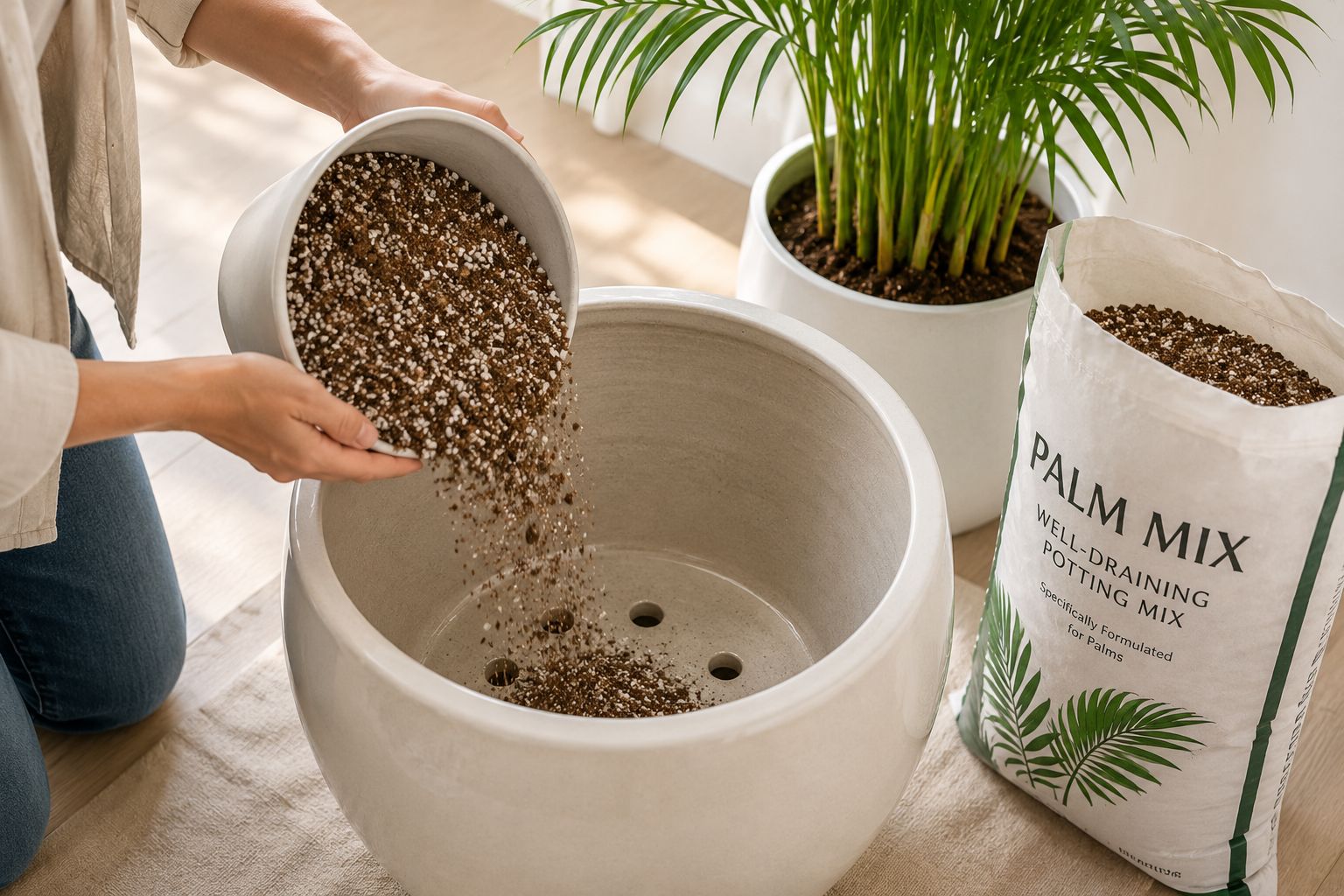
Soil:
Areca palm needs soil that drains well while retaining enough moisture for the roots to stay hydrated between waterings. Standard houseplant potting soil works as a base — add 20–30% perlite or coarse sand to improve drainage and aeration.
Palm-specific potting mixes are worth using if available — they are formulated with the sandier, more open texture that palms prefer and drain more reliably than generic indoor mixes.
Avoid very heavy soils that compact in pots and prevent air reaching the roots. Avoid pure peat-based mixes that hold moisture too long. The goal is fast drainage combined with enough organic matter to retain some moisture — exactly what a tropical rainforest floor soil provides.
Pot:
Choose a pot with drainage holes — this is non-negotiable for areca palm. A pot without drainage creates the waterlogged conditions that lead to root rot.
Areca palm likes to be slightly snug in its pot — a container just large enough for the root ball with a small amount of growing room produces healthier growth than one with excessive spare soil. Too much unused soil around the roots holds moisture the plant cannot absorb, which leads to root rot in the outer soil before the plant even needs to water.
For large areca palms, heavy ceramic or terracotta pots provide the stability needed to prevent toppling — a tall, top-heavy palm in a lightweight plastic pot is a falling risk.
| Care | Requirement |
|---|---|
| ☀️ Sunlight | Bright indirect — east window ideal, no direct harsh sun |
| 💧 Watering | When top inch is dry — filtered water preferred |
| 🌡️ Temperature | 18–27°C (65–80°F) — no drafts, no vents |
| 💨 Humidity | 50–60% ideal — pebble tray or humidifier helps |
| 🪴 Pot | Drainage holes essential — heavy base for stability |
| 🌱 Soil | Palm mix or potting soil with added perlite |
Step 05 — Feeding
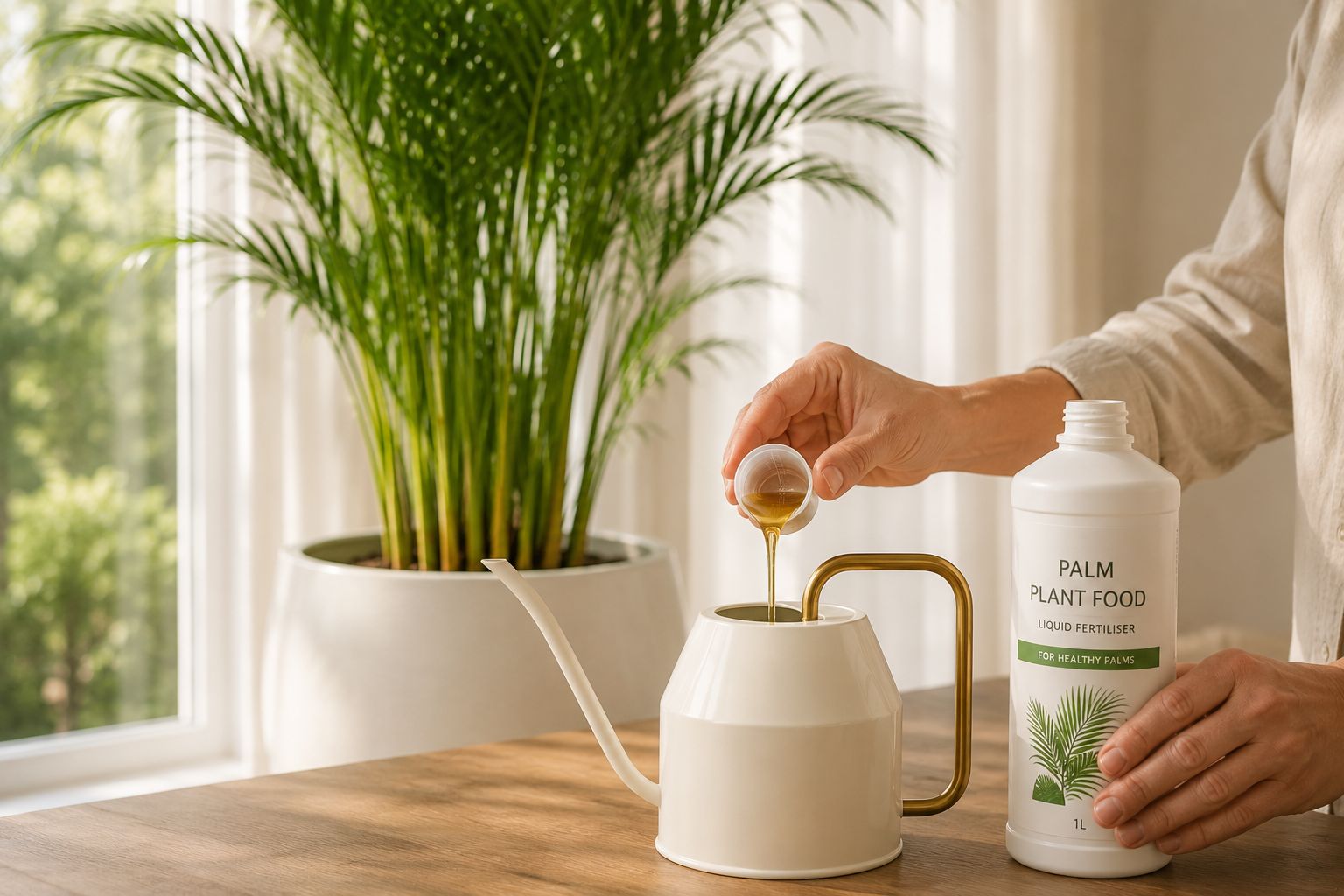
Areca palm is a moderate feeder — it benefits from regular feeding during the growing season but is sensitive to over-fertilisation, which causes the same brown tips that low humidity and water quality produce.
Feed once a month during spring and summer with a balanced liquid houseplant fertiliser diluted to half the recommended strength — or use a palm-specific fertiliser, which contains added magnesium and micronutrients that palms specifically need. Palms are known to be prone to magnesium and potassium deficiency, which shows up as yellowing on older fronds first. A fertiliser that includes these elements prevents this common issue.
Stop feeding entirely in autumn and winter. The plant's growth slows significantly in lower light and cooler temperatures — unused fertiliser accumulates as salt deposits in the soil, contributing directly to brown tips and root stress.
Flushing soil: Every one to two months, water the pot generously with clean water — enough to flush through thoroughly — to wash out accumulated fertiliser salts. This single habit prevents most salt-related leaf tip browning.
Step 06 — The Brown Tips Problem (And How to Actually Fix It)
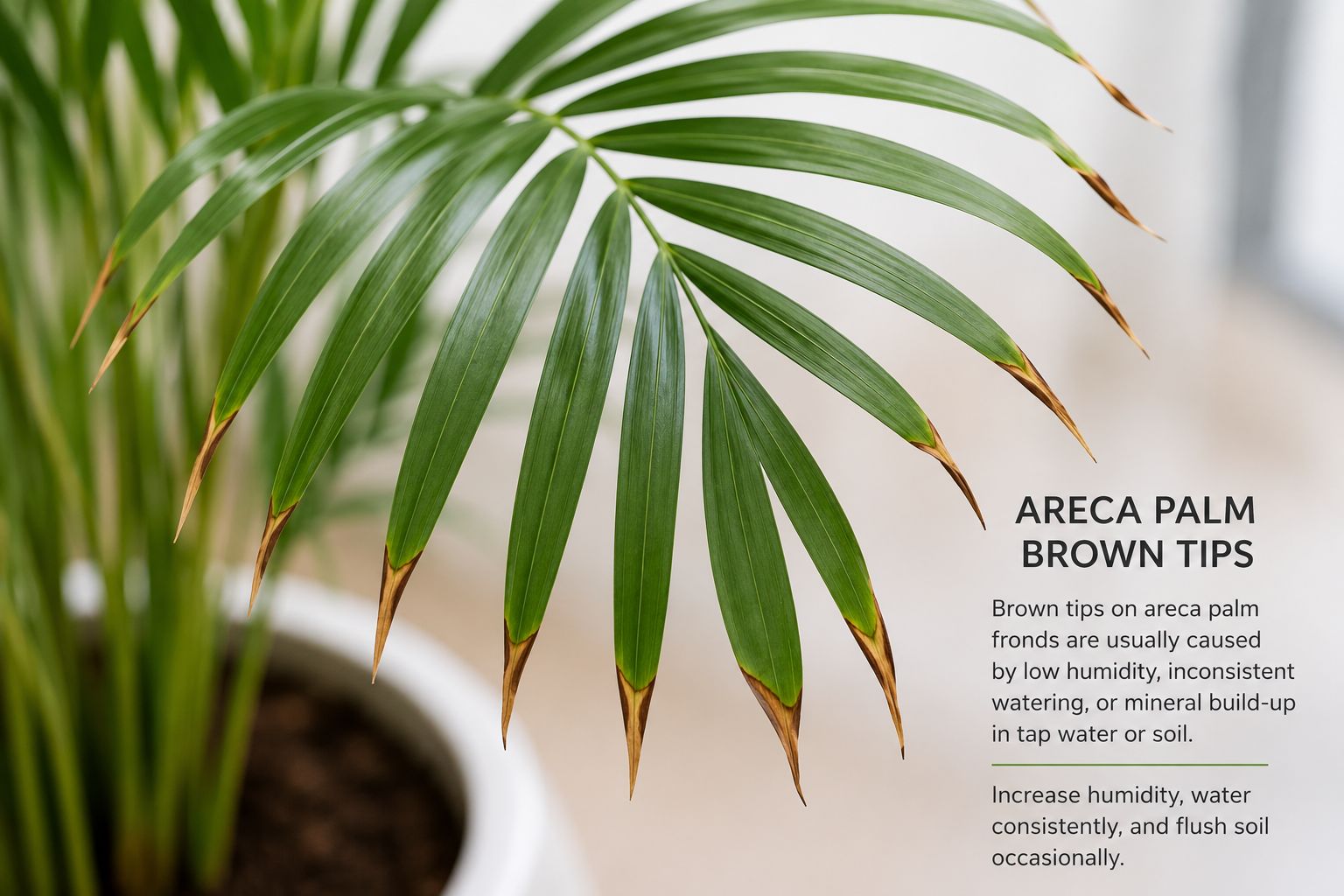
Brown tips on areca palm fronds are the most searched areca palm problem. Almost every areca palm owner encounters them. Understanding the causes is what allows you to actually fix them — because treating the wrong cause does nothing.
The most common causes in order of frequency:
Low humidity — the most frequent cause. Dry air causes the tips of the delicate leaflets to desiccate first, as these are the furthest from the water supply in the leaf. If your home is dry, particularly in winter, this is almost certainly the cause. Increase humidity as described in Step 03.
Tap water mineral accumulation — fluoride, chlorine, and salt deposits from tap water build up in the soil over months and cause leaf tip burn that looks identical to humidity damage. Switch to filtered or rainwater and flush the soil regularly.
Over-fertilisation — applying fertiliser too frequently or at full concentration causes salt build-up with the same result. Reduce feeding frequency and always dilute to half-strength.
Heating or AC vents — direct airflow from climate control systems desiccates frond tips very quickly. Move the plant away from any vents.
One important rule about brown tips: Do not cut brown tips on areca palm. Trimming the brown ends of leaflets may look tidier but it damages the vascular tissue in the leaf, causing the browning to spread further back along the frond. If a whole frond has turned brown and dried, remove it at the base — but leave tips alone. Live with the tips or consider the frond fully replaceable once it dies completely.
Step 07 — Repotting
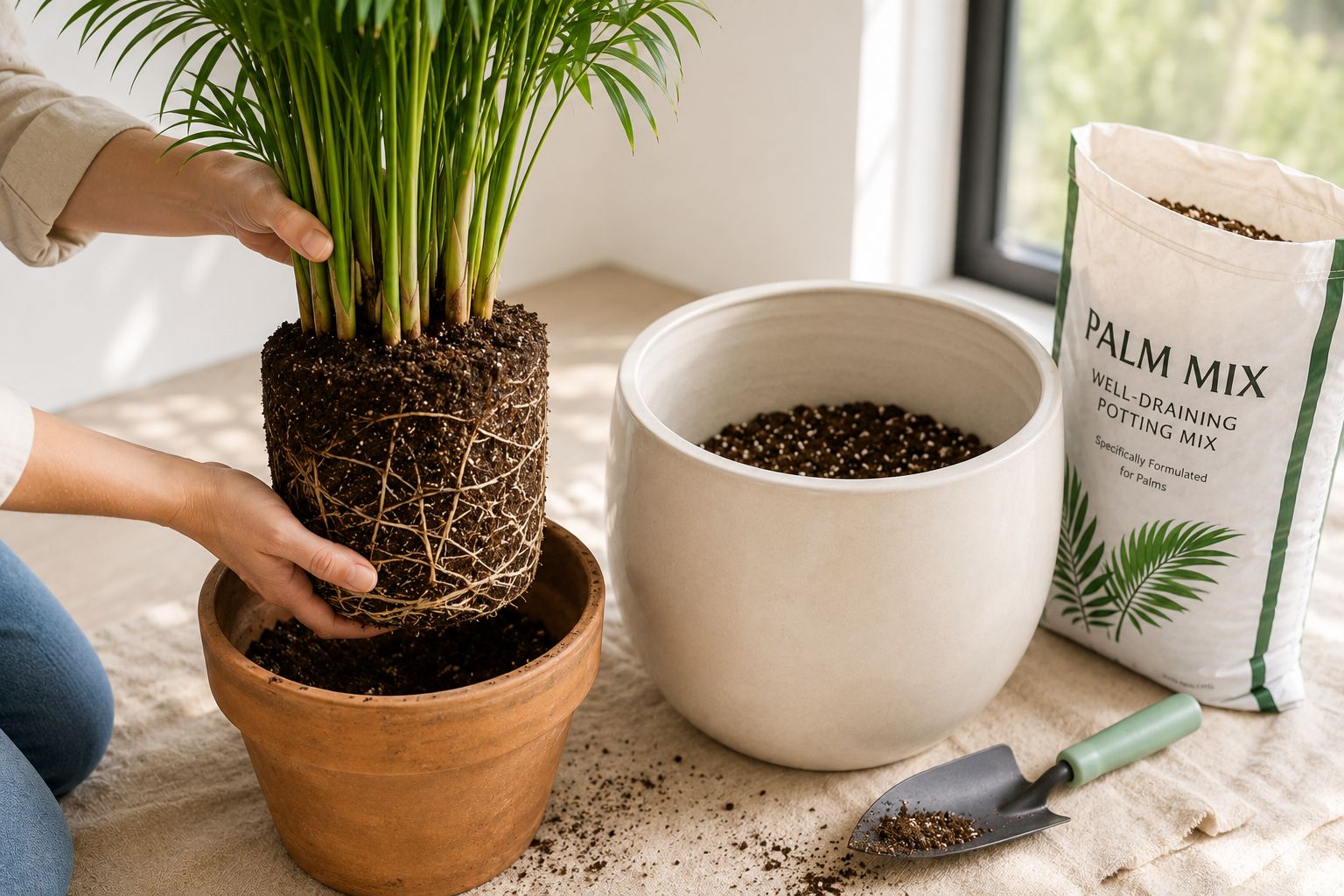
Areca palm does not need repotting often — every two to three years is typical for a well-established plant. It actually prefers a slightly snug fit in its pot, which makes it one of the easier large houseplants to manage in terms of container size.
Signs it needs repotting: Roots growing through drainage holes, the root ball visibly pushing out of the top of the pot, or the plant drying out unusually quickly after watering despite a correct care routine — this last sign indicates the root mass has displaced most of the soil and there is little moisture-holding capacity left.
Spring is the best time to repot — the plant is entering active growth and recovers fastest from root disturbance.
Always go up only one pot size — 5–7 cm (2–3 inches) wider than the current container. A pot significantly larger than needed holds too much moisture relative to the root mass and dramatically increases the risk of root rot. Choose a heavy, stable pot that can support the mature plant's height and weight.
Repotting areca palm: Water the plant thoroughly 12–24 hours before repotting to reduce transplant stress. Carefully tip the plant out. Examine the roots — trim any that are dead, black, or mushy. Place in the new pot at the same depth it was previously growing. Fill around the root ball with fresh palm mix, firming gently without compacting. Water thoroughly. Keep in bright indirect light and avoid fertilising for four to six weeks while the roots settle.
Step 08 — Propagation
Areca palm is challenging to propagate compared to most houseplants — it cannot be grown from leaf cuttings or stem cuttings. The only practical home propagation method is division of offsets — the small suckers or young shoots that emerge from the base of a mature plant.
When repotting in spring, look for distinct young shoots growing from the base with their own root system. Gently separate these from the parent clump — use a clean knife if needed for tightly bound sections. Each offset needs several leaves and an adequate root system to survive independently. Plant in a small pot with fresh palm mix, water thoroughly, and keep in warm, humid conditions with bright indirect light.
Be aware that division stresses the parent plant temporarily and the divided offsets may take several months to fully establish before showing consistent growth. Do not be discouraged by an initial period of slow or no new frond production — the plant is settling in.
Common Problems and Fixes
| Problem | Most Likely Cause | Fix |
|---|---|---|
| Brown leaf tips | Low humidity, tap water minerals, or over-fertilisation | Increase humidity. Switch to filtered water. Reduce feeding frequency. Flush soil monthly |
| Yellow fronds | Overwatering, nutrient deficiency, or insufficient light | Check drainage. Use palm fertiliser with magnesium. Move to brighter spot |
| Drooping fronds | Underwatering or transplant stress | Water thoroughly. If recently repotted, give it time to settle |
| Fronds turning pale / bleached | Too much direct sunlight | Move away from direct sun to bright indirect light |
| Very slow growth | Low light or winter dormancy | Move to brighter spot, wait for spring, ensure feeding resumes |
| Spider mites | Dry air — most common in winter | Increase humidity. Wipe fronds with damp cloth. Treat with neem oil |
| Mealybugs | Stress from incorrect conditions | Wipe with rubbing alcohol on cotton. Treat with neem oil or insecticidal soap |
| Brown, mushy base stems | Root rot from overwatering | Stop watering. Allow to dry. Remove from pot and inspect roots. Remove rotted roots and repot in fresh dry mix |
| Leaf tips spreading brown after trimming | Cutting live leaf tips damages vascular tissue | Do not trim tips — remove whole fronds only once fully dead |
Quick Care Summary
| Care | Requirement |
|---|---|
| ☀️ Sunlight | Bright indirect — east window ideal, rotate every 2–3 weeks |
| 💧 Watering | When top inch is dry — filtered water, flush soil monthly |
| 🌡️ Temperature | 18–27°C (65–80°F) — away from all vents and drafts |
| 💨 Humidity | 50–60% — pebble tray, group planting, or humidifier |
| 🪴 Pot | Heavy, stable, drainage holes — snug fit preferred |
| 🌱 Soil | Palm mix or potting soil with added perlite |
| 🌿 Feeding | Monthly at half-strength, spring and summer only |
| 📅 Repotting | Every 2–3 years — one size up only |
| ✂️ Propagation | Offset division at repotting time only |
| 🐾 Pet safety | ✅ Non-toxic to cats and dogs — ASPCA confirmed |
🐾 Pet owners: Areca palm is one of the few large dramatic houseplants confirmed non-toxic to both cats and dogs by the ASPCA. It can be placed anywhere in a pet-friendly home without concern. This is a meaningful advantage over most tropical statement plants, which are at least mildly toxic to pets.
By Seedora Store — your guide to indoor plants that actually work in any home.