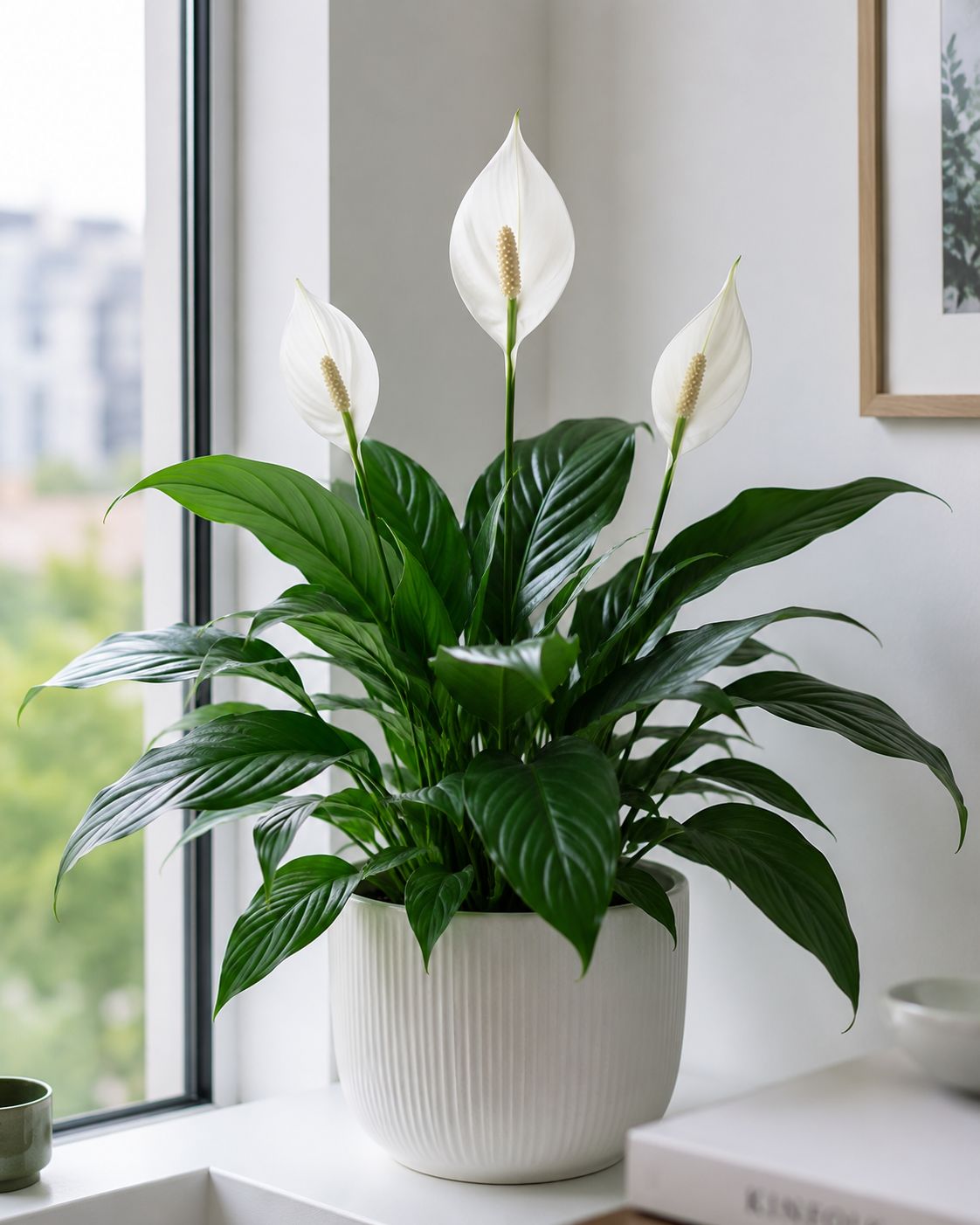
Most flowering houseplants are demanding. They need bright light, specific temperatures, carefully timed feeding schedules, and even then they bloom for two weeks and spend the rest of the year looking like an unremarkable green mound. The bargain often does not feel worth it.
Peace lily is different.
It grows on the forest floor of tropical rainforests — in the deep shade under tree canopies, where light is filtered and dim, where the air is humid, and where the soil stays consistently moist. That natural habitat has produced a plant that is genuinely at home in the conditions most rooms offer. Low light does not bother it. Average humidity is enough. It tolerates a degree of watering inconsistency that would kill many tropical plants. And it rewards all of this with elegant, architectural white flowers — the characteristic hooded spathes — multiple times per year when conditions are right.
There is also a quality that makes peace lily particularly special among houseplants: it communicates. When it is thirsty, its leaves droop — not subtly, but dramatically, like it has given up entirely. Water it and within hours those same leaves are upright and glossy again. It is one of the most readable plants you can own, which makes it extraordinarily beginner-friendly. The plant essentially tells you what it needs before anything goes seriously wrong.
Here is everything you need to grow one well.
What Is Peace Lily Called Around the World?
| Region | Local Name |
|---|---|
| 🇬🇧 English | Peace Lily / White Sails |
| 🇩🇪 German | Einblatt / Friedenslilie |
| 🇫🇷 French | Spathiphylle / Fleur de lune |
| 🇮🇹 Italian | Spatifillio / Giglio della pace |
| 🇪🇸 Spanish | Espatifilo / Lirio de la paz |
| 🇵🇹 Portuguese | Espatifilho / Lírio da paz |
| 🇧🇷 Brazil | Copo-de-leite / Lírio da paz |
| 🇵🇱 Polish | Skrzydłokwiat |
| 🇳🇱 Dutch | Lepelplant / Vredeslelie |
| 🇷🇺 Russian | Спатифиллум |
| 🇨🇳 Chinese | 白鹤芋 (Báihè yù) |
| 🇯🇵 Japanese | スパティフィラム |
| 🇰🇷 Korean | 스파티필럼 |
| 🌐 Scientific | Spathiphyllum wallisii / Spathiphyllum spp. |
🌿 Peace lily is native to the tropical rainforests of Central and South America — primarily Colombia and Venezuela — as well as parts of Southeast Asia. It was named Spathiphyllum from the Greek words spathe (a blade or spathe) and phyllon (a leaf) — referring to the distinctive white spathe that surrounds the flower spike. The common name peace lily comes from the white flower's resemblance to a white flag of peace. It was introduced to Europe in the late 19th century and has since become one of the most popular and widely sold houseplants in the world.
Which Peace Lily Should You Get?
Peace lilies come in a range of sizes from compact desk plants to large floor specimens. All share identical care needs — the choice is simply about how much space you have and the look you want.
| Variety | Height | Leaf Character | Best For |
|---|---|---|---|
| Petite / Little Angel | 25–30 cm (10–12 in) | Small, narrow, compact | Desks, shelves, small spaces |
| Wallisii (classic) | 45–60 cm (18–24 in) | Medium glossy green | Any room — the most common variety |
| Domino | 45–60 cm (18–24 in) | Variegated — green and white streaked | Rooms that need visual texture |
| Sensation | 90–120 cm (3–4 ft) | Very large, ribbed, bold | Floor plant — statement corners |
| Clevelandii | 60–90 cm (2–3 ft) | Long narrow leaves | Larger rooms, elegant vertical look |
| Power Petite | 30–45 cm (12–18 in) | Dense, compact, prolific bloomer | Best for continuous flowering |
💡 For most homes, the classic Wallisii or a compact variety like Petite is the right starting point. They are widely available, adaptable to a range of conditions, and among the most reliable bloomers. Sensation is stunning but grows very large — beautiful in offices and open-plan living rooms, less suited to small apartments.
Step 01 — The Right Spot: Light Without Harshness
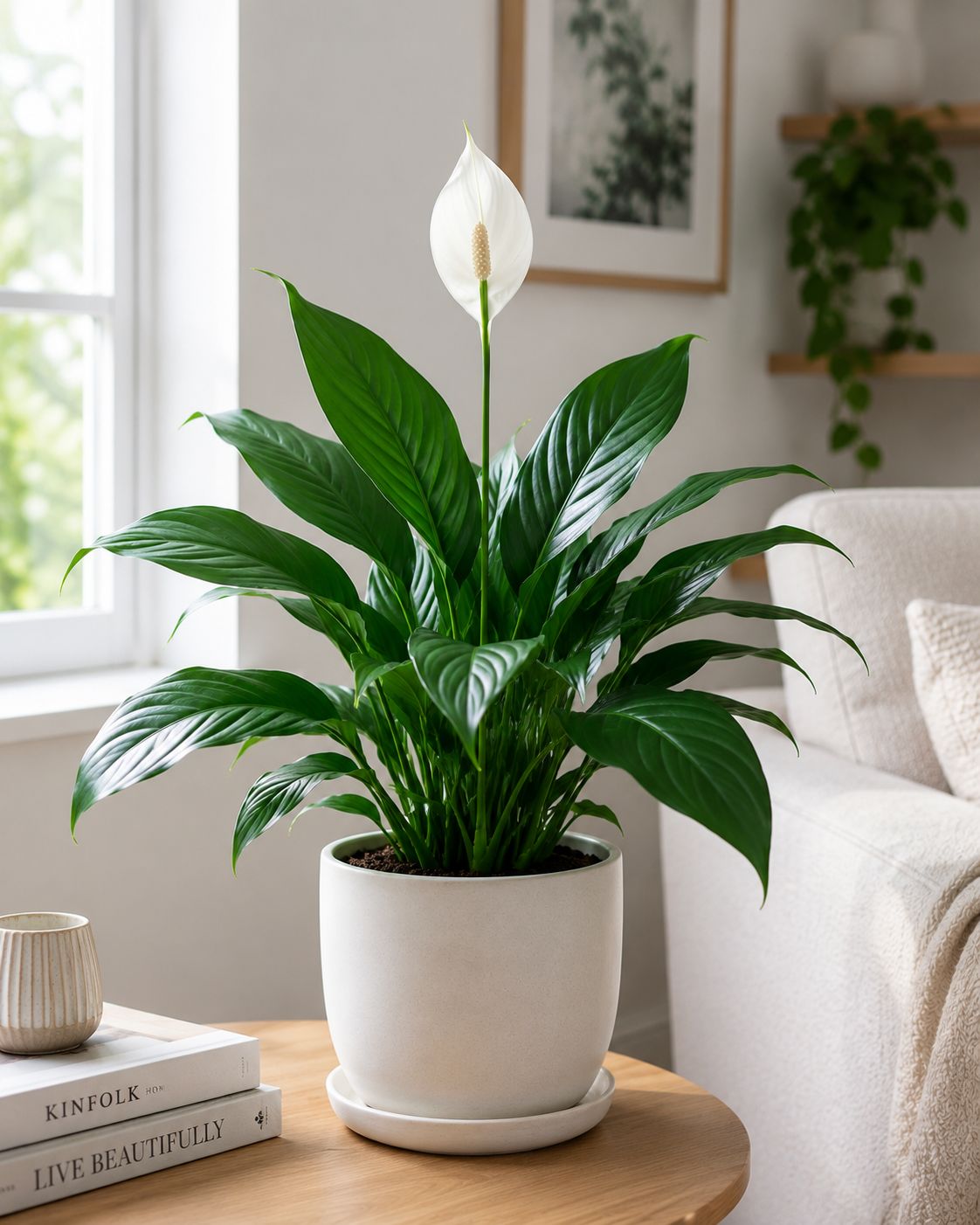
Peace lily's relationship with light is one of the most misunderstood things about this plant. It is marketed everywhere as a "low light plant" — which is true, but needs context.
Peace lily can survive in genuinely low light — a dim corner, a north-facing room, an interior hallway. In these conditions it will stay alive and green for a long time. But survival and thriving are different things. A peace lily in genuinely low light will grow slowly, produce fewer or no flowers, and look noticeably less vibrant than one in better conditions.
The sweet spot is bright indirect light — a few feet back from a well-lit window, or at a north or east-facing window where light is good but the sun never shines directly on the leaves. In these conditions, peace lily produces its best growth, richest colour, and most reliable flowering.
The one condition to avoid firmly is direct sunlight — especially harsh afternoon sun. Peace lily leaves are adapted to deep forest shade. Direct sun bleaches them, causes brown patches and crispy edges, and stresses the plant significantly. It evolved under a forest canopy and that is essentially what you are recreating indoors.
East-facing windows are considered ideal — they provide the moderate, gentle morning light that peace lily loves, without the intensity of afternoon sun. North-facing windows in the northern hemisphere also work very well.
The flowering light connection: Peace lilies bloom most reliably in bright indirect light. A plant in low light may never flower at all, or flower only once a year weakly. Moving a non-flowering peace lily to a brighter spot — while keeping it out of direct sun — is the single most effective action for encouraging blooms.
💡 The dust reminder: Over time, dust settles on peace lily's large, glossy leaves. Dusty leaves absorb light less efficiently. Wipe leaves gently with a clean, damp cloth every few weeks. This is not just cosmetic — it meaningfully helps the plant photosynthesise and improves both growth and flowering.
Step 02 — Watering: How to Read What the Plant Is Telling You
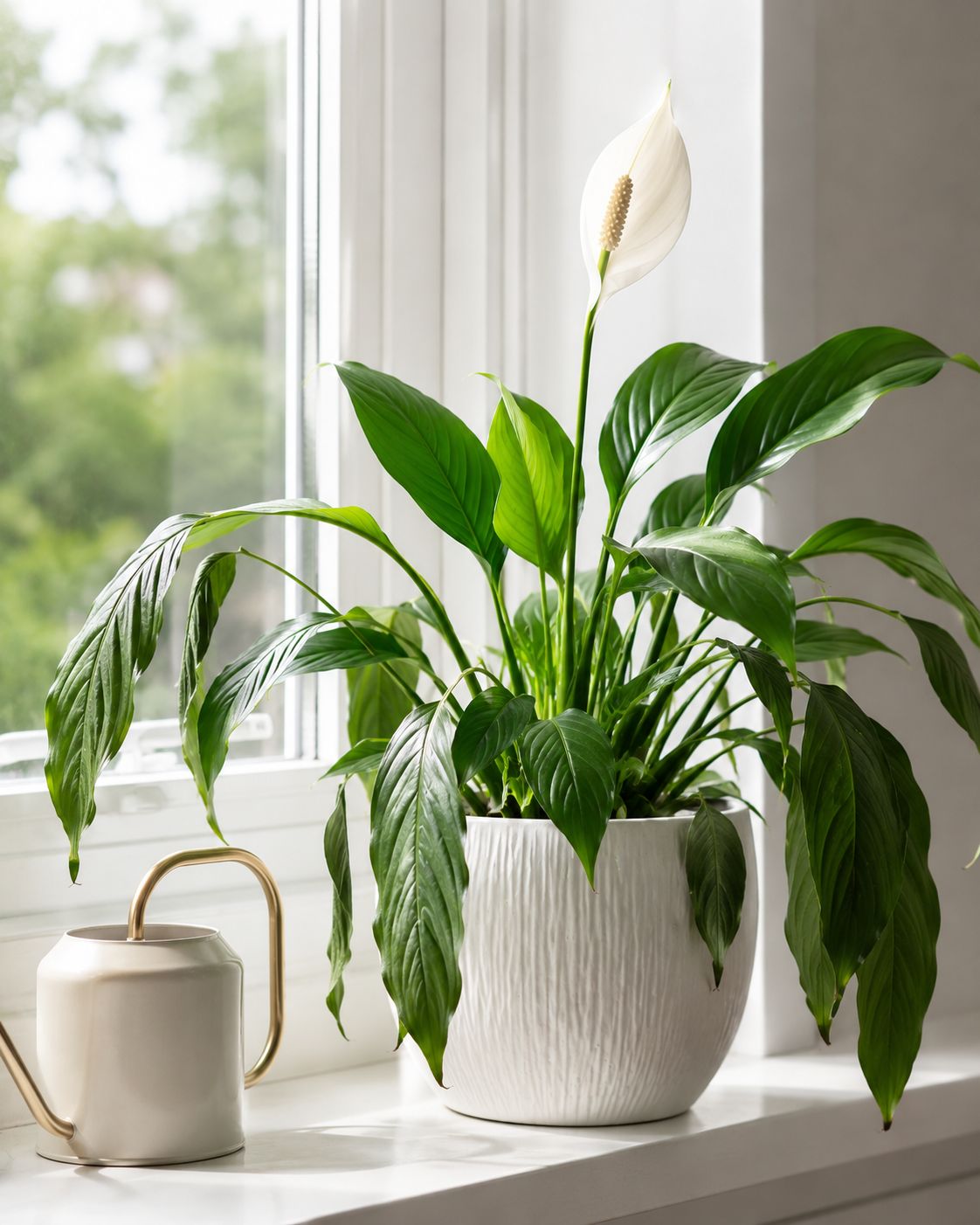
Peace lily communicates its thirst better than almost any other houseplant. When it wants water, its leaves droop — sometimes quite dramatically, leaves falling away from the centre and hanging toward the pot. Water it and within a few hours, sometimes less, those same leaves pull themselves upright and the plant looks exactly as it did before.
This is useful. But the goal is not to use the droop as your watering trigger every single time. Letting it droop repeatedly stresses the plant, and over time this leads to more brown tips and slower growth. Use the droop as a rescue signal — not as a regular schedule.
The right approach:
Check the soil every few days. Water when the top inch (2.5 cm) of potting mix feels dry to the touch. Water thoroughly — pour water slowly until it flows freely from the drainage holes at the base. Then stop, let it drain completely, and empty any saucer so the pot is not sitting in standing water. Peace lily does not like wet feet — standing water at the base leads to root rot over time.
The soil should stay lightly moist between waterings — not soggy, not bone dry. Think of it as the moisture level of a well-wrung sponge. Consistently moist but never saturated.
One important detail on water quality:
Peace lily is sensitive to fluoride and other chemicals commonly found in tap water — these accumulate in the soil over time and cause the characteristic brown leaf tips that many peace lily owners struggle with. Using filtered water, rainwater, or tap water that has been left in an open container overnight significantly reduces this problem. If your tap water is heavily chlorinated or fluoridated, the improvement from switching water sources is noticeable within a few months.
Watering frequency guide:
| Season / Conditions | Frequency |
|---|---|
| Spring and summer — active growth | Every 5–7 days |
| Autumn — slowing down | Every 7–10 days |
| Winter — cooler, slower growth | Every 10–14 days |
| Very low light year-round | Every 10–14 days |
| Bright indirect light, warm room | Every 5–7 days |
These are starting points — always confirm with the soil test before watering.
⚠️ Overwatering signs: Yellowing leaves (especially lower ones), limp stems despite moist soil, a sour smell from the pot, and very slow growth. Overwatering is the most common peace lily killer — it causes root rot that is difficult to reverse once established.
💧 Underwatering signs: Dramatic drooping, dry and pulling-away-from-pot soil, brown and crispy leaf tips. These are fast and obvious — water thoroughly and the plant recovers quickly.
Step 03 — Humidity: This Plant Loves Moisture in the Air
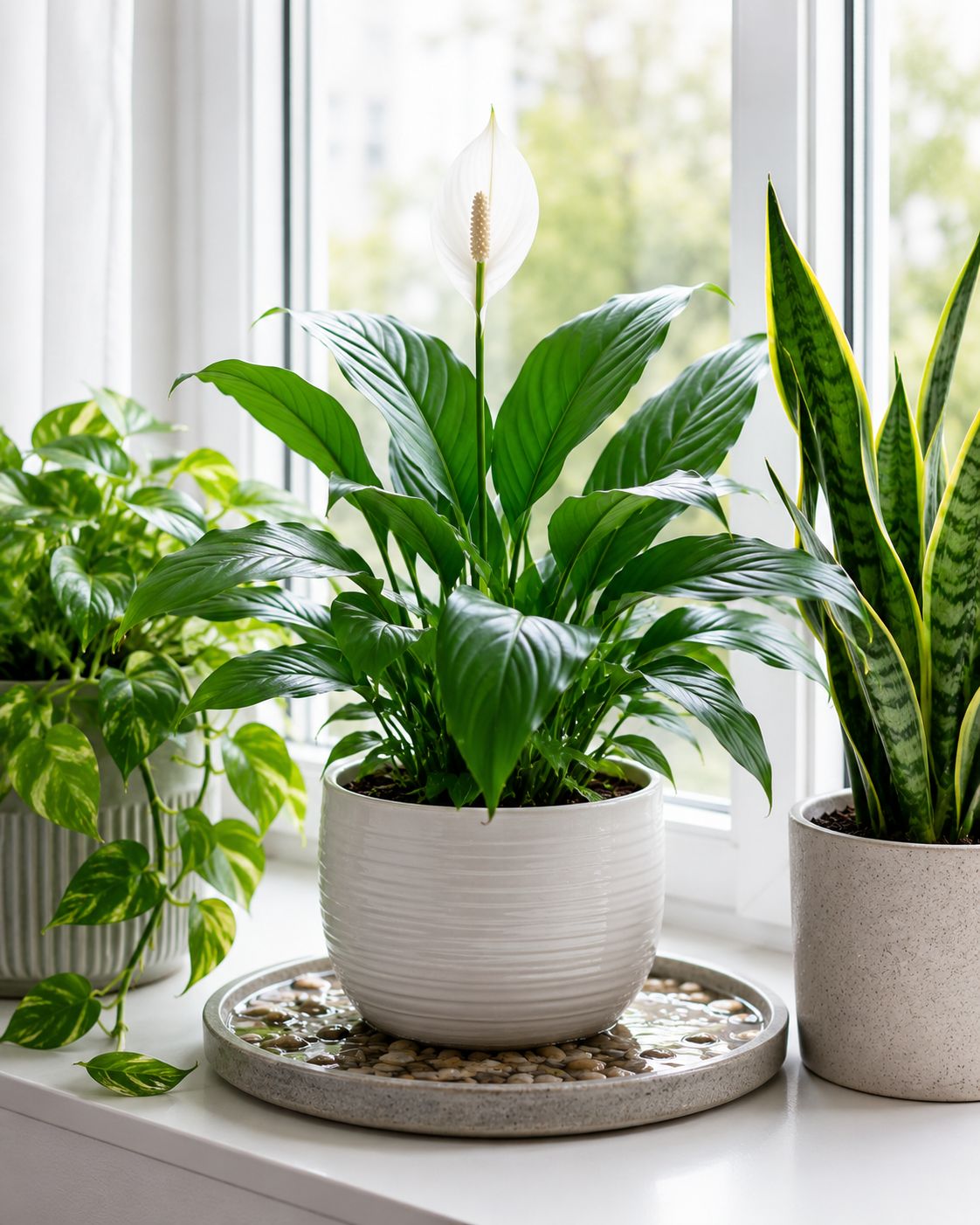
Peace lily comes from rainforests where humidity is consistently high. Indoors — especially in winter with heating running, or in dry climates year-round — average household humidity of 30–40% is often lower than what peace lily ideally wants.
The result of low humidity over time: brown leaf tips and edges, even when watering is correct. If your peace lily has brown tips despite good watering and correct light, humidity is usually the cause.
Ways to increase humidity around your plant:
Pebble tray: Place the pot on a shallow tray filled with pebbles and water. Keep the water level just below the surface of the pebbles — the pot sits on the pebbles above the waterline, not in the water. As the water evaporates it creates a humid microclimate around the plant. Refill the tray as needed.
Grouping plants: Place your peace lily near other houseplants. As all the plants transpire together they create their own shared microclimate with higher humidity than the surrounding room air. A cluster of three or four plants near a window is noticeably more humid at leaf level than a single isolated plant.
Misting: Mist the leaves every few days with clean water using a fine spray mister. This provides a temporary humidity boost and also helps keep leaves clean. Do not mist so heavily that water drips from the leaves into the crown of the plant — this can lead to fungal issues in the central growing point.
Bathroom placement: If your bathroom gets reasonable natural light, peace lily thrives there — the regular steam from showers provides natural humidity boosts throughout the week.
Step 04 — Soil and Pot
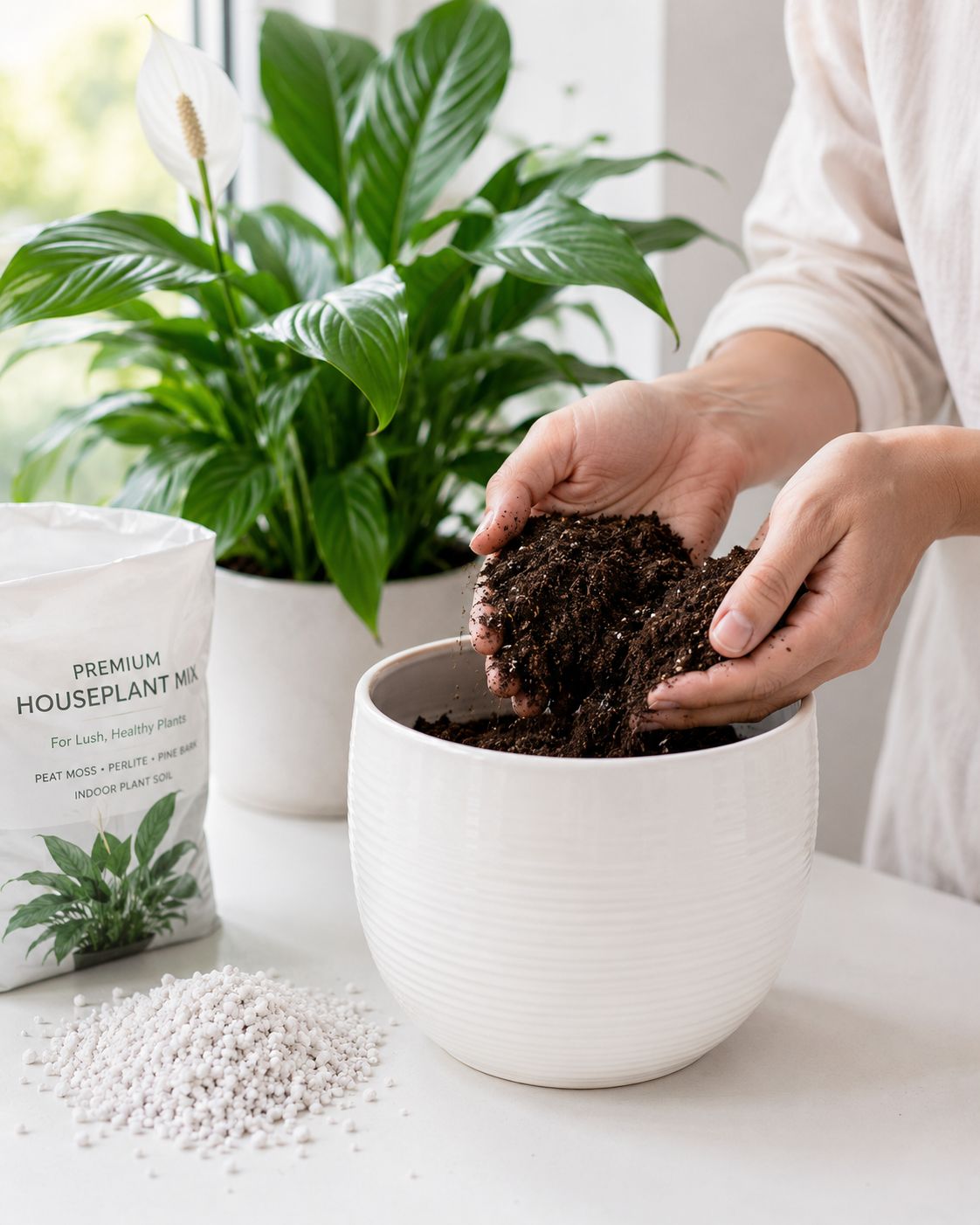
Peace lily grows on tropical forest floors — in soil that is rich in organic matter, consistently moist, and well-draining enough that water moves through without pooling. Recreating this indoors is straightforward.
Soil:
Use a quality indoor houseplant potting mix that is rich in organic matter — peat or coir-based mixes are ideal. Unlike succulents and cacti which need fast-draining gritty mixes, peace lily needs a mix that retains some moisture between waterings while still draining excess water freely.
Avoid succulent or cactus mixes — they stay too dry. Avoid very heavy garden soils — they compact in pots and suffocate roots. A standard indoor houseplant compost, possibly with a small amount of perlite mixed in for aeration, is exactly right.
Pot:
A pot with drainage holes is essential. Peace lily needs moisture retention but not waterlogging — the drainage hole is what separates the two.
Peace lily grows from rhizomes and is reasonably tolerant of being slightly root-bound. A pot slightly snug around the root ball often produces more flowers than one with too much excess soil. When repotting, choose a pot only 2–5 cm (1–2 inches) wider than the current one — too large a pot holds too much moisture relative to the roots and increases root rot risk.
Plastic pots retain moisture longer than terracotta — which suits peace lily's preference for consistent moisture. Terracotta works too but may need more frequent watering.
| Care | Requirement |
|---|---|
| ☀️ Sunlight | Bright indirect — north or east window ideal, no direct sun |
| 💧 Watering | When top inch is dry — roughly weekly, filtered water preferred |
| 🌡️ Temperature | 18–27°C (65–80°F) — no cold drafts below 13°C (55°F) |
| 💨 Humidity | Medium to high — pebble tray or misting helps |
| 🪴 Pot | Drainage holes essential — plastic or ceramic |
| 🌱 Soil | Moisture-retaining indoor potting mix — not succulent mix |
Step 05 — Feeding and Seasonal Care
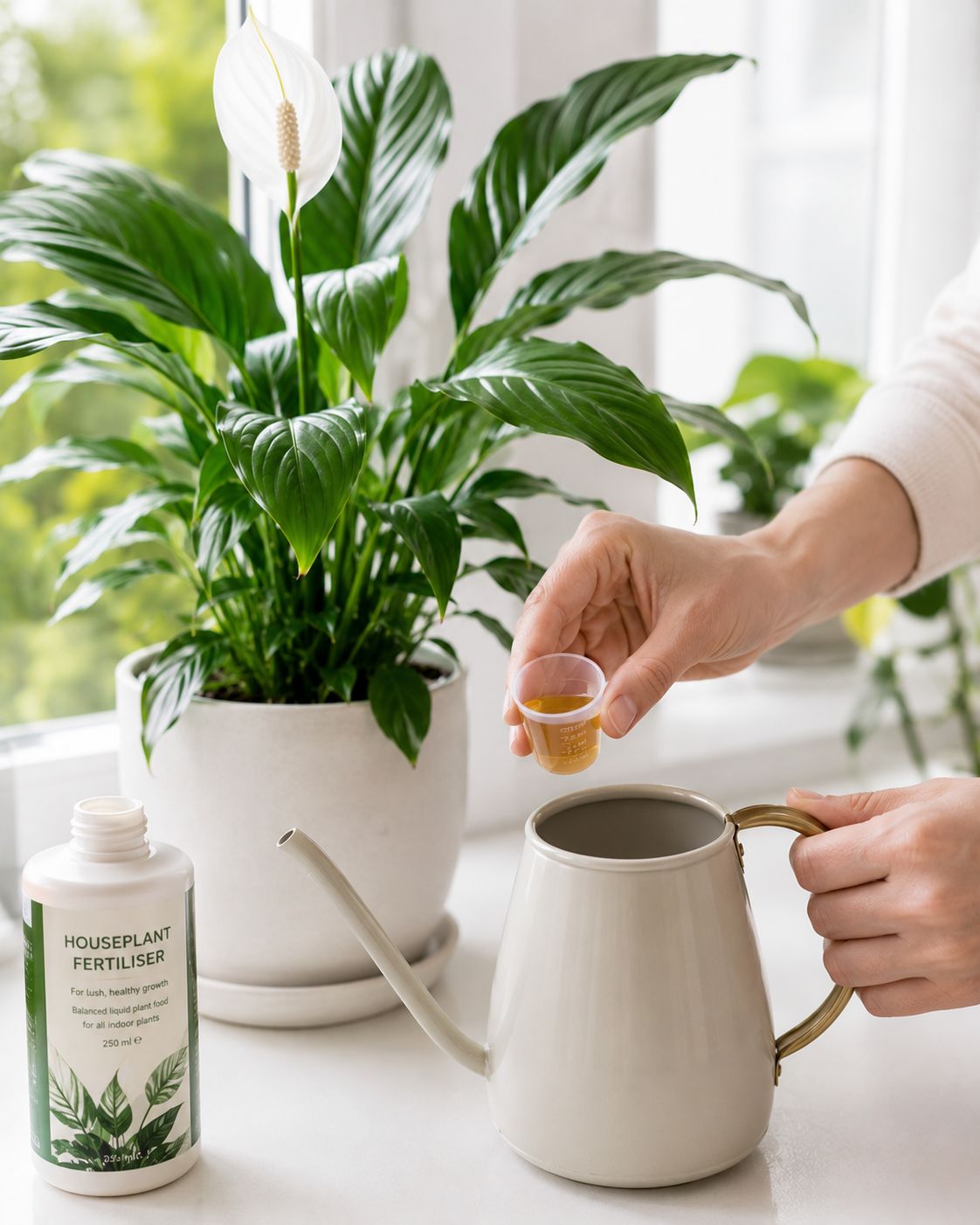
Peace lily is not a heavy feeder — it evolved in nutrient-poor forest floor conditions and does not need rich, frequent feeding to stay healthy. Simple, light, seasonal feeding is all it requires.
Feed with a balanced liquid houseplant fertiliser at half the recommended strength every four to six weeks during spring and summer. Always apply to moist soil — never to dry soil, where concentrated fertiliser can burn roots.
Stop feeding in autumn and winter. The plant's growth slows significantly in cooler, shorter-day conditions. Unused fertiliser accumulates in the soil as salt deposits — which over time causes leaf tip browning and root stress. Four to six feeds per year during the growing season is genuinely enough.
If you prefer lower maintenance, a slow-release granular fertiliser applied once in spring and once in midsummer provides gentle, consistent nutrition without requiring monthly attention.
Seasonal care notes:
Spring: Growth resumes. Resume feeding. Check whether repotting is needed. Clean leaves. The best time to propagate by division.
Summer: Most active growth. Water more frequently. Mist or use pebble tray during hot dry spells. Blooms most likely to appear or continue in these conditions.
Autumn: Slow feeding and watering gradually as temperatures drop and days shorten.
Winter: Minimal watering, no fertiliser. Keep away from cold draughts and heating vents. Lower indoor temperatures of 15–18°C (60–65°F) are fine as long as there are no cold draughts.
Step 06 — Getting It to Flower
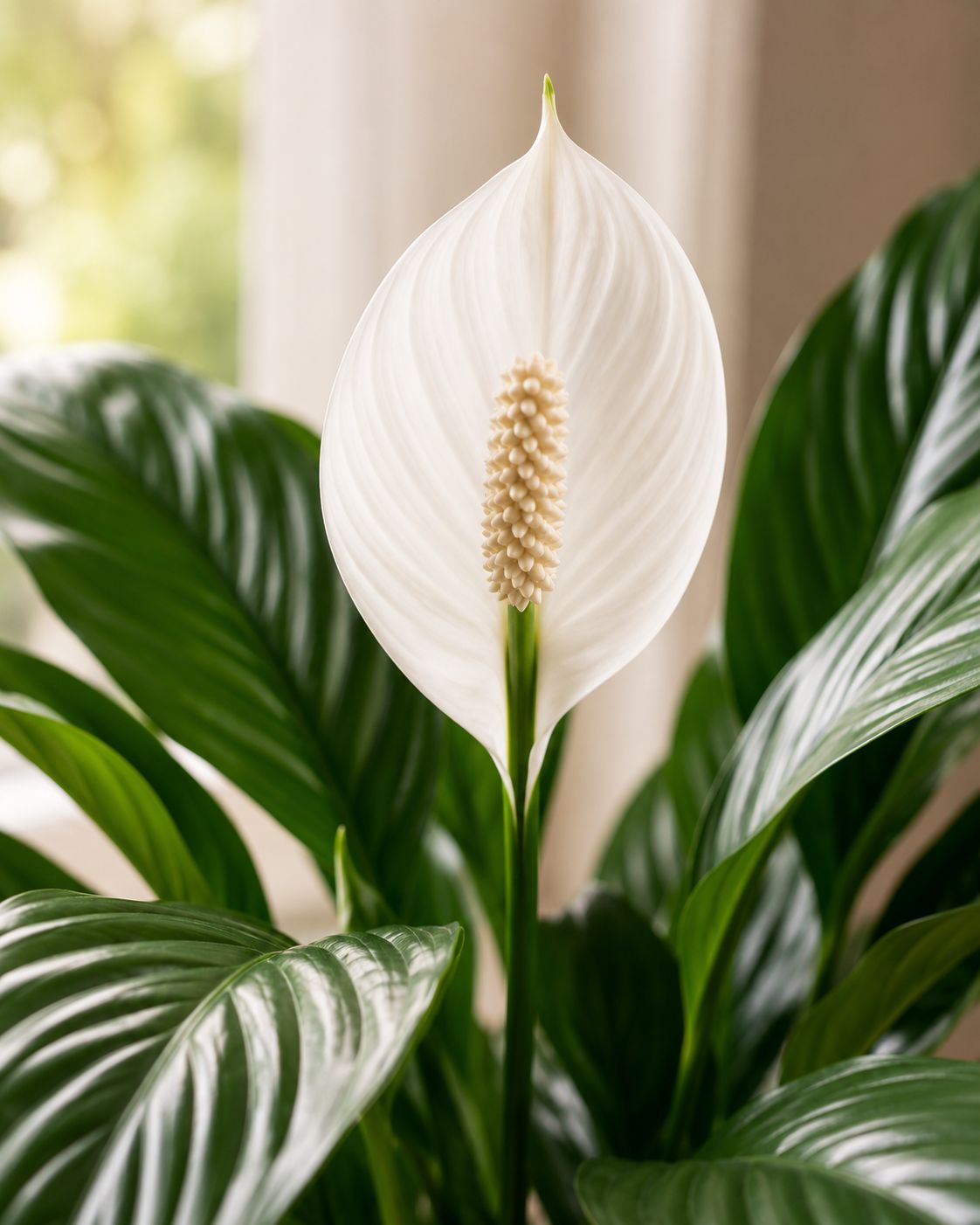
The white flowers are the reason most people buy a peace lily — and they can feel elusive if you do not understand what triggers them.
The flowers are technically not petals — what looks like a white petal is actually a spathe, a modified leaf that surrounds the true flower spike (the spadix) in the centre. They last several weeks before fading to green and eventually brown. Cut spent flowers at the base once they fade completely.
What encourages peace lily to flower:
Light is the most important factor. Peace lily blooms most reliably in bright indirect light. A plant in genuinely low light may grow well but rarely flower. If your plant has not bloomed in over a year, try moving it to a brighter spot — more light without direct sun.
Temperature plays a role. A very slight drop in nighttime temperature — moving the plant near a slightly cooler window in late winter — can trigger flowering in spring. Some growers also find that a brief period of slightly drier soil in late winter before resuming regular spring watering encourages a flush of blooms.
Feeding supports blooming. A phosphorus-rich fertiliser (the middle number in the NPK ratio on the bottle) during spring encourages flowering. A standard balanced fertiliser works too — the key is feeding at all during the growing season.
Patience: Peace lily blooms typically appear in spring and sometimes again in autumn. A healthy, well-cared-for plant flowers reliably once or twice per year. Multiple flushes of flowers from a single plant in a single year are possible with ideal conditions.
Step 07 — Propagation: Division
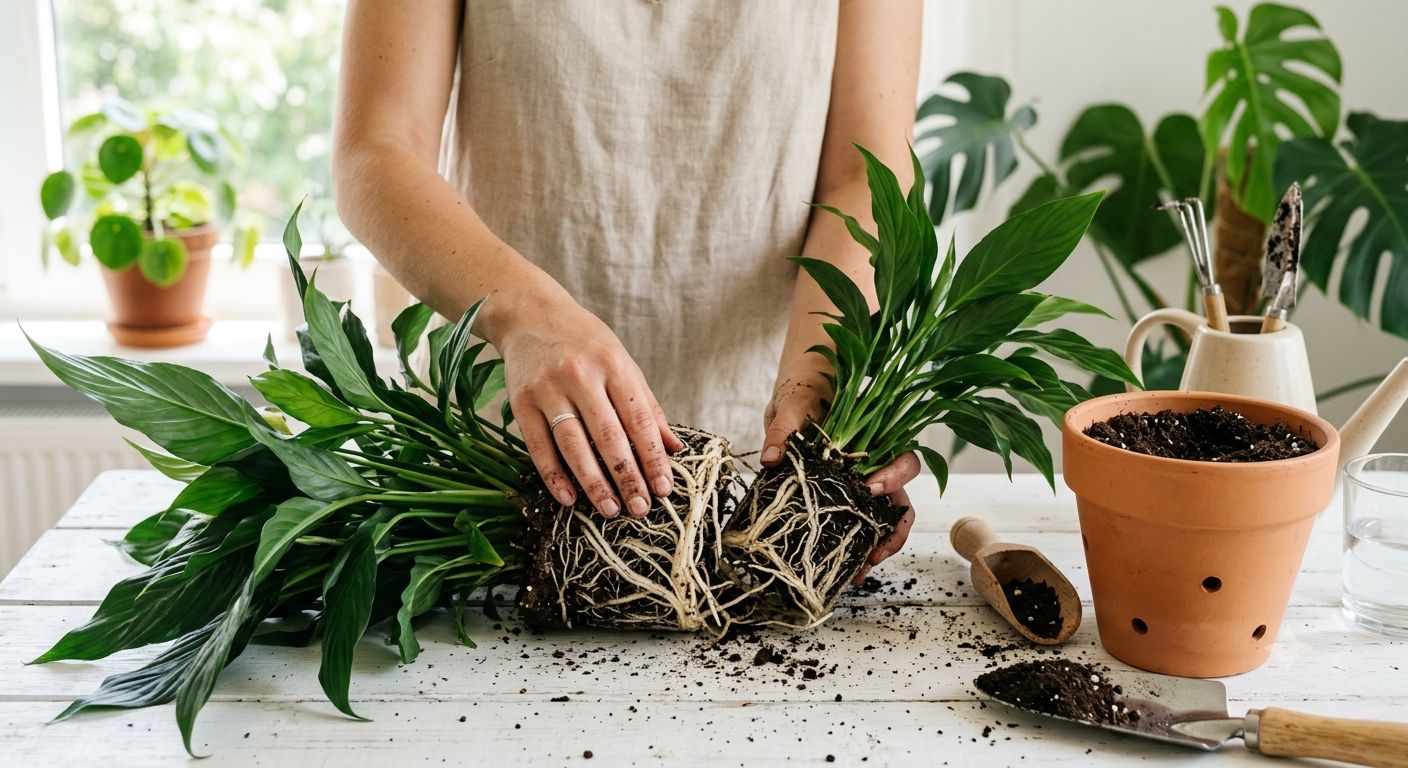
Peace lily does not propagate from leaf cuttings or stem cuttings. The only reliable propagation method is division — separating the clumping plant into sections at repotting time.
Peace lily grows from rhizomes and naturally produces multiple crowns — clusters of leaves each with their own root system growing from the central clump. Over time the pot fills with these crowns and the plant becomes root-bound and crowded. This is the ideal moment to divide.
How to divide:
Remove the plant from its pot in spring. Gently shake and brush away loose soil to expose the root structure. Look for natural separation points — places where distinct crowns with their own leaves and roots can be separated without tearing. Gently pull these sections apart by hand. For tightly bound sections, use a clean, sterilised knife to cut through.
Each division needs at least two to three leaves and a healthy section of roots. Plant each division in its own pot with fresh potting mix at the same depth it was previously growing. Water thoroughly and keep in warm, bright indirect light.
Peace lilies bounce back quickly from division — most divided plants establish within a few months and begin flowering again as they settle into their new pots.
Common Problems and Fixes
| Problem | Cause | Fix |
|---|---|---|
| Drooping leaves, dry soil | Underwatering | Water thoroughly — plant recovers within hours |
| Drooping leaves, wet soil | Overwatering or root rot | Stop watering. Let soil dry. Check roots for rot |
| Yellow leaves | Overwatering, too much direct light, or natural ageing | Check soil moisture. Move from direct sun. Remove very old leaves |
| Brown leaf tips | Fluoride in tap water, low humidity, or fertiliser build-up | Switch to filtered water. Increase humidity. Flush soil occasionally |
| Brown patches on leaves | Direct sunlight scorching | Move away from direct sun to bright indirect light |
| No flowers for over a year | Insufficient light or not feeding | Move to brighter indirect spot. Resume regular feeding in spring |
| Flowers turning green | Natural ageing of the spathe | Normal — remove spent flowers at the base once fully faded |
| Very slow growth | Low light, winter dormancy, or needs repotting | Improve light, wait for spring, or repot into fresh soil |
| White crust on soil surface | Mineral build-up from tap water | Switch to filtered water. Flush soil with clean water periodically |
| Pests — mealybugs or spider mites | Dry air and stressed plant | Wipe affected areas with rubbing alcohol. Treat with neem oil |
Quick Care Summary
| Care | Requirement |
|---|---|
| ☀️ Sunlight | Bright indirect — east or north window, never direct sun |
| 💧 Watering | When top inch is dry — weekly roughly, filtered water preferred |
| 🌡️ Temperature | 18–27°C (65–80°F) — no cold drafts below 13°C (55°F) |
| 💨 Humidity | Medium to high — pebble tray, misting, or group with other plants |
| 🪴 Pot | Drainage holes — plastic retains moisture better than terracotta |
| 🌱 Soil | Moisture-retaining indoor mix — not succulent or cactus mix |
| 🌿 Feeding | Half-strength liquid fertiliser every 4–6 weeks, spring and summer only |
| 📅 Repotting | Every 1–2 years in spring — go up 2–5 cm only |
| ✂️ Propagation | Division in spring — separate crowns with roots |
| 🌸 Flowering | Bright indirect light + spring feeding + patience |
⚠️ Toxicity: Peace lily contains calcium oxalate crystals throughout all parts of the plant. If ingested by pets or humans, it causes mouth irritation, excessive drooling, difficulty swallowing, and stomach upset. It is considered mildly to moderately toxic — keep it out of reach of cats, dogs, and small children. Skin contact with the sap can cause mild irritation in sensitive individuals — wash hands after handling.
By Seedora Store — your guide to indoor plants that actually work in any home.