How to Grow Okra at Home
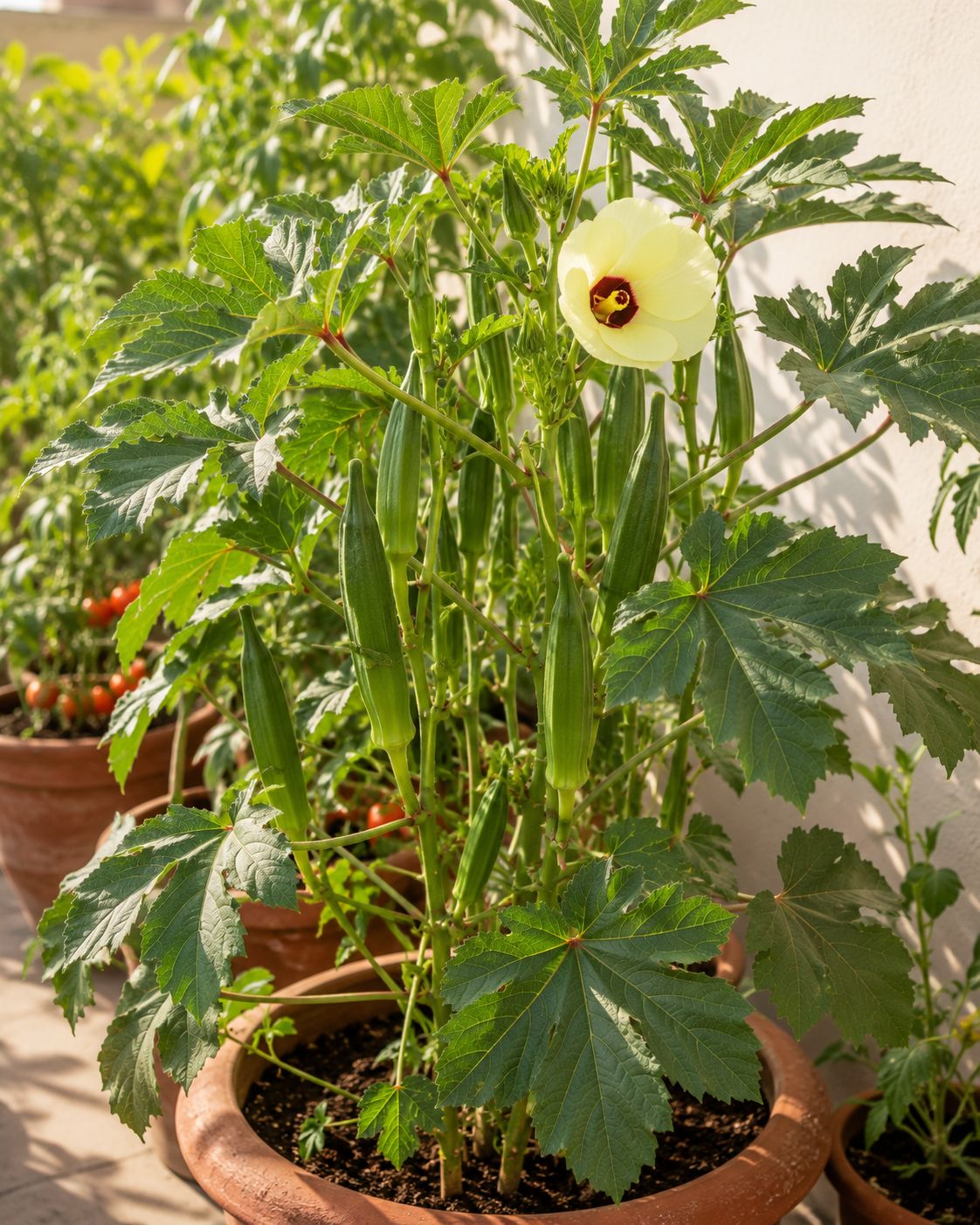
There is a moment in every okra grower's first summer that changes things. You plant a seed, forget it is there for a few weeks, and then one morning you step outside to find a tall, architectural plant with lobed leaves the size of your hand and a flower — a proper, dramatic, yellow hibiscus-like flower — opening right in the middle of it. A few days later, a slender green pod is where that flower was. A few days after that, it is 8 cm long and ready to harvest. Three days later, there is another one.
Okra is relentless once it gets going. A single plant in full summer production needs to be checked every two to three days — leave a pod one day too long and it becomes woody, inedible, and worse, signals the plant to slow down. But harvest it at the right moment and the plant keeps flowering and producing continuously, sometimes for three to four months without interruption.
It is one of the most productive vegetables you can grow in a pot. It is also one of the most ornamental — those hibiscus flowers are genuinely beautiful, which makes sense given that okra is from the same mallow family as hibiscus. And it has a nutritional profile that consistently surprises people: rich in fibre, folate, vitamins C and K, and polyphenols that research links to blood sugar management and digestive health.
It just wants one thing above everything else: heat. Give it that and the rest is easy.
What Is Okra Called Around the World?
| Region | Local Name |
|---|---|
| 🇬🇧 English (British / South Asian) | Ladyfinger / Lady's Finger |
| 🇺🇸 English (American) | Okra |
| 🇵🇰 Urdu | بھنڈی (Bhindi) |
| 🇮🇳 Hindi | भिंडी (Bhindi) |
| 🇸🇦 Arabic | بامية (Bamiya) |
| 🇮🇷 Persian / Farsi | بامیه (Bamiyeh) |
| 🇫🇷 French | Gombo |
| 🇪🇸 Spanish | Quimbombó / Okra |
| 🇧🇷 Portuguese (Brazil) | Quiabo |
| 🇹🇷 Turkish | Bamya |
| 🇨🇳 Chinese | 秋葵 (Qiū kuí) |
| 🇯🇵 Japanese | オクラ (Okura) |
| 🇳🇬 Nigeria | Ila / Okra |
| 🌐 Scientific | Abelmoschus esculentus |
🌿 Okra is native to northeastern Africa — believed to have originated in Ethiopia or the broader Nile Valley region — and has been cultivated for thousands of years. It spread through North Africa, the Middle East, and South Asia via ancient trade routes, and reached the Americas through the transatlantic slave trade in the 17th century. Today it is a fundamental ingredient in cuisines as diverse as Indian bhindi masala, West African stews, Louisiana gumbo, Egyptian bamiya, and Turkish bamya soup. Few vegetables have travelled as far and embedded themselves as deeply in as many distinct food cultures.
Which Okra Should You Grow?
All okra varieties share the same basic care. The differences are size, pod shape, spininess, and how quickly they mature.
| Variety | Pod Colour | Height | Days to Harvest | Notes |
|---|---|---|---|---|
| Clemson Spineless | Green | 90–120 cm | 55–60 days | Most popular variety worldwide — spineless pods, reliable producer |
| Baby Bubba Hybrid | Green | 60–75 cm | 50–55 days | Compact — ideal for pots and small spaces |
| Red Burgundy | Deep red / purple | 90–120 cm | 55–65 days | Stunning ornamental, pods turn green when cooked |
| Cajun Delight | Green | 90 cm | 50–55 days | Excellent for humid climates, very productive |
| Star of David | Green | Up to 180 cm | 60–65 days | Large ribbed pods, heirloom variety, great flavour |
| Blondy | Pale cream / yellow | 90–120 cm | 50–55 days | Tender, spineless, mild flavour |
| Elephant Tusk | Green | Up to 150 cm | 55–65 days | Very long pods (25–30 cm), from Kerala, India |
💡 For pot growing and balconies, start with Clemson Spineless or Baby Bubba. Clemson Spineless is the world's most widely grown okra variety for good reason — consistent, productive, easy to handle, and available almost everywhere. Baby Bubba stays more compact for tighter spaces. Both are forgiving for first-time growers.
Climate — What Okra Actually Needs
Before anything else: okra is a heat-dependent crop. Understanding this is the difference between a productive plant and one that sits in a pot looking alive but doing very little.
Okra germinates poorly in cold soil. It grows slowly in cool weather. It does not flower well below 21°C (70°F). And it produces its best harvests when daytime temperatures are consistently between 27–35°C (80–95°F). This is a crop that evolved in African heat and genuinely thrives in it.
USDA Hardiness Zones: Grows as an annual in Zones 4–11. Performs best in Zones 8–11 where summers are long and hot. In cooler zones (4–7), choose fast-maturing varieties and start seeds indoors 4–6 weeks before the last frost date.
Tropical and subtropical climates (South Asia, Southeast Asia, Africa, the Middle East, the Caribbean, Central America): okra is in its element here. In frost-free regions it can be grown as a short-lived perennial, resprouting from the base after harvest.
Mediterranean and warm-temperate climates (southern Europe, California, Pacific Coast of the Americas, southern Australia): excellent results with a long warm summer. Start seeds indoors if spring is slow to warm up.
Cool-temperate climates (northern Europe, Canada, northern US, UK): grow okra in a greenhouse or polytunnel for the best results. In a sheltered sunny outdoor spot, a good summer produces a decent crop with fast-maturing varieties. The RHS recommends growing it in a greenhouse in the UK, though outdoor growing in warm summers is possible.
Step 01 — Seed Preparation and Timing
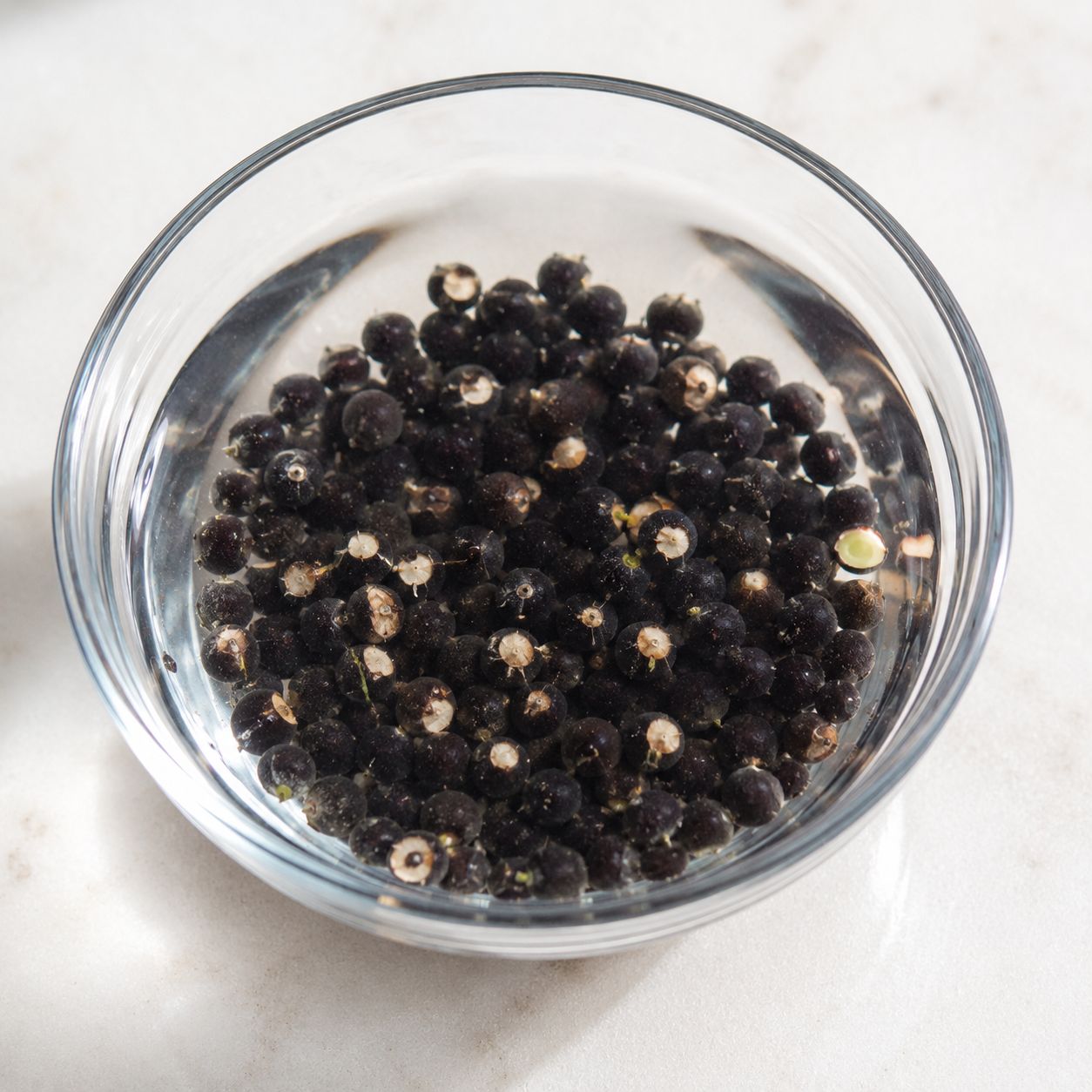
When to start:
Sow seeds when soil temperature is consistently above 18°C (65°F) — or start indoors 3–4 weeks before that point in your climate. A soil thermometer takes all the guesswork out of this.
In practical terms:
- Warm climates (Zones 9–11): Sow directly outdoors from March onwards
- Temperate climates (Zones 7–8): Start indoors in April, transplant after last frost
- Cool climates (Zones 4–6): Start indoors in March–April, harden off carefully, plant out in June
The seed soak — always do this:
Okra seeds have a naturally hard outer shell that slows germination. Soaking seeds in warm water for 12 to 24 hours before planting softens the seed coat, activates the embryo, and increases both germination rate and speed. Pre-soaking can improve germination rates by 20–30% and cut germination time by 3–5 days compared to dry-planting. It is the single easiest improvement you can make with almost zero effort.
After soaking, plant immediately — do not let soaked seeds dry out.
One important note on transplanting:
Okra has a long taproot that does not like being disturbed. If starting seeds indoors, use biodegradable peat or coir pots that can be planted directly into the final container without disturbing the roots. If you must transplant from plastic cells, do it when seedlings are very small — no more than 5–7 cm — and handle the root ball carefully.
Step 02 — Pot and Soil
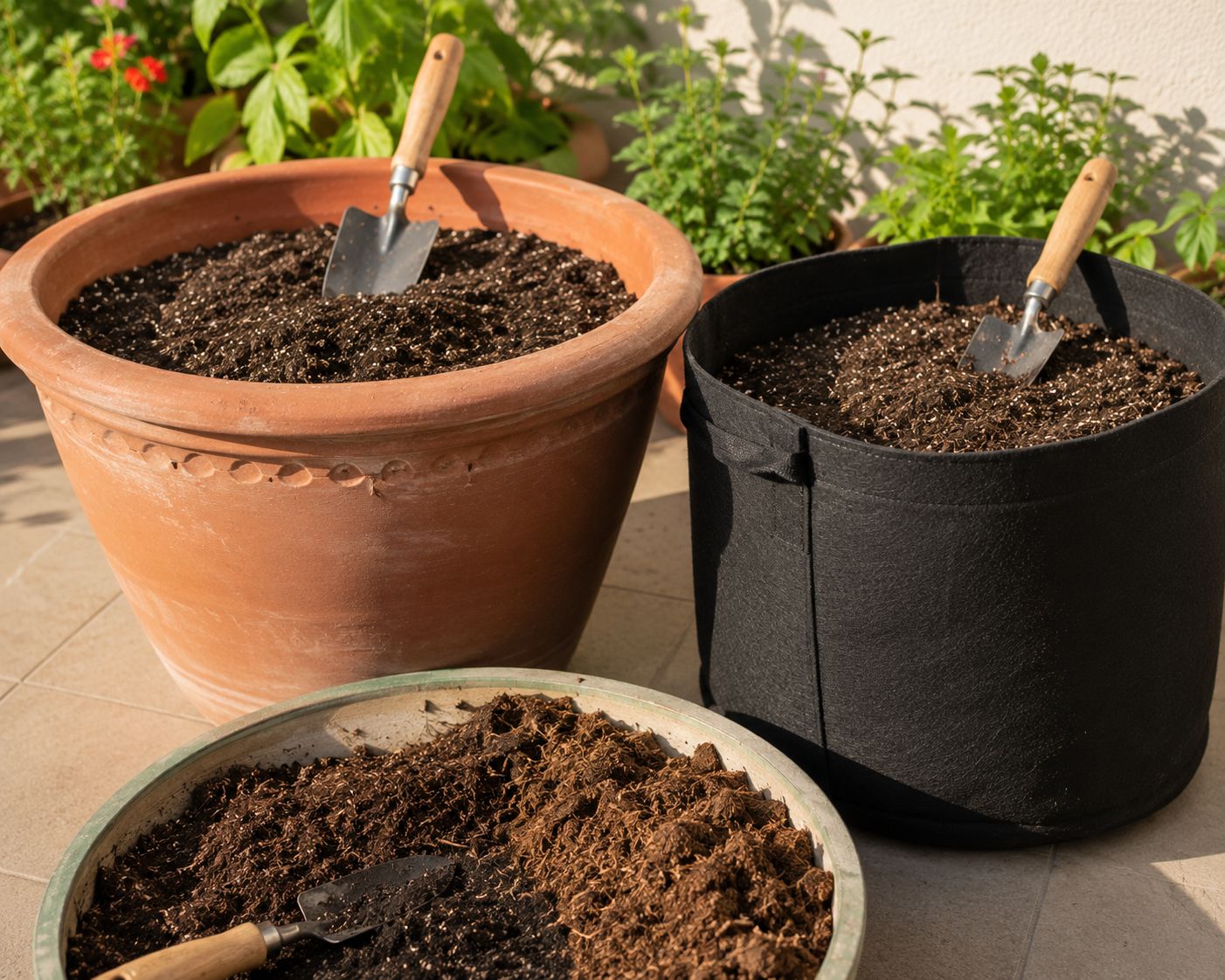
Pot size:
A minimum of a 12–16 inch (30–40 cm) diameter pot and at least 12 inches (30 cm) deep for one plant. For a single productive okra plant in a container, a 5-gallon (19-litre) pot is the practical minimum. Larger is always better — more soil volume means more moisture retention, more nutrients, and less stress on the plant during peak summer heat.
Okra grows 90–180 cm (3–6 feet) tall depending on variety. A wide, heavy pot at the base prevents it from toppling over in wind as it gets taller.
Fabric grow bags work exceptionally well for okra — they drain perfectly, prevent the waterlogging that okra hates, and their breathable walls help keep root temperatures manageable in intense summer heat.
One plant per pot unless the container is very large — okra roots need room and do not like competition.
Soil:
Okra is not fussy about soil quality — it grows in a wide range of conditions — but it performs significantly better in rich, loose, well-draining soil. The ideal pH is 6.0–7.0.
A simple and effective mix:
- 60% good quality potting mix or garden loam
- 30% well-rotted compost or aged manure
- 10% perlite or coarse sand for drainage
Mix a slow-release balanced fertiliser into the soil at planting. This feeds the plant consistently over the first several weeks without requiring immediate liquid feeding.
| Care | Requirement |
|---|---|
| ☀️ Sunlight | Full sun — 6 to 8 hours minimum, more is better |
| 💧 Watering | Consistently moist — every 1–2 days in peak heat |
| 🌡️ Temperature | 21–35°C (70–95°F) for best production |
| 🪴 Pot | 30 cm wide and deep minimum — 5 gallon (19L) per plant |
| 🌱 Soil | Well-draining, compost-rich — pH 6.0–7.0 |
| 📅 Sow time | When soil above 18°C (65°F) — spring to early summer |
Step 03 — Sowing and Early Care
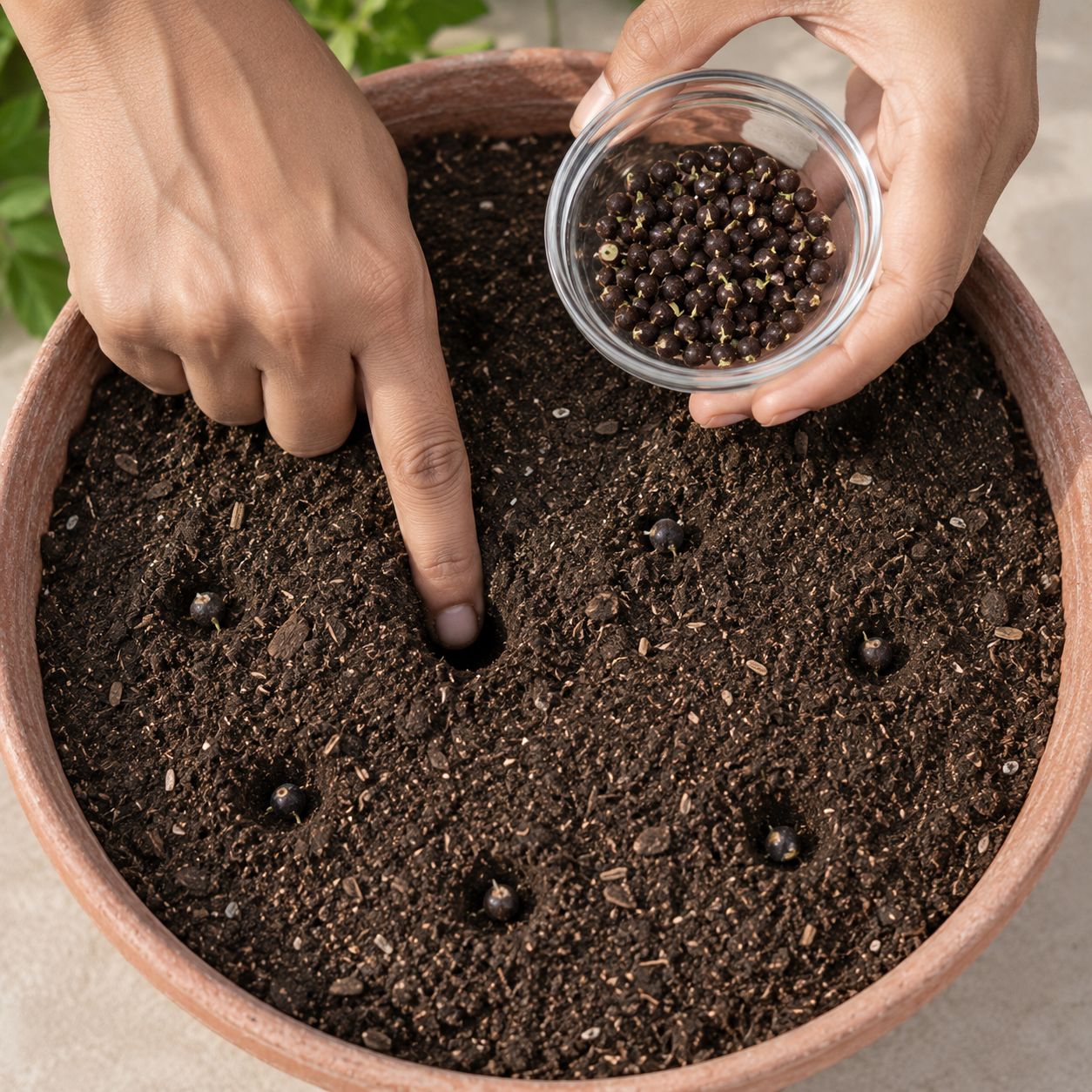
Sowing directly into the final pot:
Sow 2–3 pre-soaked seeds per pot, about 2.5 cm (1 inch) deep. Spacing multiple seeds improves the chance that at least one germinates strongly. Once seedlings develop their first true leaves — the real, lobed okra-shaped leaves — thin to the single strongest seedling per pot by snipping the others at soil level with scissors. Never pull extra seedlings out — you disturb the roots of the keeper.
Water gently after sowing. Keep the soil consistently moist but not wet during the germination period. Place in the warmest, sunniest spot available.
Germination happens in 7–14 days at the right temperature. In cooler conditions it can take up to 21 days. If seeds have not germinated after 3 weeks in warm conditions, the soil may have been too cold or seeds may be old — try a new batch.
The pinching tip:
When your okra seedling reaches about 30–45 cm (12–18 inches) tall, pinch or cut out the very top growing tip. This sounds counterintuitive but it works — removing the top encourages the plant to branch outward and develop multiple side shoots, each of which will produce pods. An okra plant that has been pinched once in its youth can produce significantly more total pods than one left to grow straight up as a single stem.
Step 04 — Care Through the Season
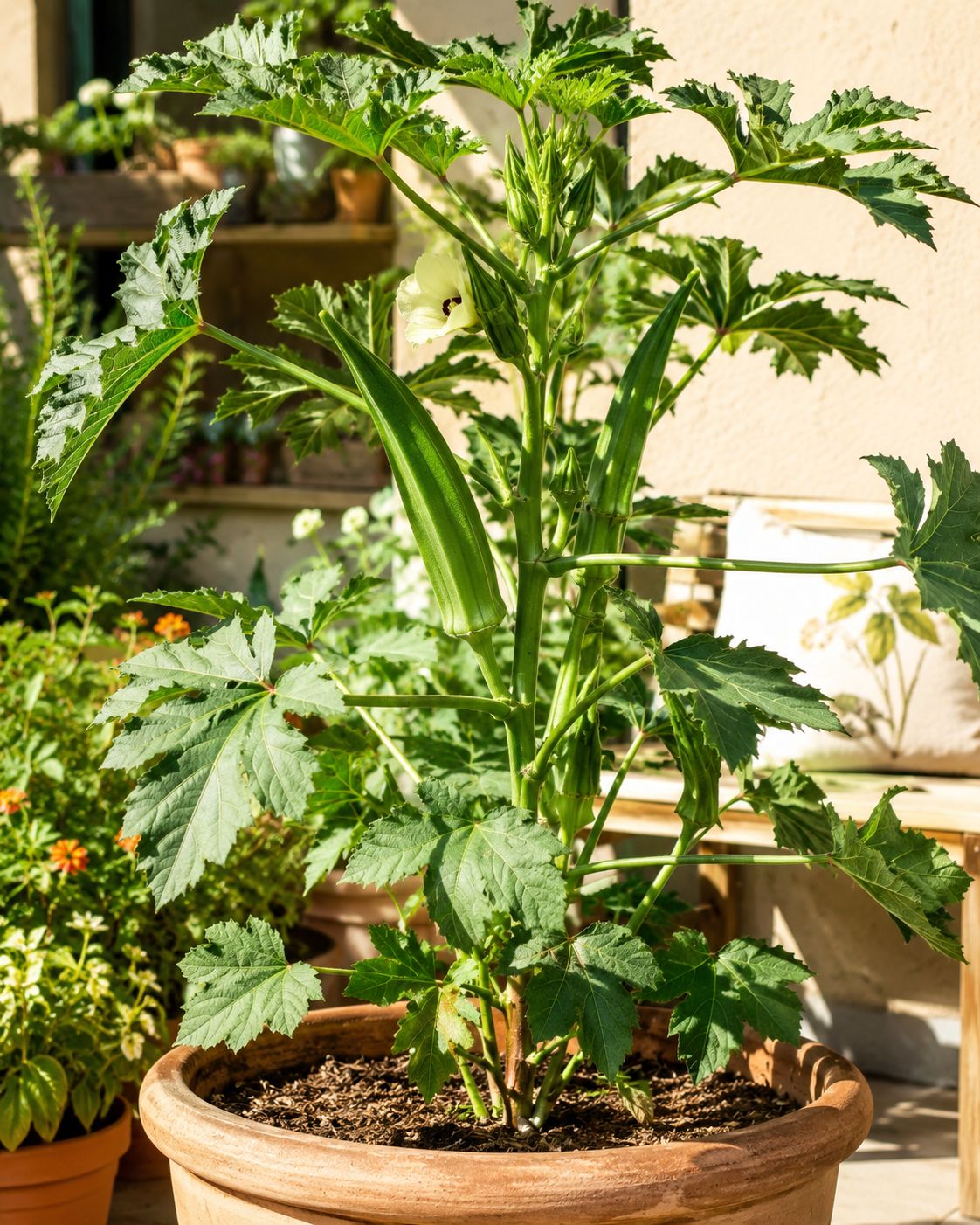
Watering:
Okra needs consistent moisture — particularly during flowering and pod development. Water when the top 2.5 cm (1 inch) of soil feels dry. In peak summer heat, potted okra may need watering every day or every other day. Drought stress during flowering causes significant flower drop — up to 30% of flowers can fall without setting pods during dry spells. Consistent moisture prevents this.
At the same time, do not let the pot sit in standing water. Okra hates waterlogged roots. Water thoroughly, let it drain completely, then check again the next day.
A layer of mulch — straw, dry leaves, or compost — on the soil surface retains moisture between waterings, keeps root temperatures lower in intense heat, and reduces how often you need to water. In summer this is one of the highest-impact things you can do for an okra plant in a pot.
Sunlight:
Okra needs at least 6 to 8 hours of direct sunlight daily. Less than 6 hours reduces flower production by up to 50% and delays fruiting by several weeks. Place your pot in the sunniest spot available. South or west-facing balconies and patios in the northern hemisphere, north or west-facing in the southern hemisphere, are ideal. A position against a south-facing wall — which reflects heat and increases ambient temperature by several degrees — extends the growing season and boosts production in marginal climates.
Staking:
Okra plants get tall — sometimes very tall. Stake them when they reach 60–75 cm (2–2.5 feet) to prevent stem breakage in wind, especially once the plant is carrying the weight of multiple pods. A bamboo cane tied loosely to the main stem is all that is needed.
Feeding:
Feed every 2–3 weeks during the growing season.
During the vegetative stage — when the plant is building its leaves and stem — use a balanced fertiliser. When the first flower buds appear, switch to a low-nitrogen, high-potassium formula. Too much nitrogen at the flowering stage pushes the plant to produce more lush leaves rather than pods. Banana peel water — peels soaked overnight and diluted — provides a free potassium boost that genuinely encourages pod set. Apply it once a week during flowering and you will notice the difference.
Step 05 — Flowers and Pollination
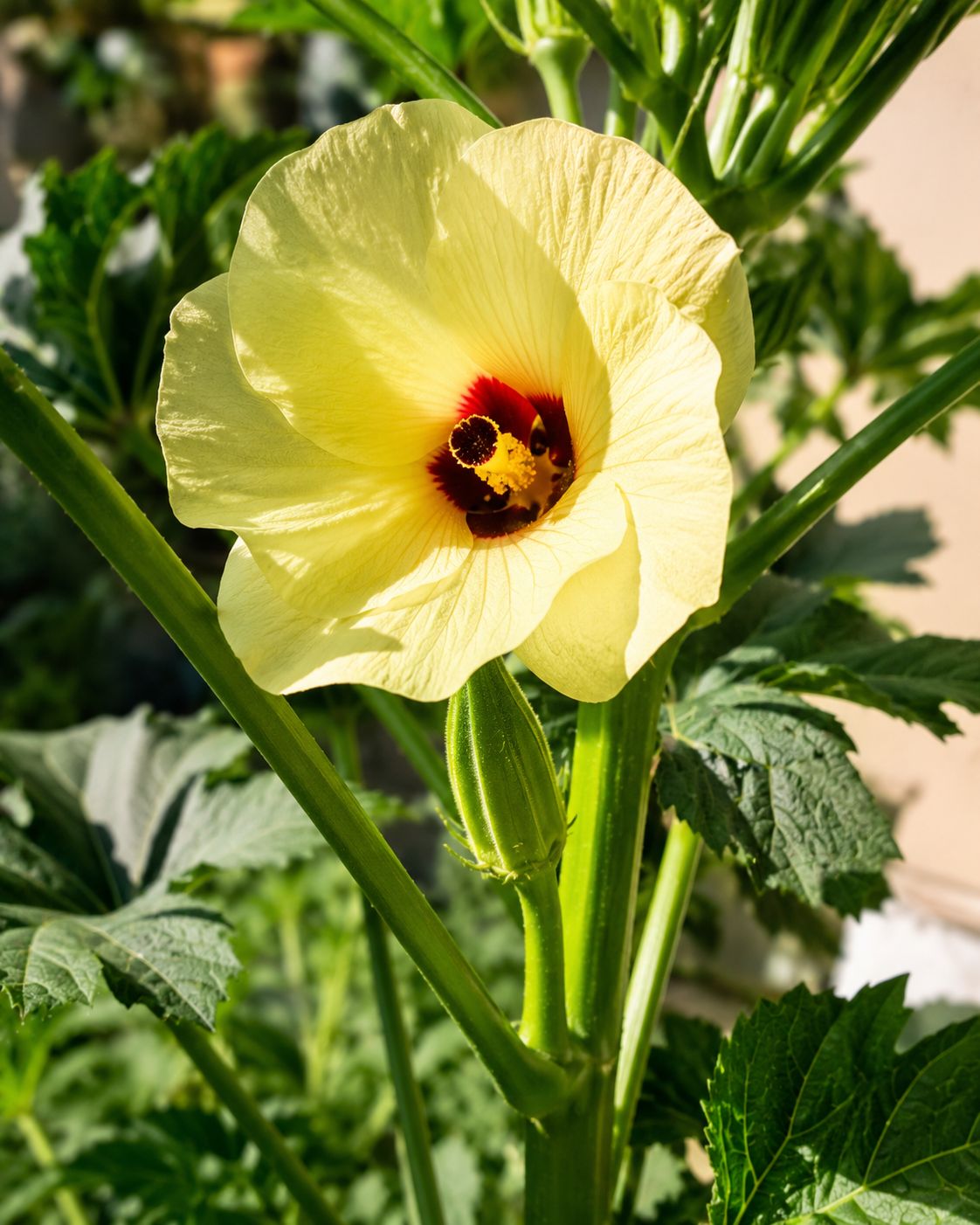
The flowers are the part most beginners do not expect. Each flower opens for just one day — a large, delicate, hibiscus-like bloom in pale yellow with a deep red or maroon centre. By the evening of the same day, it closes and begins to transform into a pod. It is genuinely one of the most beautiful things that happens in a vegetable garden.
Okra is self-pollinating — pollen transfers within the same flower without requiring a separate plant, insect, or wind. You do not need to do anything to encourage pollination. However, in completely enclosed spaces with no airflow or insect access, giving the open flowers a very gentle shake during the morning helps ensure pollen reaches the stigma.
The pod begins developing immediately after the flower closes. Growth is fast — a pod can go from invisible to 5 cm long in just 4–5 days in warm weather. This is why checking every 2–3 days is essential.
Step 06 — The Daily Harvest Rule
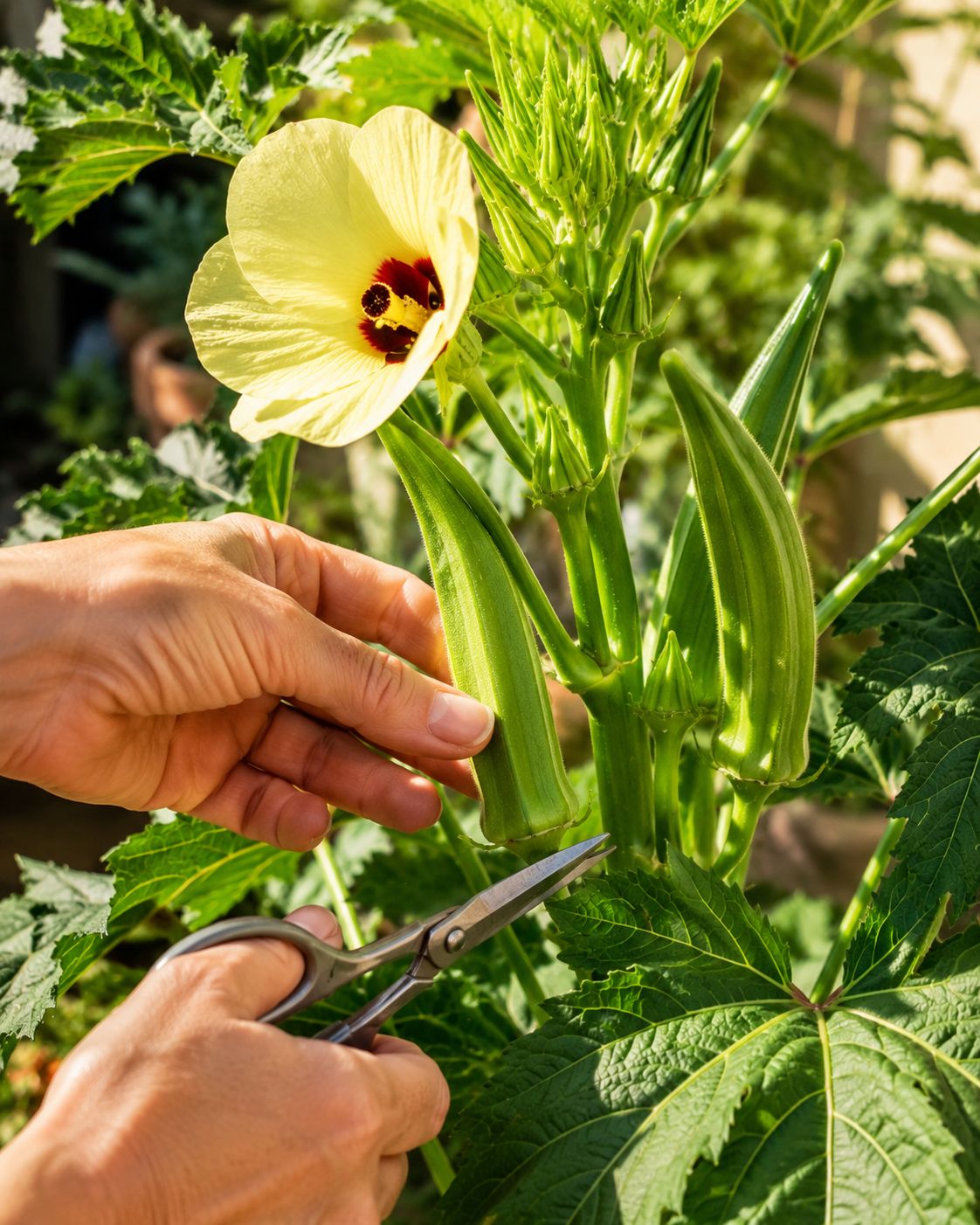
This is the single most important thing to know about okra — and the rule that separates a plant that produces for three months from one that slows down and stops after six weeks.
Harvest frequently. Never let pods over-mature on the plant.
Pods are ready when they are 5–8 cm (2–3 inches) long, bright green, firm, and snap cleanly when bent. At this stage they are tender, flavourful, and at peak nutritional value.
Leave them beyond this — 10, 12, 15 cm — and they turn woody and fibrous. The seeds inside enlarge and the texture becomes tough and unpleasant. But more critically, an over-mature pod sends a chemical signal to the plant that its job is done. Seed has been set. The plant reduces its production of new flowers. Your harvest window shrinks.
Regular harvesting does the opposite — it tells the plant to keep working, keep flowering, keep producing. Check your plant every 2–3 days. Never skip more than 3 days in peak season. Harvest everything that is ready at each picking.
How to harvest:
Use sharp scissors or a knife to cut the pod cleanly just above the cap. Do not pull or twist — this can damage the stem and stress the plant. A clean cut is always better.
Gloves for sensitive skin:
Some people find the tiny spines on okra stems and pods cause mild skin irritation. If this applies to you, thin rubber or gardening gloves during harvest make it more comfortable. Spineless varieties like Clemson Spineless significantly reduce this issue.
How to Use Fresh Okra
- 🍲 Sliced into curries and stews — absorbs flavours beautifully and thickens the sauce naturally through its natural mucilage
- 🍳 Sliced and stir-fried with onion, garlic, and spices — quick, dry cooking reduces the mucilaginous texture
- 🥘 Whole in tomato-based stews — West African, Middle Eastern, and Mediterranean style
- 🍜 Added to soups — the natural thickening quality is essential in Louisiana gumbo
- 🔥 Grilled or roasted whole with olive oil and salt — char the outside and the texture changes completely
- 🥗 Young, very small pods eaten raw in salads — tender and mild when harvested young
- 🍟 Sliced, battered, and fried — a classic preparation across the American South
Common Problems and Fixes
| Problem | Cause | Fix |
|---|---|---|
| Seeds not germinating | Cold soil, old seeds, or planted too deep | Ensure soil above 18°C, soak seeds 24 hours before sowing, plant 2.5 cm deep only |
| Slow growth, pale leaves | Too cold, not enough sun, or nutrient deficiency | Move to warmer, sunnier spot. Feed with balanced fertiliser |
| Flowers dropping without pods | Drought stress, temperature extremes, or poor pollination | Water consistently, especially during flowering. Gently shake flowers in the morning |
| Pods becoming woody and tough | Harvested too late | Check every 2–3 days. Harvest at 5–8 cm — never leave them to enlarge |
| Plant stops producing | Over-mature pods left on plant | Remove all old pods immediately. Resume frequent harvesting |
| Yellow leaves | Overwatering, nutrient deficiency, or natural ageing of lower leaves | Check soil drainage. Feed regularly. Remove very old lower leaves — normal ageing |
| Aphids or whiteflies | Common in warm weather | Neem oil spray every 7–10 days. Insecticidal soap for active infestations |
| Plant falling over | Too tall, insufficient support | Stake with bamboo cane tied loosely to main stem |
| Mildew on leaves | Poor airflow, overhead watering | Space plants adequately, water at base only, spray baking soda solution weekly |
Okra vs Other Warm-Season Vegetables
| Okra | Tomato | Chilli | Cucumber | Eggplant | |
|---|---|---|---|---|---|
| Days to first harvest | 50–65 | 60–80 | 70–90 | 50–60 | 65–80 |
| Pot size needed | Large | Large | Medium | Large | Large |
| Heat requirement | ⭐⭐⭐ Very high | ⭐⭐ Medium | ⭐⭐ Medium | ⭐⭐ Medium | ⭐⭐ Medium |
| Harvest frequency | Every 2–3 days | Every few days | Weekly+ | Every 2–3 days | Weekly |
| Self-pollinating | ✅ Yes | ✅ Yes | ✅ Yes | ❌ Needs pollinators | ✅ Yes |
| Grows in pots | ✅ Yes | ✅ Yes | ✅ Yes | ✅ Yes (trellis) | ✅ Yes |
| Difficulty | ⭐⭐ Easy-Medium | ⭐⭐ Easy-Medium | ⭐⭐ Easy-Medium | ⭐⭐ Easy-Medium | ⭐⭐ Easy-Medium |
Quick Care Summary
| Care | Requirement |
|---|---|
| ☀️ Sunlight | Full sun — 6–8 hours minimum |
| 💧 Watering | Every 1–2 days in peak summer — consistently moist |
| 🌡️ Temperature | 21–35°C (70–95°F) for best production |
| 🪴 Pot | 5 gallon (19L) minimum per plant — taller as it grows |
| 🌱 Soil | Compost-rich, well-draining — pH 6.0–7.0 |
| 🌿 Feeding | Balanced until flowers; switch to high-potassium at flowering |
| ✂️ Harvest | Every 2–3 days at 5–8 cm long — never let pods over-mature |
| 🌸 Flowers | Self-pollinating — no action needed |
| 📅 Sow time | When soil above 18°C (65°F) — after last frost |
| 🔄 Pinching | Pinch growing tip at 30–45 cm to encourage branching |
Part of the Instantly Grow Series by Seedora Store — grow the vegetables your kitchen actually uses, every single day.