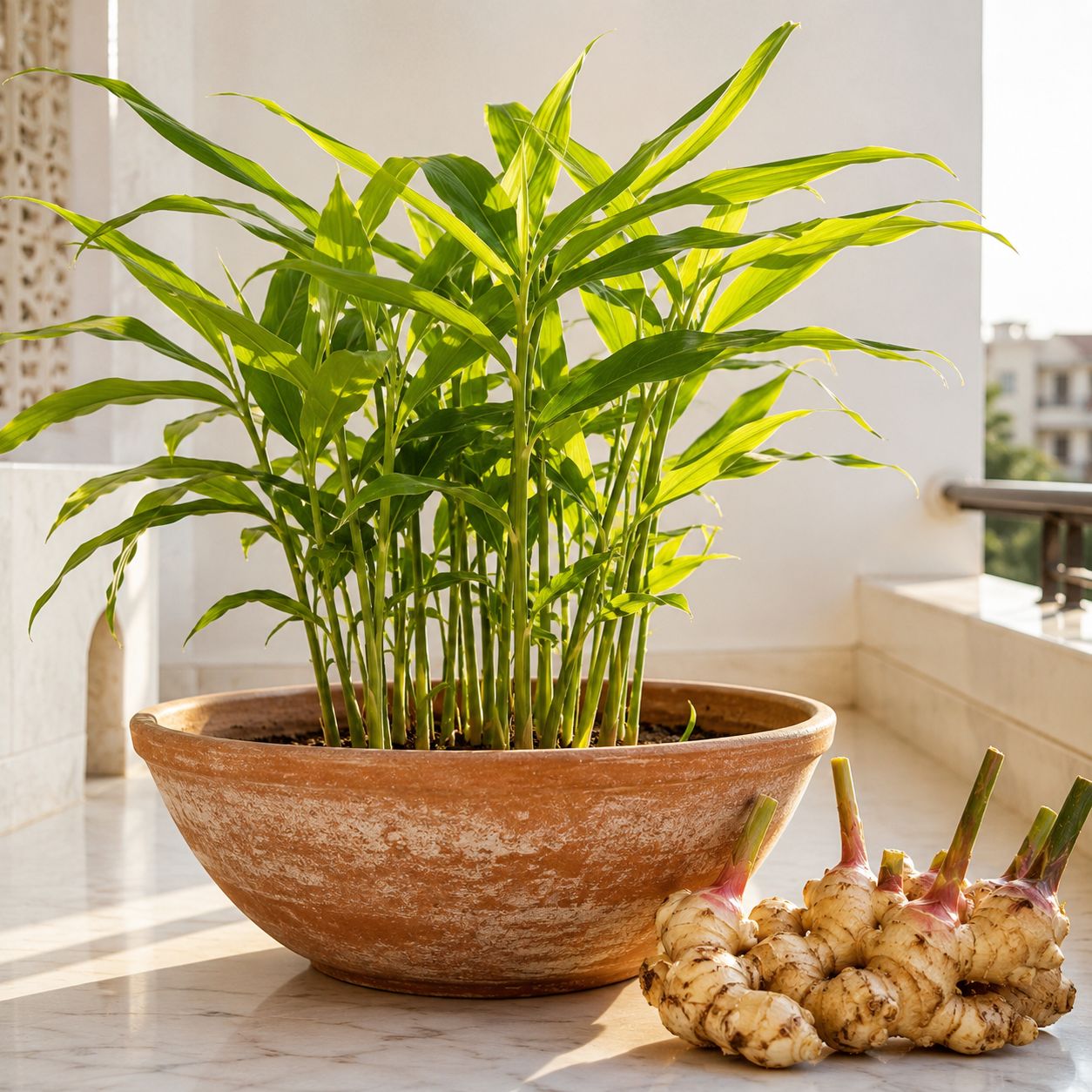
Open your fridge right now. There is a good chance there is a small piece of adrak sitting in there — bought for last week's karahi or this morning's chai. Look closely at it. If you see small bumps or greenish nubs at the tips, you are looking at a plant waiting to happen.
That single piece of ginger root is everything you need to start.
Adrak is one of the most forgiving things you can grow at home. It does not need rare seeds, special soil, or expensive equipment. It needs a wide, shallow pot, warmth, patience, and a piece of root you probably already own. From that one piece, you can grow a plant that gives you fresh ginger for years — and every harvest leaves enough rhizome behind to keep the plant going indefinitely.
This is not a fast crop. It takes eight to ten months from planting to a full mature harvest. But unlike garlic, which demands your patience and gives nothing back until harvest day, ginger lets you start taking small amounts much earlier — and the plant itself looks genuinely beautiful on a balcony the entire time it grows.
Here is exactly how to do it.
What Is Adrak Called Around the World?
| Region | Local Name |
|---|---|
| 🇵🇰 Pakistan / Urdu | ادرک (Adrak) |
| 🇮🇳 Hindi | अदरक (Adrak) |
| 🇸🇦 Arabic | زنجبيل (Zanjabeel) |
| 🇮🇷 Persian / Farsi | زنجبیل (Zanjabil) |
| 🇫🇷 French | Gingembre |
| 🇮🇹 Italian | Zenzero |
| 🇨🇳 Chinese | 姜 (Jiāng) |
| 🌐 Scientific | Zingiber officinale |
🌿 Adrak has been used in South Asian, Chinese, and Middle Eastern cooking and medicine for over four thousand years. It has a long history in Asian cooking and herbal medicine, and was traded at great expense along the Silk Road throughout the Middle Ages — at one point a pound of ginger was worth as much as a whole sheep. In Pakistani households it appears in nearly everything savoury, and in Unani medicine it is one of the most trusted remedies for digestion, nausea, and cold-weather ailments.
Where to Get Your First Rhizome
You have two options, and both work well in Pakistan.
Option A — Your Own Kitchen (Easiest)
Go to your fridge or sabzi mandi and buy a fresh piece of adrak. Look for pieces that are firm, healthy-looking, not dry or shriveled, with no signs of damage and ideally showing small eyes — the little nubs, similar to the eyes on a potato, that will grow into shoots.
There is one catch. Grocery store ginger is sometimes treated with a sprout inhibitor to keep it from sprouting prematurely on the shelf. The fix is simple: soak store-bought ginger roots in water for 24 hours before planting and discard the water afterward. This removes most of the inhibitor and significantly improves your chances of success.
Option B — A Nursery or Plant Seller (More Reliable)
If available, organic or untreated ginger rhizomes from a nursery sprout more reliably and faster than treated grocery store ginger. This is not essential in Pakistan, where market ginger generally sprouts well, but worth knowing if your first attempt does not take.
🌱 What you are looking for: A piece that feels heavy for its size, has smooth unwrinkled skin, and shows at least one or two small greenish or pink "eyes" near the tip. These eyes are the little nubs, like the ones on potatoes, that will grow into roots and shoots under the right conditions.
Step 01 — Wake the Rhizome Up
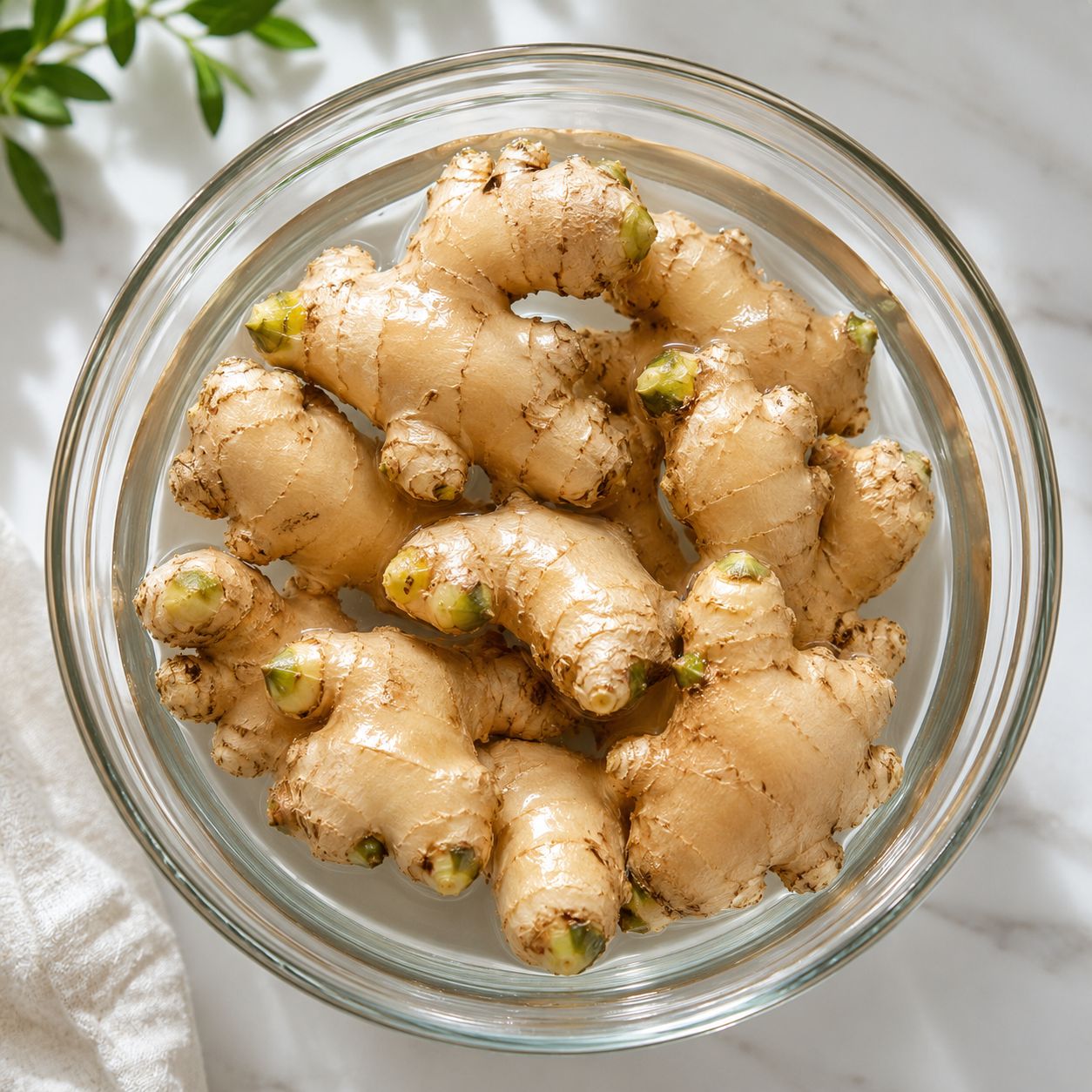
Before anything goes into soil, your ginger needs to be prepared properly. This single step prevents most of the failures beginners experience.
Soak it. Place your ginger piece in a bowl of warm water and let it sit overnight, roughly 24 hours. This rehydrates the rhizome, rinses off any sprout inhibitor or chemical residue, and signals to the root that conditions are right to wake up.
Cut it, if needed. If your piece is large with multiple eyes, you can divide it. Like potatoes, ginger rhizomes have eyes or buds, and rhizomes can be planted whole or cut into pieces, each with a bud. Cut your ginger into fragments and allow it to sit out for a day to become dry and form a callus, making sure that each piece you plant has an eye so that it will sprout properly.
This callusing step matters. A freshly cut, wet surface placed directly into damp soil is an invitation for rot. Let the cut edge air-dry for one to two days until it feels slightly leathery before planting.
💡 Bigger piece, bigger plant. The larger the rhizome you use, the quicker it sprouts and the larger your eventual harvest. If you only have room for one or two plants, use a larger piece with several eyes rather than many tiny pieces.
Step 02 — Choose the Right Pot and Soil
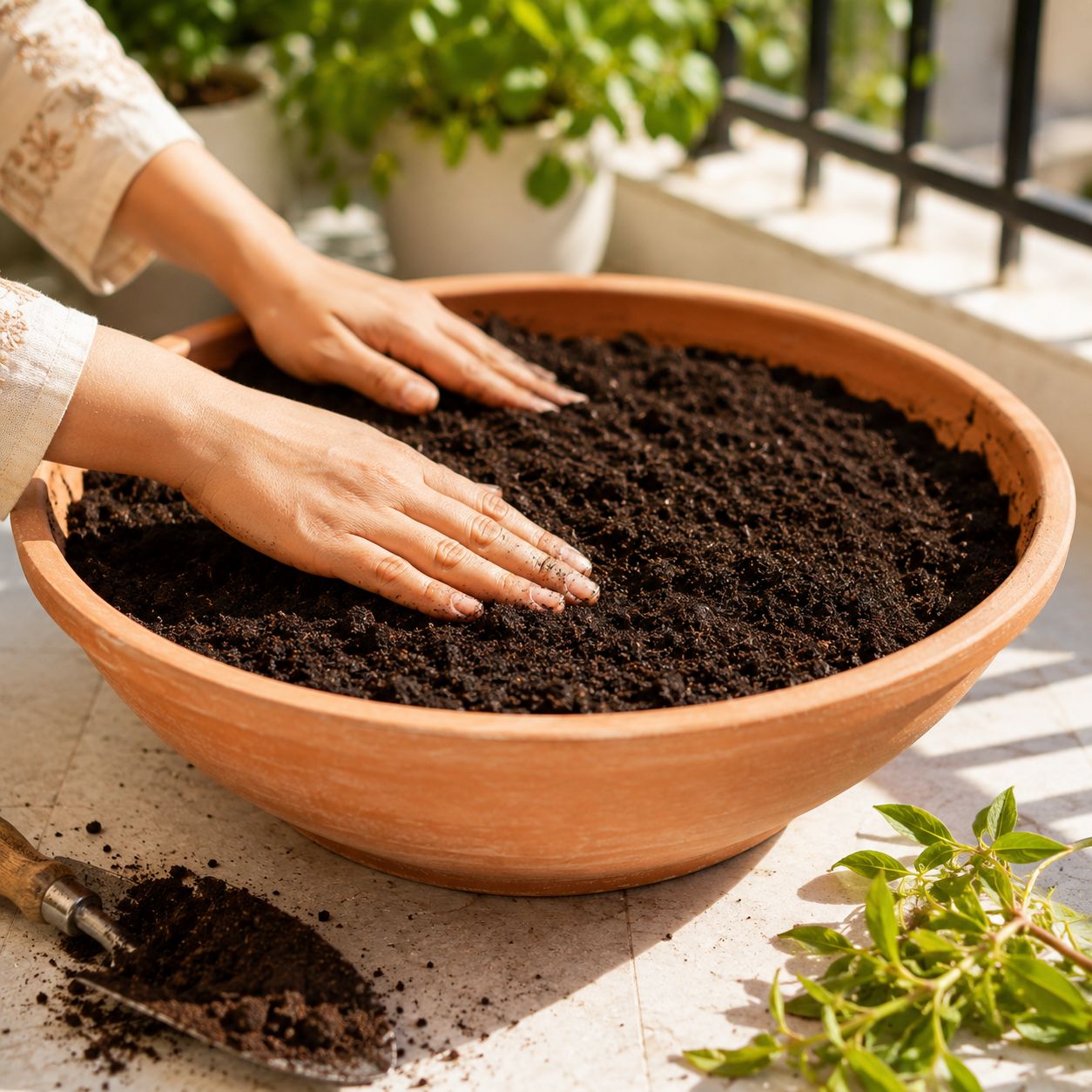
Ginger grows differently from almost everything else in this series. It does not send a root straight down — it spreads sideways, just under the surface, growing into a wide flat clump. This changes everything about the pot you choose.
Go wide, not deep. Ginger wants to grow horizontally, so the wider the pot the better your ginger will fare. If you are planting your ginger in a pot, use one at least 12 inches deep — but width matters even more than depth here. A shallow, broad container, similar to a bonsai planter, gives the rhizome the room it needs to spread without restriction.
A single rhizome piece does well in a pot roughly 30 cm wide. If you are planting several pieces together, scale up to a wide tub or a half-barrel — every additional piece needs its own spreading room.
Soil matters enormously for ginger. Ginger thrives in open, spongy soil that mimics the conditions it enjoys in its native southeast Asia, where it grows amongst leaf litter in steamy, shaded humidity. Mix:
- 50% good potting soil or garden loam
- 30% well-rotted compost or decomposed manure (gobar khaad)
- 20% coarse sand, perlite, or rice husk for drainage and lightness
You want to plant your ginger in well-draining soil to prevent rot, and mildly acidic soil is best — aim for a pH around six to six-and-a-half. If you have access to garden compost mixed with composted bark or coir, even better — it keeps the mix light while staying rich.
Drainage holes at the base of the pot are absolutely essential. Ginger rhizomes rot quickly in waterlogged soil.
| Care | Requirement |
|---|---|
| ☀️ Sunlight | Partial shade — 2 to 5 hours, avoid harsh afternoon sun |
| 💧 Watering | Light until sprouted, then consistently moist |
| 🌡️ Temperature | 21–29°C ideal for sprouting and growth |
| 🪴 Pot | Wide and shallow — minimum 30 cm wide |
| 🌱 Soil | Rich, loose, well-draining — compost essential |
| 📅 Best time to plant (Pakistan) | February – April |
Step 03 — Plant It
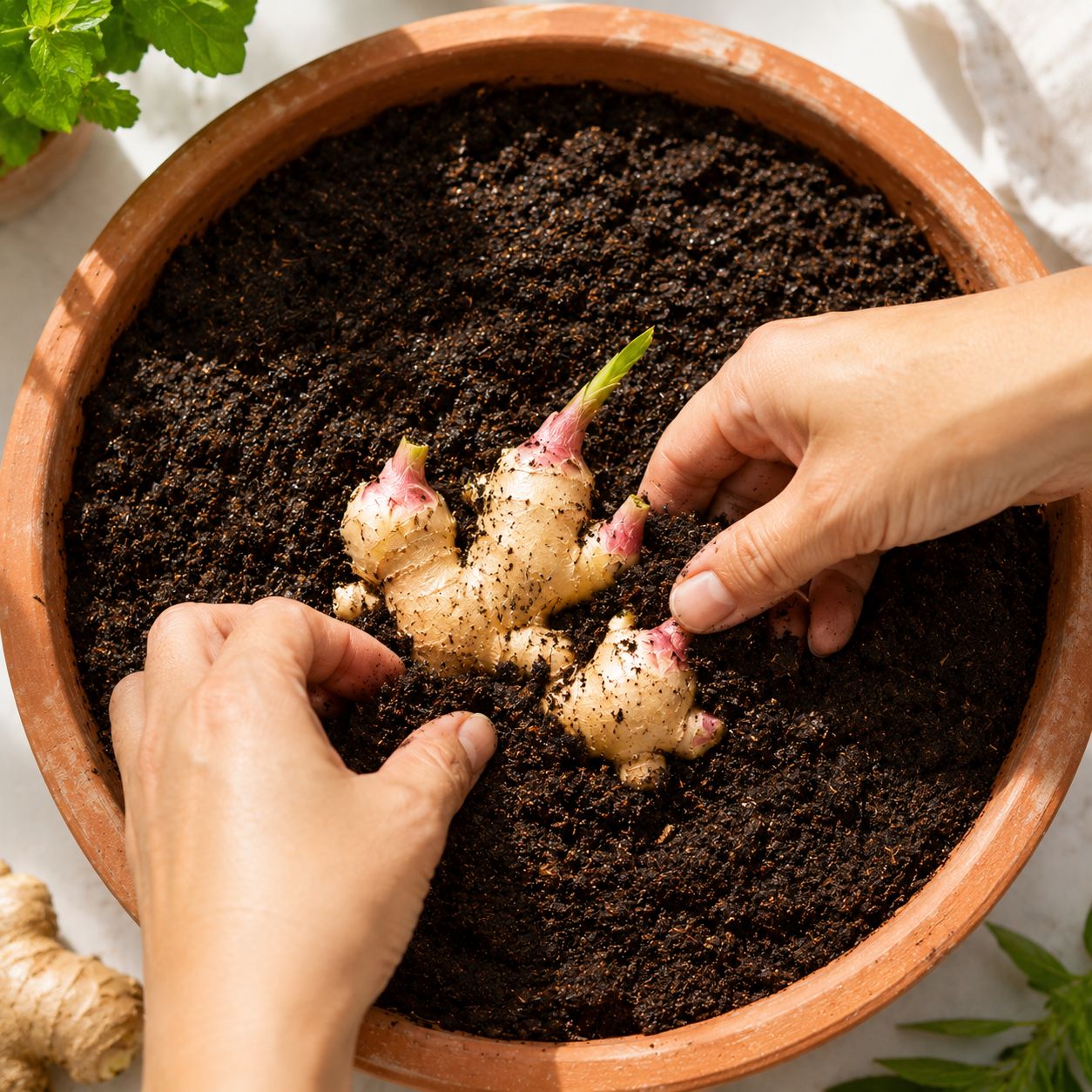
Here is the part that surprises most beginners. Ginger does not want to be buried deep. It wants to sit close to the surface.
Fill your pot with the prepared soil mix, leaving about 5 cm of space below the rim. Place the ginger rhizome on top in the middle, and cover over just barely — these rhizomes prefer to sit at the surface rather than be buried deeper down, where they might rot away.
A planting depth of 2 to 4 cm is ideal. Position the piece so any visible eyes or buds point upward toward the soil surface. If you cannot tell which way is up, do not worry too much — the plant generally sorts itself out as it grows.
Water it in gently after planting — just enough to settle the soil around the rhizome, not a heavy soak. Go easy on watering while the ginger is yet to sprout, since the rhizome could rot if kept too wet during this dormant period.
🌱 The waiting game begins now. It may take several weeks before you begin to see growth — it can take up to fifty days or more for ginger to sprout, and during that time the rhizome does not need much water or light. This is completely normal. Resist the urge to dig it up and check. Place the pot somewhere warm, check the soil surface occasionally, and be patient.
Step 04 — Care While It Grows
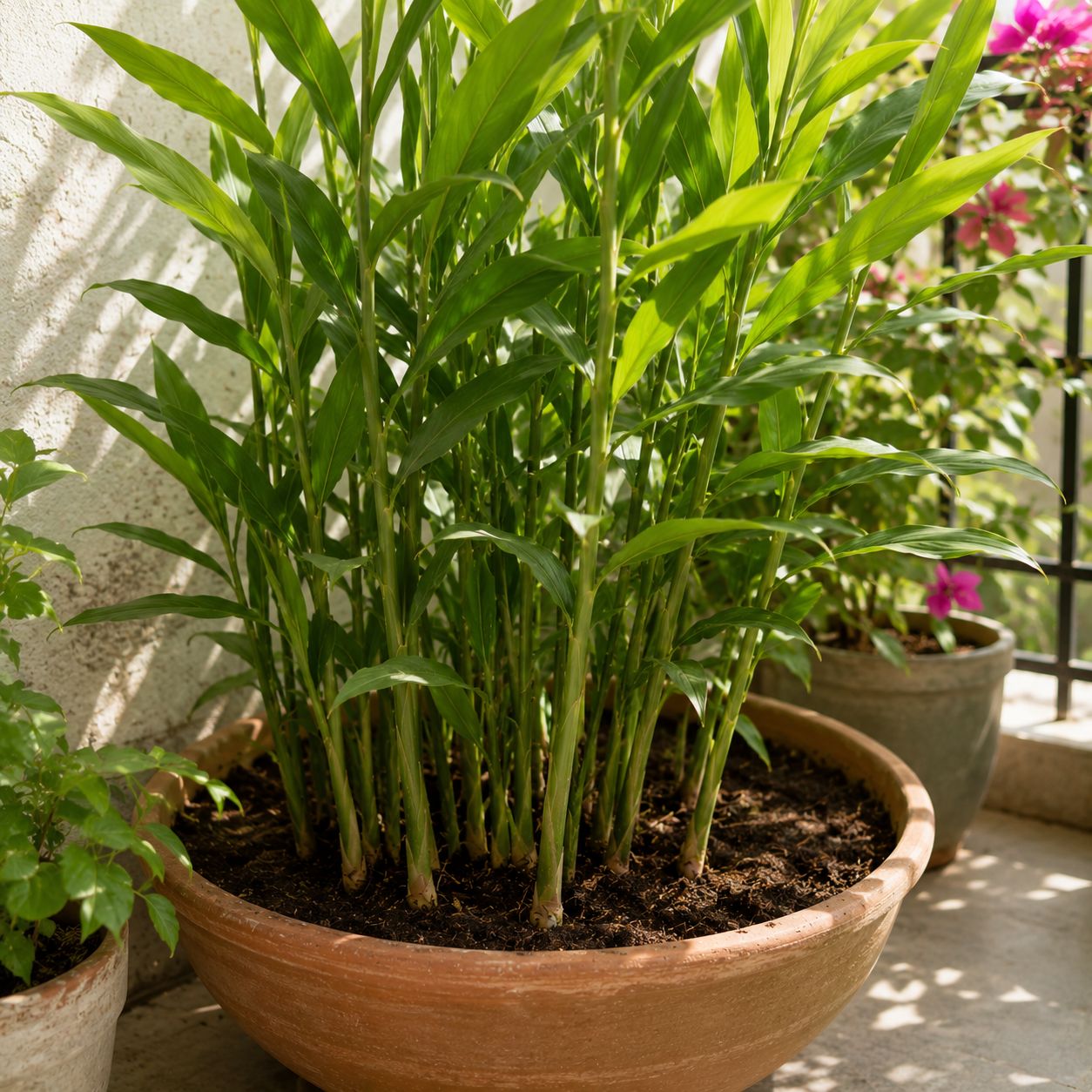
Once the first green shoots break through the soil — usually four to eight weeks after planting in good conditions — your ginger plant officially exists, and the care routine shifts.
Light: Unlike shimla mirch or tomatoes, ginger does not want full sun. Ginger thrives in partial shade with only about two to five hours of sun a day. In Pakistan, this usually means morning sun and afternoon shade — a balcony spot that gets gentle light rather than harsh, direct midday sun. Too much intense sunlight can cause leaf tips to brown and scorch.
Water: Once the plant is actively growing, watering needs increase considerably. It will need regular watering to mimic the frequent rain showers of its natural habitat, and because the growing medium is very well-draining, you need to keep a close eye to ensure it doesn't dry out — in warmer weather this can mean watering every day. Keep the soil consistently moist but never soggy. If leaf edges start turning brown, that is usually a sign the plant is water-stressed and needs more frequent watering.
Humidity: Ginger is a tropical plant that loves humidity. Misting the leaves occasionally during hot, dry Pakistani afternoons helps replicate its natural rainforest-floor environment and keeps growth lush.
Feeding: Ginger is a hungry plant that benefits from regular feeding throughout its long growing season. A slow-release fertiliser mixed into the soil at planting works well, supplemented with an occasional liquid seaweed feed or diluted compost tea every few weeks. Banana peel water, soaked overnight and diluted, also makes an excellent free potassium boost during active growth.
Mounding: As the plant matures, new rhizomes push upward and can become exposed at the soil surface. When you see pink or pale rhizome tissue poking through, add a thin layer of fresh soil or compost over the top — a practice called hilling or mounding. This protects the developing rhizomes from sunlight (which toughens the skin and can affect flavour) and encourages the clump to keep expanding.
Step 05 — Harvest: Two Ways to Do It
This is where adrak becomes genuinely special compared to almost everything else in this series — you get to choose how and when you harvest, and the plant rewards you either way.
Method 1 — Sneak a Little Early (Baby Ginger)
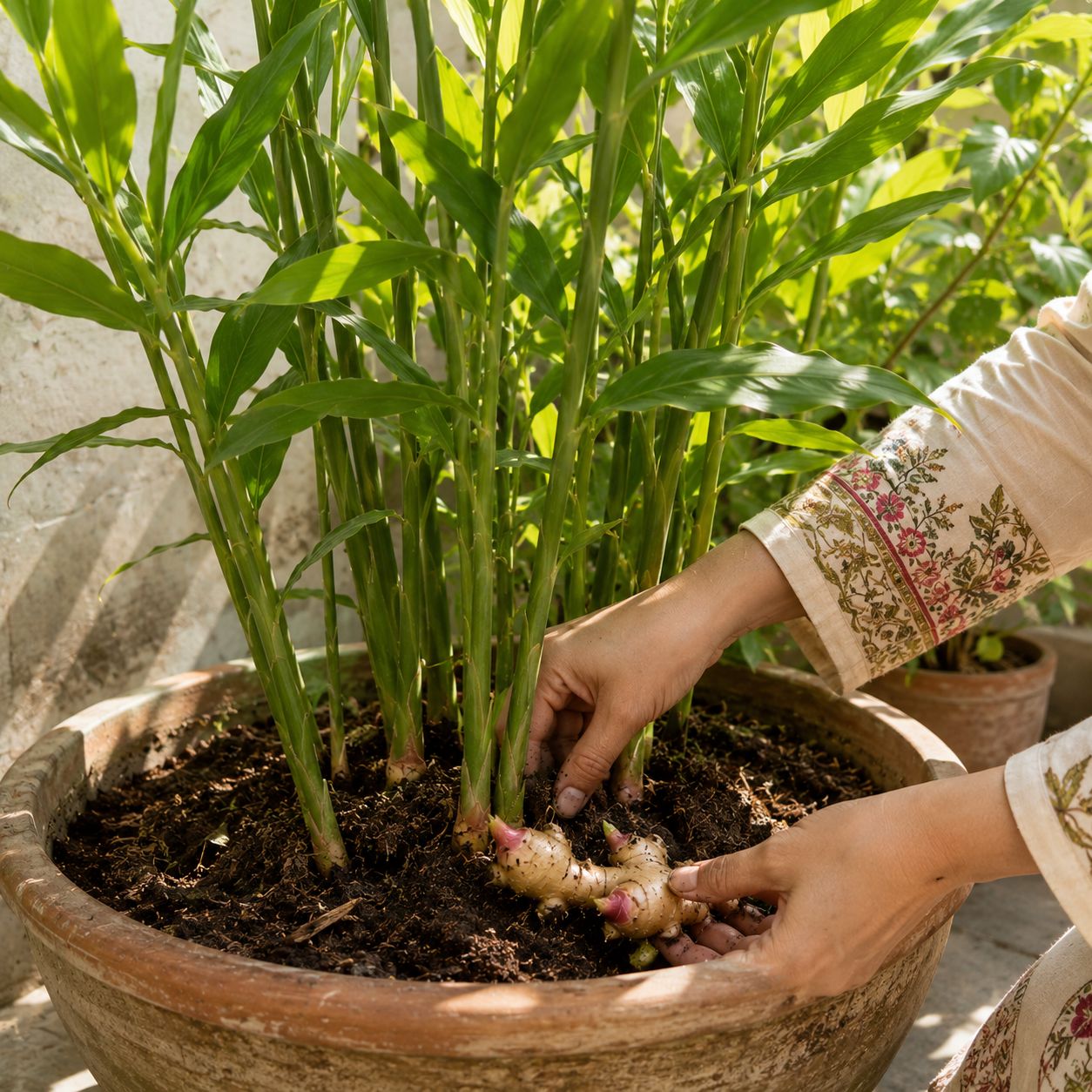
You do not have to wait the full eight to ten months to use your own ginger. Once the plant is well established — usually three to four months in — you can carefully dig around the base with your fingers, locate a piece of rhizome at the edge of the clump, and snap or cut off a small portion. Cover the area back over with soil and let the rest of the plant continue growing undisturbed.
This younger rhizome, often called baby ginger, has thinner skin, a milder and slightly sweeter flavour, and does not need peeling before use. Use your fingers to unearth a bit of rhizome, cut a small portion off with a sharp knife, replace it with potting soil or compost, and allow your ginger to continue to grow — in this way, you can harvest ginger from a single pot forever.
Method 2 — Full Mature Harvest
For a stronger, more pungent, longer-storing ginger, wait for the full growing cycle. Ginger will start to slow down and stop making new leaves in late summer, and any time after that is okay to harvest — the entire crop typically takes eight to ten months. The plant will stop producing leaves in late summer, and you can harvest the roots any time after this.
To harvest, simply remove the rhizome from the soil — you can take all of it, or cut a portion and re-pot the rest, keeping it in a warm spot if you want the plant to continue. Wash thoroughly before using or storing.
✂️ The smartest approach: Harvest small baby ginger pieces from the edges of the clump throughout the growing season for everyday cooking, and let the centre of the plant mature fully for a larger harvest at the end of the season. One pot, continuous supply, almost no waste.
How to Use Fresh Adrak Every Day
- 🍵 A thin slice crushed into your morning chai — the classic Pakistani start to the day
- 🍳 Grated adrak-lehsan paste as the base of karahi, qorma, daal, and nihari
- 🍲 A few slices simmered into soup or shorba for cold and flu relief
- 🥗 Julienned fresh into salads or raita for a sharp, fresh bite
- 🍋 Muddled with lemon and honey in hot water — a traditional digestive and immunity drink
- 🍪 Grated into desserts like gajar halwa or spiced cookies for warmth
Storing Fresh Adrak After Harvest
Short term — refrigerator: Unpeeled, unwashed adrak wrapped loosely in a paper towel and placed in the vegetable drawer keeps well for two to three weeks.
Long term — freezer: Wash, dry thoroughly, and freeze the whole piece or pre-grated portions in a sealed bag. Frozen adrak grates easily straight from frozen and works perfectly in cooking. Lasts several months with no real loss in flavour.
Replant instead of storing: The smartest storage method of all — leave a healthy piece of rhizome with eyes intact, pot it up again, and let it become next season's plant. This is genuinely the easiest way to guarantee a permanent home supply.
Common Mistakes to Avoid
| Mistake | What Happens | The Fix |
|---|---|---|
| Planting unsoaked grocery ginger | Sprout inhibitor prevents growth | Soak 24 hours before planting |
| Burying the rhizome deep | Rot, no sprouting | Plant only 2–4 cm deep, near the surface |
| Using a deep, narrow pot | Restricted spreading, small harvest | Use a wide, shallow pot instead |
| Full direct sun all day | Scorched, browned leaf tips | Partial shade — 2 to 5 hours of gentle sun |
| Heavy watering before sprouting | Rhizome rots before it wakes up | Water lightly until shoots appear |
| Digging it up too early to check | Disturbs delicate new roots | Be patient — sprouting can take up to 7–8 weeks |
| Letting soil dry out once growing | Brown, crispy leaf edges | Water consistently, check daily in hot weather |
Adrak vs Other Home Garden Crops
| Adrak (Ginger) | Lehsan (Garlic) | Shimla Mirch | Mint | |
|---|---|---|---|---|
| Time to first harvest | 3–4 months (baby ginger) | 6–8 months | 60–80 days | 3–4 weeks |
| Full harvest | 8–10 months | 6–8 months | Continuous | Continuous |
| Sunlight needed | Partial shade | Full sun | Full sun | Partial sun |
| Pot style | Wide and shallow | Deep | Deep | Any |
| Pakistan kitchen use | ✅ Daily | ✅ Every dish | ✅ Daily | ✅ Daily |
| Replants itself | ✅ Forever | ✅ Every year | ❌ | ✅ Forever |
| Difficulty | ⭐⭐ Easy-Medium | ⭐⭐ Easy-Medium | ⭐⭐ Easy-Medium | ⭐ Easiest |
Adrak is the patient cousin of mint and the shade-loving cousin of shimla mirch. It asks for a wide pot, a bit of shade, and several months of trust — and in return it gives you a plant that, once established, can keep producing fresh ginger from the very same pot for years without ever buying seed again.
Part of the Instantly Grow Series by Seedora Store — grow the vegetables your kitchen actually uses, every single day.