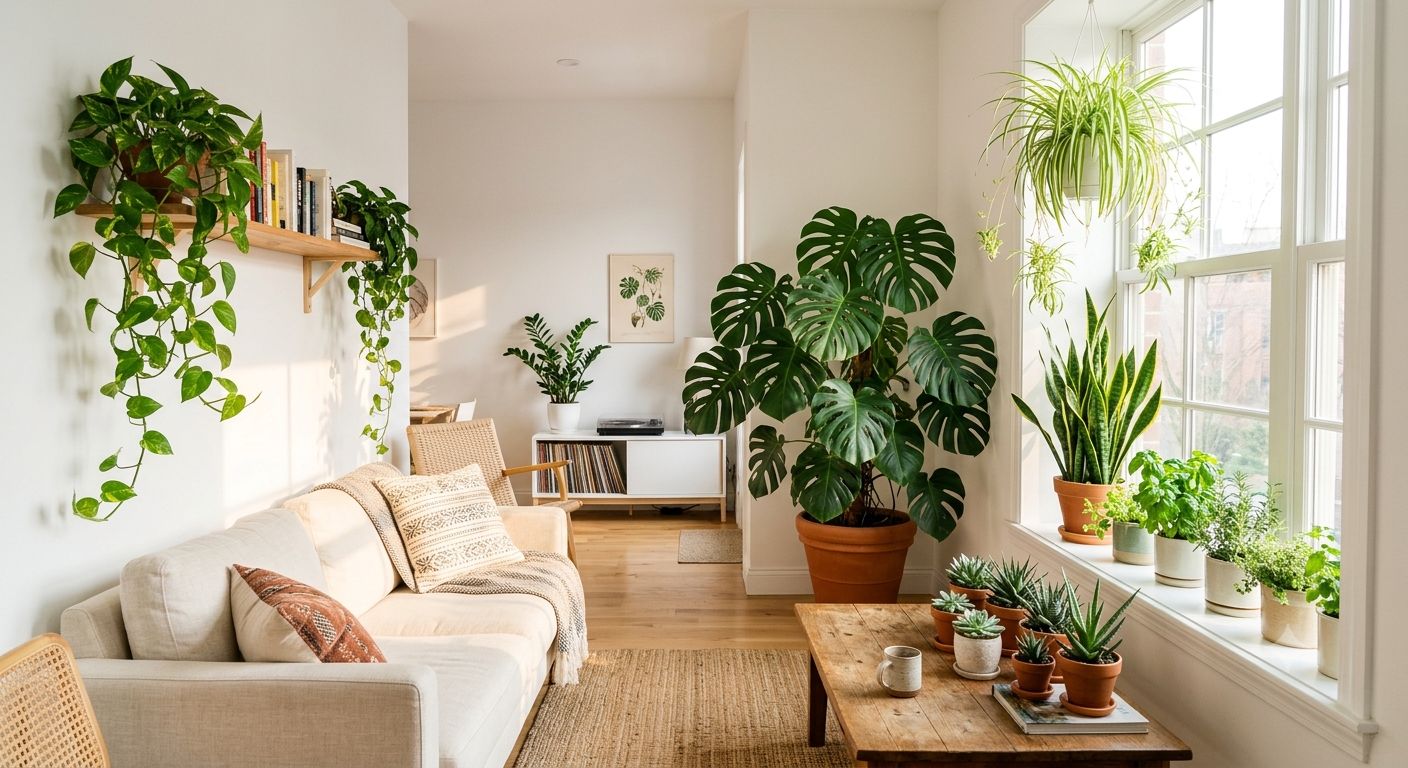
There is a plant for every person, every room, every lifestyle, and every level of attention you are willing to give.
Some people want something that looks after itself — a plant they can ignore for two weeks and come back to find exactly as they left it. Others want something dramatic — a giant split-leafed Monstera that takes over the corner of a room and makes everyone who walks in stop and stare. Some want fresh herbs on the kitchen windowsill, snipped into dinner every evening. Others want a trailing vine that cascades down shelves like a living curtain.
All of those plants exist. All of them are easier to grow than most people assume. And each one has its own full guide on the Seedora blog — linked throughout this page — so you can go from curious to confident in one read.
This is the hub. The complete map of indoor plants. Start here, find what fits your home and your life, and follow the link that goes deep.
How to Choose the Right Indoor Plant
Before the list, one principle that saves most beginners from their first failure.
Match the plant to the conditions you actually have — not the conditions you wish you had.
The most common reason houseplants die is not neglect. It is misplacement. A sun-loving succulent on a north-facing windowsill. A humidity-loving fern next to a radiator. A plant that needs consistent moisture given a once-a-week calendar watering.
Before buying anything, answer three questions:
How much light does my space actually get? Stand in the room at midday and look at your windows. Direct sun streaming in = bright direct light. Bright but no sun beam = bright indirect light. Dim, overcast-feeling light = low light. Most houseplants want bright indirect. Some genuinely tolerate low light. Very few survive true darkness.
How often will I realistically water? Be honest. If you are busy and forgetful, choose drought-tolerant plants — succulents, snake plants, ZZ plants. If you enjoy checking on plants regularly, you can try moisture-loving varieties.
How much space do I have? A Monstera in a small flat eventually needs the whole room. A Bird's Nest fern stays compact for years. Size matters both at purchase and at maturity.
With those three questions answered, everything else follows.
🏆 The Best Statement Plants — Plants That Fill a Room
Monstera Deliciosa — The Most Iconic Indoor Plant in the World
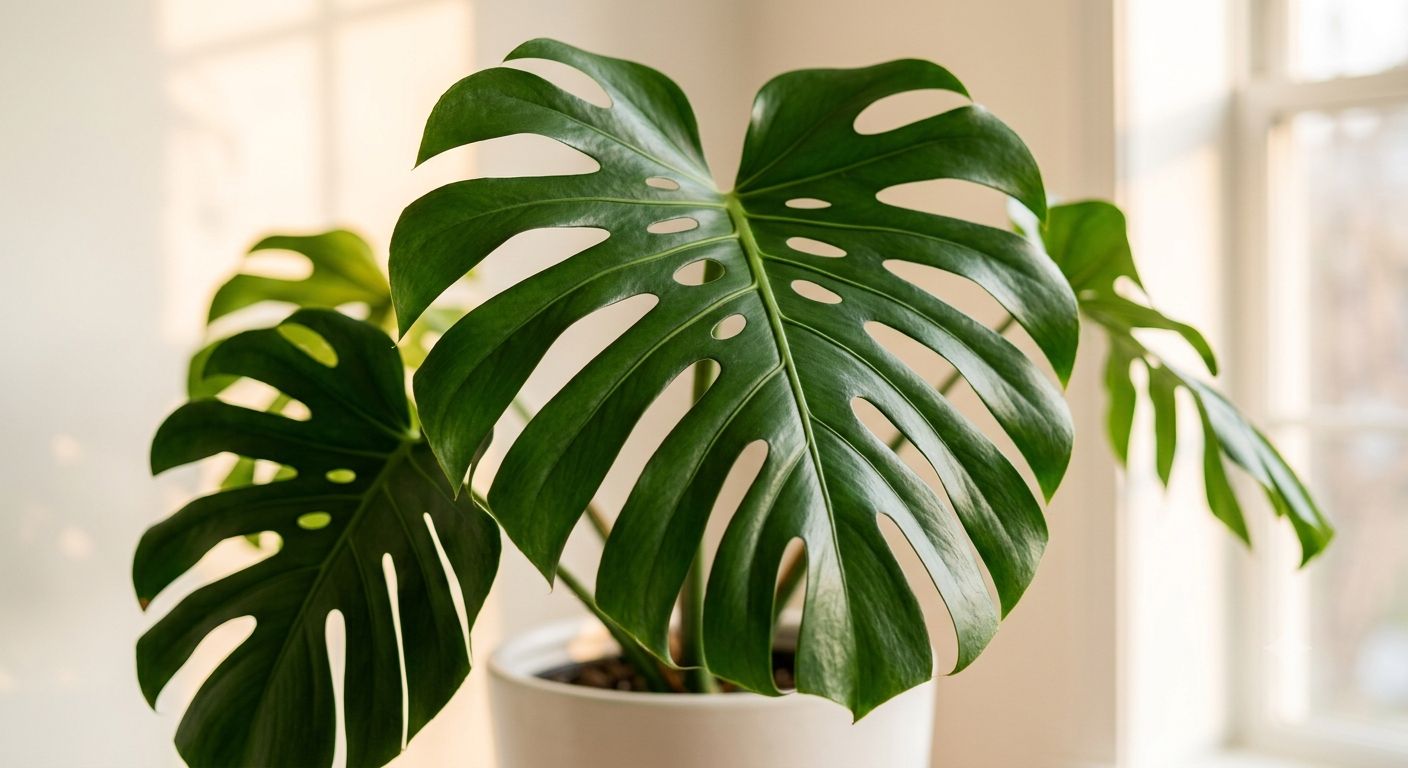
The Monstera is having a moment that has lasted a decade and shows no sign of stopping. Searches for Monstera care jumped 600% on Google Trends. The National Garden Bureau declared 2025 the Year of the Monstera. And walking into any home, cafe, or office right now, you will almost certainly find one.
The appeal is obvious. Those large, glossy, deeply split and perforated leaves — called fenestrations — look unlike anything else in the plant world. A healthy Monstera is genuinely architectural. It fills corners, creates focal points, and transforms a plain room into something that feels alive and tropical.
The quick care facts:
Monstera thrives in bright indirect light — an east or west-facing window is ideal. It needs watering when the top 2 inches (5 cm) of soil feel dry, roughly every 7 to 10 days in growing season. It loves humidity but adapts to average indoor conditions. It grows toward the light and upward — a moss pole gives it something to climb and produces significantly larger, more fenestrated leaves over time.
The one thing most beginners get wrong: overwatering. Monstera roots are highly sensitive to sitting in wet soil. Always let the top layer dry before watering again. The 75% rule — water only when the top two to three inches of soil are completely dry — is the most reliable approach.
Varieties to know:
The classic Monstera deliciosa is the large, dramatic one. Monstera adansonii is the smaller, trailing version with more delicate holes — perfect for shelves or hanging baskets. The Monstera Thai Constellation — creamy variegated leaves with white splashes — is the most coveted and searched variety among collectors right now.
Monstera is mildly toxic to pets and children if ingested — keep it out of reach.
| Light | Water | Humidity | Growth |
|---|---|---|---|
| Bright indirect | Every 7–10 days | Medium to high | Fast — can reach 6–8 ft indoors |
Philodendron — The Monstera's Easier, More Forgiving Cousin
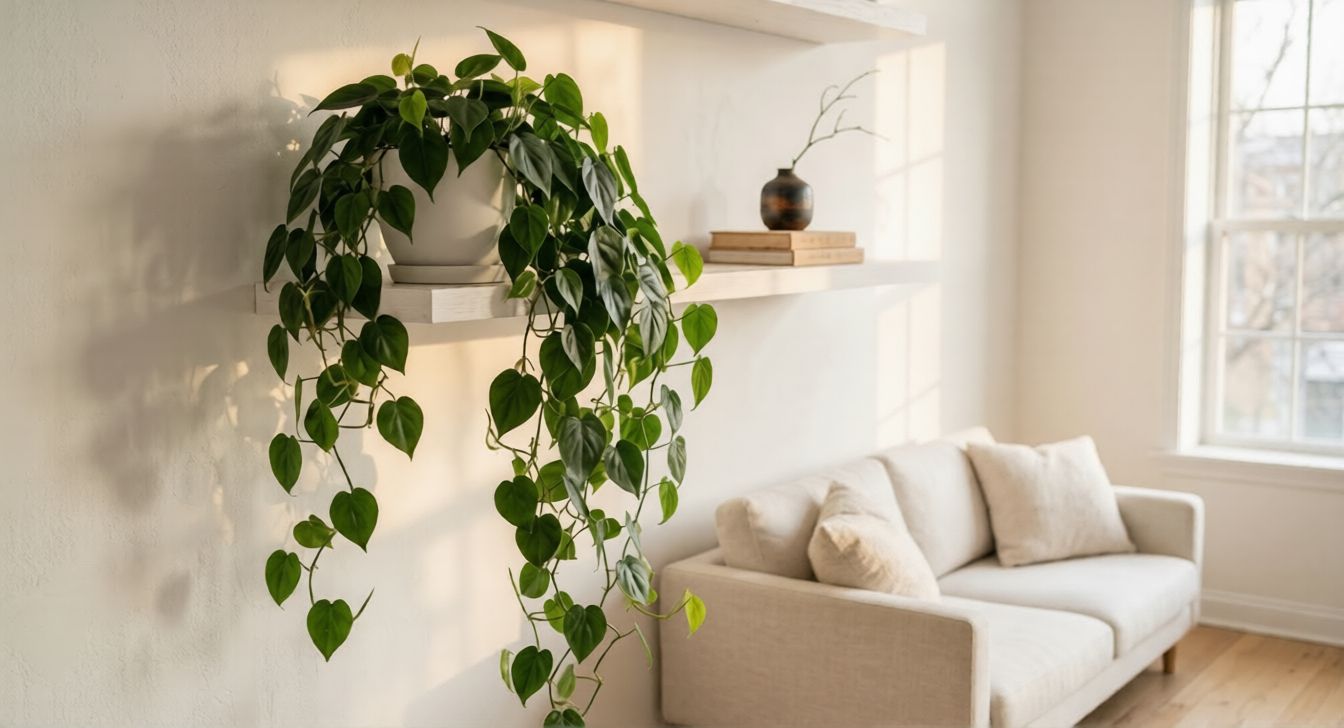
Philodendrons are often confused with Monsteras — and understandably so. Both are tropical aroids from Central and South America. Both have large, dramatic leaves. Both are extremely popular. The difference is that philodendrons are generally more forgiving of lower light and more tolerant of irregular watering than most Monsteras.
The Heartleaf Philodendron (Philodendron hederaceum) is the most common and most beginner-friendly — trailing dark green heart-shaped leaves that grow quickly and look beautiful in hanging pots or trained up a pole. The Philodendron Brasil adds golden-yellow variegation to the same trailing habit. The Philodendron Gloriosum has enormous velvety dark leaves with white veins and is one of the most sought-after collector plants right now.
The quick care facts:
Most philodendrons want bright to medium indirect light — more tolerant of lower light than Monstera. Water when the top inch of soil is dry. Feed monthly in spring and summer with a balanced liquid fertiliser. They trail or climb depending on variety — trailing types look stunning in hanging pots or cascading from high shelves, climbing types reward a moss pole with increasingly larger, more mature leaves.
| Light | Water | Humidity | Growth |
|---|---|---|---|
| Medium to bright indirect | Every 7–14 days | Medium | Moderate to fast |
🌿 The Best Low-Maintenance Plants — For Busy People and Beginners
Snake Plant — The One Plant That Survives Everything
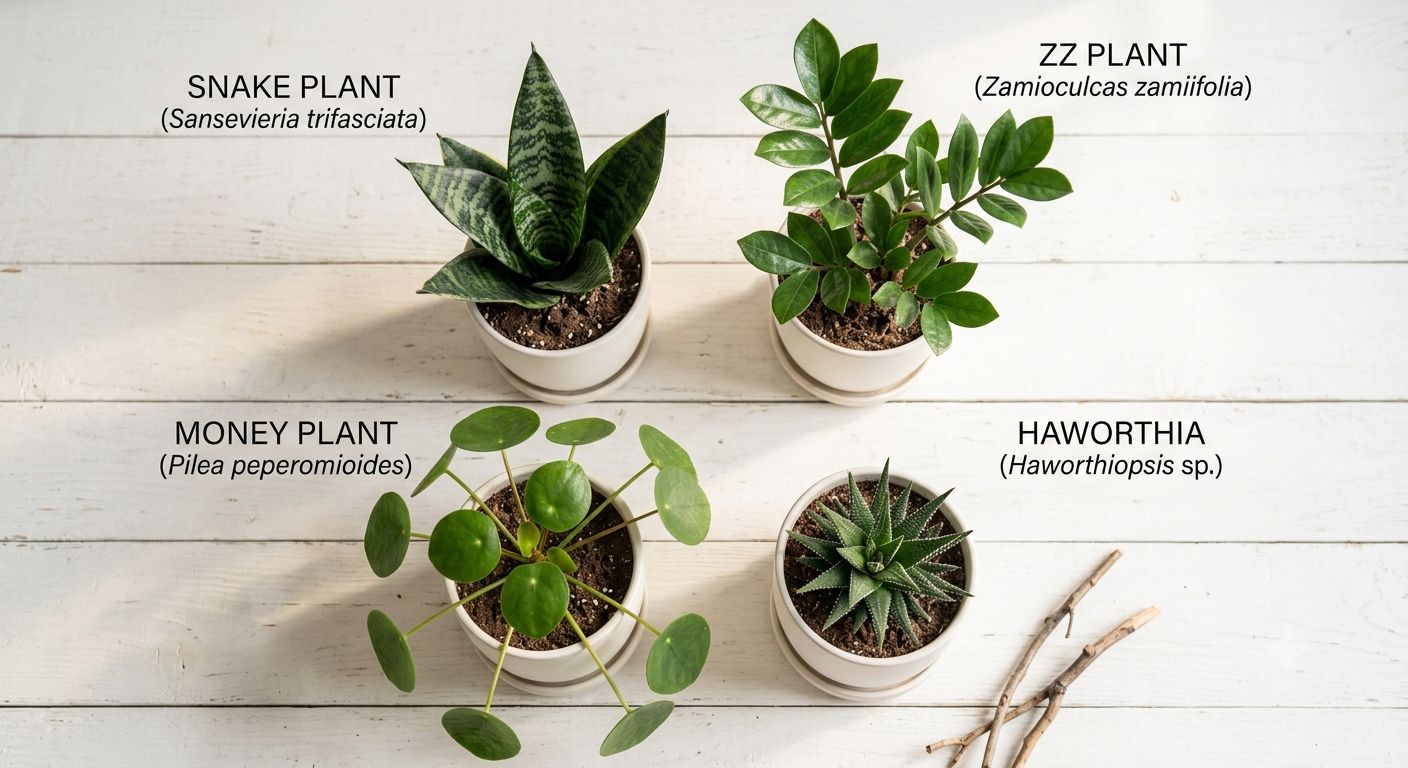
If there is one plant every beginner should start with, it is the snake plant. It tolerates low light better than almost any attractive houseplant. It goes weeks without water. It handles dry indoor air that kills most tropical plants. It looks architectural and beautiful. And it releases oxygen at night through a process called CAM photosynthesis — making it one of the few genuinely good bedroom plants.
The snake plant is the foundation of any indoor plant collection. Start here.
👉 Full care guide: How to Grow Snake Plant Indoors — The Plant That Thrives on Neglect
| Light | Water | Difficulty |
|---|---|---|
| Low to bright indirect | Every 2–6 weeks | ⭐ Easiest |
Aloe Vera — The Most Useful Plant You Can Grow Indoors
Aloe vera is functional and beautiful. The thick, fleshy leaves store a gel that genuinely soothes burns, sunburn, and skin irritation — a living first aid kit on your windowsill. It needs bright light, very little water, and almost no other attention.
👉 Full care guide: How to Grow Aloe Vera Indoors — The Easiest Plant You'll Ever Own
| Light | Water | Difficulty |
|---|---|---|
| Bright indirect to some direct | Every 2–3 weeks | ⭐ Easiest |
ZZ Plant — The Indestructible Glossy Wonder
ZZ plant (Zamioculcas zamiifolia) is one of the few genuinely low-light-tolerant plants that also looks stunning. Upright, glossy, architectural dark green leaves growing from a central rhizome that stores water — this plant tolerates neglect, low humidity, and dim conditions that would kill most houseplants. Water every two to three weeks in summer, less in winter. Feed once or twice a year. Almost nothing goes wrong with a ZZ plant.
👉 Full care guide: How to Grow ZZ Plant Indoors — The Most Indestructible Houseplant
| Light | Water | Difficulty |
|---|---|---|
| Low to medium indirect | Every 2–4 weeks | ⭐ Easiest |
Money Plant — The One That Grows in Water, Soil, or Thin Air
The Money Plant (Epipremnum aureum, also called Pothos in the West) is one of the most versatile indoor plants alive. Snip a stem, drop it in a jar of water, and it grows roots within days. Plant it in soil and it trails or climbs indefinitely. Hang it in a corner and the vines grow longer and longer, filling shelves and spilling over furniture in the most satisfying way.
It tolerates low light better than most trailing plants. It bounces back from underwatering. It grows in almost any container. It is the ideal first plant for anyone who has ever killed a houseplant and felt defeated.
👉 Full care guide: How to Grow Money Plant Indoors — The Plant That Refuses to Die
| Light | Water | Difficulty |
|---|---|---|
| Low to bright indirect | Every 1–2 weeks | ⭐ Easiest |
Spider Plant — The Plant That Makes More Plants for Free
Spider plant grows, looks good, and then produces cascading stems tipped with baby plants — called spiderettes — that can be snipped off and rooted to create dozens of new plants for free. It is one of the few houseplants that actively reproduces on display, which makes it both productive and endlessly satisfying to watch.
It adapts to a wide range of light conditions, tolerates irregular watering, and is completely non-toxic to pets — one of the rare options that is genuinely safe for homes with cats and dogs.
👉 Full care guide: How to Grow Spider Plant Indoors — The Plant That Grows Itself and Gives You More
| Light | Water | Pet Safe | Difficulty |
|---|---|---|---|
| Low to bright indirect | Every 1–2 weeks | ✅ Yes | ⭐ Easiest |
🌵 The Best Succulents and Cacti — For Bright Spots and Forgetful Waterer
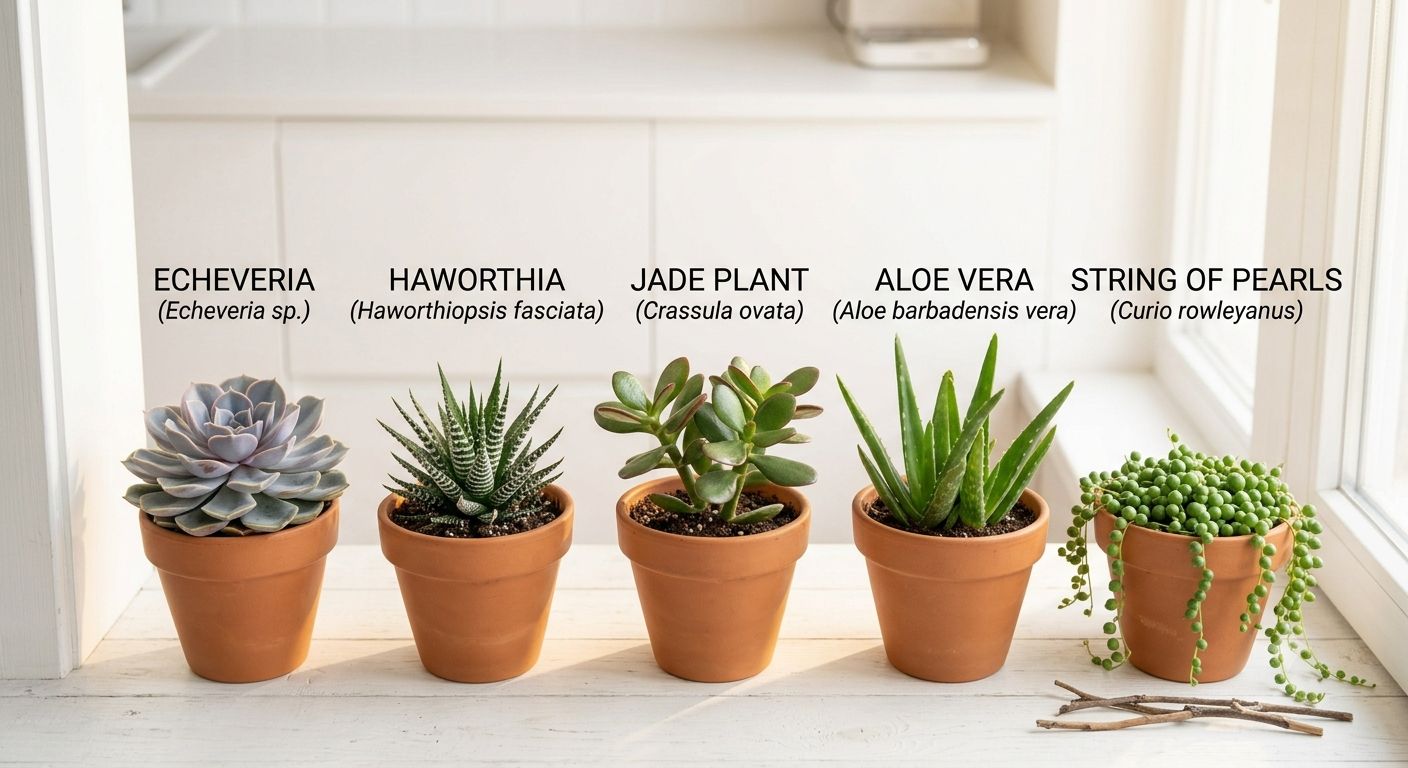
Succulents store water in their fleshy leaves and stems — a survival adaptation from their native desert environments that makes them extraordinarily tolerant of the dry, inconsistent conditions of most indoor spaces. They need the brightest window you have and very little else.
The one thing most people get wrong: they look perfect in any light at the nursery but slowly deteriorate indoors without enough sun. A south-facing windowsill with direct morning light is the sweet spot. Without adequate light, succulents stretch toward the window and lose their tight, compact shape.
👉 Full care guide: How to Grow Succulents Indoors — The Complete Honest Guide for Beginners
Best beginner succulents: Echeveria, Haworthia, Jade Plant, Aloe Vera, String of Pearls, Zebra Plant.
| Light | Water | Difficulty |
|---|---|---|
| Bright direct to indirect | Every 2–6 weeks | ⭐ Easy when light is right |
🌸 The Best Fragrant Indoor Plants — For Homes That Smell Beautiful
Jasmine — One Plant Fills an Entire Room
A single jasmine plant in bloom produces a fragrance so intense it fills the room and drifts into neighbouring spaces. It is one of the most rewarding sensory experiences you can have from a windowsill plant — completely free and completely alive.
👉 Full care guide: How to Grow Jasmine Indoors — Your Home Will Smell Like Heaven
Lavender — Calm in a Pot
Lavender smells like calm. It also repels moths and insects naturally, making it practical as well as beautiful on a windowsill. It needs full sun and excellent drainage — a south-facing window and a cactus-mix soil.
👉 Full care guide: How to Grow Lavender Indoors — Your Home Will Never Smell the Same
🌿 The Best Indoor Herbs — Fresh Ingredients From Your Windowsill
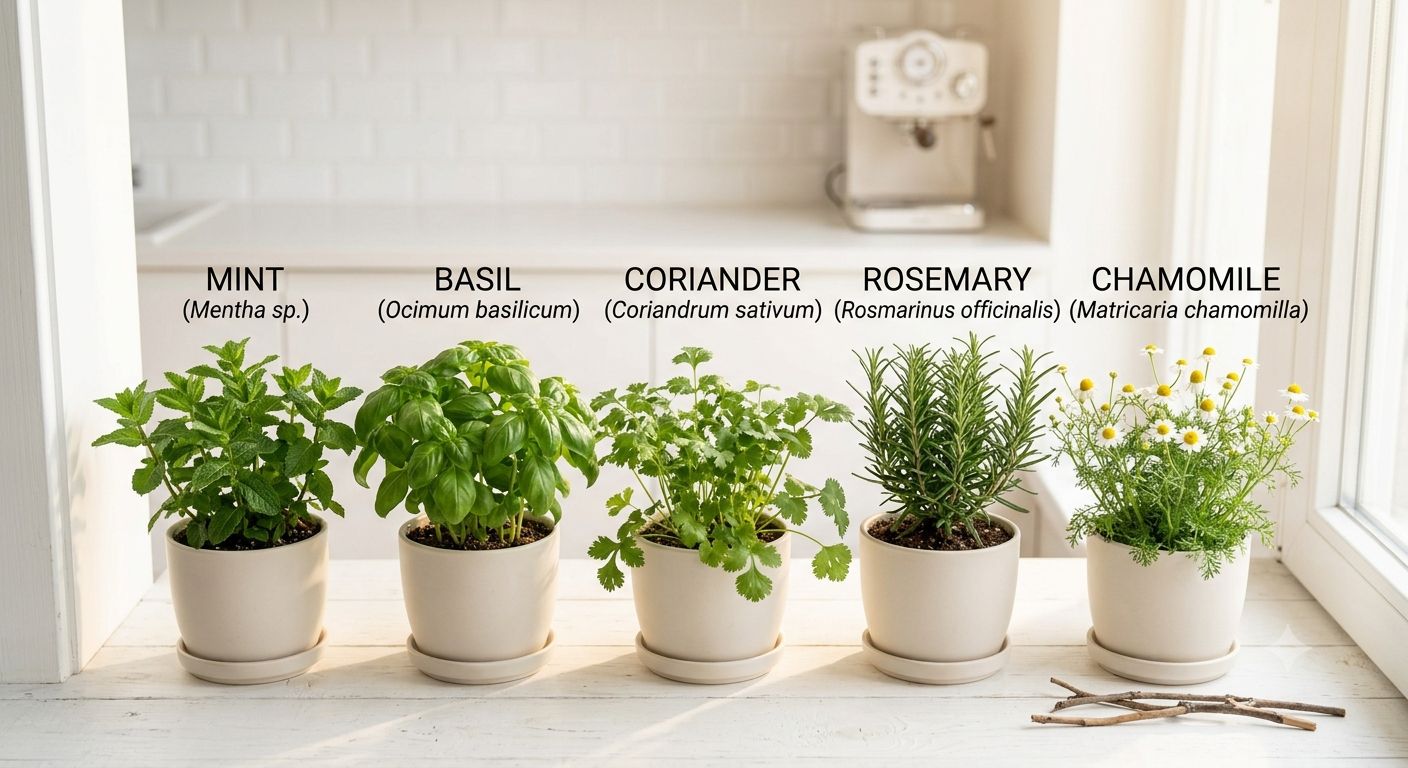
This is where indoor plants cross from decorative into genuinely useful. A sunny kitchen windowsill with a few herb pots means fresh ingredients every time you cook — snipped directly into the pot, into the salad, into the tea. The flavour difference between fresh herbs from your own plant and dried herbs from a packet is not subtle. It is completely different.
Mint — Roots in a Week, Grows Forever
Drop a stem in a glass of water and it roots in days. Fresh mint for tea, cocktails, salads, and cooking — forever, for free, from a single cutting.
👉 Full care guide: How to Grow Mint at Home — The Plant That Spreads Itself and Never Runs Out
Basil — The King of Kitchen Herbs
Fresh basil from your own plant tastes nothing like supermarket basil. Grow it from seed on a sunny windowsill and harvest regularly to keep it producing for months.
👉 Full care guide: How to Grow Basil Indoors from Seed — Fast and Easy
Coriander — Fresh Leaves in 3 Weeks
The fastest herb in this list. Sow seeds today, harvest fresh coriander in three weeks. The trick is succession sowing — a new batch every two to three weeks — so you never run out.
👉 Full care guide: How to Grow Coriander at Home — Fresh Leaves in 3 Weeks, Forever
Rosemary — The Herb That Lasts for Years
Unlike most herbs that bolt and die within a season, a rosemary plant grown properly lasts for years — becoming a small woody shrub that you harvest from indefinitely.
👉 Full care guide: How to Grow Rosemary at Home — The Herb That Lasts for Years
Chamomile — Grow Your Own Calming Tea
Tiny white flowers with an apple-honey fragrance, dried and steeped into one of the most soothing cups of tea you will ever make from your own garden.
👉 Full care guide: How to Grow Chamomile at Home — And Make Your Own Tea Forever
Lemongrass — From a Supermarket Stalk in Days
No seeds required. Buy a stalk of lemongrass from any grocery store, stand it in water, and watch it root in days. One of the most satisfying and fastest propagations in this entire series.
👉 Full care guide: How to Grow Lemongrass at Home — From a Supermarket Stalk
🥬 The Fastest Indoor Food — Results in Days, Not Months
Microgreens — Harvest in 7 Days
Microgreens are the fastest food you can grow at home. No garden, no soil, no experience needed. A tray, some seeds, a little water, and seven days. The nutritional density per bite is extraordinary — some varieties contain up to 40 times more nutrients than the mature plant.
👉 Full care guide: How to Grow Microgreens at Home — Harvest in 7 Days, No Soil Needed
🌺 The Best Flowering Indoor Plants — Colour and Life Year-Round
Calliopsis — Explosion of Colour from Seed in 8 Weeks
Golden, red, and burgundy daisy-like blooms that explode into colour from seed in just eight weeks. One of the easiest and most cheerful flowering plants you can grow indoors or on a sunny balcony.
👉 Full care guide: How to Grow Calliopsis — The Flower That Blooms Like Crazy from Seed
🪴 The Low Light Specialists — For Rooms Without Much Sun
If your home does not get much natural light, you are not without options. Several genuinely beautiful plants thrive in lower light conditions that would slowly kill most houseplants.
| Plant | Light Tolerance | Why It Works |
|---|---|---|
| Snake Plant | Low to bright | Architectural, dramatic, CAM photosynthesis for bedrooms |
| ZZ Plant | Low to medium | Glossy, indestructible, stores water in rhizome |
| Money Plant / Pothos | Low to bright | Fast-growing trailing plant, tolerates shade |
| Spider Plant | Low to bright | Produces babies, pet-safe, very adaptable |
| Peace Lily | Low to medium | Flowers indoors in low light, air-purifying |
| Philodendron | Medium to low | More forgiving than Monstera, trails beautifully |
| Haworthia | Low to moderate | Best low-light succulent — genuinely tolerates shade |
The honest truth about low light: these plants survive in lower light — they do not necessarily thrive. All plants grow faster, look better, and produce healthier growth with more light. But these varieties are the best-adapted for the dim corners and north-facing rooms that most houseplants simply cannot handle.
🌱 The Complete Seedora Indoor Plant Reading List
Every plant on this page has its own full care guide. Here is the complete library:
Indoor Plants
- How to Grow Snake Plant Indoors — Low light, architectural, bedroom perfect
- How to Grow Succulents Indoors — Bright light, drought tolerant, dozens of varieties
- How to Grow Aloe Vera Indoors — Functional, easy, built-in first aid
- How to Grow Money Plant Indoors — Trailing, grows in water or soil, almost indestructible
- How to Grow Spider Plant Indoors — Produces babies, pet-safe, very fast growing
- How to Grow Jasmine Indoors — The most fragrant plant you can grow indoors
- How to Grow Lavender Indoors — Calming scent, insect repellent, windowsill beauty
- How to Grow Microgreens at Home — Harvest in 7 days, no soil needed
- Ficus Family Guide — Fiddle Leaf Fig, Rubber Plant & Weeping Fig
Kitchen Herbs
- How to Grow Mint at Home — Roots in water in days, grows forever
- How to Grow Basil Indoors — King of kitchen herbs
- How to Grow Coriander at Home — Fresh leaves in 3 weeks
- How to Grow Rosemary at Home — Lasts for years
- How to Grow Chamomile at Home — Make your own calming tea
- How to Grow Lemongrass at Home — From a supermarket stalk
Flowers
- How to Grow Calliopsis — Colour from seed in 8 weeks
- How to Grow Marigold at Home — Pest-repelling, self-seeding, blooms all season
- How to Grow Sunflowers at Home — The happiest plant you will ever grow
The One Rule That Makes All of This Work
Every plant on this page is manageable. None of them require expertise. What they all require is the right conditions — matched honestly to what your home actually offers.
Get the light right. Water based on what the soil says, not what the calendar says. Start with two or three plants that suit your space. Add more as you build confidence.
The best indoor plant is the one that is alive in your home six months from now — growing, healthy, and making your space feel more like somewhere you want to be.
By Seedora Store — every plant on this page has a full growing guide. Follow the links, pick your plant, and get growing.