How to Grow Lavender Indoors
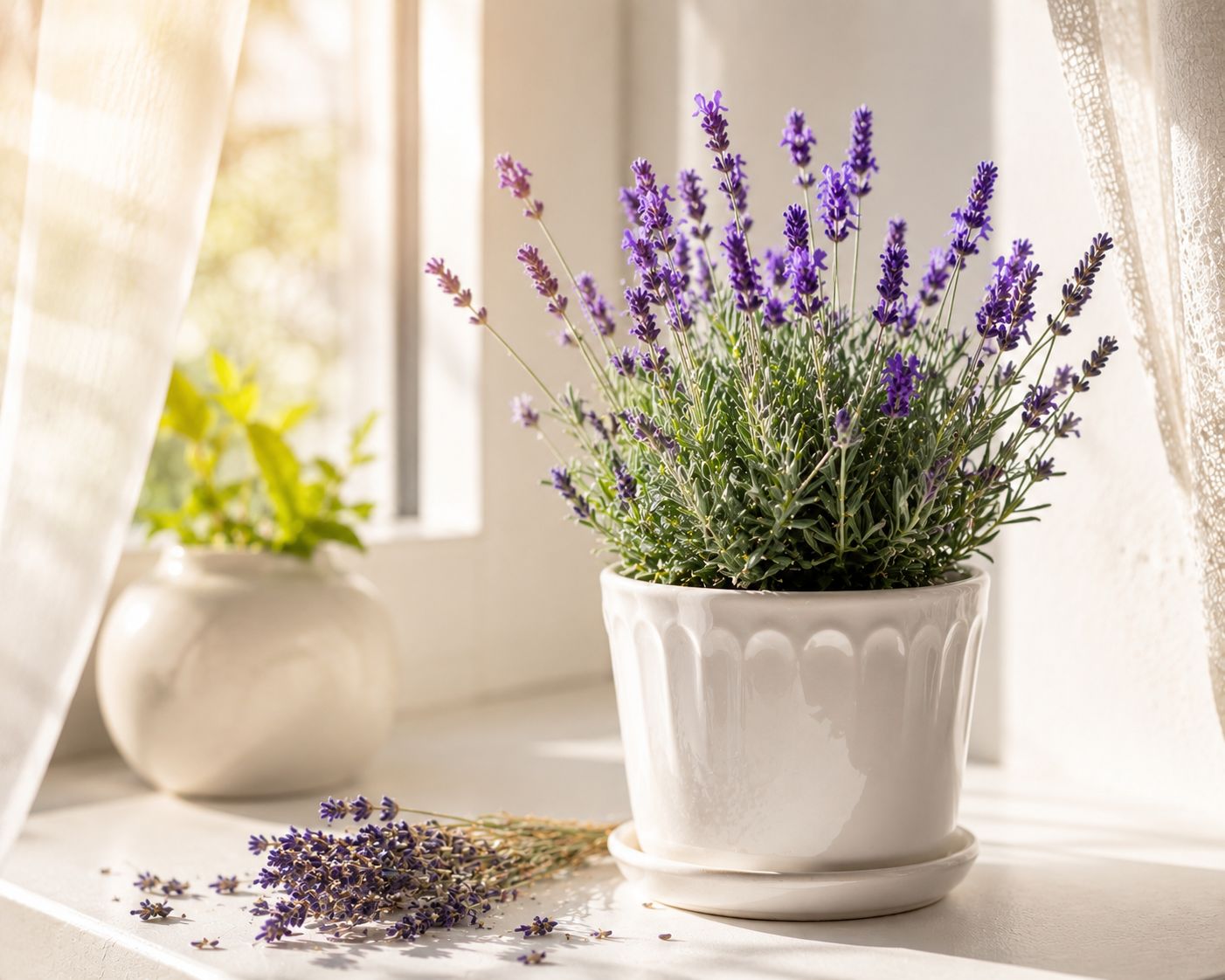
There is something about lavender that just makes everything feel slower and quieter. The smell hits you the moment you walk in the room. It helps you sleep. It calms your nerves. And growing it yourself — from a tiny cutting or seed — makes it feel even more special. Here is how to do it.
What Is Lavender Called Around the World?
| Region | Local Name |
|---|---|
| 🇵🇰 Pakistan / Urdu | لیوینڈر (Lavender) / اسطوخودوس (Ustukhuddus) |
| 🇸🇦 Arabic | الخزامى (Al-Khuzama) |
| 🇮🇳 Hindi | लैवेंडर (Lavender) / हिंदी में खजामा |
| 🇫🇷 French | Lavande |
| 🇪🇸 Spanish | Lavanda / Espliego |
| 🇹🇷 Turkish | Lavanta |
| 🌐 Scientific | Lavandula angustifolia |
🌿 In traditional Unani and Islamic medicine, lavender — known as Ustukhuddus — has been used for centuries for headaches, anxiety, and insomnia.
Why Lavender Belongs in Your Home
😴 Better Sleep — The scent of lavender genuinely lowers heart rate and blood pressure. Keep a pot near your bed and feel the difference within days.
😌 Reduces Anxiety — Studies confirm lavender aromatherapy reduces cortisol — the stress hormone. No diffuser needed when you have the real plant.
🦟 Repels Mosquitoes & Moths — Insects hate lavender. Put a pot near your window and dried sprigs in your wardrobe. Natural, chemical-free protection.
🍵 Lavender Tea — Steep fresh or dried flowers in hot water for a calming bedtime tea. Add honey and it is honestly delicious.
✨ Skin Benefits — Lavender oil is antibacterial and anti-inflammatory. Fresh flowers steeped in warm water make a gentle face rinse.
🎁 Dries Beautifully — Cut stems and hang them upside down to dry. Use in home decor, sachets, or gifting. They hold their fragrance for months.
💜 Stunning to Look At — Purple flower spikes against grey-green foliage. Few plants are this beautiful and this useful at the same time.
Best Lavender Varieties for Indoors
| Variety | Why It Works Indoors |
|---|---|
| French Lavender (Lavandula dentata) | Most tolerant of indoor conditions, blooms almost year round |
| English Lavender (Lavandula angustifolia) | Most fragrant, classic look, great for drying |
| Dwarf Varieties (Hidcote, Munstead) | Compact size, perfect for pots and windowsills |
💡 For indoors, French Lavender or a dwarf English variety are your best bets — more forgiving, more compact, more bloom.
Step 01 — Start from a Cutting or Seed
You have two options — and both work beautifully.
From a cutting (faster — recommended)
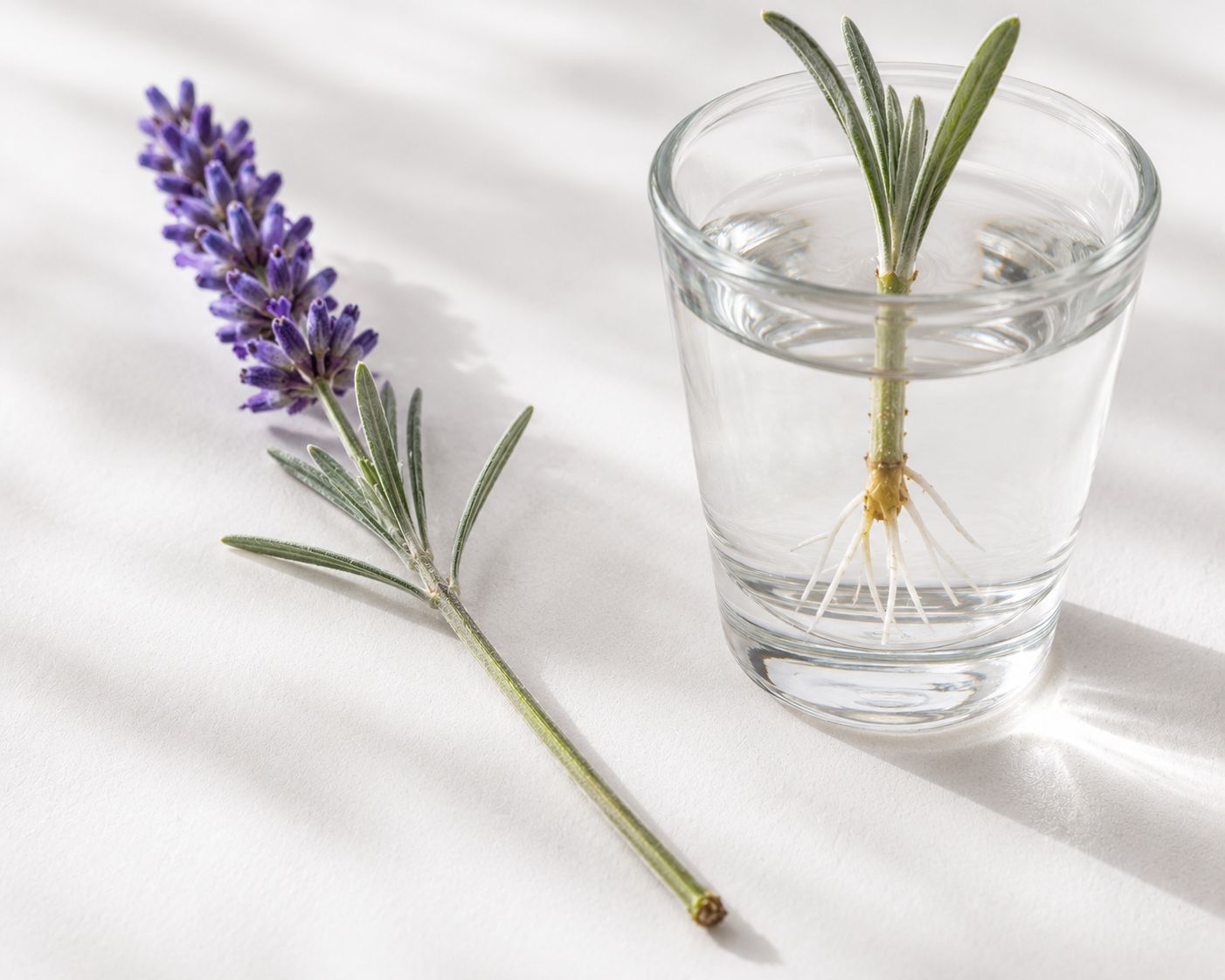
Snip a 10–12 cm stem just below a leaf node from a healthy lavender plant. Strip the lower leaves, leaving just the top few. Let it sit in a glass of water for 5–7 days until small roots appear — then plant directly into soil.
From seed (slower but rewarding)
Sprinkle seeds on top of seed-starting mix, press lightly — do not bury. Cover with cling wrap and keep at 18–21°C. Germination takes 14–21 days. Be patient — lavender seeds are slow starters but strong finishers.
✂️ Cuttings from a friend's garden or a supermarket pot plant root beautifully. Ask around — most lavender owners have more than they need.
Step 02 — Get the Soil Right
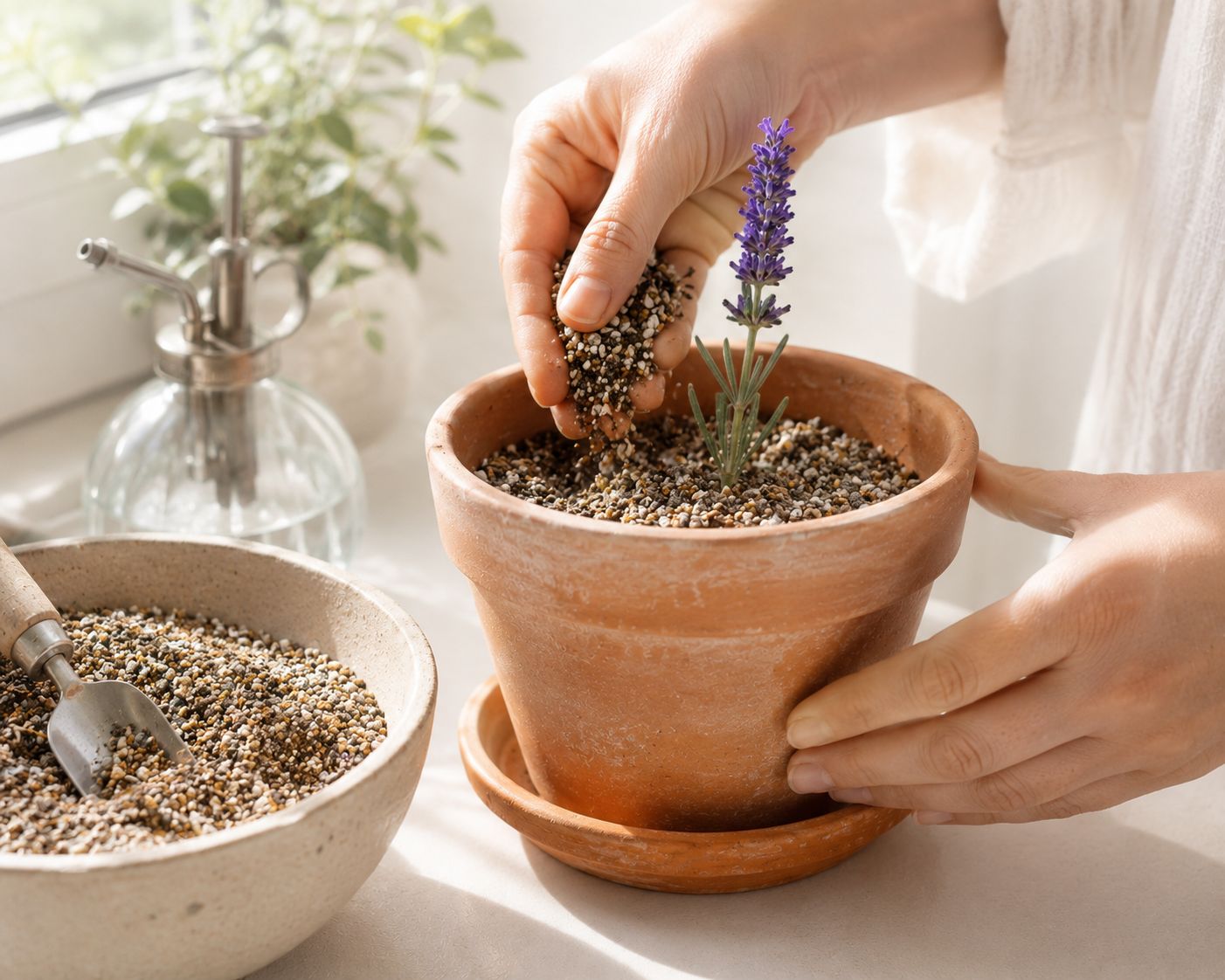
Lavender is originally from the dry, rocky Mediterranean. It absolutely hates wet feet. Use a mix of potting soil + coarse sand or perlite (1:1 ratio) — gritty, fast-draining, almost poor soil is exactly what it wants.
Choose a terracotta pot with drainage holes — terracotta wicks away excess moisture naturally and mimics lavender's natural rocky habitat perfectly. Avoid plastic pots if you can.
| Soil Mix | Ratio |
|---|---|
| Potting mix | 50% |
| Coarse sand or perlite | 50% |
Step 03 — Sun, Air & Tough Love
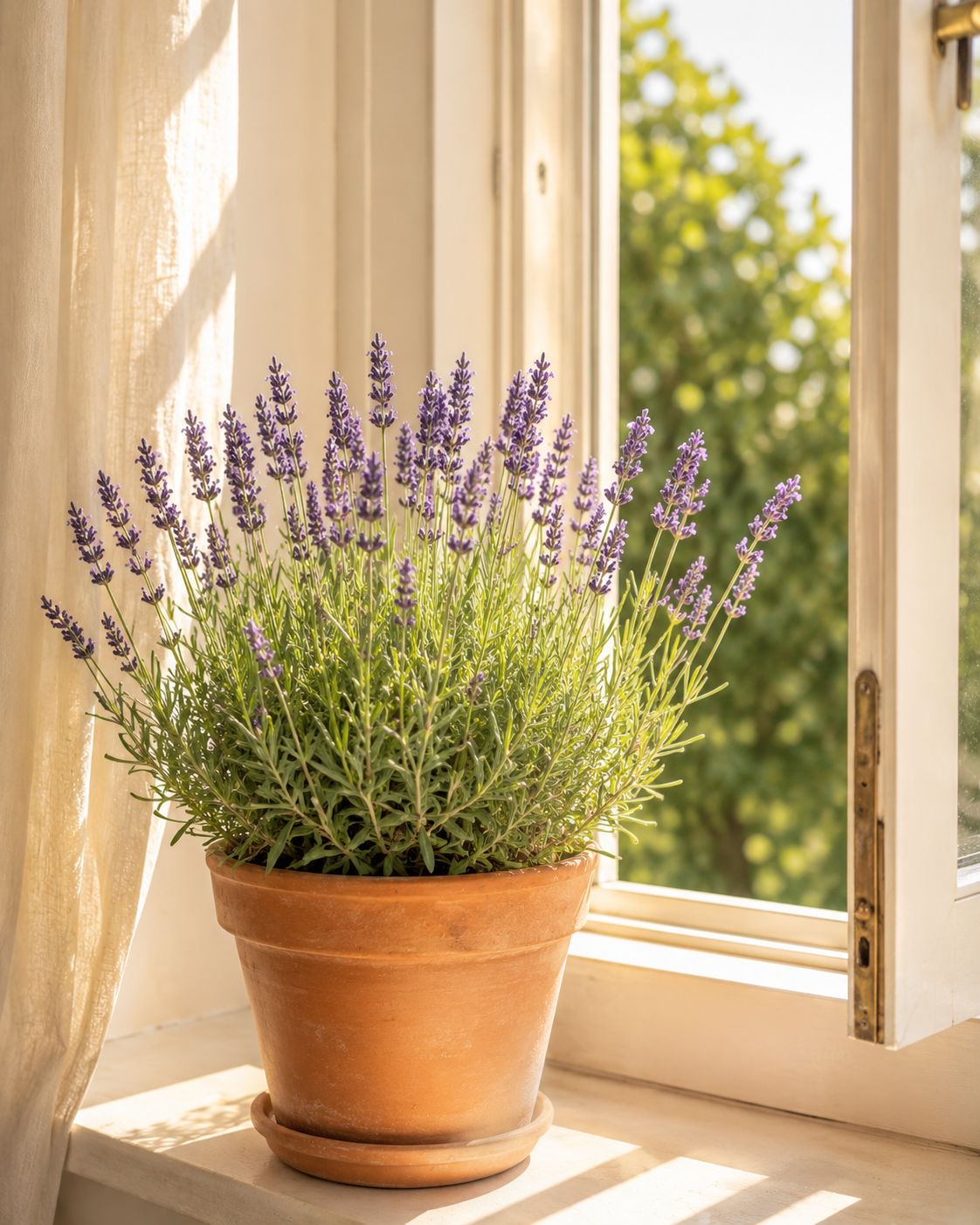
Lavender needs 3 things above everything else — sun, airflow, and to be left alone.
Place it on your sunniest windowsill — south or west-facing ideally. It wants a minimum of 6–8 hours of direct or bright light daily. Open a nearby window when you can — good air circulation prevents the one thing that kills lavender indoors: fungal issues from stagnant humid air.
Water only when the soil is completely dry — push your finger 3–4 cm into the soil. If it feels even slightly damp, wait. When you do water, water deeply then let it drain fully.
| Care | Guide |
|---|---|
| ☀️ Light | 6–8 hrs bright sun daily |
| 💧 Water | Only when bone dry |
| 🌬️ Air | Good ventilation always |
| 🌡️ Temperature | 15–25°C ideal |
| 🪴 Pot | Terracotta with drainage |
Step 04 — Bloom, Harvest & Dry
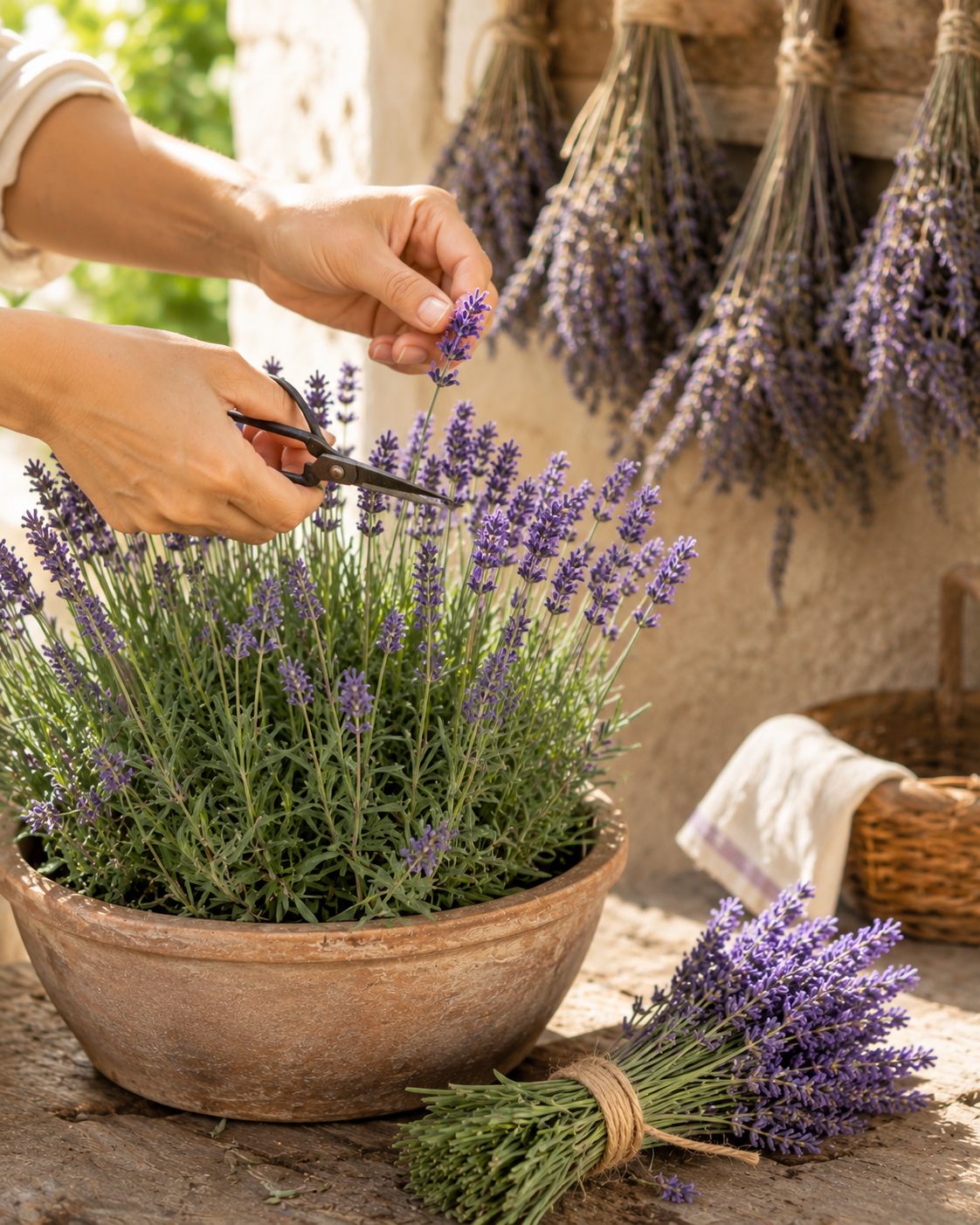
With good sun and proper watering, lavender flowers appear in spring and early summer — usually 3–4 months after planting for cuttings, longer from seed. When flower spikes are about half open, cut them with scissors just above the leaves.
To dry: Bundle 10–15 stems with a rubber band and hang upside down in a warm, airy spot for 2–3 weeks. Fully dried lavender holds its scent for up to 2 years.
Use dried flowers for:
- 🛏️ Sachets under your pillow for better sleep
- 👗 Wardrobe bundles to repel moths
- 🍵 Lavender tea and cooking
- 🎁 Homemade gifts and decor
💜 After flowering, trim the plant back by about a third — never cut into the woody base. This keeps it bushy and encourages a second flush of blooms.
Common Mistakes & How to Fix Them
| Mistake | What Goes Wrong | Fix |
|---|---|---|
| Overwatering | Root rot, grey mould, death | Water only when bone dry |
| Wrong soil | Waterlogged roots | Always use gritty, fast-draining mix |
| Not enough sun | Leggy, pale, no flowers | Minimum 6 hours bright light |
| Poor airflow | Fungal issues, grey mould | Open window, don't crowd the plant |
| Cutting into woody base | Plant dies back permanently | Only prune green growth, never wood |
Part of the Instantly Grow Series by Seedora Store — grow plants that calm, heal, and fill your home with something beautiful.