How to Grow Spider Plant Indoors
Some plants take. Spider Plant only gives.
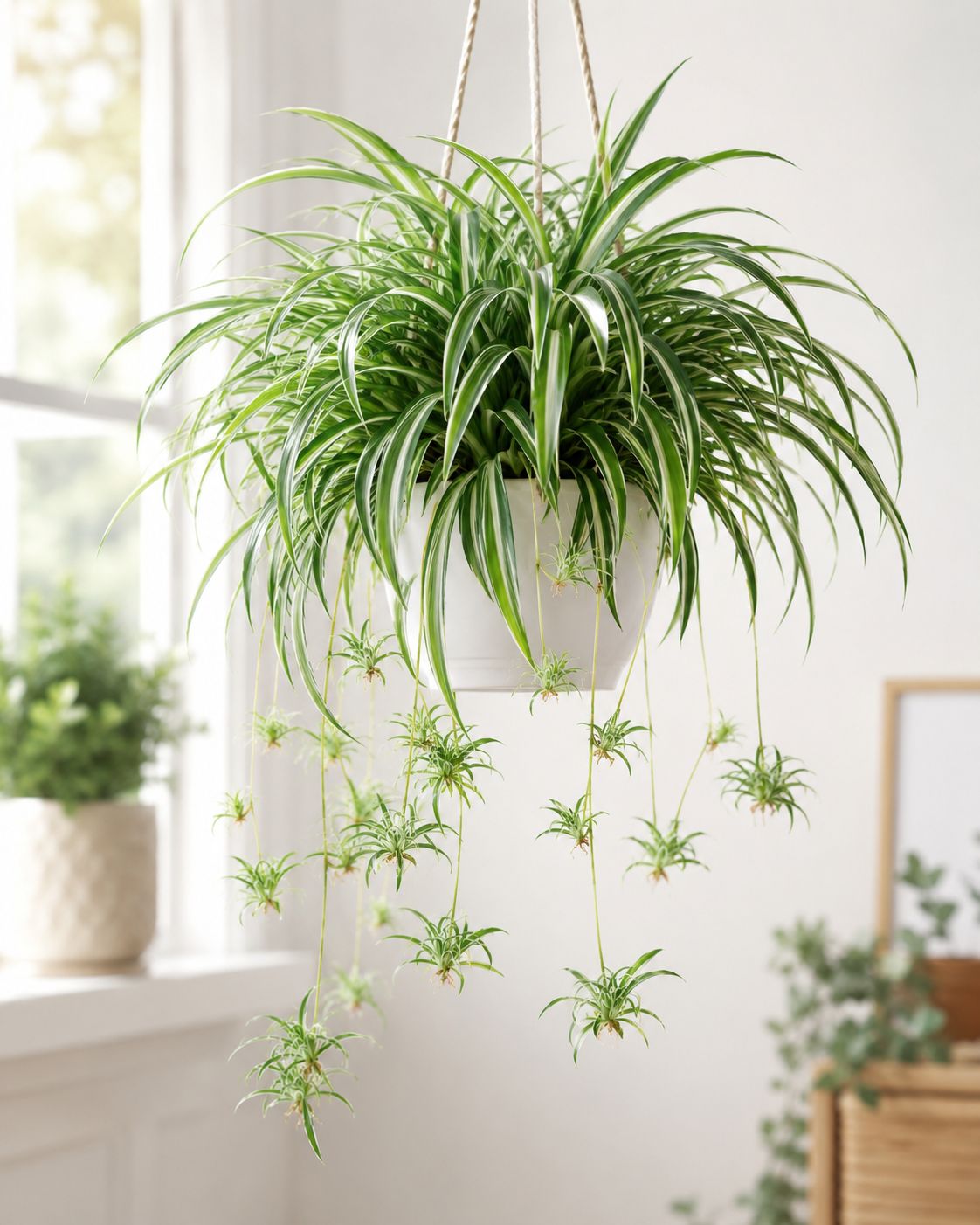
It gives you clean air. It gives you beautiful arching leaves that spill over shelves and hanging baskets like a green waterfall. And then — just when you think it cannot get any better — it starts producing baby plants. Dozens of them. Dangling on long thin runners like little green spiders on silk threads. Ready to be snipped off, rooted, and given to every person you know.
It is genuinely one of the most satisfying plants to grow indoors. And it could not care less if you forget to water it for two weeks.
Here is everything you need to know.
What Is Spider Plant Called Around the World?
| Region | Local Name |
|---|---|
| 🇵🇰 Pakistan / Urdu | مکڑی پودا (Makri Poda) / ربن گھاس |
| 🇸🇦 Arabic | نبات العنكبوت (Nabat al-Ankaboot) |
| 🇮🇳 Hindi | स्पाइडर प्लांट (Spider Plant) |
| 🇿🇦 South Africa | Hen and Chickens Plant |
| 🇩🇪 Germany | Grünlilie (Green Lily) |
| 🇧🇷 Brazil | Clorofito |
| 🌐 Scientific | Chlorophytum comosum |
| 🌐 Also Known As | Ribbon Plant / Airplane Plant / Hen and Chickens |
🌿 It gets the name Hen and Chickens because the mother plant constantly produces baby plants — just like a hen with her chicks following behind.
Why Spider Plant Deserves to Be in Every Room
Before we get into how to grow it — here is why this plant is not just pretty. It actually does things.
🫁 Cleans Your Air Seriously Well — NASA's famous Clean Air Study tested 19 houseplants. Spider Plant was one of the top performers — removing formaldehyde, carbon monoxide, and xylene from indoor air. The kind of toxins that come from cooking fumes, paint, and cleaning products.
🐾 Completely Safe for Children and Pets — Unlike most air-purifying plants, Spider Plant is non-toxic to cats, dogs, and children. It is one of the very few plants you can have absolutely everywhere in your home without a second thought.
😌 Reduces Stress Visually — There is actual research behind this. The sight of trailing greenery lowers blood pressure. Spider Plant's cascading leaves and dangling babies are particularly calming to look at — something about the movement and the layered depth.
💧 Handles Dry Air Really Well — In Pakistani winters when indoor air gets dry from heaters, Spider Plant tolerates low humidity far better than most tropical houseplants. It just keeps going.
🌙 One of the Few Plants That Produces Oxygen at Night — Most plants switch to absorbing oxygen after dark. Spider Plant continues photosynthesising at low light levels, making it genuinely useful in bedrooms.
🎁 Infinitely Generous — A single mature Spider Plant produces 20 to 50 babies per year. Every one of those babies becomes a new plant. You will never run out of gifts for people who visit your home.
Spider Plant Varieties Worth Growing
| Variety | Look | Best Feature |
|---|---|---|
| Variegated (classic) | Green with white centre stripe | Most popular, bright and bold |
| Reverse Variegated | White centre, green edges | Unusual, striking |
| Solid Green | All green, no stripes | Fastest growing, most vigorous |
| Bonnie / Curly | Twisted, curly leaves | Compact, great for small spaces |
| Ocean | Narrow white margins | Dainty, delicate look |
💡 The classic variegated version — green with a white stripe down the centre — is what you will find everywhere in Pakistan. It is the toughest, most forgiving, and most beautiful of them all.
Step 01 — Get a Baby Plant (Spiderette)
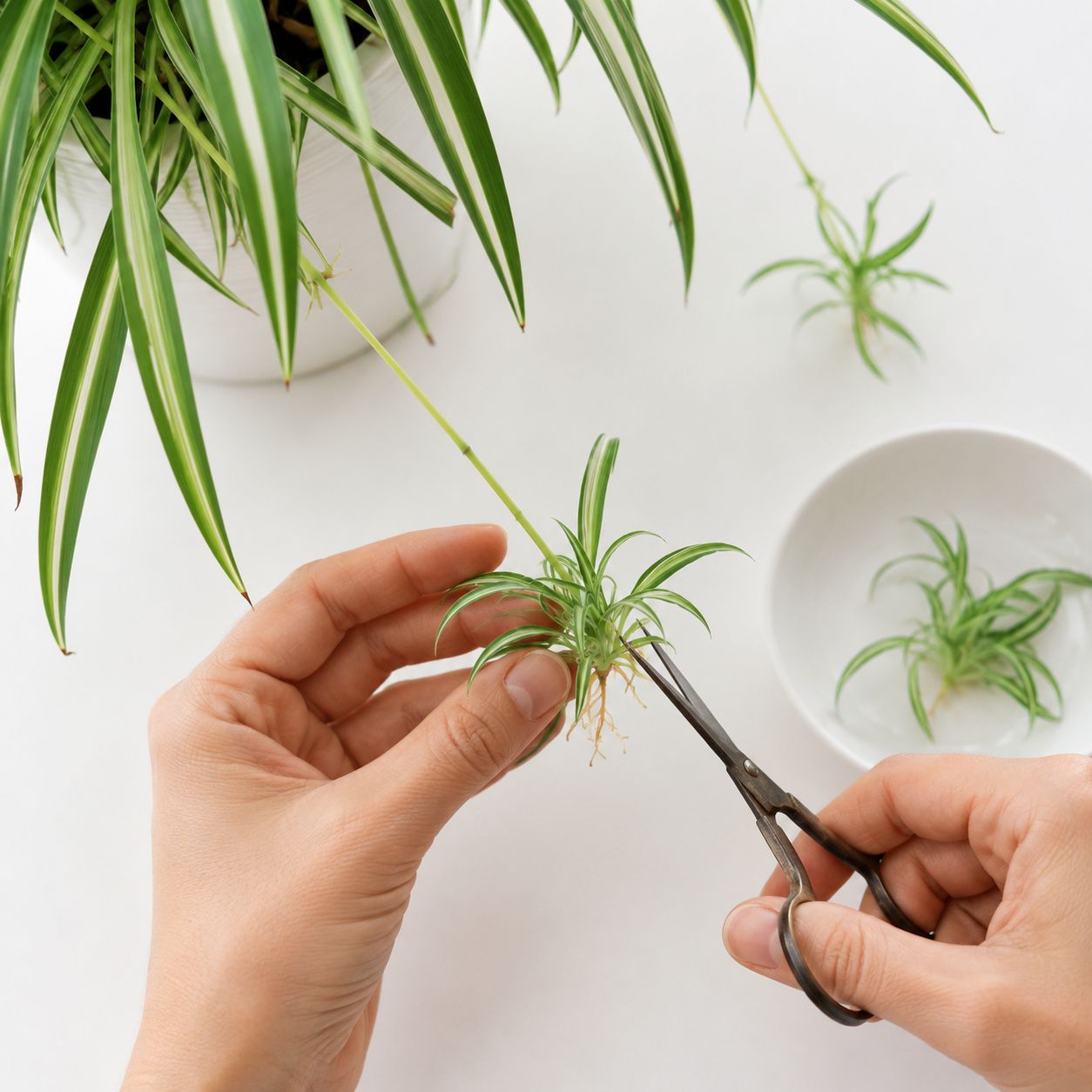
You almost definitely know someone who has a Spider Plant. And that Spider Plant almost definitely has babies — those little plantlets dangling on long arching runners from the mother plant.
Ask for one. They will give you ten.
Snip a baby off close to where it joins the runner using clean scissors. Choose one that already has a few visible tiny roots hanging from its base — those are called aerial roots and they tell you the baby is ready and actively trying to find soil.
No one with a Spider Plant has ever said no to giving away babies. It is basically the law of Spider Plant ownership.
✂️ No babies available yet? Buy a small Spider Plant from any nursery — within 6 months it will produce babies of its own and you will have more than you know what to do with.
Step 02 — Root in Water First
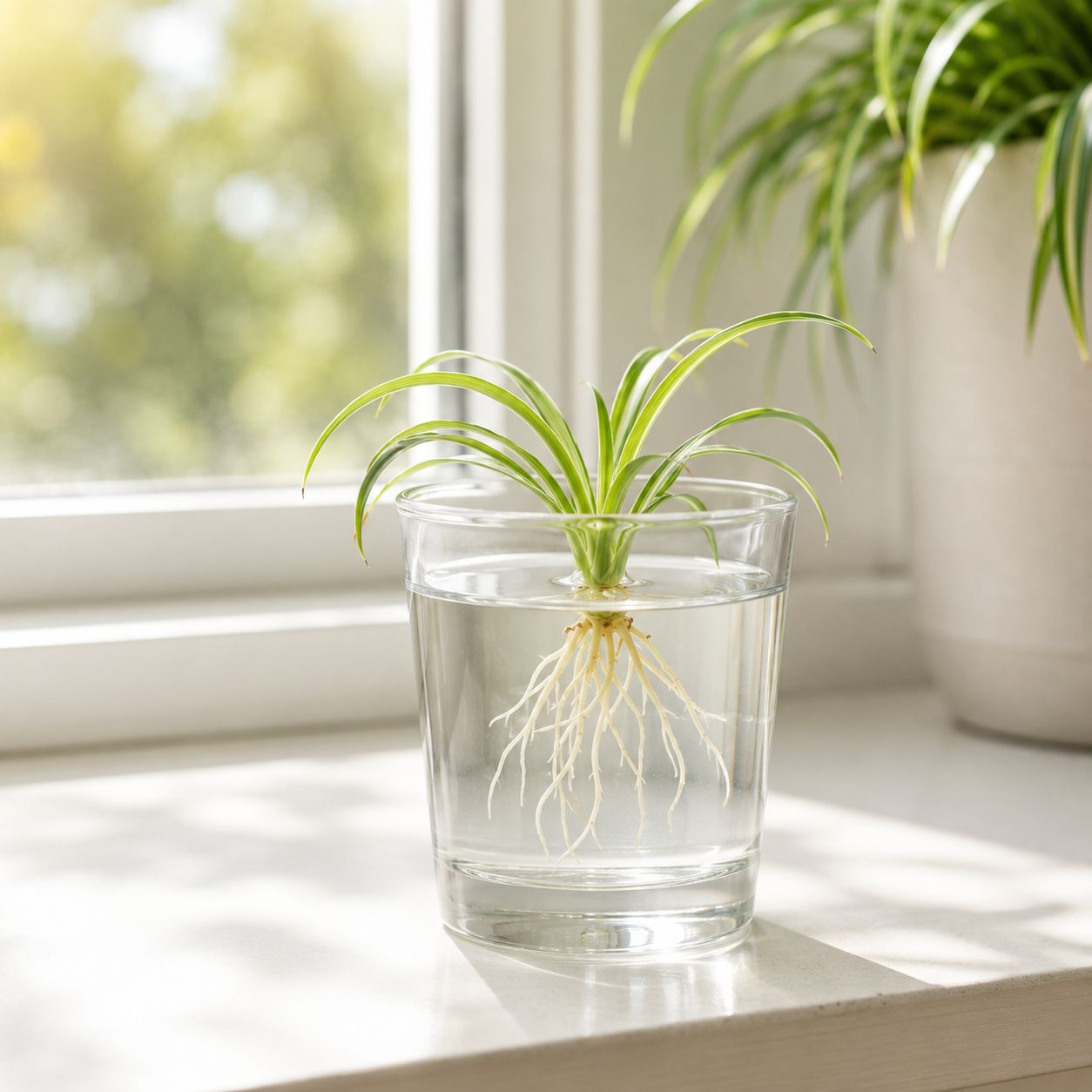
This step takes a few days and it is genuinely satisfying to watch.
Drop your spiderette into a small glass of water — just enough to submerge the roots and base, 3–4 cm deep, keeping the leaves above water. Place on a bright windowsill. Change the water every 4–5 days to keep it fresh and prevent algae.
Within 7–10 days you will see the roots growing visibly longer — sometimes you can almost watch them extend day by day. Once roots are 3–4 cm long, your baby is ready to move to soil.
Some people keep Spider Plants in water indefinitely and they grow perfectly fine that way. But soil gives you faster, fuller, lusher growth long term.
Step 03 — Plant and Find Its Spot
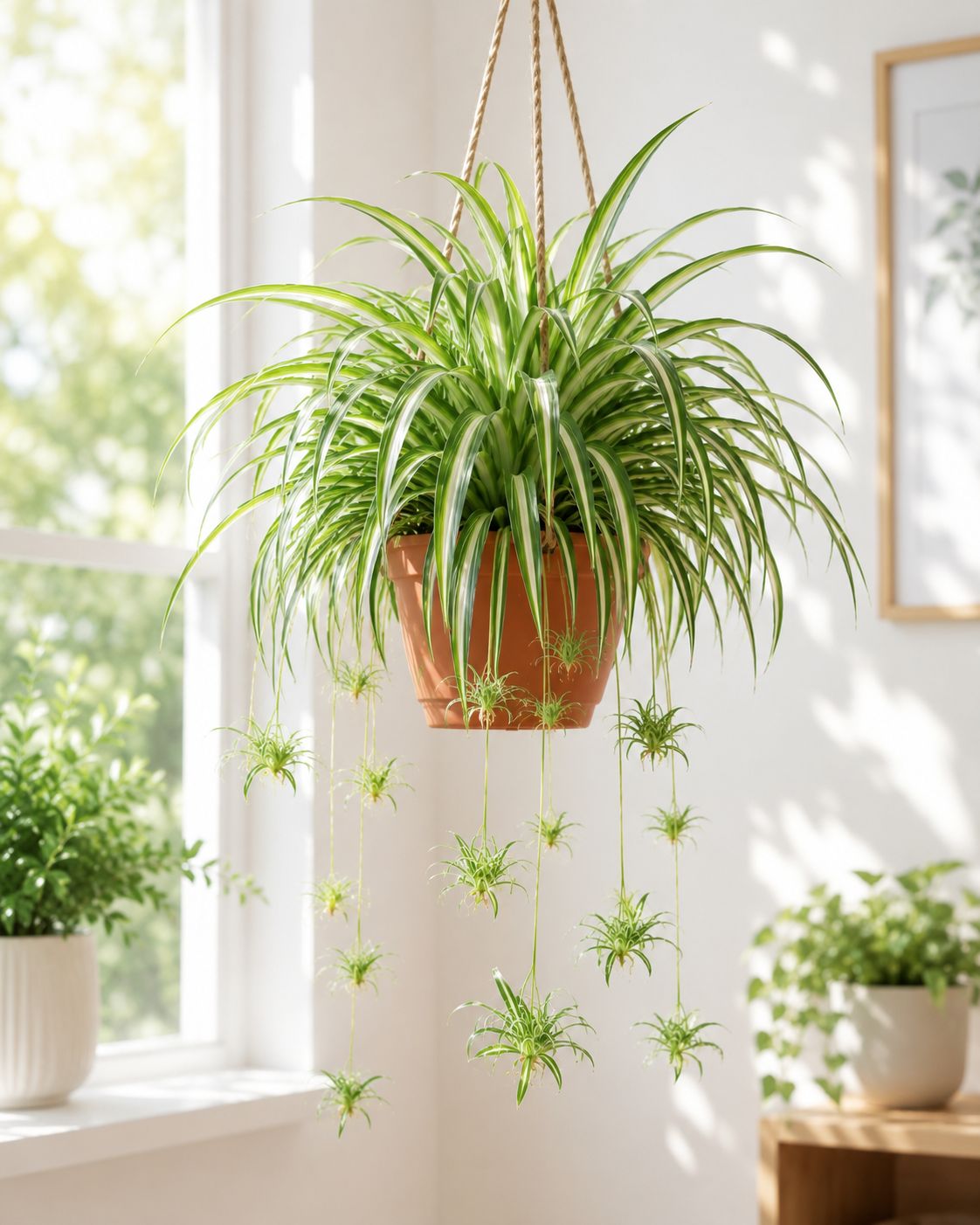
Plant your rooted baby in regular potting mix — Spider Plant is not fussy about soil at all. Just make sure the pot has drainage holes. Water lightly after planting and leave it alone for a week while it adjusts.
Now find its spot. Spider Plant is one of the most adaptable plants when it comes to light — it grows in bright indirect light, medium light, and even lower light conditions. It will not thrive in a dark corner, but it will survive. Bright indirect light is where it looks its absolute best — leaves are more vibrant, variegation is bolder, and it produces babies faster.
What it absolutely cannot stand:
❌ Direct harsh afternoon sun — leaves scorch and go brown at the tips
❌ Soggy soil — it has thick fleshy roots that store water and rot quickly if overwatered
❌ Fluoride in tap water — brown tips on Spider Plant are almost always caused by fluoride. Use filtered water or let tap water sit out overnight before watering.
| Care | Requirement |
|---|---|
| ☀️ Light | Bright indirect — medium tolerated |
| 💧 Watering | Every 7–10 days |
| 🌡️ Temperature | 13–27°C — very adaptable |
| 💦 Humidity | Average — handles dry air well |
| 🪴 Pot | Any — hanging basket looks best |
| 💧 Water type | Filtered or left overnight |
Step 04 — Watch It Multiply
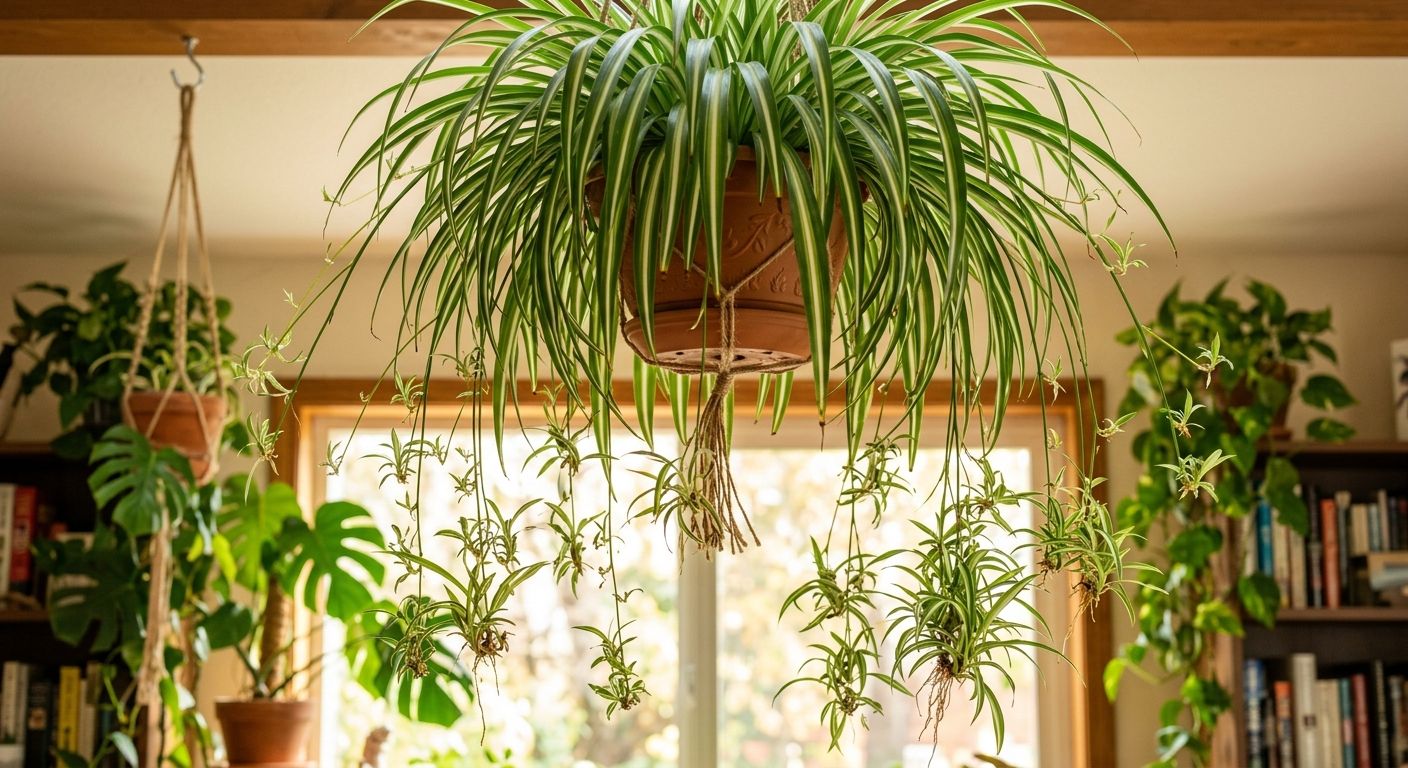
Here is the thing about Spider Plant that nobody warns you about. You start with one. You end up with thirty.
Once your plant is established and happy — usually 6–9 months after planting — it will start sending out long arching runners. At the end of each runner, a baby plant forms. Then that runner branches and makes another baby. Then another. A mature plant in good light can have 8 to 12 runners going at once, each with multiple babies at different stages.
To encourage more babies — let the plant get slightly root bound. A snug pot stresses it just enough to trigger reproduction. It is the plant's way of saying the space is full, time to make more plants and spread.
To propagate the babies:
- ✂️ Snip and root in water as described in Step 02
- 🪴 Pin the baby directly onto a small pot of soil while still attached to the runner — it roots in place within 2–3 weeks, then cut the runner
- 🎁 Give them away to everyone you know
🌿 Never throw away Spider Plant babies. Pot them up, line your windowsills, hang them from your ceiling, fill your bathroom, give them to neighbours. One plant is never enough once you understand what it can do.
Why Are My Spider Plant Tips Brown?
This is the most common question Spider Plant owners ask — and the answer is almost always one of three things.
The leaves are telling you something specific each time:
Brown only at the very tips — Fluoride or chlorine in tap water. Switch to filtered water or leave water in an open jug overnight before using.
Brown and crispy all along the edges — Air is too dry or the plant is getting direct sun. Move away from harsh light, mist occasionally.
Brown, soft, and mushy at the base — Overwatering and root rot. Remove from pot, trim rotten roots, repot in fresh dry soil.
Pale, washed out, losing variegation — Not enough light. Move to a brighter spot.
Spider Plant communicates clearly. Once you know the language it speaks, keeping it perfect is easy.
Common Mistakes to Avoid
| Mistake | What Happens | The Fix |
|---|---|---|
| Using unfiltered tap water | Brown leaf tips | Filtered or overnight-rested water |
| Overwatering | Root rot, mushy base | Let soil dry between waterings |
| Direct harsh sun | Scorched, bleached leaves | Bright indirect only |
| Too large a pot | Slow growth, no babies | Keep slightly root bound |
| Cutting runners before babies root | Babies die | Root first, then cut |
| Dark corner | Pale, leggy, no variegation | Needs at least medium light |
Spider Plant vs Other Easy Indoor Plants
| Spider Plant | Pothos | Snake Plant | Aloe Vera | |
|---|---|---|---|---|
| Produces babies | ✅ Dozens | ❌ | ❌ | ✅ A few |
| Safe for pets | ✅ Yes | ❌ Toxic | ❌ Toxic | ❌ Toxic |
| Low light | ✅ Yes | ✅ Yes | ✅ Yes | ❌ Needs sun |
| Air purifier | ✅ Yes | ✅ Yes | ✅ Yes | ✅ Yes |
| Grows in water | ✅ Yes | ✅ Yes | ❌ | ❌ |
| Kid and pet safe | ✅ Only one | ❌ | ❌ | ❌ |
Spider Plant is the only easy indoor plant that is beautiful, air-purifying, pet-safe, AND gives you endless free plants. Nothing else on this list does all four.
Part of the Instantly Grow Series by Seedora Store — plants that give more than they take, and make your home feel alive.