You bought a plant. You gave it water. You gave it a spot near the window. Two weeks later it was dead and you blamed yourself.
It was not your fault. It was the wrong plant for your light.
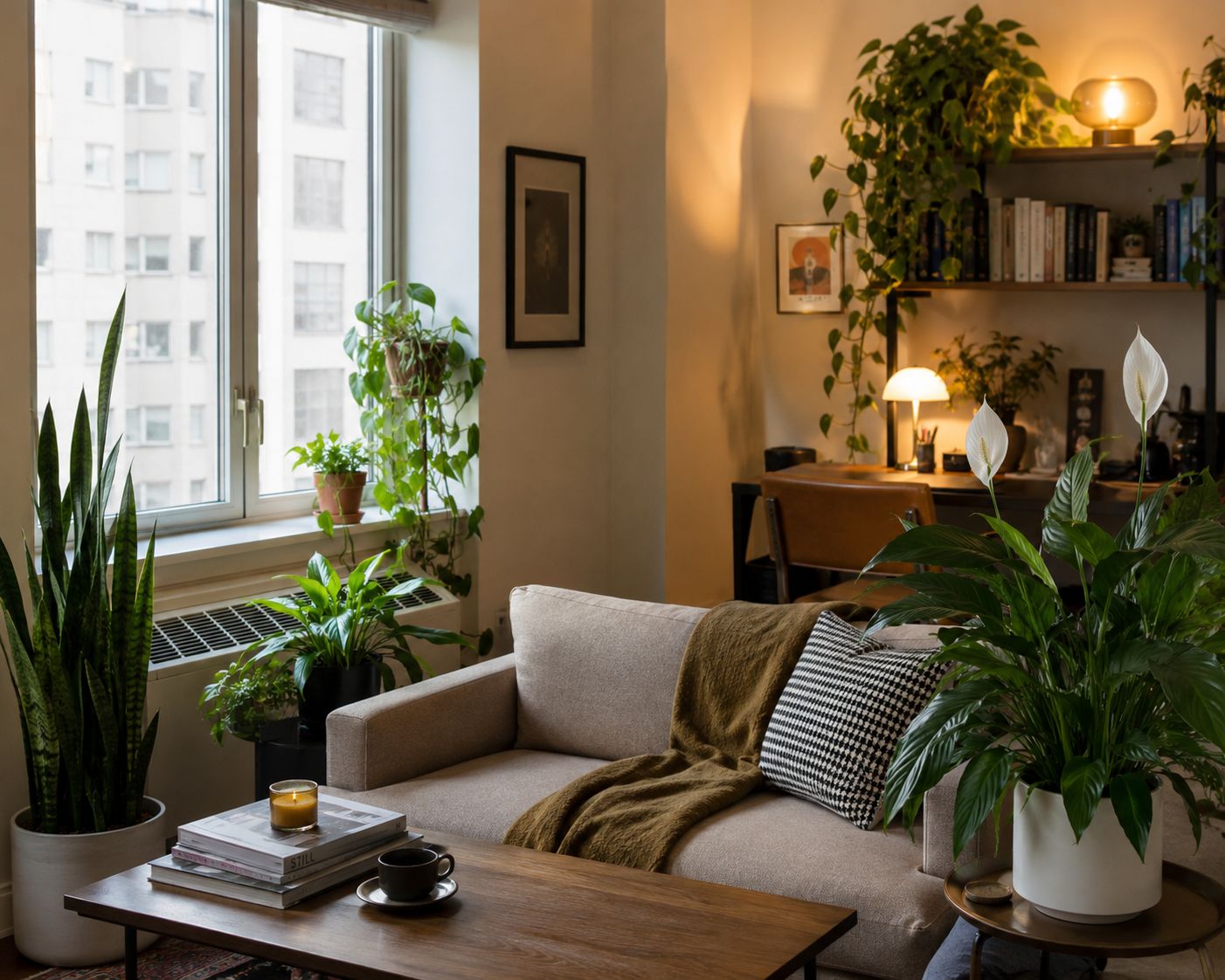
Most apartments simply do not get enough sun for the plants people typically buy. But here is what nobody tells you at the garden centre — some plants actually prefer dim rooms. They evolved in the shade of rainforest floors where direct sunlight rarely reaches. A bright sunny windowsill stresses them. Your dark corner is exactly what they want.
This is that list.
First — What Low Light Actually Means
Low light is not no light. Every plant needs some.
Here is the simplest test. Sit in the spot during the day without switching on a lamp. Can you read a book comfortably? If yes — a low light plant will survive there. If it feels easy and bright — it will thrive there.
That is the only rule you need.
Snake Plant
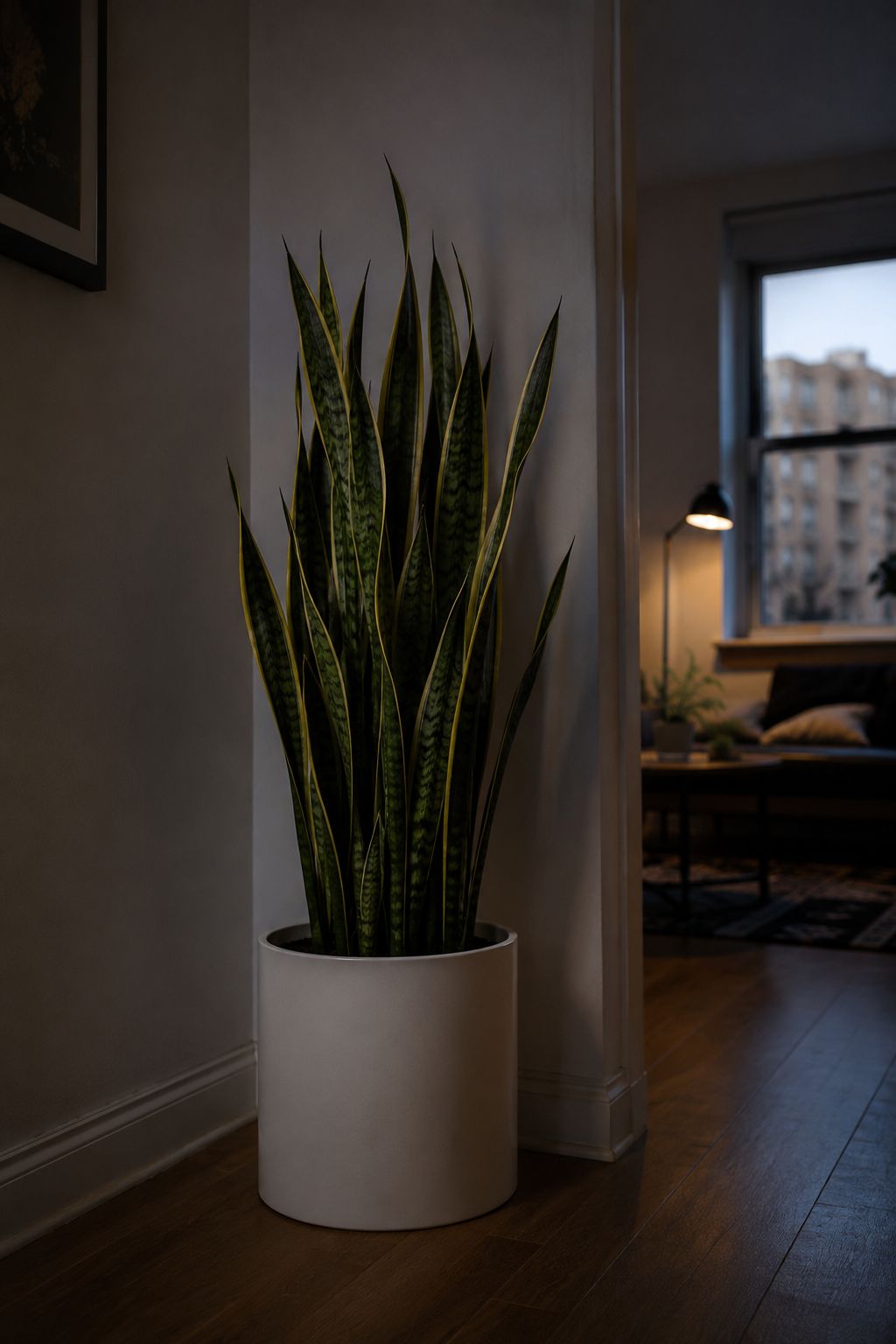
If you have killed every plant you have ever owned, start here.
Snake plant tolerates north-facing rooms, weeks without water, dry heated air, and windowless corners lit only by a ceiling bulb. Not just survives — actually stays healthy. The upright sword-like leaves look deliberate and architectural in any room. It does not sprawl. It does not droop. It just stands there, clean and structural, asking for almost nothing.
One thing that makes it genuinely special: it releases oxygen at night instead of during the day. Most plants do the opposite. That makes it one of the only houseplants that actually makes sense in a bedroom.
Water it when the soil is bone dry. That is the entire care routine.
Light: Very low to bright indirect
Water: Every 2–6 weeks
Pet safe: No
→ Full grow guide: How to Grow Snake Plant Indoors
Pothos
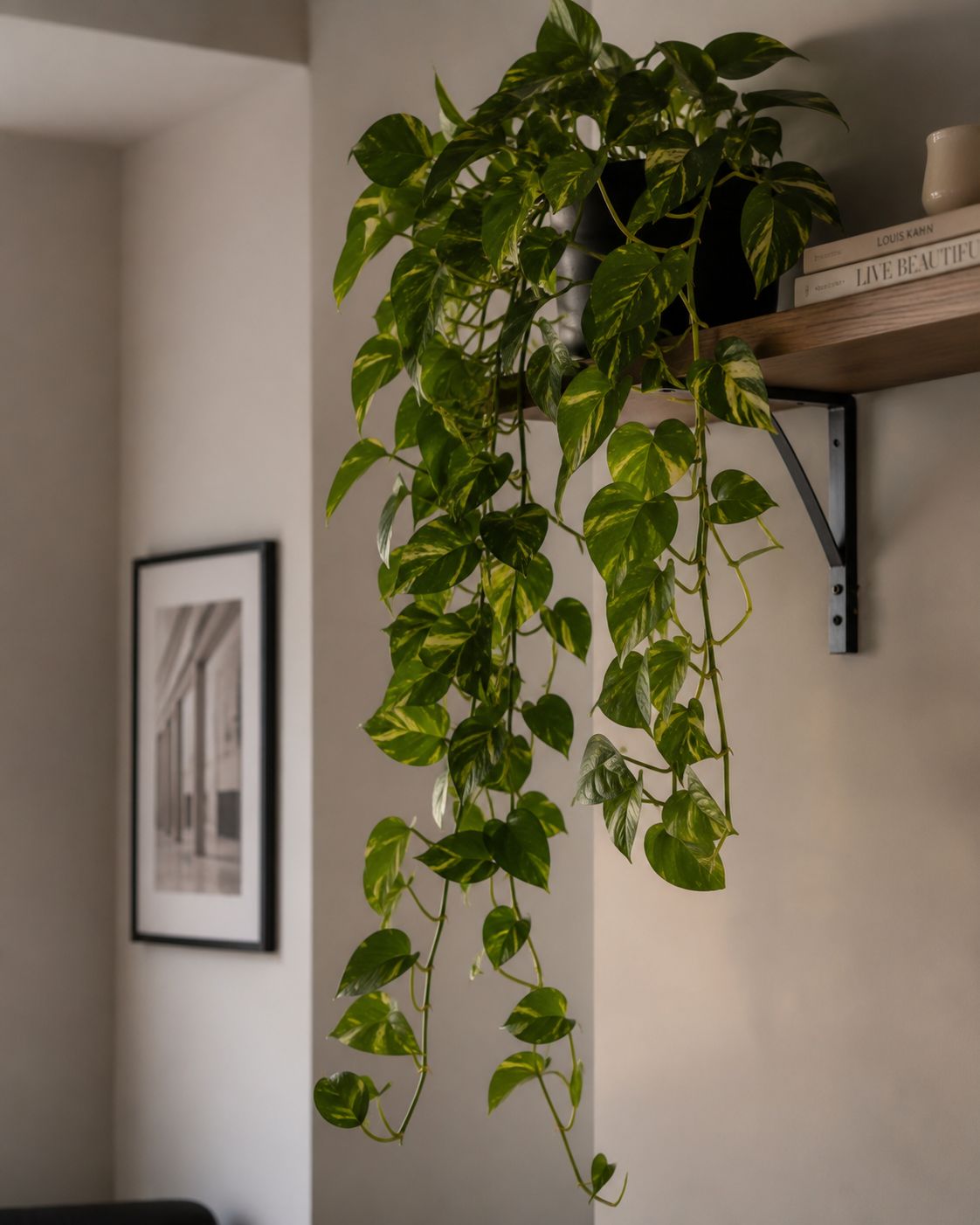
This is the most popular houseplant in the world. Once you grow one, you will understand why.
Pothos trails. Long, heart-shaped leaves cascade from shelves, drape over furniture, climb up poles if you give them one. In a dim apartment it grows a little slower and the golden streaks in the leaves deepen to solid green — the plant quietly adapting to what you have. It is not struggling. It is adjusting. There is a difference.
It also cleans the air. NASA's Clean Air Study identified pothos as effective at removing formaldehyde, benzene, and toluene from indoor spaces. In a small apartment with limited airflow, that is not nothing.
Cut a stem, put it in a glass of water, watch it grow roots. One plant becomes ten within a year. Entirely for free.
Light: Low to bright indirect
Water: Every 1–2 weeks — let the top inch dry first
Pet safe: No
→ Full grow guide: How to Grow Money Plant Indoors
ZZ Plant
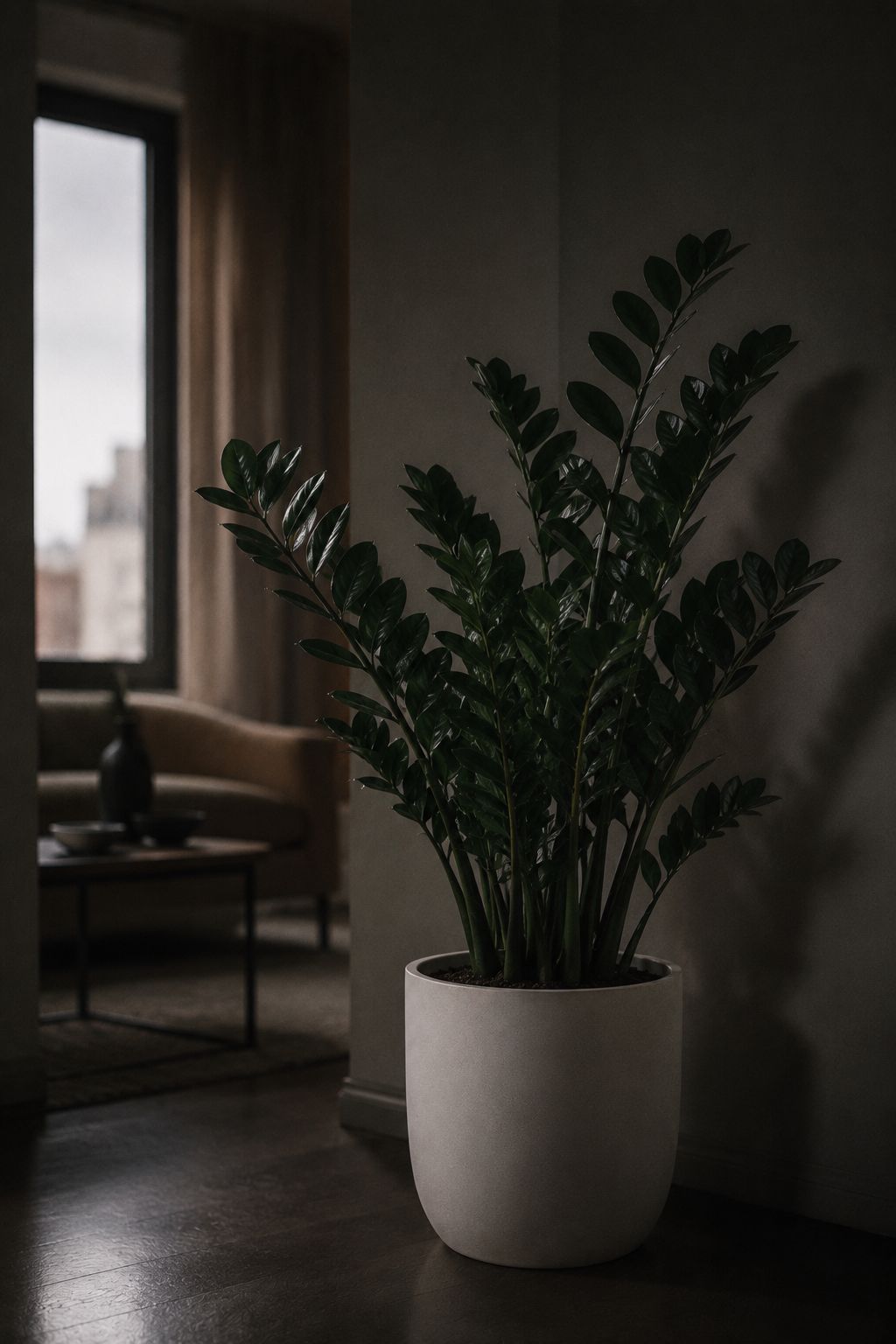
The ZZ plant has a secret underground. Thick, potato-like rhizomes store water beneath the soil. When conditions are difficult — low light, no water, dry air — the plant draws on those reserves instead of deteriorating. It is essentially carrying its own emergency supply at all times.
The result is a plant that looks genuinely polished in any interior. Upright stems. Perfectly paired oval leaves. A deep glossy green that looks almost lacquered. It does nothing dramatically. It just looks consistently good, asks for almost nothing, and quietly removes toluene and xylene from your air while it does it — confirmed in a 2021 study published in Applied Sciences.
The Raven ZZ variety, whose leaves mature to near-black, is one
of the most visually striking indoor plants available at any price
point.
Light: Very low to moderate
Water: Every 2–4 weeks
Pet safe: No
→ Full grow guide: How to Grow ZZ Plant Indoors
Peace Lily
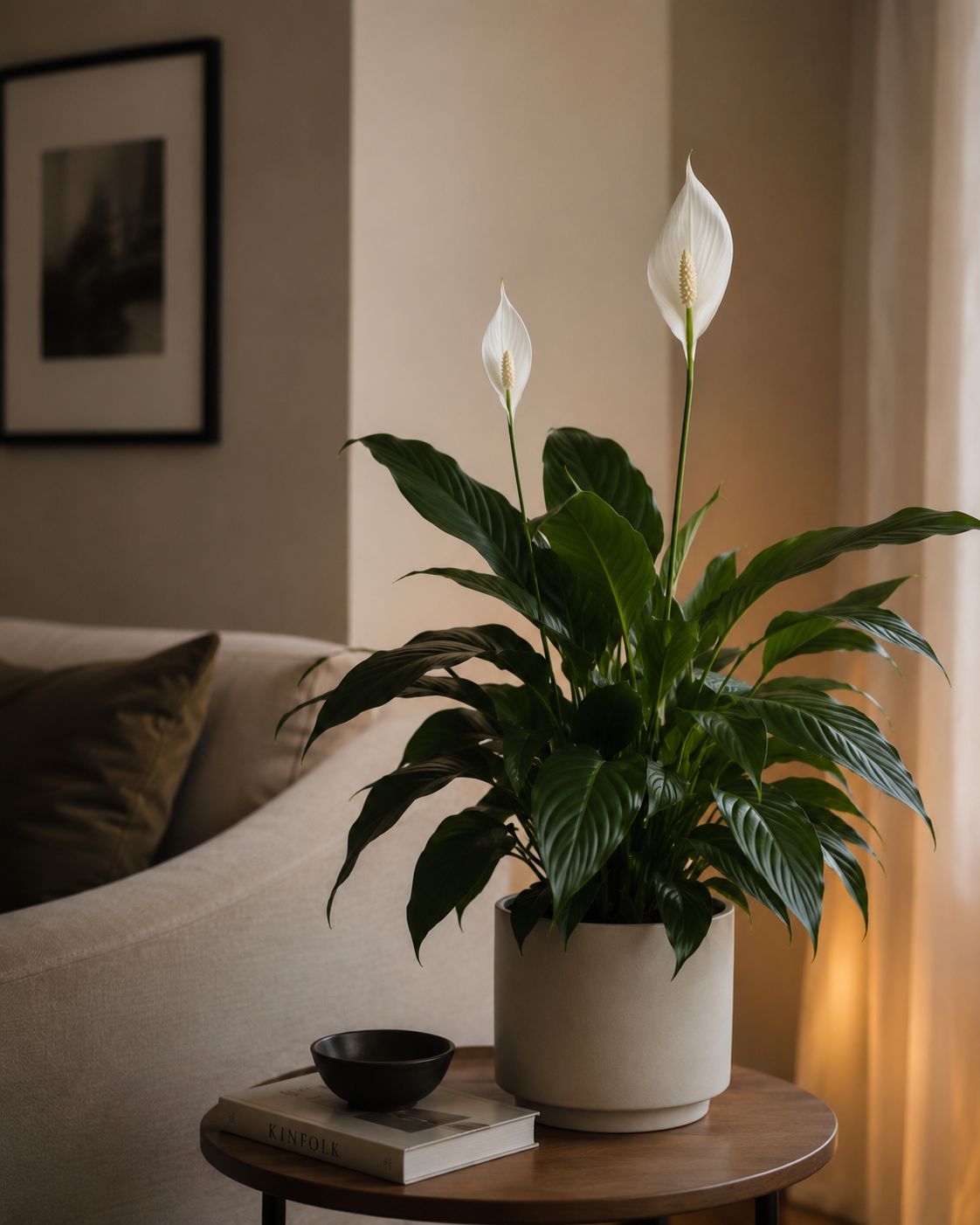
Most flowering plants need a bright window. Peace lily blooms in a dim room. That alone makes it unusual. White hooded flowers appear in spring and sometimes again in autumn — without asking for direct sunlight once.
But the thing that makes peace lily genuinely special is that it talks to you.
When it needs water, the leaves droop. Not slightly — dramatically. The whole plant leans over like it has given up. Water it and within a few hours every leaf is upright again. If you are someone who never knows when to water a plant, peace lily removes all the guesswork. It tells you, every single time.
It was also the only plant in NASA's Clean Air Study that removed all five tested indoor pollutants — formaldehyde, benzene, trichloroethylene, xylene, and ammonia. The only one.
Light: Low to bright indirect
Water: When the top inch is dry — roughly weekly
Pet safe: No
→ Full grow guide: How to Grow Peace Lily Indoors
Philodendron
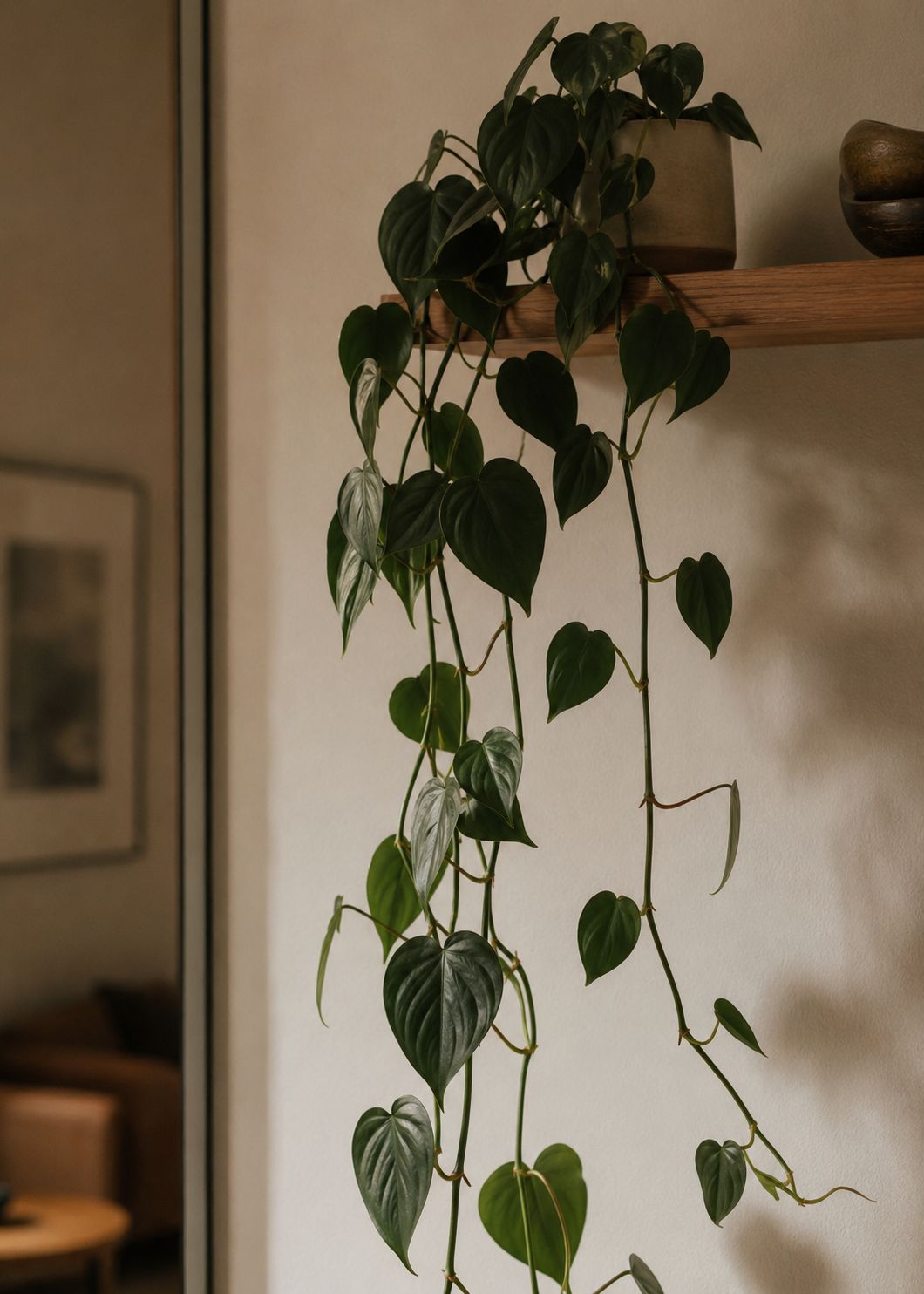
Pothos and philodendron are often confused. They are closely related and both trail beautifully. But philodendron has something pothos does not — softer, more velvety leaves that feel genuinely lush in the hand.
The heartleaf variety is the most common and the easiest. Dark green heart-shaped leaves on fast-growing trailing or climbing stems. The Brasil variety adds gold-green streaks. The Micans has a copper-bronze shimmer that changes in different light. All of them grow in dim conditions without complaint.
Put a stem cutting in water. Roots appear within a week. Pot it up and you have a second plant. It is that simple.
Light: Low to bright indirect
Water: Every 1–2 weeks — let the top inch dry first
Pet safe: No
Spider Plant
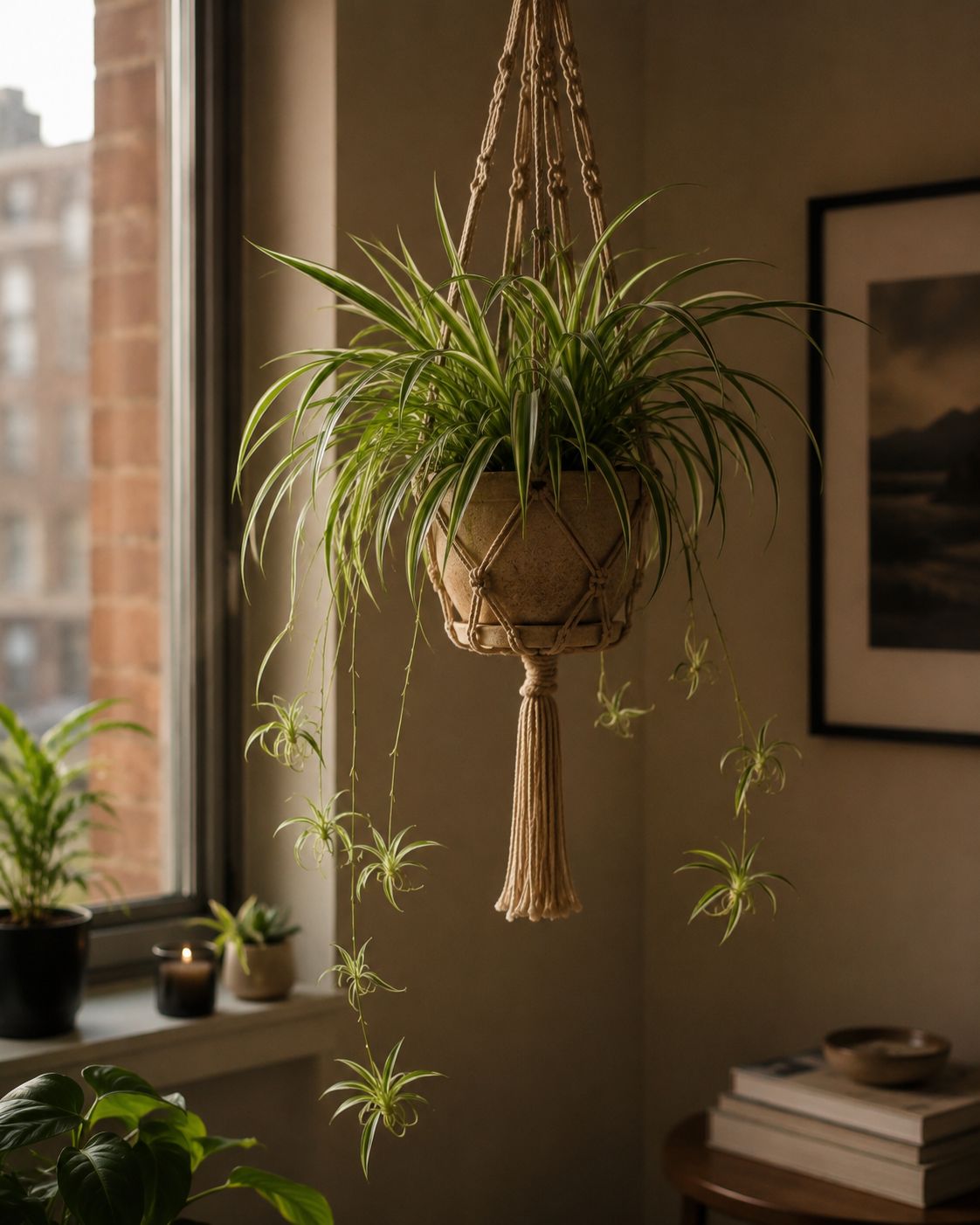
Spider plant is the one on this list you can place anywhere in your home without worrying about your cat or dog getting into it. Fully non-toxic. Confirmed by the ASPCA.
It produces arching striped leaves — green with a cream or white stripe down the centre — and after a few months begins sending out long stems tipped with baby plants. Those babies can be snipped off, placed in water, and rooted into new plants within days. One spider plant eventually becomes many.
NASA found it removed 95 percent of formaldehyde from a sealed chamber in 24 hours. The real-world effect is more modest — but the plant is genuinely active in your air, not just decorative.
If you have pets, this is the plant to start with.
Light: Low to bright indirect
Water: Every 1–2 weeks — keep lightly moist
Pet safe: Yes
→ Full grow guide: How to Grow Spider Plant Indoors
Chinese Evergreen
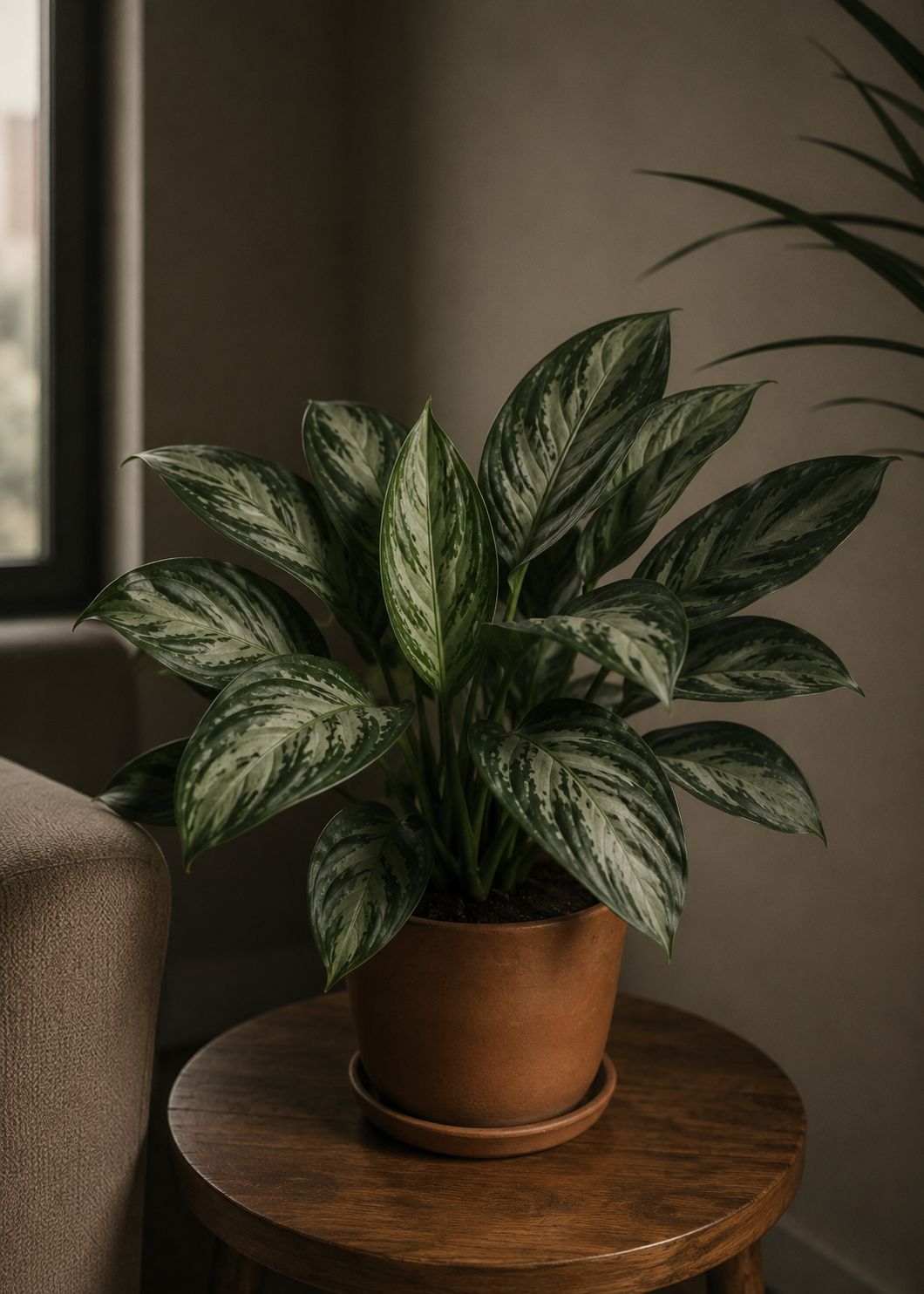
Most low-light plants are green. Chinese evergreen — Aglaonema — comes in silver, deep maroon, pink-edged, red-striped, and cream-splashed varieties. If your apartment is dim and you still want colour, this is the answer.
The darker green varieties tolerate the lowest light. The coloured ones — pinks and reds — need a little more. But all of them work in standard apartment conditions without drama.
It grows slowly. Does not need frequent repotting. Does not need regular feeding. Bounces back from periods of neglect faster than most houseplants. Clemson University Extension lists it as one of their top recommendations for low-light indoor growing specifically because of how little it demands.
Light: Low to moderate indirect
Water: Every 1–2 weeks — drought tolerant
Pet safe: No
Cast Iron Plant
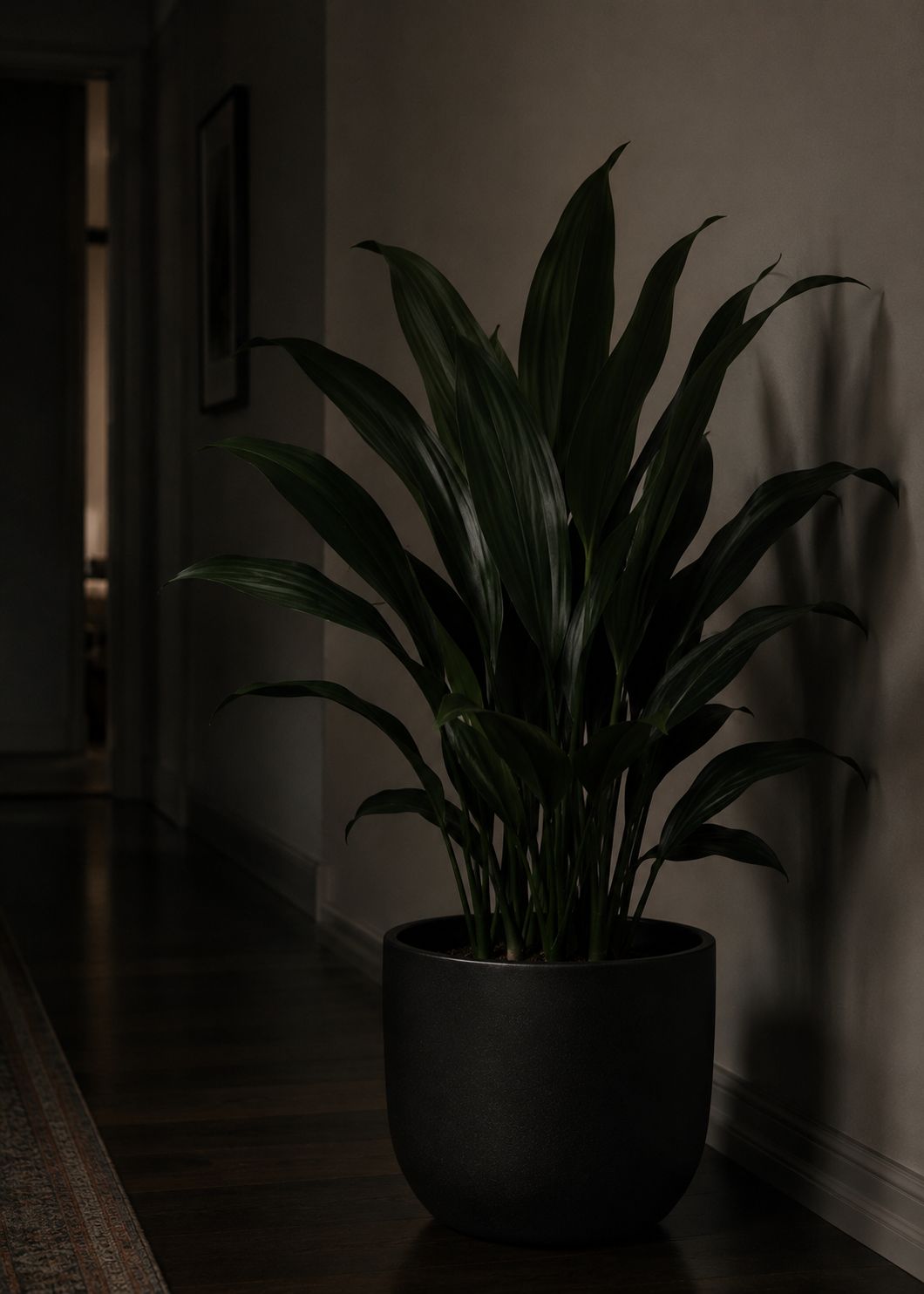
The Victorians grew this in rooms filled with coal smoke, gas fumes, and almost no natural light. It survived. It kept growing. They named it accordingly.
Cast iron plant — Aspidistra elatior — is for the darkest spots in your home. The hallway with no window. The bathroom with a frosted glass panel. The corner three rooms away from natural light. Nothing else on this list works in those conditions. This one does.
It grows extremely slowly. But it grows. The deep dark green strap-like leaves are clean and architectural. It never asks for much. It never rewards you with drama. It simply stays alive and looks good in spots where everything else gives up.
That is the whole point of it.
Light: Very low — the most shade-tolerant plant available
Water: Every 2–4 weeks
Pet safe: Yes
Quick Comparison
| Plant | Light Needed | Water | Pet Safe | Best For |
|---|---|---|---|---|
| Snake Plant | Very low | Every 2–6 weeks | No | Any room, bedroom |
| Pothos | Low | Every 1–2 weeks | No | Shelves, trailing |
| ZZ Plant | Very low | Every 2–4 weeks | No | Dark corners, offices |
| Peace Lily | Low | Weekly | No | Flowering, air quality |
| Philodendron | Low | Every 1–2 weeks | No | Trailing, climbing |
| Spider Plant | Low | Every 1–2 weeks | Yes | Pets, beginners |
| Chinese Evergreen | Low | Every 1–2 weeks | No | Colour in dim rooms |
| Cast Iron Plant | Very low | Every 2–4 weeks | Yes | Windowless rooms |
What Not to Buy for a Dim Apartment
Succulents need hours of direct sun daily. In a dim room they look fine for a month then slowly collapse. They are not low-light plants regardless of how they are sold.
Fiddle leaf figs need consistent bright indirect light. They are among the most sensitive large houseplants to low light and decline quickly without it.
Basil, rosemary, lavender — all need six or more hours of direct light. They will not survive on a dim windowsill.
If someone at a garden centre is steering you toward any of these for a dark apartment, they either do not know or do not care. Now you do.
One Last Thing
None of these plants are entirely light-free. They all benefit from being as close to a window as possible — even a north-facing one with no direct sun still provides more light than the centre of a room.
And if your apartment genuinely has no natural light anywhere, a basic LED grow light on a timer for 12 to 16 hours a day will keep every plant on this list healthy indefinitely. They are inexpensive and they work.
The right plant in the right spot. That is the whole secret.
By Seedora Store — Home & Living Series.
Sources: NASA Clean Air Study, Wolverton et al. (1989); University of Copenhagen, ZZ plant VOC study; Applied Sciences (2021); Clemson University Cooperative Extension; University of Vermont, low-light office plant study; LowLightLeaf.com; Forestry.com; Proven Winners.