The numbers from 2025 are not subtle.
Mental Health UK published its annual Burnout Report surveying over four thousand adults. Ninety-one percent reported experiencing high or extreme levels of stress in the past year. Not some stress. Not occasional stress. High or extreme. That is not a statistic about a vulnerable minority. That is nearly everyone.
Eagle Hill Consulting's November 2025 survey found that 55 percent of the US workforce is currently experiencing burnout — a six-year high. Gallup's 2024 Global Workplace Report found that 41 percent of employees worldwide experience a lot of stress on a daily basis. Aflac's 2025 WorkForces Report put moderate-to-high stress among US workers at 72 percent — the highest figure recorded in seven years.
These numbers come from different countries, different methodologies, different definitions of stress and burnout. But they all point in the same direction. Stress is not a personal failing or a phase that people will grow out of. It has become the background condition of modern life.
And yet, for all the coverage of burnout, productivity hacks, and wellness trends, very little attention goes to what the research has actually been building toward for decades — a solution that costs almost nothing, requires no prescription, no subscription, and no schedule.
What Stress Is Actually Doing to Your Body

Before getting to the solution, it is worth being clear about what chronic stress actually is at a biological level, because most people understand it only as a feeling.
When the brain perceives a threat — a deadline, a difficult conversation, financial pressure, an inbox that won't empty — it signals the adrenal glands to release cortisol. Cortisol is the body's primary stress hormone. In short bursts, it is essential. It sharpens focus, suppresses inflammation, and mobilises energy. The system was designed for acute threats — a predator, a physical danger, something that would resolve quickly one way or another.
The problem with modern stress is that it does not resolve. The threats are chronic and abstract — debt does not go away at the end of the day, job insecurity does not lift after an hour, social pressure does not conclude. So cortisol stays elevated. And elevated cortisol over extended periods does something the body was never designed to handle.
Research from Columbia University and multiple independent studies documents what sustained high cortisol actually produces: suppressed immune function, disrupted sleep, impaired memory and cognitive performance, increased blood pressure, elevated risk of cardiovascular disease, weight gain around the abdomen, and — over time — a measurably higher risk of depression and anxiety disorders. The WHO officially classifies burnout as an occupational syndrome resulting from chronic workplace stress that has not been successfully managed, characterised by exhaustion, cynicism, and reduced professional efficacy.
The body does not distinguish between the stress of a looming presentation and the stress of being chased. It responds the same way. And when that response runs continuously for months or years, the consequences are not metaphorical. They are clinical.
Why the Usual Solutions Are Not Working
The global wellness industry was valued at over five trillion dollars in 2023. Meditation apps, ergonomic chairs, four-day work weeks, cold plunge protocols, breathwork certifications, corporate mindfulness programmes — the market for stress solutions has never been larger.
And yet burnout is at a six-year high.
This is not evidence that all of these tools are useless. Some of them help some people in some situations. But it does suggest that the dominant framing of the stress problem — that it is primarily a behavioural issue solvable through the right habits and routines — is missing something important.
The research on chronic stress consistently points toward something more fundamental than habits. It points toward environment.
A stressed person who meditates for ten minutes and then returns to the same environment, the same unrelenting demands, the same sealed office with no natural light and no green in sight, is managing the symptoms without changing the conditions. The cortisol keeps coming because the signals that trigger it have not changed.
The research that gets less attention asks a different question. Not how do you manage stress after it arrives — but what kinds of environments reduce the likelihood of it arriving in the first place.
What the Royal Horticultural Society Found
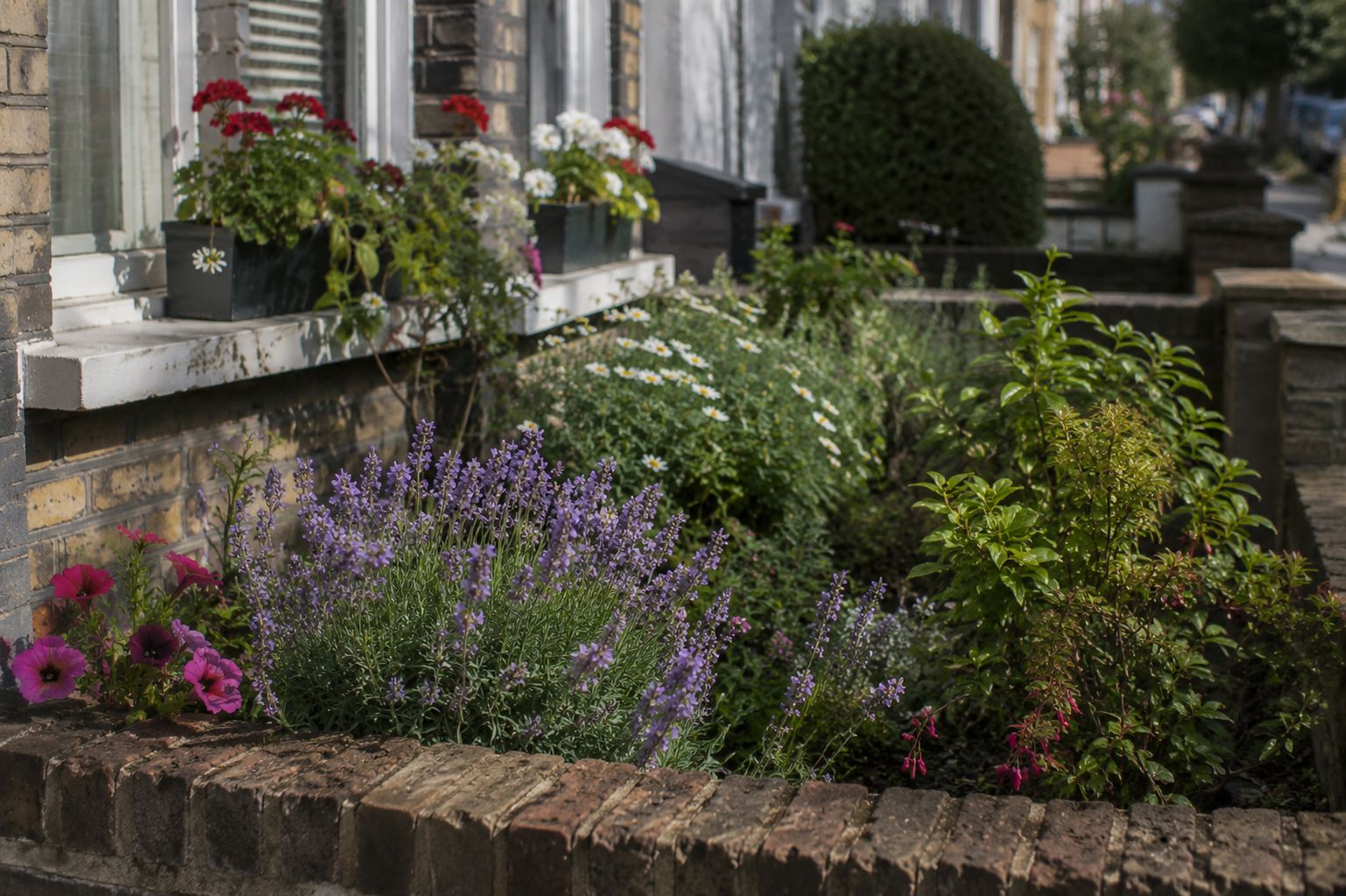
In a study conducted jointly by the Royal Horticultural Society and the universities of Sheffield, Westminster, and Virginia, researchers introduced a small number of ornamental plants into bare front gardens in economically deprived streets in Salford, Greater Manchester. The plants were modest — juniper, azaleas, lavender, daffodil bulbs, petunias. Nothing elaborate. Roughly what you might put in a pot on a windowsill.
Before and after the intervention, the researchers measured residents' cortisol levels.
Before the plants went in, only 24 percent of residents had what the researchers classified as healthy daytime cortisol patterns — the kind of cortisol curve that indicates the body is regulating its stress response effectively. After one year of living with the plants outside their homes, that figure rose to 53 percent.
The RHS described this effect as equivalent to attending eight mindfulness sessions.
These were not people who went into therapy. They did not change their jobs or their sleep routines or their diets. They got plants outside their front doors. And the measurable hormonal signature of their stress responses improved substantially over the following year.
The finding matters because it demonstrates something the research has been suggesting for a long time but rarely states this plainly: the presence of living green in a person's immediate environment changes the body's stress chemistry, not just their reported mood.
The Thirty-Minute Experiment
A study documented by Columbia University's Center for Community Health examined what happened when a group of gardeners performed a deliberately stressful task and then spent thirty minutes either reading or gardening.
Afterward, the researchers tested cortisol levels in both groups.
The gardening group showed a significant decrease in cortisol. The reading group did not show the same reduction. Both activities were restful. Both were quiet and non-demanding. The difference was contact with living plants and soil.
This finding connects to work being done on what researchers call the microbiome-gut-brain axis. Soil contains a bacterium called Mycobacterium vaccae, which has been found in multiple studies to stimulate the release of serotonin when humans come into contact with it — through skin contact, through inhalation of soil particles, through the simple act of handling earth. Serotonin is the neurotransmitter most directly associated with mood regulation and the one most targeted by antidepressant medications.
It is not a stretch to say that dirt, at a biological level, has antidepressant properties. The research does not say this casually. It says it in peer-reviewed journals, with controlled conditions and measurable outcomes.
What a 2024 Meta-Analysis Found
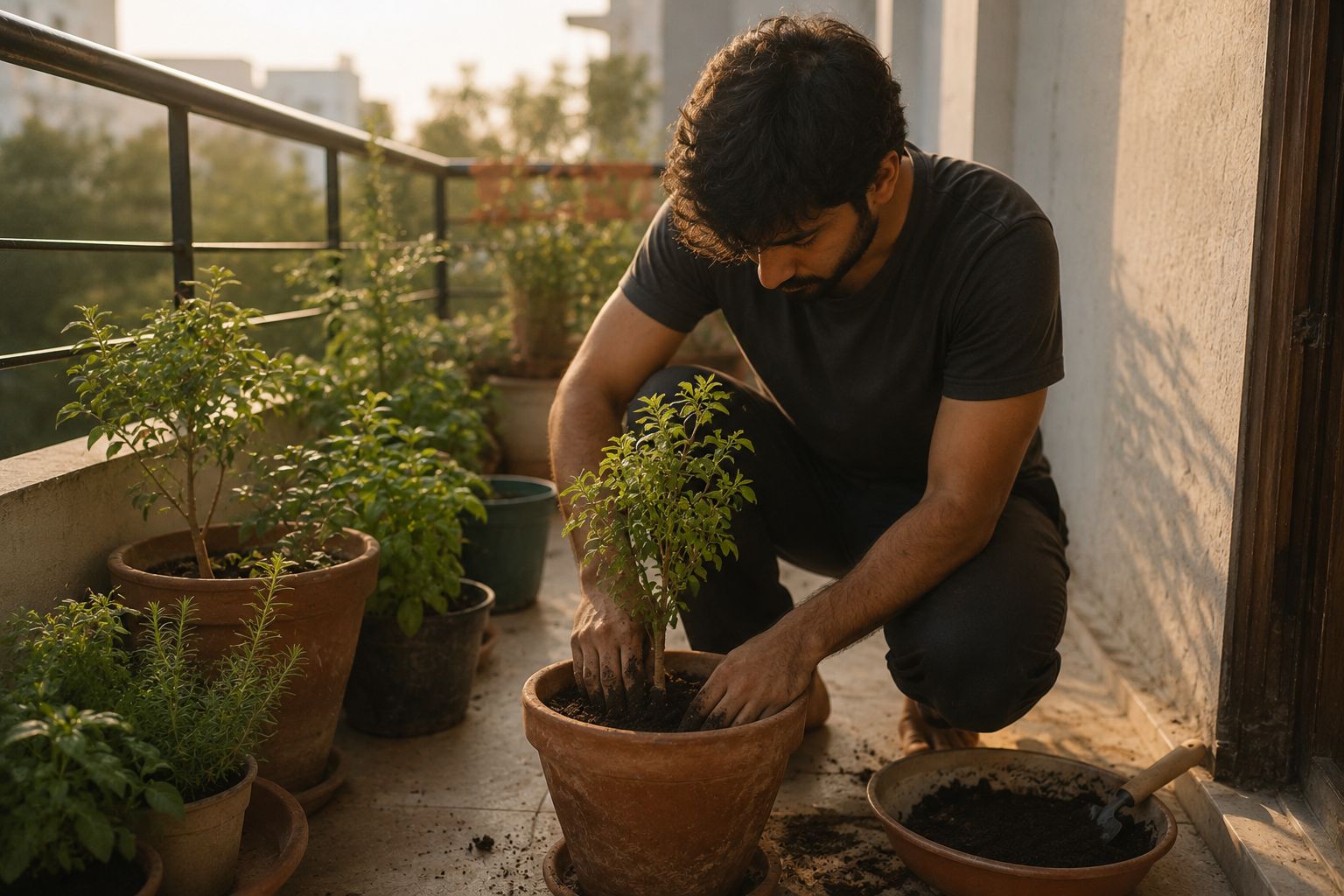
A systematic review and meta-analysis published in Frontiers in Psychology and referenced in the National Institutes of Health database examined the body of evidence on horticultural therapy — the use of plant-related activities as a therapeutic intervention.
The review found significantly positive effects on psychological stress indicators compared to control groups. Specifically, it found that indoor horticultural settings produced some of the strongest results — which matters because most people do not have ready access to gardens, allotments, or green spaces. The study found that a total duration of between 100 and 500 minutes of horticultural activity — spread over weeks, not a single session — produced the most consistent stress reduction effects.
One hundred minutes spread over several weeks is roughly fifteen minutes a week. It is watering your plants before work. It is repotting something on a Sunday morning. It is standing at a windowsill for a few minutes before the day starts.
The bar is not as high as most people assume.
The Problem With How We Think About Stress Relief
There is a tendency to think of stress relief as something that requires dedicated time, effort, and usually money. You schedule it. You carve it out. You treat it as something separate from ordinary life that needs to be deliberately pursued.
The research on plants and green spaces suggests a different model. The most consistent finding across studies is not that occasional, deliberate exposure to nature dramatically reduces stress. It is that continuous, ambient exposure to living green in the environments where people spend most of their time produces a sustained change in how the body manages its stress response.
The distinction matters. One model requires you to do something. The other requires you to change what your environment looks like.
Sixty percent of the world's population now lives in cities. The average person spends roughly 90 percent of their life indoors. Most of those indoor environments contain no living green whatsoever. From an evolutionary standpoint — and the stress research is, at its core, evolutionary in nature — this is a profoundly unusual set of conditions for a species whose nervous system developed over hundreds of thousands of years in constant contact with the natural world.
The body has not adapted to sealed, plantless, artificially lit rooms. The cortisol data suggests it is still responding to them as mildly threatening environments, day after day, year after year.
What the Evidence Actually Recommends
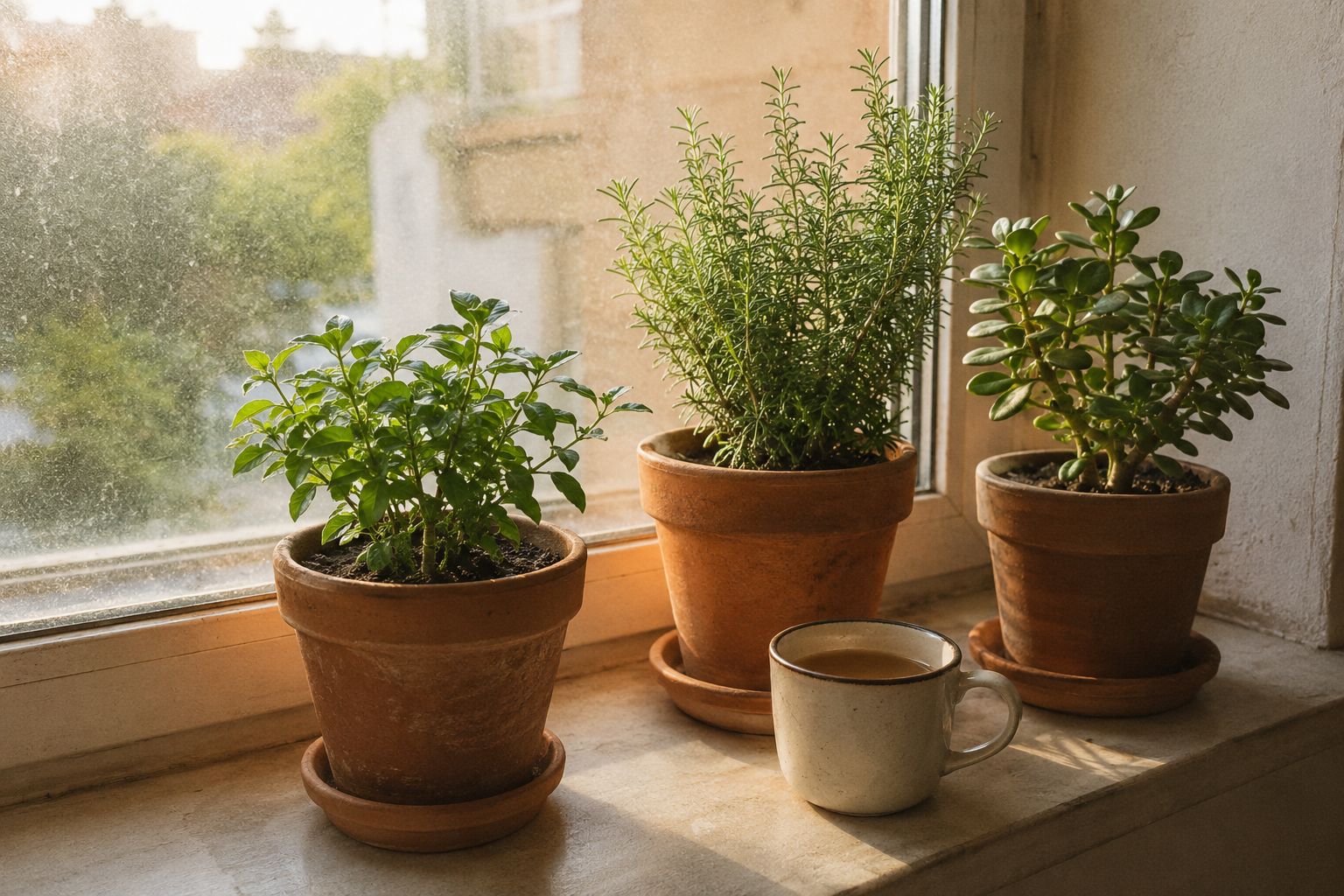
The research does not recommend a particular plant, a specific number, or a formal gardening practice. What it consistently points toward is the sustained presence of living green in the spaces where people spend the most time.
A plant by a desk. A few pots on a windowsill. Something living in the room where you have your morning coffee. These are not grand interventions. They do not require a garden or a subscription or a weekend retreat. They require a pot, some soil, and the minimal attention that most plants actually need.
What they appear to return, according to decades of research from the Royal Horticultural Society, Columbia University, the National Institutes of Health, Chiba University, and multiple independent laboratories, is a measurable shift in how the body handles the stress that modern life reliably produces.
Cortisol is not a feeling. It is a hormone with a measurable concentration in your saliva right now. The studies show that concentration changes — in predictable, positive directions — in the presence of plants.
That is a modest claim. The research is careful to make it modestly. But modest and real and free is a combination that deserves more attention than it gets in a five-trillion-dollar wellness industry that rarely mentions a windowsill.
By Seedora Store — Wellbeing Series.
Sources: Mental Health UK, The Burnout Report 2025; Gallup Global Workplace Report 2024; Eagle Hill Consulting, November 2025; Aflac WorkForces Report 2025; World Health Organisation, Burnout Classification 2019; Royal Horticultural Society, Sheffield, Westminster and University of Virginia joint study; Columbia University Center for Community Health, cortisol and gardening; Frontiers in Psychology, horticultural therapy meta-analysis (NIH); Chiba University, plant interaction and autonomic nervous system, Journal of Physiological Anthropology 2015; Scientific Reports, plant community and stress reduction, 2024.