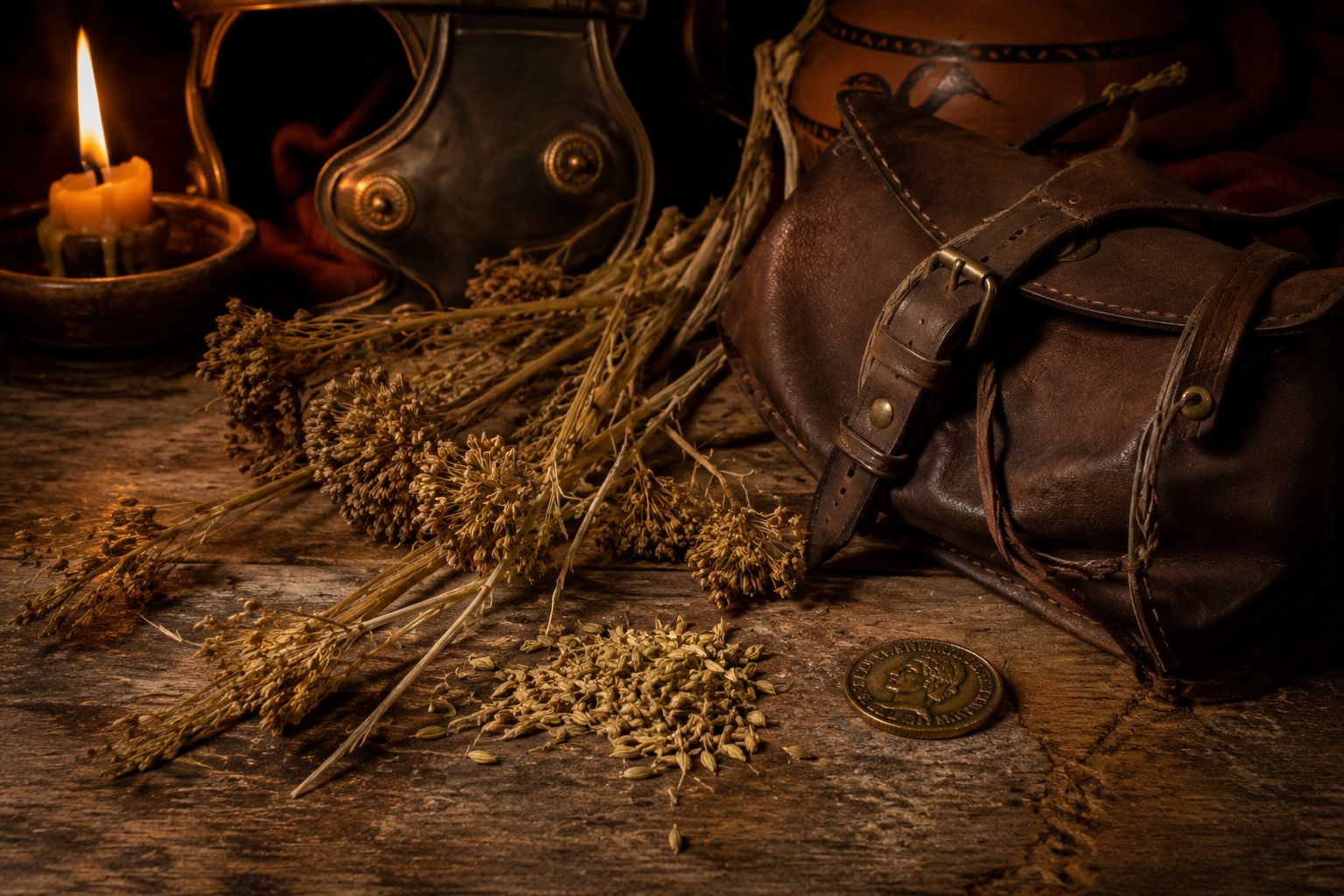
Pack a modern soldier's kit and you won't find a single plant in it. Pack a Roman legionary's, and you would. Tucked among the hardtack and salted meat was something stranger to modern eyes: fennel — a feathery, anise-scented herb that traveled with the army not as flavoring, but as equipment.
This is the story of how one unremarkable-looking plant ended up woven into an empire's survival, its medicine, its modern kitchens — and possibly your own backyard.
A Legend Borrowed From the Greeks
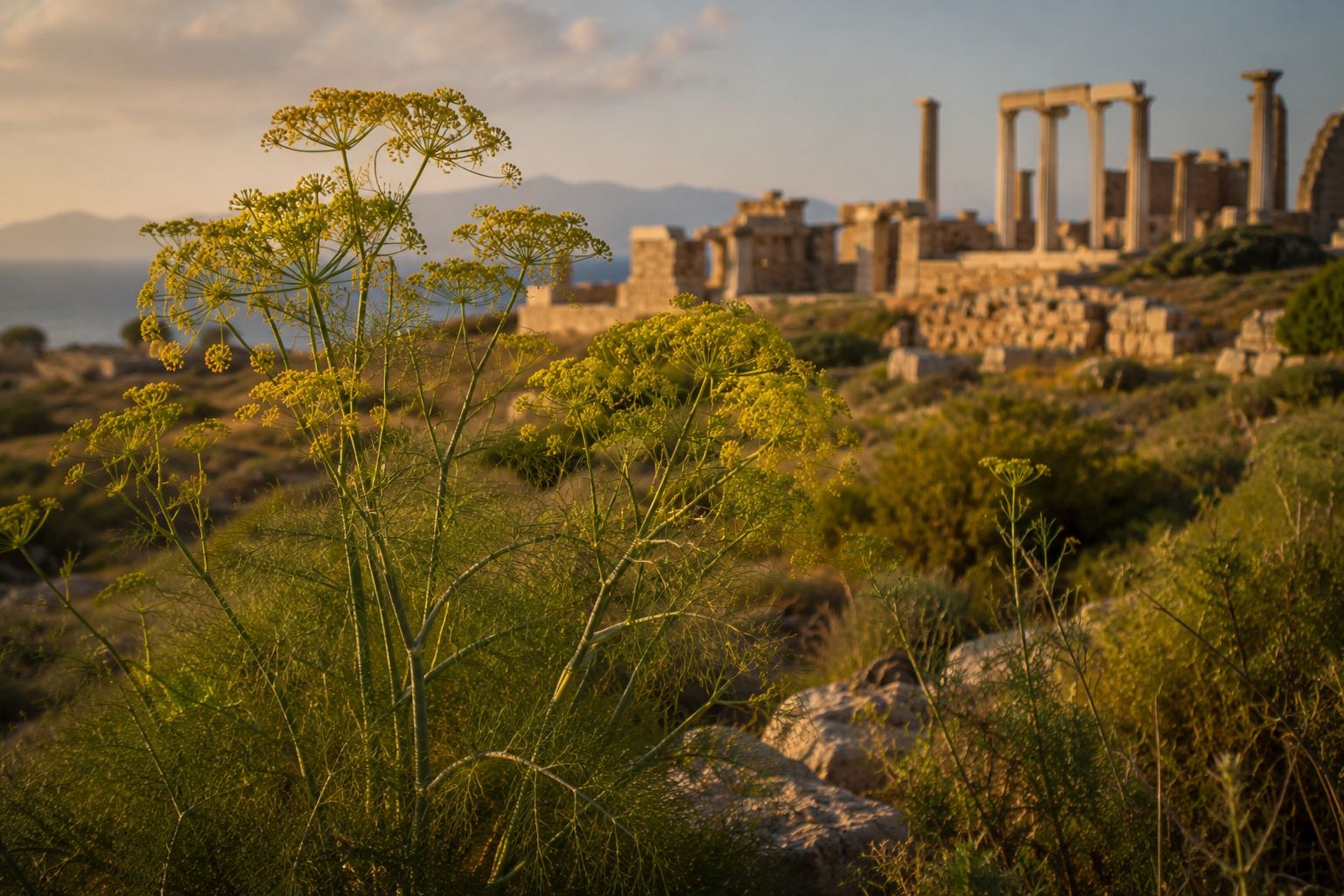
Rome didn't discover fennel. It inherited the plant's reputation from Greece, and the reputation came with a battle attached.
The Greek word for fennel was marathron — and legend holds that the Battle of Marathon in 490 BCE was fought in a field thick with the plant. True or not, the association stuck: fennel became a symbol of strength and victory before Rome ever got its hands on it. By the time Roman armies adopted the herb, they weren't just eating a plant. They were eating a symbol with a winning record.
What Fennel Actually Did for a Roman Soldier
Here's where the story stops being symbolic and starts being practical — because fennel earned its place in a legionary's ration bag through what it actually did to the body, not just what it represented.
It kept soldiers marching on empty stomachs. Fennel is a genuine appetite suppressant — Romans already used it this way during religious fasting periods. On a campaign where the next meal was never guaranteed, a plant that quieted hunger without costing any weight in the supply wagon was a real tactical advantage, not a superstition.
It settled the one thing that could end a march early. Digestive trouble on foreign food and foreign water was a constant threat to an army on the move. Fennel was a standard remedy for exactly this — the same reason it still ends an Indian or Pakistani meal today, three thousand years later.
It doubled as breath care and eye care. Chewed raw, it freshened breath after days without proper washing. Pliny the Elder also pointed to it for eye problems, repeating a folk belief that snakes rubbed their molting eyes against fennel stalks — early "evidence," to the Roman mind, that the plant restored eyesight.
It made bad rations taste like food. Roman bakers laid fennel leaves under bread as it baked, letting the anise flavor soak upward into the loaf — a small comfort that mattered more than it sounds when your diet is hardtack and salted meat for weeks at a time.
Put together, this wasn't one dramatic use. It was fennel showing up in five or six small ways across a soldier's day — which is exactly the kind of usefulness that earns a plant a permanent spot in an empire's supply chain.
Pliny's Prescription List
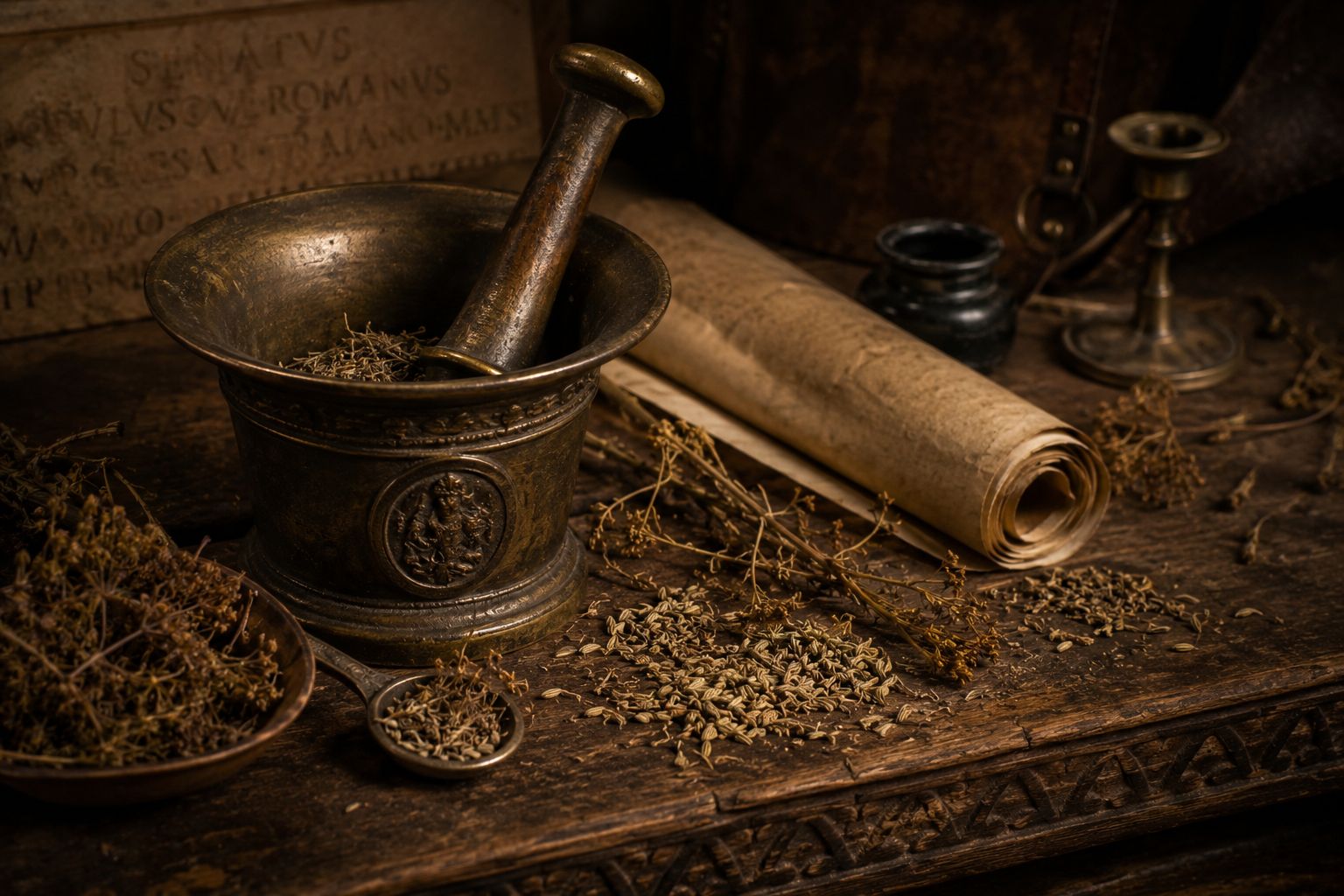
If fennel had a single champion in the Roman world, it was Pliny the Elder. In his sprawling Natural History, compiled in the first century CE, Pliny recommended fennel for more than twenty different ailments — eyesight, digestion, and beyond. A century later, the physician Galen classified it as one of the "four warming seeds," alongside celery, parsley, and asparagus — a formal medical endorsement that shaped European herbal medicine for the next thousand years.
None of this came from anything resembling modern science. It came from centuries of trial, observation, and repetition — an empire slowly cataloguing which plants actually seemed to help, and writing it down for the next generation to use.
The Part the Romans Couldn't Have Known
This is where ancient guesswork and modern lab results quietly meet.
Ancient physicians reached for fennel as a general remedy for infections and ailments with no framework for understanding why it worked — no knowledge of bacteria, no concept of a fungal infection. They were working entirely from observation: this plant seems to help.
Modern laboratory research has since tested fennel's essential oil directly against bacteria and fungi — and confirmed it genuinely suppresses several of them. The compound largely responsible, anethole, is the same one that gives fennel its sweet, licorice-like smell. The Romans had no idea why fennel seemed to help wounds and ailments heal. It took roughly two thousand years and a microscope to find out they weren't entirely wrong.
Where Fennel Lives Now
Fennel never retired. It just changed uniforms.
India is now the largest fennel producer on Earth — grown commercially across Gujarat, Rajasthan, and West Bengal — followed by China, Egypt, and the original Mediterranean coastline it started on. It travels the world today in a handful of familiar forms: the crisp anise-flavored bulb (Florence fennel) in Italian cooking, the toasted seeds handed out as an after-meal digestive and breath freshener across Pakistani and Indian households, a component of Chinese five-spice, and the pollen chefs now treat as a gourmet finishing spice. Same plant the legions carried. Completely different kind of army moving it around the world now.
Where You Can Grow It
The part that might surprise you most: this isn't a rare or difficult plant. Fennel is one of the easier herbs a home gardener can grow.
- Climate: Thrives across USDA zones 4–9 as a self-sowing perennial in milder areas, or simply grown as a fast annual almost anywhere else
- Light: Full sun — at least 6 hours a day
- Soil: Well-drained, moderately fertile; it tolerates less-than-perfect soil without much complaint
- Time to harvest: As little as 60–90 days from seed to a usable plant
- Effort: Minimal — it's genuinely one of the more forgiving herbs to start from seed, and it self-sows readily once established
A plant sturdy enough to survive a Roman supply line is not going to be fussy about your balcony pot.
Still Growing in Every Kitchen
It's a useful reminder for anyone growing herbs today: the plant in your own garden bed might be more interesting than it looks. Fennel isn't just a kitchen herb, and it isn't just history either. It's a living plant you can grow yourself, from the same seed lineage an empire once depended on to keep marching.
Part of the History & Culture series by Seedora Store — the histories hiding in your garden bed.