A plant has no brain. No nerves. No eyes, ears, or nose. By every organ we associate with "sensing," a plant should be numb to the world around it.
And yet: touch a mimosa plant, and its leaves fold shut in under a second. Let a caterpillar start chewing on a tomato plant, and its undamaged neighbors start producing defensive chemicals before the caterpillar ever reaches them. Some plants appear to "remember" a harmless disturbance for over a month.
None of this is folklore. It's an active, peer-reviewed field of research called plant neurobiology, and the honest answer to "can plants sense their environment" is: yes, in ways that are genuinely surprising — just not in the way you might be picturing.
Do plants actually feel touch?
Yes — and the mechanism is closer to an animal's than you'd expect, minus the nerves.
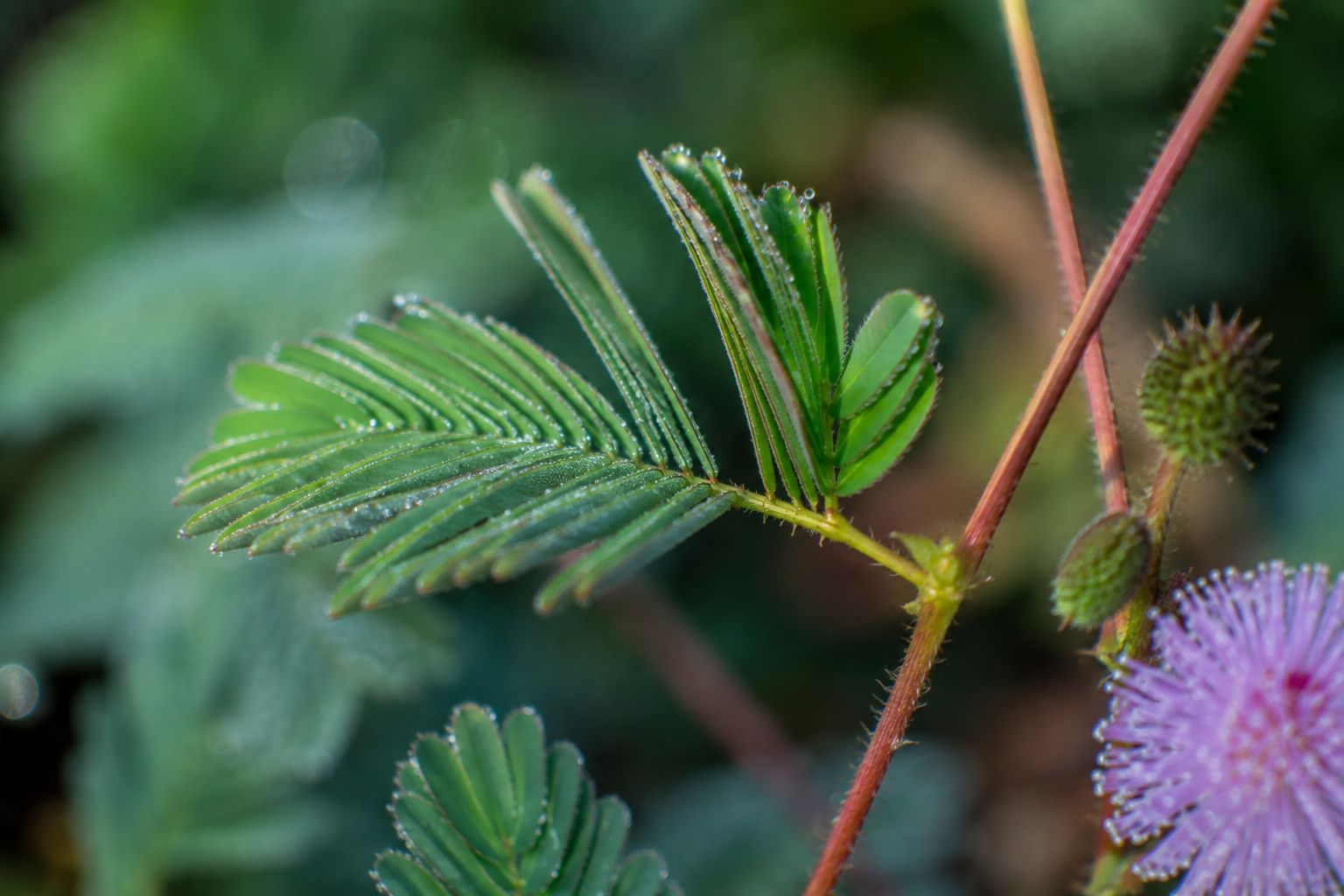
Mimosa pudica, the "touch-me-not" plant, folds its leaflets shut almost instantly when touched. The trigger isn't a nervous system — it's an electrical impulse called an action potential, moving through the plant's tissue and causing cells at the base of each leaflet to lose water pressure rapidly, which snaps the leaf shut.
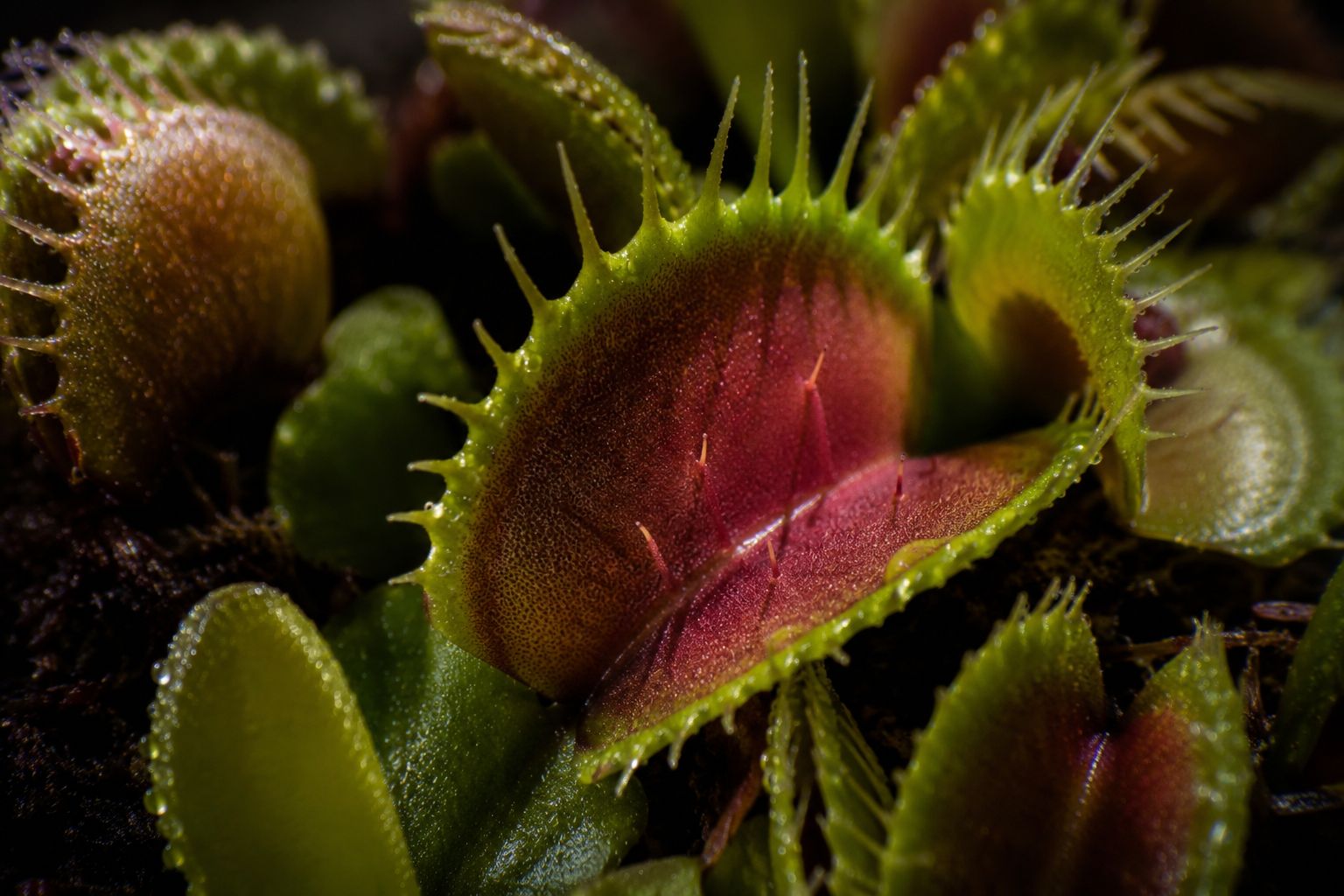
The Venus flytrap works the same way, faster and more dramatically. Each trap has tiny trigger hairs; brush two of them within about 20 seconds of each other, and an electrical signal fires that slams the trap shut. Scientists first recorded these exact electrical pulses in 1873 — this isn't a recent discovery, just a recently understood one. In some measurements, the signal travels through the plant's tissue at a speed in the same range as a nerve impulse in an animal.
Do plants "talk" to each other?
In a real, measurable sense — yes, though "talk" is doing some heavy lifting in that sentence.
Plants release volatile organic compounds (VOCs) — airborne chemical signals — when they're under attack. When maize is being eaten by caterpillars, it releases a specific blend of VOCs that attracts parasitic wasps, the caterpillar's natural predator, essentially calling in help. Neighboring plants that pick up on these compounds often respond by ramping up their own chemical defenses before anything has touched them.
This was first documented with a chemical called methyl jasmonate, released by sagebrush — the plant equivalent of shouting a warning that other plants can "hear" and act on, without ever having been touched by whatever caused the alarm in the first place.
What is the "Wood Wide Web," really?
It's the underground half of the story — and it's the part scientists are still actively arguing about.
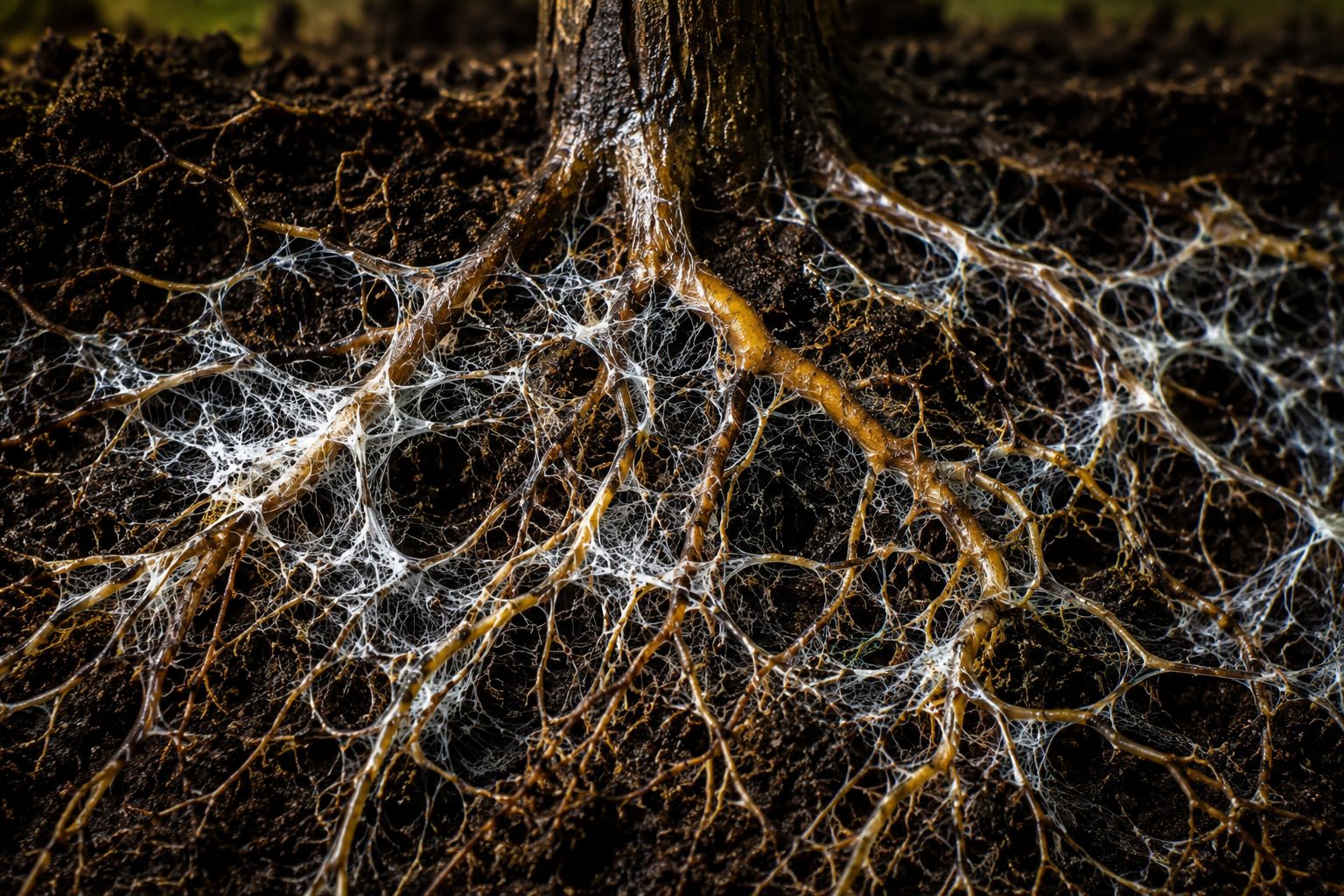
Most plants form partnerships with mycorrhizal fungi in the soil, trading sugars for water and nutrients. Those fungal networks connect the roots of many different plants — sometimes across an entire forest — into what researchers nicknamed the Wood Wide Web.
What's solidly established: nutrients and water genuinely move between connected plants through these fungal highways. What's still actively debated: whether plants use this same network to send warning signals to each other — some experiments show electrical signals traveling between plants connected only by fungal threads (with no shared air or direct root contact), which is a striking result, but the case isn't considered fully closed yet. This is a good example of real science being more careful — and more interesting — than the version that goes viral.
Can plants actually "remember" things?
This is the finding that tends to surprise people most.
In experiments by biologist Monica Gagliano, Mimosa plants were repeatedly dropped a short distance — harmless, but startling enough to trigger their leaf-closing response. At first, every plant closed its leaves every time. But after repeated drops with no actual harm following, the plants stopped closing their leaves altogether — they had, in effect, learned the stimulus wasn't dangerous. Even more strikingly, they still remembered this weeks later, without any repeated exposure in between: a genuine form of long-term learning, in an organism with no brain to store it in.
So — can plants "feel," or think?
Here's where it's worth being precise, because this is exactly where popular science coverage tends to oversell the story.
Plants clearly sense their environment — touch, chemical signals, light direction, gravity, and more — and they clearly respond to what they sense, sometimes in ways that look a lot like learning. What they almost certainly do not have is subjective experience — the felt, inside sense of pain or fear that an animal has. A plant's response to being eaten is a real, measurable, chemical event. Whether anything is "experiencing" that event is a different question entirely, and the honest scientific answer is: there's no evidence that it is, and no accepted way to even test for it in something without a nervous system.
The interesting version of this story isn't "plants have feelings like we do." It's that plants evolved an entirely different toolkit — electrical, chemical, fungal — for doing many of the same jobs a nervous system does, without ever needing one.
Why this actually matters if you garden
None of this changes how you water a tomato plant. But it changes how you might think about the plant while you do it.
Every time a pest starts nibbling on a leaf, a chemical signal is already firing through the plant and often into the soil. Every root tip is actively sensing which direction has more water and growing toward it. Every mimosa or sensitive plant you brush against is running a genuine electrical response, not just flinching mechanically.
A garden isn't a static backdrop that things happen to. It's a network of organisms constantly sensing, signaling, and adjusting — just on a timescale and in a language too slow and too silent for us to notice without looking closely.
Part of the General Series by Seedora Store — for the science behind the plants you grow.