Could We Feed Ourselves Again?
Strip everything else away — the job, the phone, the news cycle, the bills — and the original human problem was very simple: find enough food to survive until tomorrow. Everything else we now call civilization was, in some sense, built on top of that one problem slowly getting solved. Once a group of people had reliable food, they had time. Time became specialization. Specialization became trade, tools, writing, cities, and eventually the version of the world we live in now, where most of us have never grown a single thing we've eaten.
That last part is the strange one. For nearly all of human history, growing or gathering your own food wasn't a hobby or a lifestyle choice — it was simply what living meant. It's only in the last century or so, an eyeblink in the scale of our species, that most people quietly stopped doing it at all.
So here's the question worth sitting with: in a world now shaped by AI, automation, and instant delivery, is there anything left of that older way of living worth going back to? Not the whole thing — nobody is proposing we give up medicine or refrigeration. But the actual core of it: people growing at least some of what they eat, and depending on each other, not just a supply chain, for the rest.
Why We Ever Stopped
It's worth being honest about why humanity moved away from growing its own food in the first place, because the reasons were good ones. Farming one crop at scale is dramatically more efficient than every household growing a little of everything. Trade lets a region that grows abundant wheat feed a region that can't, in exchange for something it can't grow itself. Specialization let some people become doctors and engineers instead of spending all day in a field. None of that was a mistake. It's arguably the reason any of us have the free time to ask a question like this one at all.
The trade-off is that efficiency and dependence tend to grow together. The more efficiently a system feeds you, the less you understand about how your own food actually gets made — and the more exposed you are if that system ever falters, even briefly.
Geography Was Never Optional
There's a real limit to how far self-sufficiency can go, and it comes down to geography. A family in a mountain village simply cannot grow rice the way a family on a river delta can, and a household in a dry, hot region isn't going to be pulling in the same harvest as one in temperate farmland. This isn't a flaw in the idea — it's the reason trade has existed for as long as agriculture has. Even the most food-independent societies in history still traded for salt, spices, or whatever their own land couldn't provide.
What this suggests isn't that full self-sufficiency is realistic for every household everywhere. It's that the right unit for food independence was probably never the single family — it was always the community. A cluster of households or a small town, growing a spread of what their local land actually supports, trading the surplus with the next town over, is a far more realistic version of "going back to basics" than every single person trying to grow everything they eat alone.
We've Actually Done This Before — Recently
This isn't just a thought experiment. It's been tested, at real scale, within living memory.
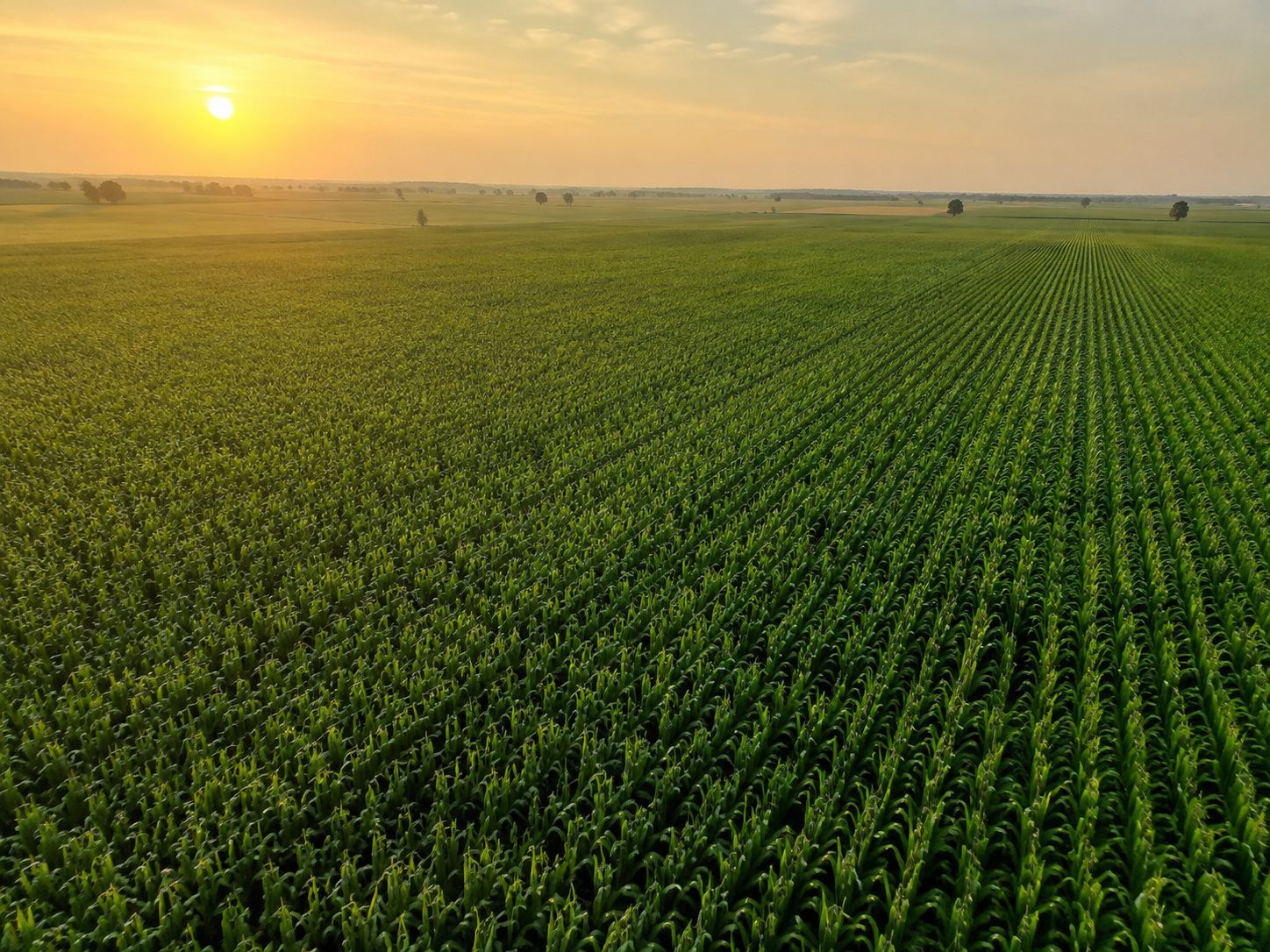
During the Second World War, ordinary households across the US and UK were asked to grow whatever vegetables they could in whatever space they had — backyards, empty lots, even rooftops. Roughly 20 million of these Victory Gardens were planted, and by 1943 they were producing about 40 percent of all the vegetables consumed in the country. That number is worth sitting with for a second. Nearly half a nation's fresh vegetables, grown not by farms, but by families with no particular training, working small plots alongside everything else going on in their lives.
It wasn't effortless, and it isn't a perfect model — it was driven by wartime necessity, not lifestyle preference, and once the pressure lifted, most people understandably went back to buying vegetables instead of growing them. But it proves the underlying claim: ordinary people, growing food in ordinary spaces, can meaningfully feed a population when they actually try. This isn't a fringe idea. It's a documented, recent, large-scale fact.
The Strange Opening the AI Era Creates
Here's the part that makes this moment different from any point in the last hundred years: for the first time since food-growing became optional, we might be gaining back the one resource that made it disappear in the first place — time.
As automation and AI absorb more of the repetitive, administrative parts of work, a real (if uneven) question opens up about what people do with the hours that frees up. Historically, freed-up time got absorbed into more specialization, more consumption, more screen time. But it doesn't have to. Some of that time could just as easily go back into something as old as agriculture itself — a garden bed, a balcony of pots, a rooftop of grow bags — not as a full replacement for the modern food system, but as a hedge against total dependence on it, and a genuine source of the kind of grounded, tangible satisfaction that scrolling never quite provides.
This is already showing up, quietly, at the edges of modern life. Community-supported agriculture, urban homesteading, rooftop farming collectives, and neighborhood seed-swaps aren't mainstream yet, but they're growing steadily in exactly the direction this question points toward — small groups of people choosing to know where at least part of their food comes from, and choosing each other over pure market dependence for it.
So — Can We Actually Do It?
Probably not all the way, and probably not alone. A single household growing one hundred percent of its own diet, in a modern city, is not a realistic ambition for almost anyone — the land, time, and climate constraints are real. But that was likely never how it worked even in the past that we're romanticizing. Early human food security was never one person surviving alone. It was small groups, pooling what their specific patch of earth could give them, and trading for the rest.
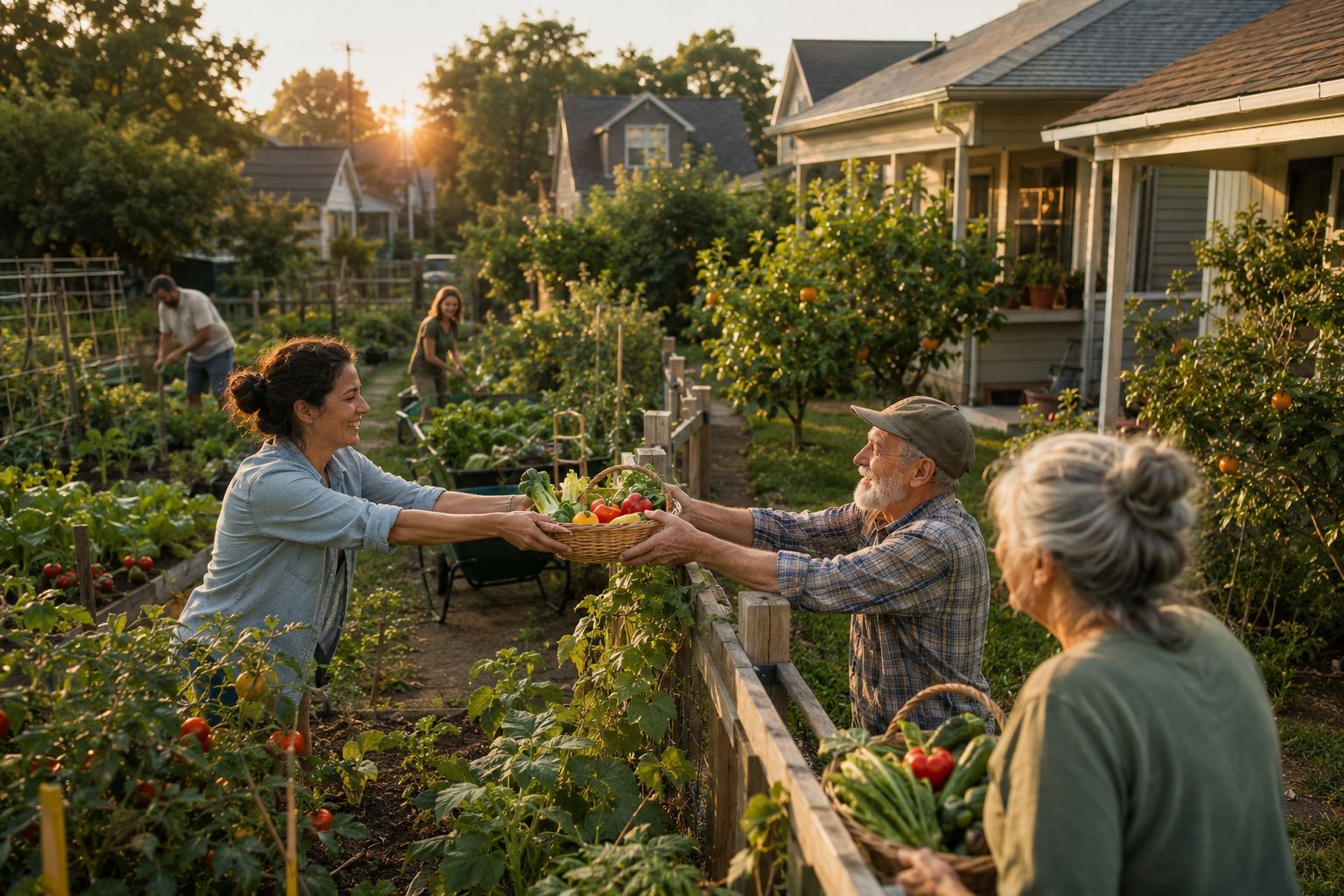
That version is absolutely still possible. A household growing a meaningful share of its own vegetables. A street or a small community sharing surplus instead of everyone buying the same five vegetables from the same supply chain. A shift from being a pure consumer of food to being, even partially, a producer of it again.
It won't replace the modern food system, and it doesn't need to. It just needs to sit alongside it — a smaller, slower, more resilient layer underneath the fast one, so that "what's happening in the market" stops being the only thing standing between a family and dinner.
Where This Actually Starts
Nobody needs a farm to test this idea. It starts the same way it always has — with one bed, one pot, one plant that actually gets eaten. The Victory Garden movement didn't begin with a national plan; it began with individual families deciding to plant something, and it added up to something far larger than any of them expected on their own.
That's really the whole argument in one sentence: self-sufficiency was never going to be one dramatic decision. It was always just the sum of a lot of ordinary people quietly growing something, one small garden at a time.
A Buffer Worth Building, No Matter What the Future Holds
As AI and automation reshape what work even looks like, a lot of people are quietly uneasy about what stays certain and what doesn't. Growing your own food isn't a way to opt out of that uncertainty entirely — nobody's garden pays the rent. But it is one of the few things you can build that genuinely lowers how much of your life depends on a job going right, an economy staying stable, or a supply chain never breaking down. Food is the one need every single one of us shares no matter what happens to the world of work, and it's one of the few needs a household or a street can actually meet for itself, at least in part, with nothing more than soil, seeds, and a bit of shared effort. A garden that feeds your own kitchen and still leaves enough to hand over the fence to a neighbor isn't just produce — it's the beginning of a community that looks out for each other regardless of who has a job this year and who doesn't. In a future that nobody can fully predict, that kind of quiet, shared self-reliance might be one of the steadiest things you can plant.
☞ How to Turn Your Rooftop Into a Garden
☞ No-Till Gardening for Beginners
Part of the Trend Decode by Seedora Store — for the bigger questions behind why we grow at all.