
Try this thought experiment: you're standing in a garden, and a few feet away, someone snips a leaf off a tomato plant.
Nothing happens, right? No sound, no reaction, no drama.
Except that's not quite true. In the seconds after that cut, an invisible signal spreads through the air. Plants nearby detect it. And they start preparing for an attack that hasn't even happened to them yet.
Plants, it turns out, talk to each other. Not with words, obviously — but through chemistry, sound, and an underground network so vast that scientists have started calling it the "Wood Wide Web." And the more researchers study it, the stranger and more impressive it gets.
The Smell of Danger
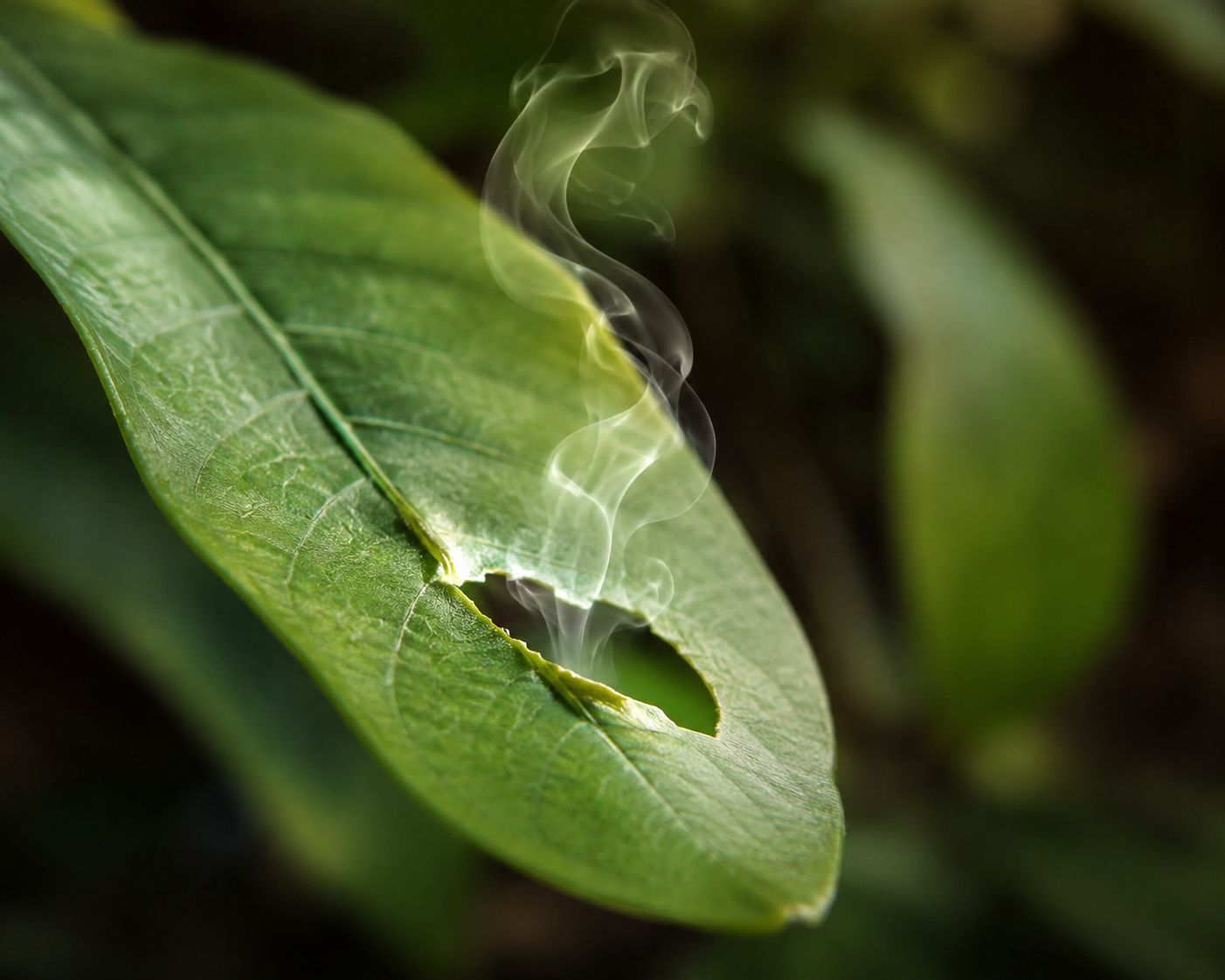
Here's how it usually starts. When a plant gets bitten by an insect or torn by wind, it releases a cocktail of airborne chemicals called volatile organic compounds, or VOCs. Think of it as the plant world's version of a scent-based alarm system.
Nearby plants pick up on these VOCs, and something remarkable happens — they respond before they're ever touched. One well-studied example involves sagebrush, which releases warning chemicals that neighboring tomato plants detect and react to almost instantly, ramping up their own chemical defenses in preparation for an attack that hasn't reached them yet.
It's less "communication" in the way we think of it, and more like one plant overhearing a warning meant for someone else — and taking it seriously anyway.
Plants Might Even Have a "Voice"
This is where it gets genuinely wild. In recent years, researchers recording plants in a quiet lab setting picked up something nobody expected: sound. Not sound in the way a bird sings or a dog barks — these were faint ultrasonic clicking noises, far above the range of human hearing, produced by stressed or dehydrated plants.

Scientists believe these clicks come from tiny air bubbles forming and popping inside the plant's water-transport system as it struggles under stress — almost like a plant's version of a stomach growling. Whether other plants (or animals) are actually "listening" to these sounds is still being studied, but the discovery alone reshaped how seriously scientists take the idea of plants having something like a voice.
The Hidden Network Beneath Your Feet
If chemical signals are a plant's way of shouting into the wind, there's a second, quieter system running underground — one that's arguably even more astonishing.

Beneath forests and even backyard gardens, plant roots connect to vast networks of thread-like fungi called mycorrhizae. These fungal threads link the roots of different plants — sometimes different species entirely — into a shared underground web. Through this network, plants can send nutrients, water, and even distress signals to each other.
Scientists studying this "Internet of Plants" are now building mathematical models to understand it, treating each plant like a node in a massive, living communication network. Some research even suggests plants can recognize their own relatives underground and cooperate with them differently than they do with strangers — sharing more resources with kin, competing more openly with unrelated plants nearby.
It's a strange thing to sit with: a forest isn't really a collection of separate trees. It might be closer to one connected, communicating system.
Why This Isn't Just a Fun Fact
It's easy to file this away as a neat piece of trivia. But scientists studying plant communication think it could genuinely change agriculture. If crops can be bred or managed to "listen" to each other's warning signals more effectively, farmers could reduce how many pesticides they need — letting plants defend themselves earlier and more efficiently, the way nature already intended.
There's also a bigger, quieter shift happening here. For most of history, we've treated plants as passive — background scenery that grows, sits still, and waits to be eaten. This research is chipping away at that assumption. Plants sense. They react. They warn each other. They share resources with family. That's not the same thing as human intelligence, but it's not "just sitting there" either.
The Next Time You Walk Past a Garden

Next time you're outside and you see two plants growing near each other, it's worth remembering: there's a good chance they're already in conversation. A quiet exchange of chemistry, maybe a faint click you'll never hear, possibly a shared thread of fungus running beneath your feet, moving information back and forth in real time.
We spent centuries assuming plants were silent. We just weren't listening the right way.
Sources: Research summarized via ScienceTimes and peer-reviewed studies published in Cell, iScience, and Trends in Plant Science (2026), including work on plant volatile organic compound signaling, bioacoustic emissions, and mycorrhizal network modeling.