When to Plant in South Asia
Every planting guide so far in this series has started with the same question: how cold does it get? Across Pakistan, India, Bangladesh, and Sri Lanka, that question mostly doesn't apply. Frost is rare, and where it exists, it's a footnote rather than the main event.
The question that actually runs the calendar here is different: which monsoon is coming, and when will it arrive?
This region is shaped by rain the way the Pacific Northwest is shaped by cold fronts, or Arizona by heat. Two enormous monsoon systems — the southwest and the northeast — sweep across the subcontinent at different times, hit different coastlines, and leave entirely different growing windows in their wake. Four countries, four rainfall patterns, four planting calendars — all running on the same underlying logic once you see it.
Understanding This Region's Climate
| Area | Defining System | Character |
|---|---|---|
| Pakistan / North India | Rabi – Kharif – Zaid | The only part of this guide with a genuine cool winter — real frost risk, real temperate vegetables |
| South India | Southwest & Northeast Monsoon | No winter at all — two monsoons feed two different coastlines at two different times of year |
| Bangladesh | Aus – Aman – Boro (rice-defined seasons) | A deltaic floodplain where the entire calendar bends around flood depth and cyclone risk |
| Sri Lanka | Yala – Maha | An island split by both monsoons at once, with a cool highland pocket that behaves like nowhere else nearby |
The rest of this guide walks through each of these four systems on its own terms, because — unlike frost dates, which shift gradually — these are four genuinely different frameworks for thinking about a growing year.
Pakistan & North India — The Rabi-Kharif-Zaid System
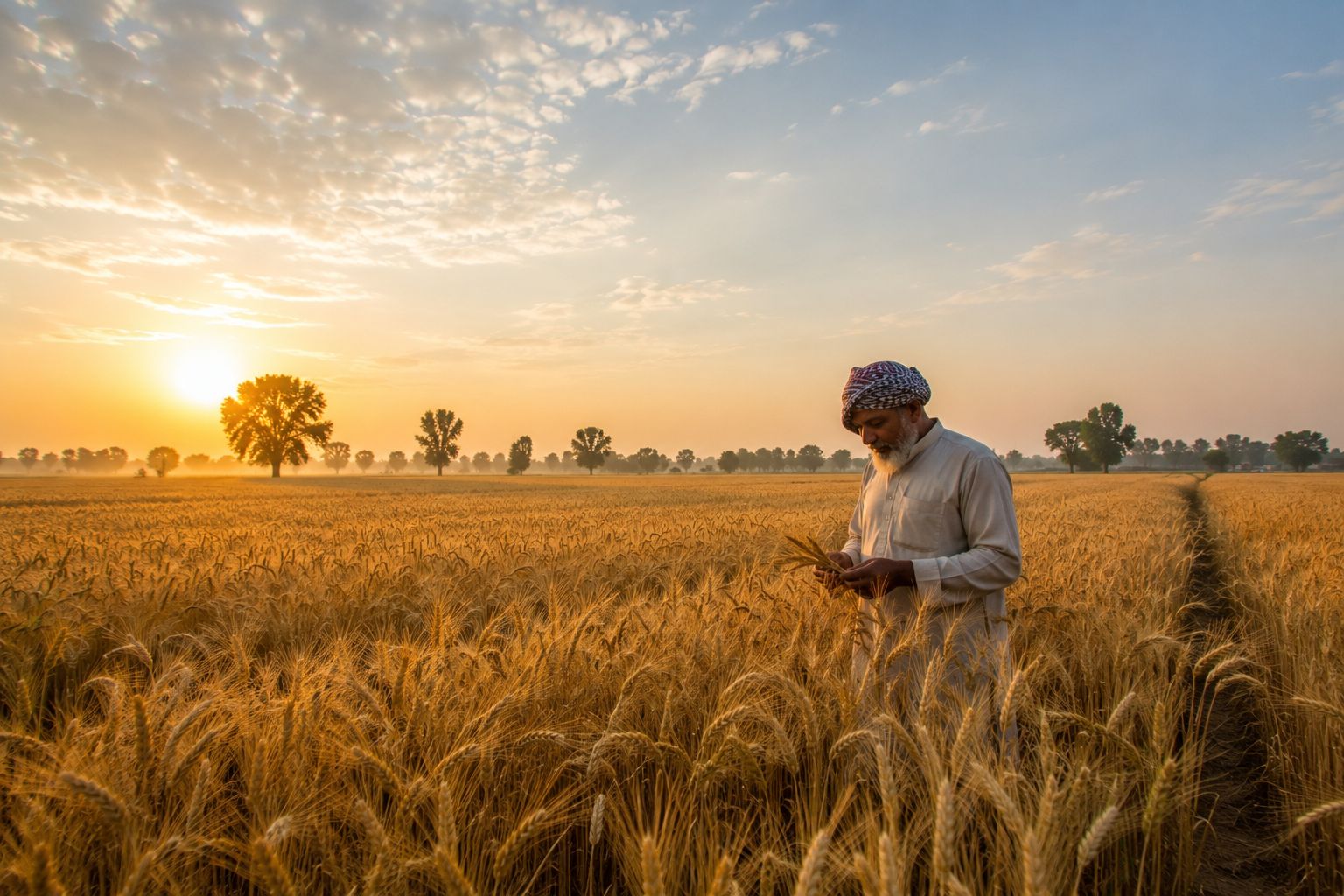
This is the one part of South Asia with a real winter — and it changes everything about what's possible here compared to the rest of the region.
| Season | Window | What to Plant |
|---|---|---|
| Rabi (winter) | October–March | Wheat, mustard, gram, peas, barley, plus temperate vegetables: cauliflower, carrots, spinach, radish, lettuce |
| Kharif (monsoon) | June–October | Rice, cotton, maize, sugarcane, plus okra, moong, sesame |
| Zaid (short summer) | March–June | Watermelon, muskmelon, cucumber, bitter gourd — entirely irrigation-fed, no rainfall relied on |
Why this matters more than it sounds: Rabi crops need real cold to perform — wheat sown after mid-December loses yield because it faces heat too early during grain-filling. That coolness, arriving each winter across Punjab and the wider northern plains, is what allows cauliflower, carrots, and peas to grow here at all. Move further south into peninsular India, and that window simply doesn't exist — which is exactly why South India's calendar looks completely different.
Flowers: Marigold blooms heavily through the Rabi season and is deeply tied to festival culture across the region; roses and chrysanthemums also perform best in the cool winter months.
South India — When Two Monsoons Feed Two Different Coasts
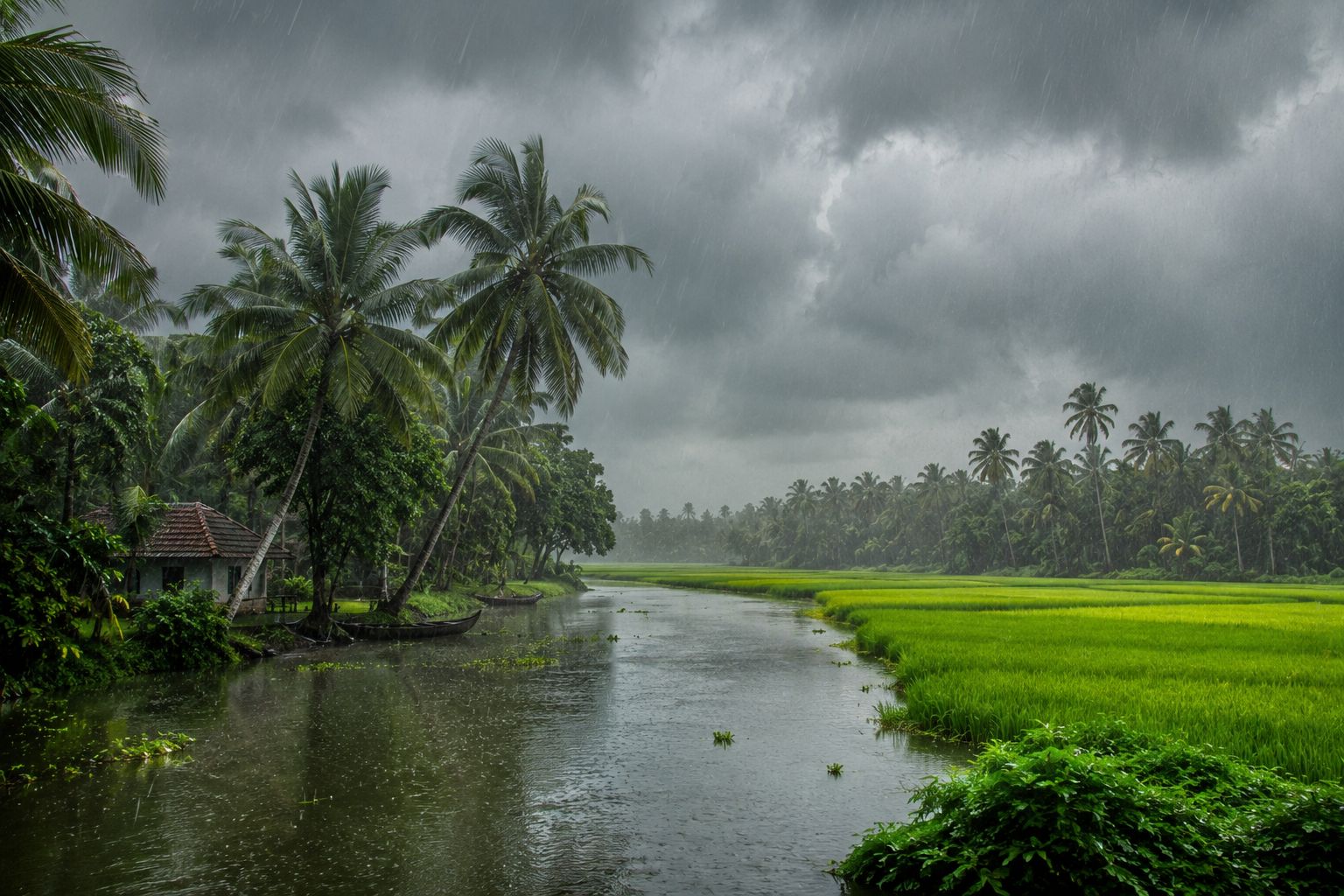
South of the Deccan Plateau, winter effectively disappears. There's no frost, no true cold season, and no Rabi-style temperate window. Instead, everything runs on two separate monsoons that don't behave the same way at all.
| Monsoon | Window | Effect |
|---|---|---|
| Southwest Monsoon | June–September | Strikes the Western Ghats and the west coast (Kerala, coastal Karnataka) with heavy, reliable rain |
| Northeast Monsoon | October–December | Becomes the primary rain source for Tamil Nadu and the southeastern coast |
The fact almost nobody outside the region knows: Tamil Nadu sits in the rain shadow of the Western Ghats, so the mountains block most of the southwest monsoon before it ever arrives. The northeast monsoon — arriving three to four months later from the Bay of Bengal — supplies roughly half of Tamil Nadu's entire annual rainfall. A Kerala garden and a Tamil Nadu garden, separated by a single mountain range, are effectively planning around two different rainy seasons.
What to plant: With no frost risk, tropical vegetables — okra, brinjal (eggplant), gourds, chillies, tomatoes — can be sown almost continuously, timed to whichever monsoon is about to arrive in your specific area rather than a fixed calendar month. Rice, the dominant crop, is planted to catch either monsoon depending on the coast.
Flowers: Jasmine, grown and strung into garlands across Tamil Nadu and Karnataka, flowers reliably in the warm, humid conditions year-round; hibiscus and marigold are equally constant.
Bangladesh — A Calendar Built on Floodwater
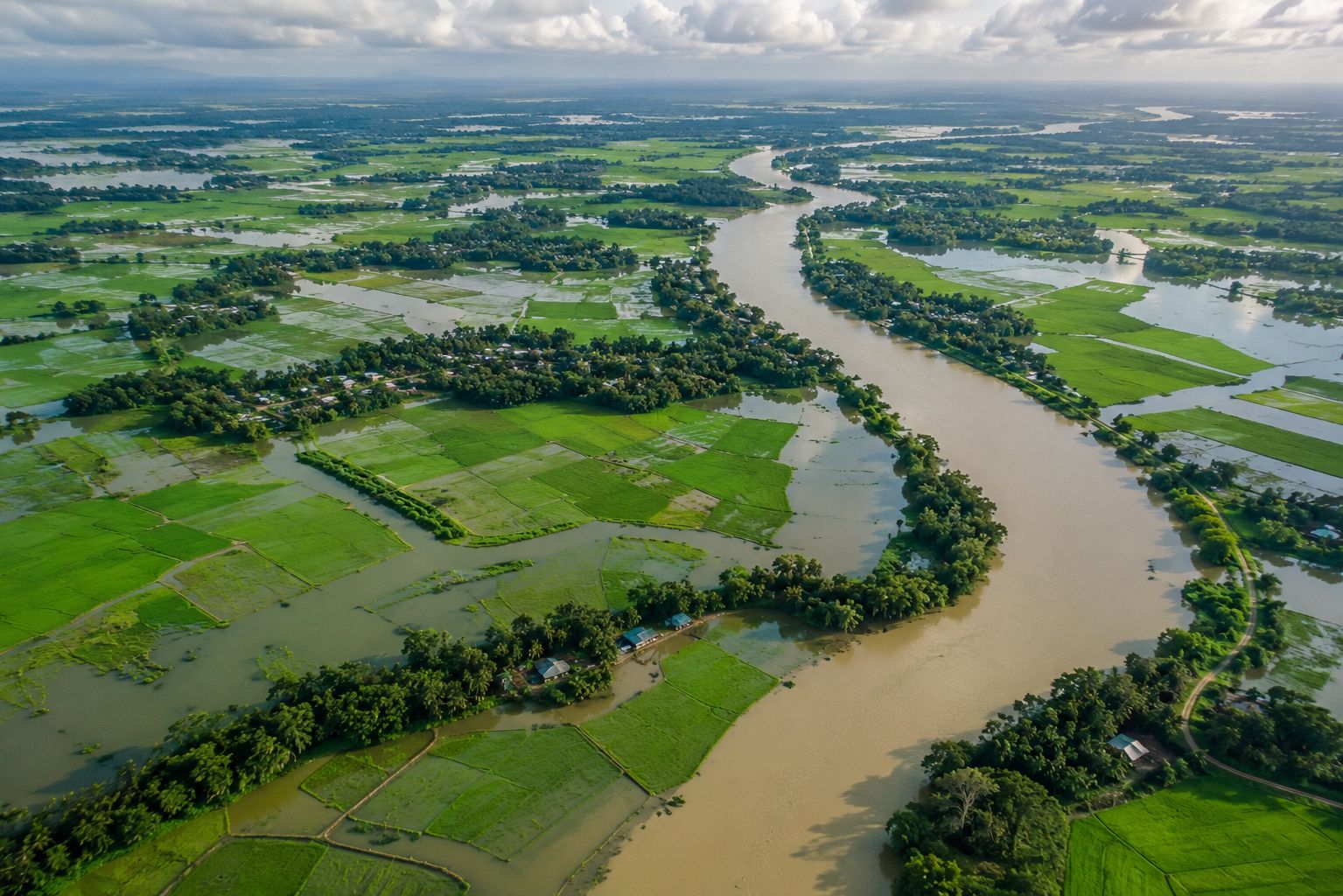
No country in this guide is shaped by water more directly than Bangladesh. Sitting at the base of the Ganges-Brahmaputra-Meghna delta, roughly 60 percent of the land sits below six metres of elevation, and the entire agricultural calendar is organized not just around rainfall, but around flood depth itself.
The clearest proof: Bangladesh's three growing seasons are literally named after which rice is grown in them.
| Season | Window | Defined By |
|---|---|---|
| Aus (Kharif-1) | March–June | Pre-monsoon, quick-duration crops sown on unreliable early rain |
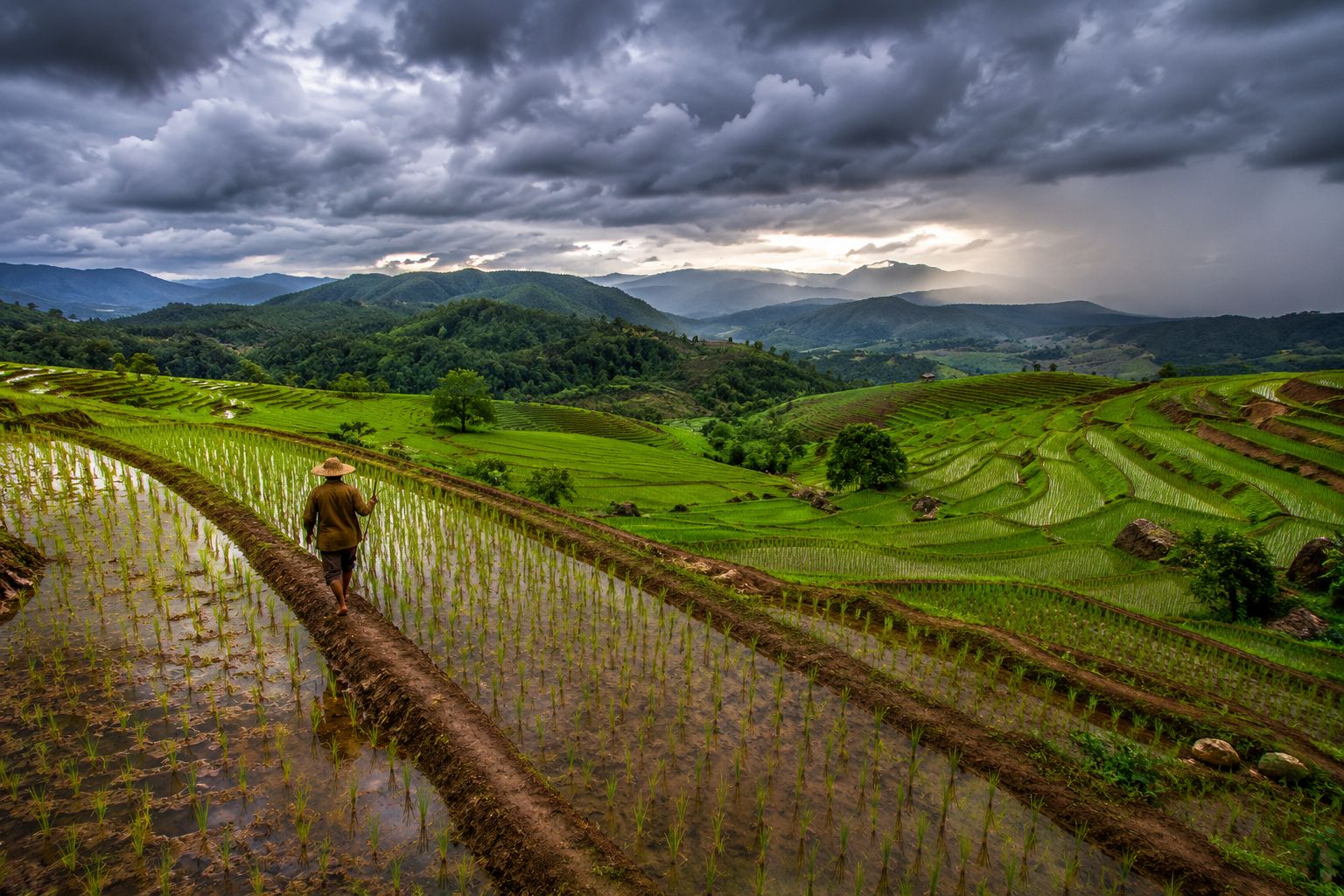
| Aman (Kharif-2) | June–November | The classic monsoon season — transplanted rice that actually benefits from deep flooding |
| Boro (Rabi) | November–March | Dry, cool season — fully irrigated, and now the highest-yielding of the three thanks to complete water control |
What to plant alongside rice: The Rabi window (November–March) is when winter vegetables come in — cauliflower, cabbage, radish, carrot — during the one stretch of the year with low humidity and manageable rainfall. Jute, a Kharif crop, shares the monsoon window with Aman rice.
A risk worth planning around directly: Cyclones forming over the Bay of Bengal cluster in two windows — April–May, right before the main monsoon, and October–November, as it withdraws. Both sit right at the edges of the main growing seasons, and both are worth building slack into any planting schedule near the coast.
National symbols worth knowing: The white water lily (shapla) is Bangladesh's national flower, found in nearly every pond and waterway in the country, and jackfruit (kathal) is its national fruit — both fittingly tied to a landscape defined by water.
Sri Lanka — An Island Split by Two Monsoons at Once
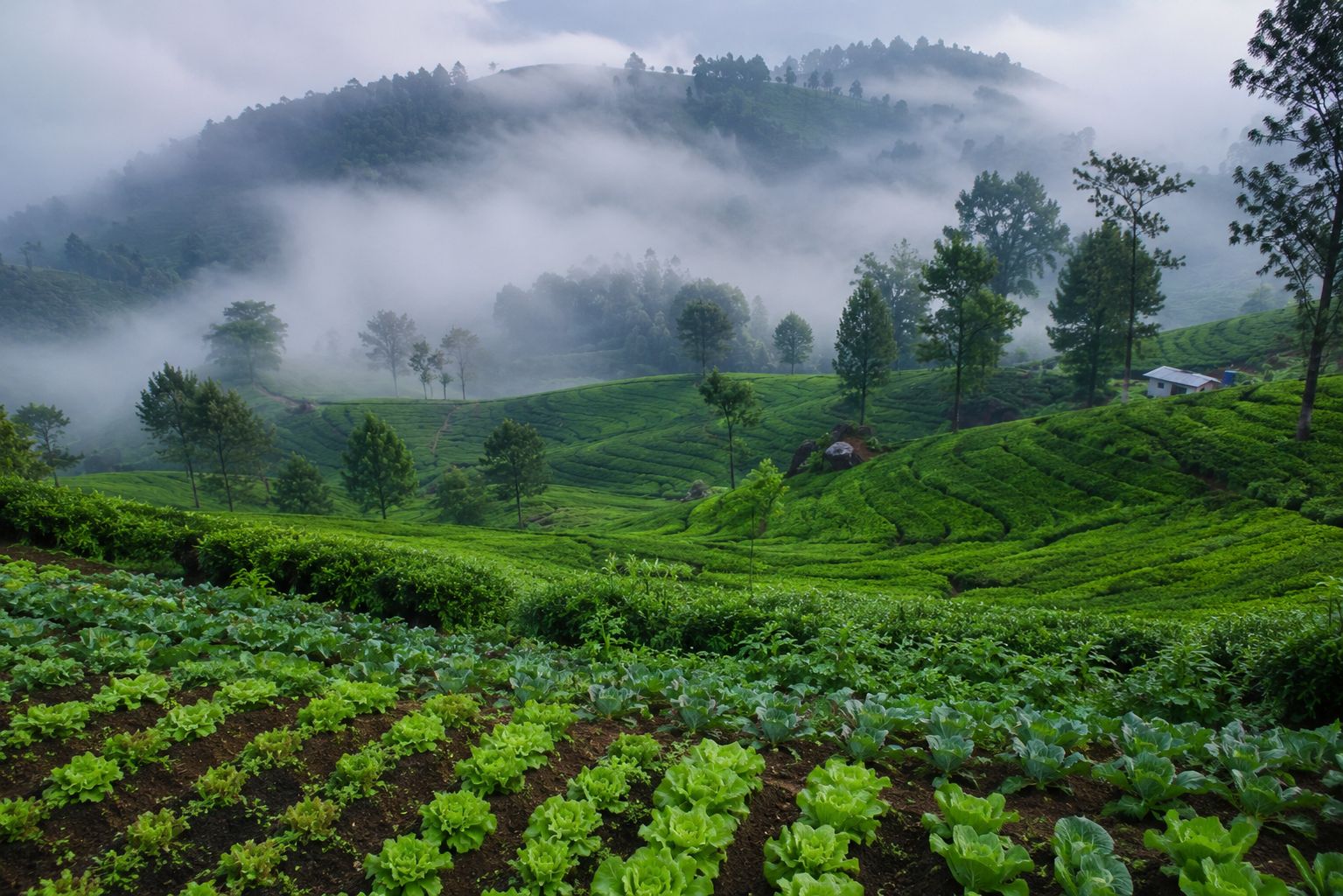
Sri Lanka gets hit by both of South Asia's monsoons in the same year, but from opposite directions — and the island's shape means different regions experience each one completely differently.
| Season | Window | Effect |
|---|---|---|
| Yala | May–September | Southwest monsoon; wet zone (southwest, hill slopes) gets heavy rain, while the dry zone stays hot and needs irrigation |
| Maha | October–February/March | Northeast monsoon plus the second inter-monsoon; the bigger, more reliable season for most of the island |
What to plant: Yala favors heat-loving crops — chillies, brinjal, okra, long beans, snake gourd — especially in the drier zones where the season doesn't bring excess moisture. Maha, with steadier and heavier rain, is the main season for most vegetables nationwide, including the crops that define the island's most unusual growing region.
Nuwara Eliya — the exception that makes this region genuinely unique: Sitting at nearly 1,900 metres in the central highlands, Nuwara Eliya is cool enough — locals call it "Little England" — to grow lettuce, broccoli, carrots, leeks, and even strawberries: crops that have no business growing on a tropical island, made possible purely by altitude. Frost is rare here but not impossible in January, the only place in this entire guide outside Punjab where that's even a conversation.
A flower worth knowing: The blue water lily (Nil Manel) is Sri Lanka's national flower — the same genus as Bangladesh's shapla, growing in ponds and wetlands across the island and referenced in Sinhala literature for centuries.
Best Fruits Across the Region
Mango is the one crop every part of this guide agrees on. From Punjab to Sri Lanka, mango season clusters around the pre-monsoon months — roughly May through July in the north, shifting slightly by latitude — making it the closest thing South Asia has to a shared seasonal identity.
Jackfruit ties the wetter parts of the region together. Bangladesh's national fruit, it also grows widely and heavily across Sri Lanka, Kerala, and the eastern coastal belt, thriving in exactly the humid, high-rainfall conditions that define those areas.
Coconut is the backbone crop of the coastal south. Kerala's backwaters and Sri Lanka's coastal belt both built entire regional cuisines and economies around it, requiring almost none of the winter this guide's northern section depends on.
Common Regional Challenges
| Challenge | Where | The Fix |
|---|---|---|
| Monsoon flooding and waterlogging | Bangladesh, coastal South India, Sri Lanka's wet zone | Raised beds, strong drainage channels, flood-tolerant varieties where flooding is guaranteed |
| Cyclone risk | Bangladesh, coastal South India, Sri Lanka | Avoid planting tall or fragile crops right before April–May or October–November windows |
| Pre-monsoon heat ("Loo" winds) | Pakistan, North India | Mulch heavily and irrigate consistently through April–May before the monsoon breaks the heat |
| High humidity fungal disease | All monsoon-affected zones | Space plants for airflow, avoid overhead watering late in the day |
| Delayed or failed monsoon | Entire region | Where possible, rely on irrigation as backup rather than rainfall alone for high-value crops |
The One Rule Worth Remembering
Every region in this series has had its own version of "the one thing to plan around" — the dry season in the Pacific Northwest, the summer heat break in the desert Southwest. Here, across four countries and several distinct systems, it's simpler than any of them: water decides the calendar, not temperature.
Frost only enters the conversation in two places in this entire guide — the winter plains of Pakistan and North India, and the highland pocket of Nuwara Eliya. Everywhere else, the real planning question was never "how cold will it get." It was always "which monsoon is coming, from which direction, and how much water is it about to bring." Once that clicks, Rabi and Kharif, Yala and Maha, Aus and Aman all stop looking like four unrelated systems — they're the same underlying logic, worked out separately by four different landscapes shaped by the same seasonal rains.
Part of the Seasonal Grow Guide by Seedora Store — planting calendars built around your actual weather, not someone else's.