When to Plant in the Pacific Northwest
Most planting advice assumes a climate this region doesn't have: hot summers, cold snowy winters, four sharp seasons. The Pacific Northwest — western Washington, western Oregon, and the northern California coast — runs on a different pattern entirely, and it's a good one, once you understand it.
The short version: it rains from October through June, then almost stops. Seattle and Portland each average less than an inch of rain in July. Winters are mild and wet rather than frozen. Summers are dry, sunny, and — this is the part that surprises transplants most — genuinely cool. Portland and Seattle average only 6 to 8 days a year above 90°F. There is rarely a killing heat wave, and there's rarely a hard freeze either.
That single fact — wet mild winters, dry mild summers, almost no real heat — is what this entire planting calendar is built around.
Understanding This Region's Climate
This region isn't one climate — it's several similar ones stacked together. Knowing which one you're in changes your calendar more than any single tip below.
| Sub-Region | Where | Character |
|---|---|---|
| Coastal Strip | Pacific coast, WA to N. California | Foggy, mild, narrow temperature range year-round, cool summers |
| Puget Sound Lowlands | Seattle, Tacoma, Olympia | Mild maritime, most common PNW garden climate |
| Willamette Valley | Portland, Salem, Eugene | Slightly warmer summers than Puget Sound, excellent for orchards and berries |
| Olympic Rain Shadow | Sequim, Port Townsend | Dramatically drier than surrounding areas — the region's "banana belt" |
| Northern California Coast | Eureka, Arcata | Cool, foggy, narrow temperature swing even in summer |
USDA Hardiness Zones: Most of this region falls between zone 7b and 9b. Seattle sits at 9a/9b, Portland at 8b/9a, and the outer coast often reaches 9b. This tells you which perennials, shrubs, and fruit trees will survive winter here — but for annual vegetables, frost dates matter more than the zone number.
Köppen Classification: The interior valleys (Portland, Salem, Eugene) are classified Csb — warm-summer Mediterranean. The immediate coast and Puget Sound lean Cfb — oceanic, with an even narrower temperature range. Both share the same defining trait: a genuinely dry summer, which is unusual for a "temperate" climate and is the main reason gardening here doesn't resemble gardening in the Northeast or Midwest.
Soil: Decades of heavy rainfall leach minerals out of the topsoil, leaving it naturally acidic across most of the region. This is exactly why rhododendrons, blueberries, camellias, and azaleas grow here almost without effort — and why crops that prefer neutral soil, like brassicas and leafy greens, often benefit from an occasional dose of garden lime.
Frost Dates & Growing Season at a Glance
| City / Area | Last Spring Frost | First Fall Frost | Growing Season |
|---|---|---|---|
| Seattle, WA | ~March 24 | ~November 17 | ~238 days |
| Portland, OR | Late March | Late October–November | ~220 days |
| Sequim, WA (rain shadow) | Mid-March | Late November | ~250+ days |
| Eureka, CA (coastal) | Rarely a hard frost | Rarely a hard frost | Near year-round |
| Eugene, OR (Willamette Valley) | Early April | Late October | ~200 days |
These are averages, not guarantees — a nearby hill, a paved driveway, or an exposed corner of your yard can shift your personal frost date by two to three weeks in either direction.
The Planting Calendar — Season by Season
Unlike regions with a single hard planting window, the PNW's mild winters mean something is plantable almost year-round. Here's the full-region breakdown.
Late Winter (February–Early March)
| Category | What to Plant | Method |
|---|---|---|
| Vegetables | Peas, spinach, fava beans, onion sets | Direct sow as soil becomes workable |
| Fruits | Bare-root berry canes, fruit trees | Plant while dormant, before bud break |
| Flowers | Sweet peas, pansies, primroses | Direct sow or transplant hardy starts |
Spring (March–May)
| Category | What to Plant | Method |
|---|---|---|
| Vegetables | Lettuce, kale, broccoli, carrots, beets, radishes | Direct sow outdoors |
| Vegetables | Tomatoes, peppers, squash starts | Start indoors in March; transplant outdoors mid-to-late May, after last frost |
| Fruits | Strawberry crowns, blueberry bushes | Plant once soil is workable |
| Flowers | Dahlia tubers, sweet alyssum, calendula | Plant dahlias after last frost risk passes |
Early Summer (June)
| Category | What to Plant | Method |
|---|---|---|
| Vegetables | Beans, cucumbers, summer squash, corn | Direct sow once soil has warmed |
| Vegetables | Basil, second round of lettuce | Direct sow or transplant |
| Flowers | Zinnias, cosmos, sunflowers | Direct sow — thrive in the dry summer stretch |
Late Summer–Fall (July–September)
| Category | What to Plant | Method |
|---|---|---|
| Vegetables | Fall carrots, kale, spinach, overwintering onions | Direct sow by early-to-mid August for a fall harvest |
| Vegetables | Garlic | Plant cloves in October for summer harvest |
| Fruits | Fall-bearing raspberries | Prune after harvest; plant new canes in early fall |
| Flowers | Asters, ornamental kale, mums | Plant for fall color |
Winter (October–January)
| Category | What to Plant | Method |
|---|---|---|
| Vegetables | Overwintering cabbage, broad beans, garlic | Direct sow — mild winters allow slow growth through the cold months |
| Fruits | Dormant fruit tree pruning | Prune apples, pears, and cherries while dormant |
| Flowers | Tulip and daffodil bulbs | Plant in October–November for spring bloom |
Best Vegetables for the Pacific Northwest
Cool-season crops thrive here with almost no extra effort: kale, lettuce, spinach, broccoli, cabbage, peas, and carrots all grow through spring and fall, and several — kale and overwintering cabbage especially — will survive straight through a mild winter with minimal protection.
Warm-season crops need help. With only a handful of days above 90°F each year, tomatoes, peppers, corn, melons, and eggplant are working against the climate, not with it. The fix isn't to avoid them — it's to stack every advantage: choose short-season, cool-tolerant varieties (tomatoes rated under 75 days to maturity, cherry types over large slicers), use black plastic mulch to warm the soil, and grow against a south-facing wall that holds afternoon heat.
Best Fruits for the Pacific Northwest
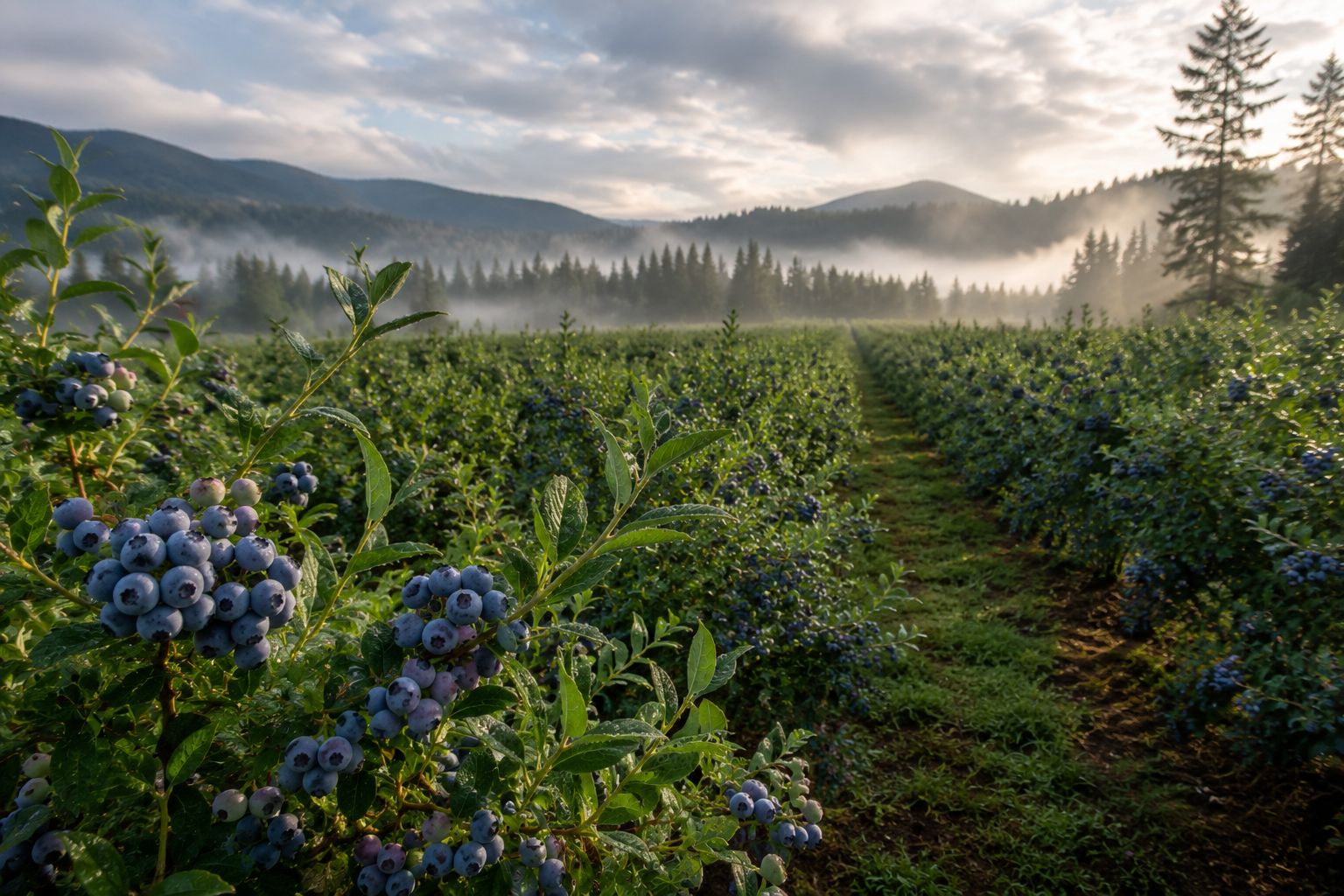
Berries are the region's signature crop. Washington is the top blueberry-producing state in the country, harvesting well over 100 million pounds a year — the acidic native soil and cool nights are exactly what blueberries evolved for. Raspberries, blackberries, and strawberries all perform just as reliably in home gardens.
The marionberry is a genuinely regional fruit. It was bred in 1956 by Oregon State University and the USDA in Marion County, Oregon, from a cross of the Chehalem and Olallie blackberries — it exists nowhere else in the world quite the way it does here, and it remains one of the most-planted caneberries in home gardens across the region.
Tree fruit does well too, with one caveat. Apples, pears, and cherries all grow successfully in home gardens on this side of the Cascades — but the Bing cherry, developed in 1875 in Milwaukie, Oregon (right in the Willamette Valley), is now grown commercially mostly in the drier parts of central and eastern Oregon, because sweet cherries tend to split their skins if it rains while they're ripening. Home gardeners on the wet side can still grow excellent cherries; just expect the occasional wet-June split, and consider netting or a rain cover during ripening.
Best Flowers for the Pacific Northwest
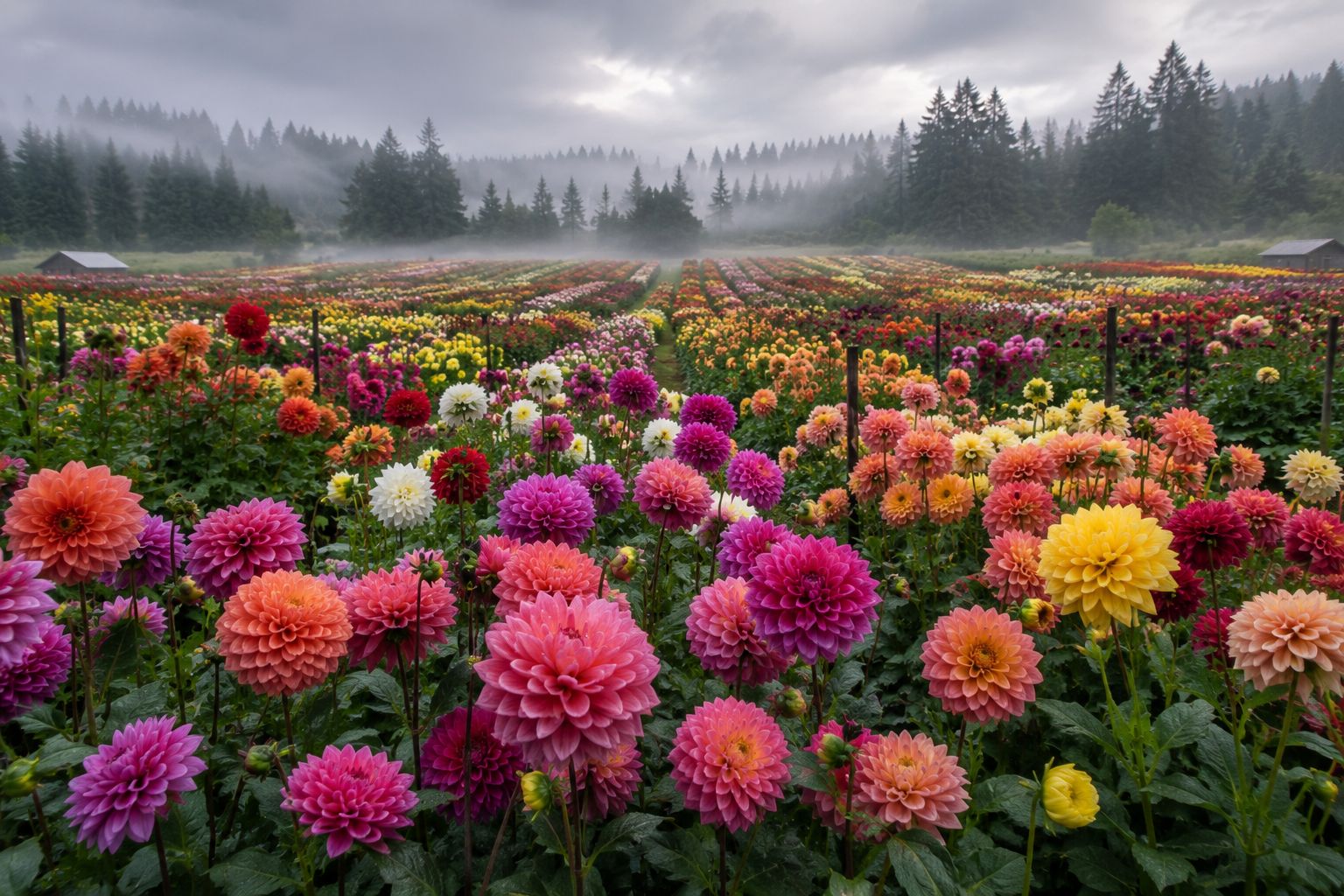
Dahlias are practically the region's flower. They prefer cool nights and moderate summer heat over intense sun, which is exactly the PNW's climate — Seattle has even adopted the dahlia as its official city flower, and dahlia farms across Washington and Oregon stay open for u-pick well into October.
Rhododendrons need no persuading here. As Washington's official state flower, they're native to the region's forests and perfectly matched to the naturally acidic soil, alongside azaleas, camellias, and hydrangeas.
Lavender has its own famous pocket. In the rain-shadow microclimate around Sequim, on the Olympic Peninsula, dramatically lower rainfall than the surrounding region has turned the town into one of the country's best-known lavender-growing areas, with farms and festivals built around it every July.
Regional Challenges to Plan For
| Challenge | Why It Happens | The Fix |
|---|---|---|
| Slugs and snails | Constant moisture, mild winters that never kill them off | Beer traps, copper tape, iron phosphate slug bait, morning patrols |
| Acidic soil for pH-sensitive crops | Heavy rainfall leaches soil minerals over time | Add garden lime before planting brassicas or leafy greens |
| Limited heat for warm-season crops | Only 6–8 days a year above 90°F | Choose short-season varieties, use black plastic mulch, grow against south-facing walls |
| Spring/fall fungal pressure | Wet shoulder seasons on cucurbits and roses | Space plants for airflow, water at the base, avoid wetting foliage late in the day |
| Cherry and stone fruit splitting | Rain during ripening | Net trees or use a rain cover in the weeks before harvest |
The One Rule Worth Remembering
Everywhere else in the country, gardeners plan around frost. Here, plan around the dry season. The Pacific Northwest's defining trait isn't cold winters or hot summers — it's a nearly rainless stretch from July through September, sitting inside a climate that's mild enough to garden through most of the rest of the year too. Once that clicks, the calendar above stops looking unusual and starts looking like exactly what it is: a longer, gentler growing year than most of the country gets, just running on different rules.
Part of the Seasonal Grow Guide by Seedora Store — planting calendars built around your actual weather, not someone else's.