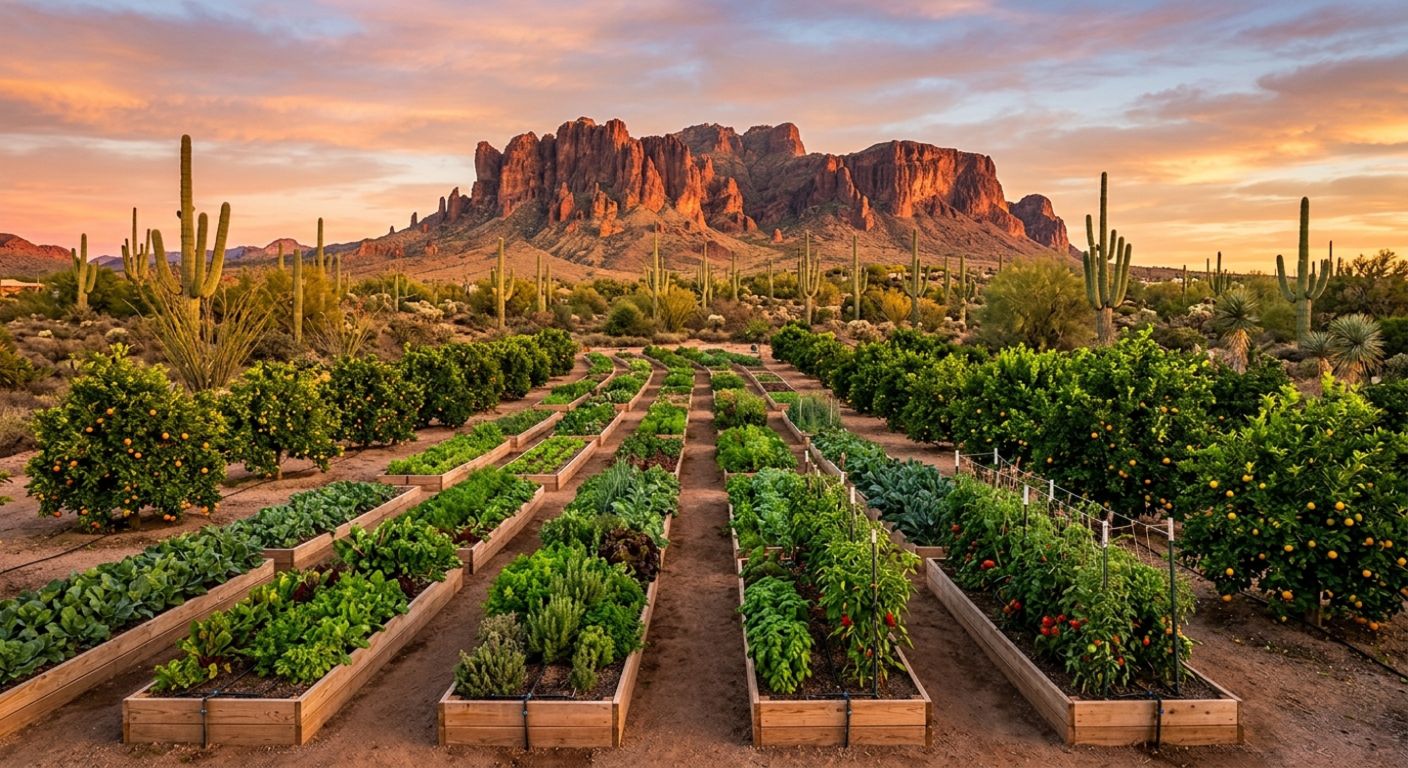
Most of the country plans a garden around one question: when does it stop freezing? Here, across Southern California, Arizona, Nevada, and New Mexico, that question barely matters. Frost is rare, brief, or absent entirely across most of this region. The real question is the opposite one: when does it get too hot to grow anything at all?
That single shift changes everything about how a garden calendar here is built. In much of the low desert — Phoenix, Tucson, Las Vegas, Yuma — summer isn't the growing season. It's the season most vegetables actively shut down, and gardeners plan their year around it rather than through it. Coastal Southern California is the exception, mild enough to grow almost continuously. New Mexico's high desert splits the difference, with real seasons but a punishing summer sun. Understanding which of these three patterns applies to you is the entire foundation of this guide.
Understanding This Region's Climate
This is not one desert — it's three distinct growing patterns sharing a border.
| Sub-Region | Where | Character |
|---|---|---|
| Coastal & Valley Southern California | Los Angeles, San Diego, Riverside | True Mediterranean climate — mild year-round, little to no frost, closest thing to true year-round growing |
| Low Desert Basins | Phoenix, Tucson, Yuma, Las Vegas | Extreme summer heat (105°F+ for weeks), mild winters, an inverted calendar where cool and warm seasons bookend a punishing summer |
| High Desert / Rio Grande Valley | Albuquerque, Santa Fe, Las Cruces | Higher elevation, real four-season pattern, big day-to-night temperature swings, monsoon rains in summer |
USDA Hardiness Zones: This region spans an unusually wide range. Coastal Southern California sits around zones 9b–11, with San Diego rarely seeing frost at all. The low desert basins fall around zones 9b–10b. New Mexico's high desert is notably cooler, with Albuquerque at zone 7a/7b and Santa Fe closer to 6a/6b — elevation matters more than latitude here.
Köppen Classification: Coastal Southern California is classified Csa/Csb — Mediterranean, the same broad family as parts of the Pacific Northwest's interior valleys, but with far less rain. The low desert basins are true BWh — hot desert climate. New Mexico's high desert leans BSk — cold semi-arid, thanks to elevation.
Soil: Unlike the acidic soil common in wetter regions, this entire region trends alkaline, a result of low rainfall never washing minerals out of the ground. This is exactly why crops that prefer neutral-to-acidic soil — blueberries, azaleas — struggle here without serious amending, while natively adapted, alkaline-tolerant plants (agave, desert marigold, mesquite) thrive without help.
Frost Dates & Growing Season at a Glance
| City / Area | Last Spring Frost | First Fall Frost | Growing Season |
|---|---|---|---|
| San Diego, CA | Rare / none | Rare / none | Near year-round |
| Los Angeles, CA | ~February 1 | ~December 15 | ~270 days |
| Phoenix, AZ | Mid-February | Mid-December | Near year-round (heat-limited, not frost-limited) |
| Las Vegas, NV | Early March | Mid-November | ~220–250 days |
| Albuquerque, NM | ~April 10–16 | ~October 25 | ~198 days |
| Santa Fe, NM | Early May | Early October | ~160–180 days |
Notice what's missing: a hard winter cutoff. In this region, the growing season is limited far more by summer heat and elevation than by frost.
The Planting Calendar
Because the three sub-regions run on different clocks, this calendar is organized by what the season is doing, not a fixed month grid — with notes on where each window shifts.
Cool Season (roughly October–February in the low desert; November–March at higher elevation; nearly year-round on the coast)
| Category | What to Plant | Notes |
|---|---|---|
| Vegetables | Lettuce, spinach, kale, broccoli, cauliflower, carrots, beets, peas, onions | The low desert's true primary growing season — mild days, cool nights, no heat stress |
| Fruits | Citrus (oranges, lemons, grapefruit) | Plant/establish trees in fall through early spring across Southern California and the low desert |
| Flowers | Pansies, snapdragons, sweet peas, calendula | Reliable color through the mild winter months |
Warm Season, First Window (February–May across the low desert; year-round overlap on the coast)
| Category | What to Plant | Notes |
|---|---|---|
| Vegetables | Tomatoes, peppers, squash, beans, cucumbers, corn | In Phoenix and Yuma, get these in by mid-February; Tucson and Las Vegas can wait until early-to-mid March |
| Vegetables | New Mexico chile / Hatch-type peppers | Transplant in April in New Mexico's high desert; roughly 80 days to first green harvest |
| Flowers | Marigolds, zinnias, sunflowers, celosia | Marigolds double as a companion planting that deters nematodes in alkaline desert soil |
The Summer Heat Break (June–August, low desert basins specifically)
| Category | What Survives | Notes |
|---|---|---|
| Vegetables | Okra, black-eyed peas, sweet potatoes, Armenian cucumber, tepary beans, Malabar spinach | Desert-adapted crops bred or selected for extreme heat — nearly everything else stalls or dies |
| Fruits | Established citrus and date palms | Mature trees tolerate the heat; new plantings should wait for fall |
| Flowers | Lantana, desert zinnia, vinca | Some heat-tough bloomers keep going through the worst months |
This is the counterintuitive core of desert gardening: most tomatoes stop setting fruit above 95°F, and bare desert soil in direct sun can reach 140°F at the surface — hot enough to damage shallow roots outright. The University of Arizona's own extension guidance is blunt about it: expect production to drop sharply from June through August and plan around that reality instead of fighting it.
Second Warm Season (August–October, low desert fall replant)
| Category | What to Plant | Notes |
|---|---|---|
| Vegetables | A second round of tomatoes, peppers, squash | Many low desert gardeners get better tomato yields from this fall planting than the spring one |
| Vegetables | Fall cool-season crops begin again | Broccoli, lettuce, and carrots go back in as September approaches |
Monsoon Season (July–September, Arizona and New Mexico specifically)
Intense, brief thunderstorms roll through the interior Southwest each summer, delivering welcome moisture but also flash flooding, wind damage, and a spike in humidity that can bring fungal disease to crops otherwise adapted to bone-dry air. Good drainage and staking exposed plants matters more in this window than any other time of year.
Best Vegetables for This Region
The chile is the region's defining crop, especially in New Mexico. Grown along the Rio Grande since Spanish colonial times, New Mexico-style green chile — most famously the Hatch Valley strains — is planted around April and harvested from August through October, with the tradition of roasting fresh chile in street-corner drum roasters becoming a genuine statewide seasonal event each fall.
Desert-adapted heirlooms deserve real consideration. Native Seeds/SEARCH and similar seed banks preserve arid-adapted varieties — tepary beans, Hopi varieties, Chimayo melons — that were selected over centuries specifically to handle low desert heat and drought better than standard commercial seed.
Cool-season crops are simply easier here than almost anywhere else in the country. Lettuce, broccoli, and carrots that other regions squeeze into a short spring or fall window can be grown from October through February with minimal effort across the entire low desert and Southern California coast.
Best Fruits for This Region
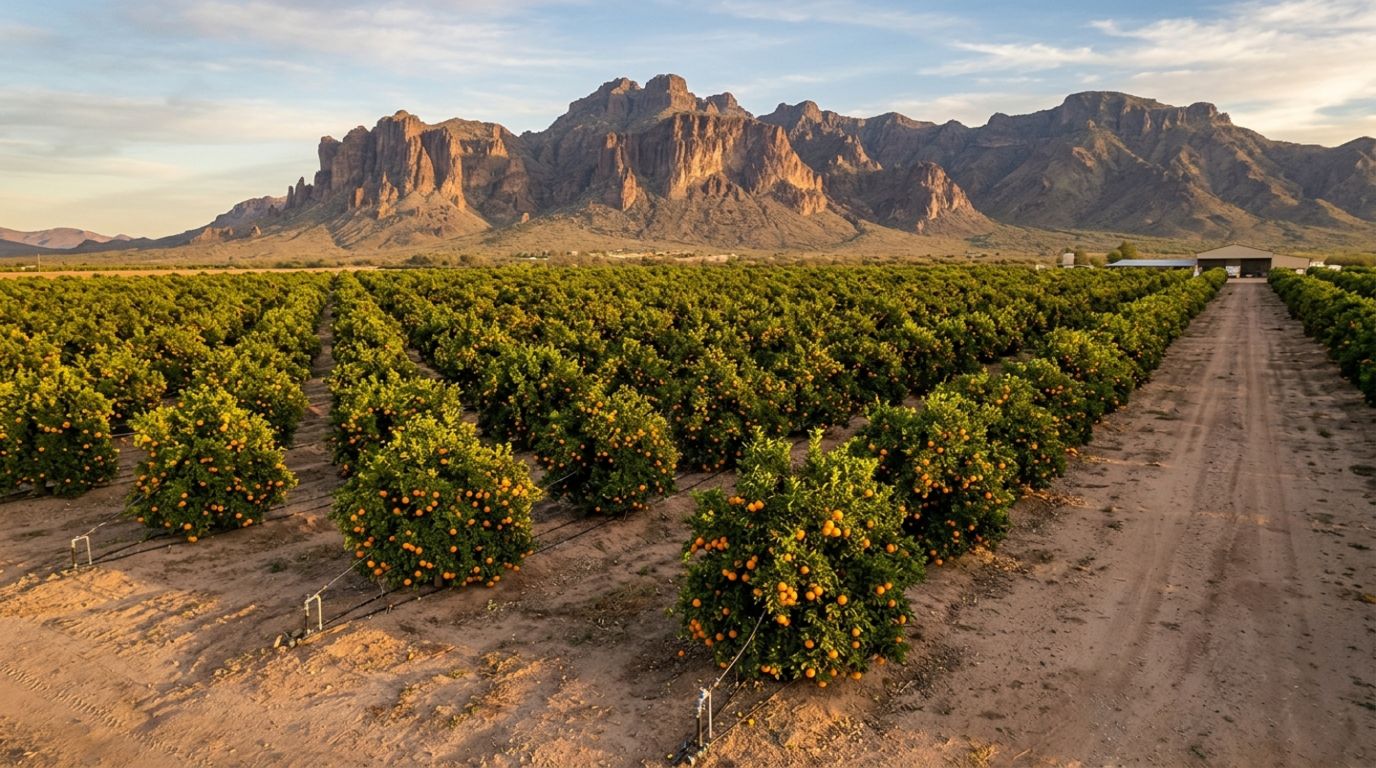
Citrus is the signature fruit of the mild-winter zones. Oranges, lemons, and grapefruit grow reliably outdoors across coastal Southern California and the low desert basins, planted anytime from fall through early spring while the weather stays mild.
Dates are a genuinely unique regional specialty. The Coachella Valley in Southern California produces roughly 90 to 95 percent of all commercial dates grown in the United States — a direct result of the valley's combination of intense heat, low humidity, and reliable irrigation, conditions date palms evolved for in the first place.
Pecans are New Mexico's quiet giant. Despite chile getting most of the attention, pecans are New Mexico's single largest commercial food crop, and the state ranks second nationally in production behind only Georgia. The Mesilla Valley near Las Cruces, fed by Rio Grande irrigation, is home to what is recognized as the world's largest single pecan orchard.
Best Flowers for This Region
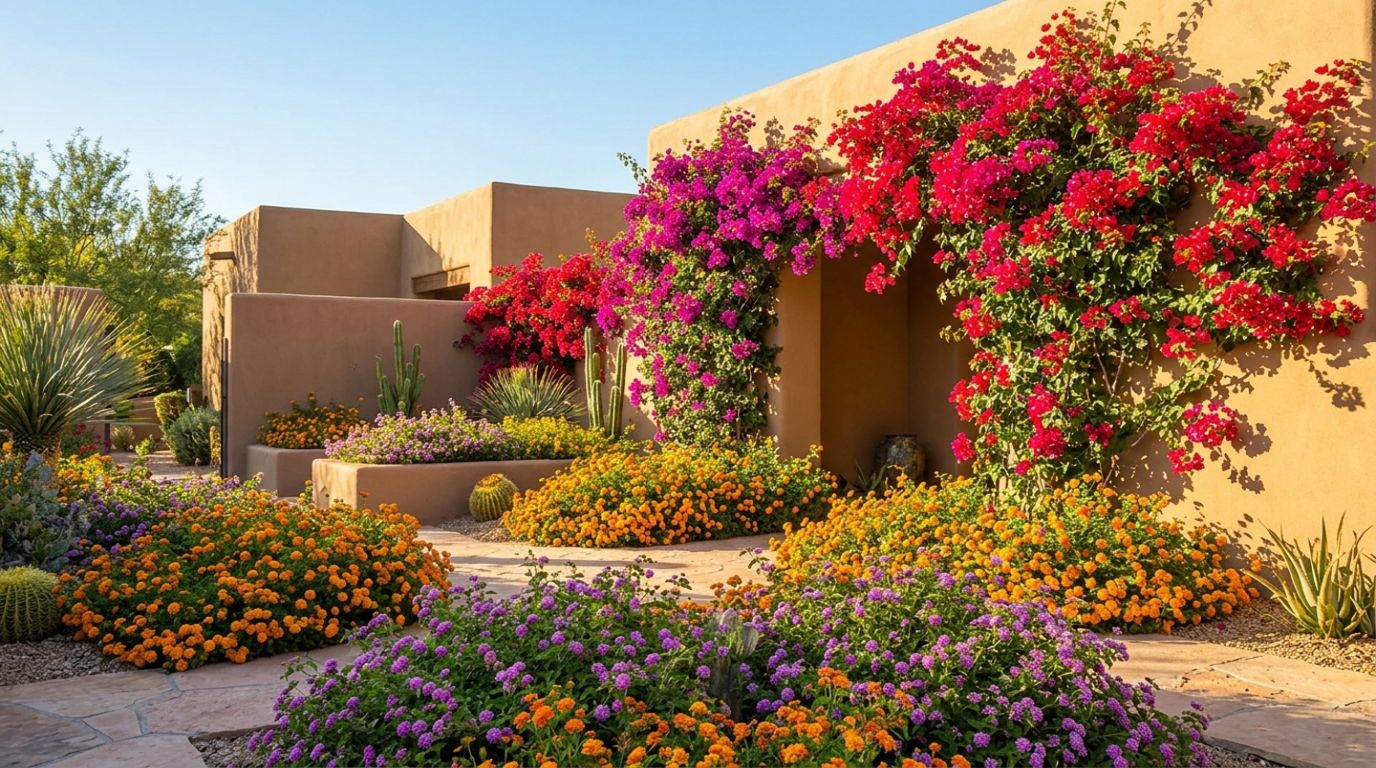
Bougainvillea and lantana define the look of low desert landscaping — both bloom through the hottest months when most flowering plants have given up, and both tolerate the alkaline soil without complaint.
Desert marigold and other native wildflowers ask for almost nothing. Adapted over thousands of years to this exact soil and rainfall pattern, native flowering plants typically outperform imported ornamentals with a fraction of the water.
New Mexico's state flower, the soaptree yucca, reflects the whole region's growing philosophy — striking, drought-tolerant, and built for exactly this climate rather than fighting against it.
Regional Challenges to Plan For
| Challenge | Why It Happens | The Fix |
|---|---|---|
| Blossom drop on tomatoes and peppers | Fruit set fails above roughly 95°F | Choose heat-tolerant varieties, provide afternoon shade cloth, or shift the main crop to fall |
| Scorching surface soil | Direct desert sun can push bare soil past 140°F | Mulch heavily to insulate roots and retain moisture |
| Alkaline soil | Low rainfall never leaches minerals from the ground | Amend with sulfur or use raised beds with imported soil for pH-sensitive crops |
| Water loss to evaporation | Intense sun and low humidity dry soil fast | Drip irrigation and deep, infrequent watering outperform frequent shallow watering |
| Monsoon flooding and wind | Sudden intense summer thunderstorms in AZ/NM | Ensure drainage and stake tall or top-heavy plants before monsoon season begins |
| Underestimating summer | Assuming "hot climate" means "grow all summer" | Treat June–August as a rest period in the low desert; plan the real growing season around it, not through it |
The One Rule Worth Remembering
Everywhere else, gardeners work around winter. Here, across most of this region, the season to work around is summer. The low desert's real growing calendar runs from roughly September through May, with a genuine dormant stretch through the peak heat — the opposite pattern from almost anywhere else in the country. Coastal Southern California softens this considerably, and New Mexico's elevation reshapes it again into something closer to a true four-season year. But the underlying lesson holds across all three: this region doesn't lack a growing season. It just runs on a completely different clock than the one most planting advice assumes.
Part of the Seasonal Grow Guide by Seedora Store — planting calendars built around your actual weather, not someone else's.