Something strange happens in a hospital room when you add a plant to it.
Researchers at Kansas State University found that surgical patients recovering in rooms with plants required significantly less pain medication, had lower heart rates and blood pressure, reported less anxiety, and were discharged faster than patients in plantless rooms. The plants were not medicinal. Nobody prescribed them. They just sat in the corner, growing quietly, and somehow the people nearby got better faster.
This is not an isolated finding. Results like this have been showing up in laboratories, hospitals, offices, and homes across six decades of research. The relationship between human beings and plants is not aesthetic or decorative. It is biological. And the science behind it is more interesting than most people realise.
A Theory That Started in 1984
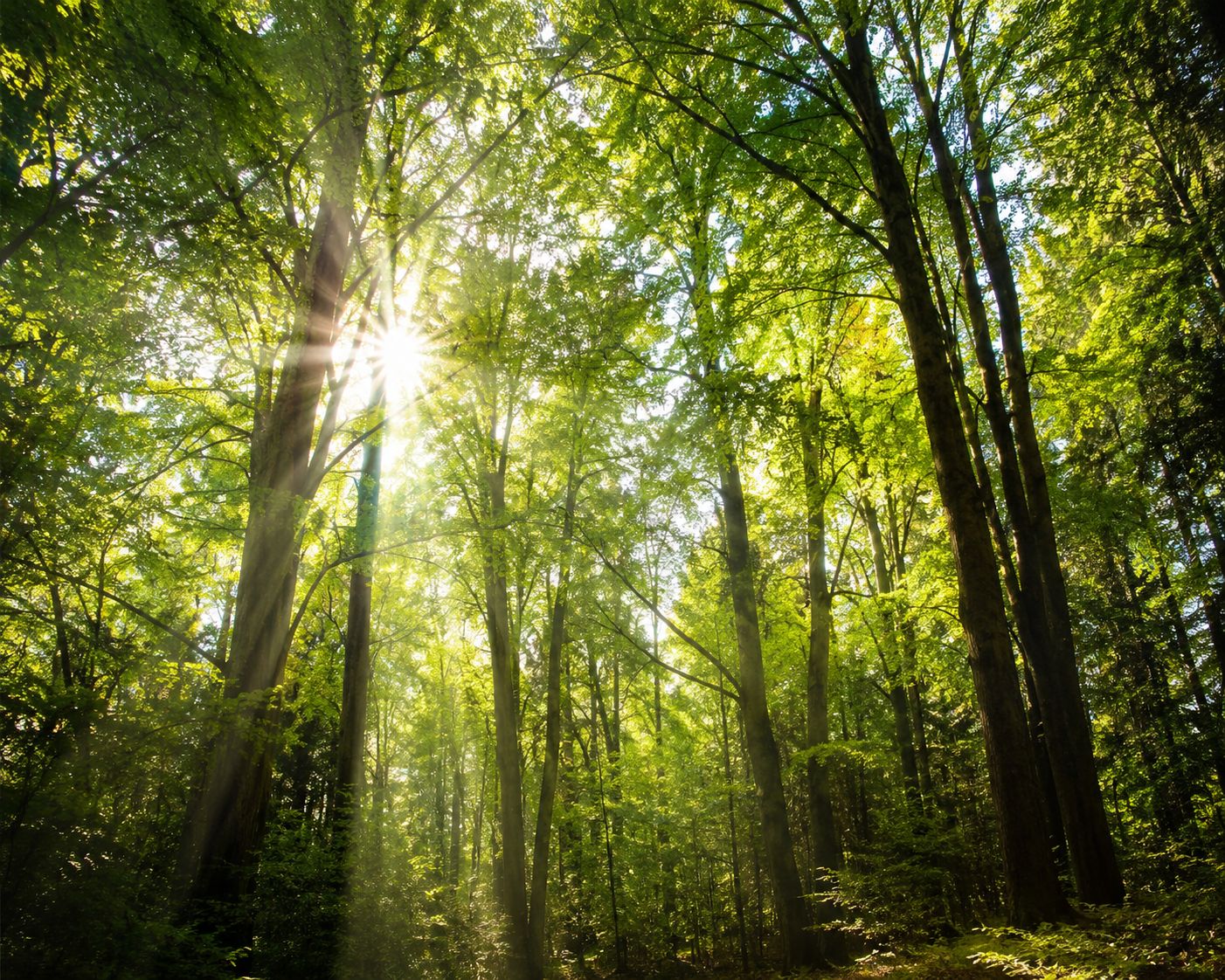
In 1984, biologist Edward O. Wilson published a book called Biophilia. The central argument was straightforward: humans do not simply enjoy nature. We are drawn to it at a level below conscious thought, because our brains were built in it.
For 99 percent of human evolutionary history, our ancestors lived in direct and constant contact with the natural world. Plants, animals, running water, changing light — these were the textures of existence. The human nervous system evolved within that context. It learned to read natural environments as signals of safety, food, and shelter. It learned to relax in them.
The built environments we now inhabit — offices, apartments, climate-controlled rooms with artificial light and no green in sight — are, from the brain's evolutionary perspective, entirely new. We have had them for a fraction of a percent of our existence as a species. The brain has not caught up. It still looks for the signals it evolved to respond to. When it finds them, even in a pot on a windowsill, something settles.
Wilson called this innate tendency biophilia — literally, love of life. Subsequent research spent the next four decades working out exactly what that settling looks like in measurable terms.
What Happens to Your Body

The most direct way to test Wilson's hypothesis was to measure what actually changes in the body when people are around plants. Researchers did exactly that.
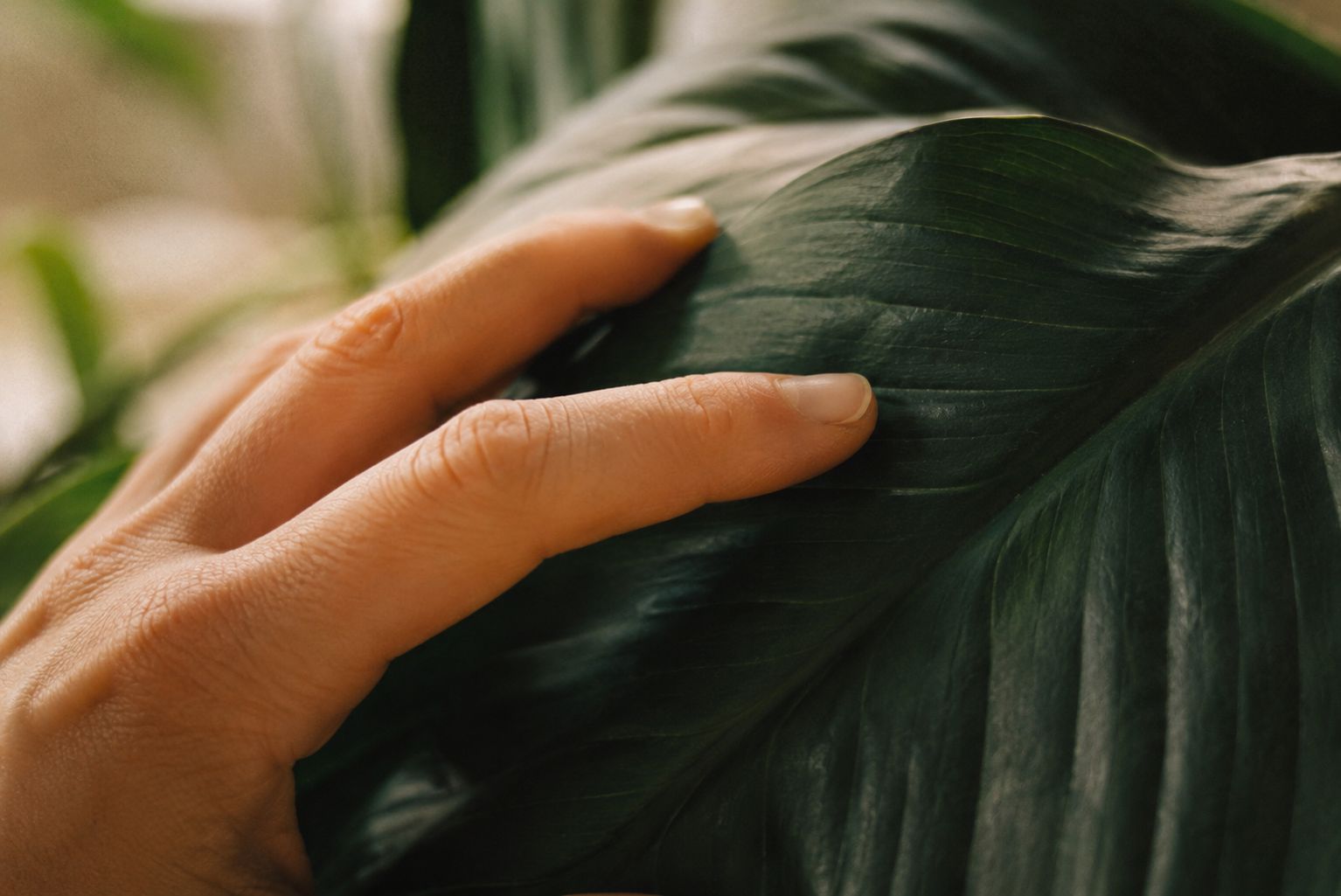
A study published in the Journal of Physiological Anthropology in 2015, conducted by researchers from Chungnam National University in South Korea and Chiba University in Japan, took a group of young adults and asked half of them to transplant a houseplant while the other half completed a short computer-based task. Afterward, they switched. Throughout both tasks, the researchers measured heart rate, blood pressure, and activity in the autonomic nervous system — the system responsible for the body's stress response.
The results were consistent. After interacting with the plant, participants showed suppressed sympathetic nervous system activity — the branch responsible for the fight-or-flight stress response — and reduced diastolic blood pressure. After the computer task, both measurements rose. The participants also reported feeling more comfortable and natural after the plant task, and more uncomfortable and artificial after the computer work.
This was a controlled, crossover study. The same people did both tasks. The only variable was whether they were interacting with a living plant or a screen. The plant won.
Melinda Knuth, an assistant professor of horticultural science at North Carolina State University, has studied this relationship directly. Her research focuses on cortisol — the hormone the body releases under stress, measurable in saliva. Being around plants, her research shows, lowers cortisol levels in a meaningful and measurable way. The effect is not dramatic in the way medication is dramatic. It is more like the difference between a room that is slightly too warm and one at the right temperature — pervasive, constant, and felt in the body before it is noticed by the mind.
The Attention Problem
In the late 1980s, Rachel and Stephen Kaplan at the University of Michigan proposed a theory that offered a different angle on the same phenomenon.
They called it Attention Restoration Theory. The premise was this: the modern environment makes constant demands on directed attention — the deliberate, effortful kind of focus required for screens, problem-solving, planning, and any task that requires blocking out distraction. This kind of attention has a limited daily capacity. Once it is depleted, cognition suffers. People become irritable, make worse decisions, and find it harder to concentrate. What most people call mental fatigue is, in the Kaplans' framework, directed attention fatigue.
Natural environments, they argued, engage a completely different mode of attention — what they called involuntary attention. Watching leaves move, registering the colour of a plant, noticing the texture of bark — these are things the brain processes without effort, without cost to the directed attention system. In this state, directed attention rests and replenishes.
The implication is that looking at a plant on your desk while you work is not a distraction. It is the opposite. It is a micro-restoration — a brief engagement of the effortless attention system that allows the directed system to recover slightly before returning to the task. Over the course of a working day, these micro-restorations accumulate.
Research has since supported this idea. Studies consistently show that workers in environments with plants report better concentration, make fewer errors, and experience less mental fatigue at the end of the day than those in plantless environments. A study from the University of Exeter found that simply adding plants to a lean, minimal office environment increased worker productivity by 15 percent. The researchers observed that the plants appeared to increase employees' engagement with their work environment and their sense of wellbeing.
The Pandemic Revealed Something
For years, the research on plants and mental health was largely academic — interesting findings from controlled studies that most people never encountered. Then, in 2020, the world ran an accidental experiment.
Lockdowns confined billions of people to their homes. The external environments that had provided daily doses of green — parks, streets lined with trees, the walk to work past a garden — disappeared overnight. What followed, research later documented, was a significant increase in anxiety, depression, and psychological distress across the global population.
But something else also happened. Houseplant sales increased dramatically. Gardening became one of the most common new activities adopted during lockdowns. In the UK, it became the most participated-in form of informal recreation. People found themselves instinctively reaching for green, for growing things, for the experience of caring for a living organism in a space that had shrunk to the dimensions of a flat.
A study conducted during the Bulgarian lockdowns examined people's mental health outcomes and found that those who had houseplants or access to a garden experienced measurably fewer symptoms of depression and anxiety than those who did not. The researchers concluded that exposure to greenery provided something they described as a feeling of being away — a psychological sense of having moved, of being somewhere else, even within the same four walls. That feeling, however modest, was enough to shift measurable mental health indicators.
The pandemic did not introduce the science. It confirmed it in conditions nobody would have designed by choice.
Recovery in Hospital Rooms
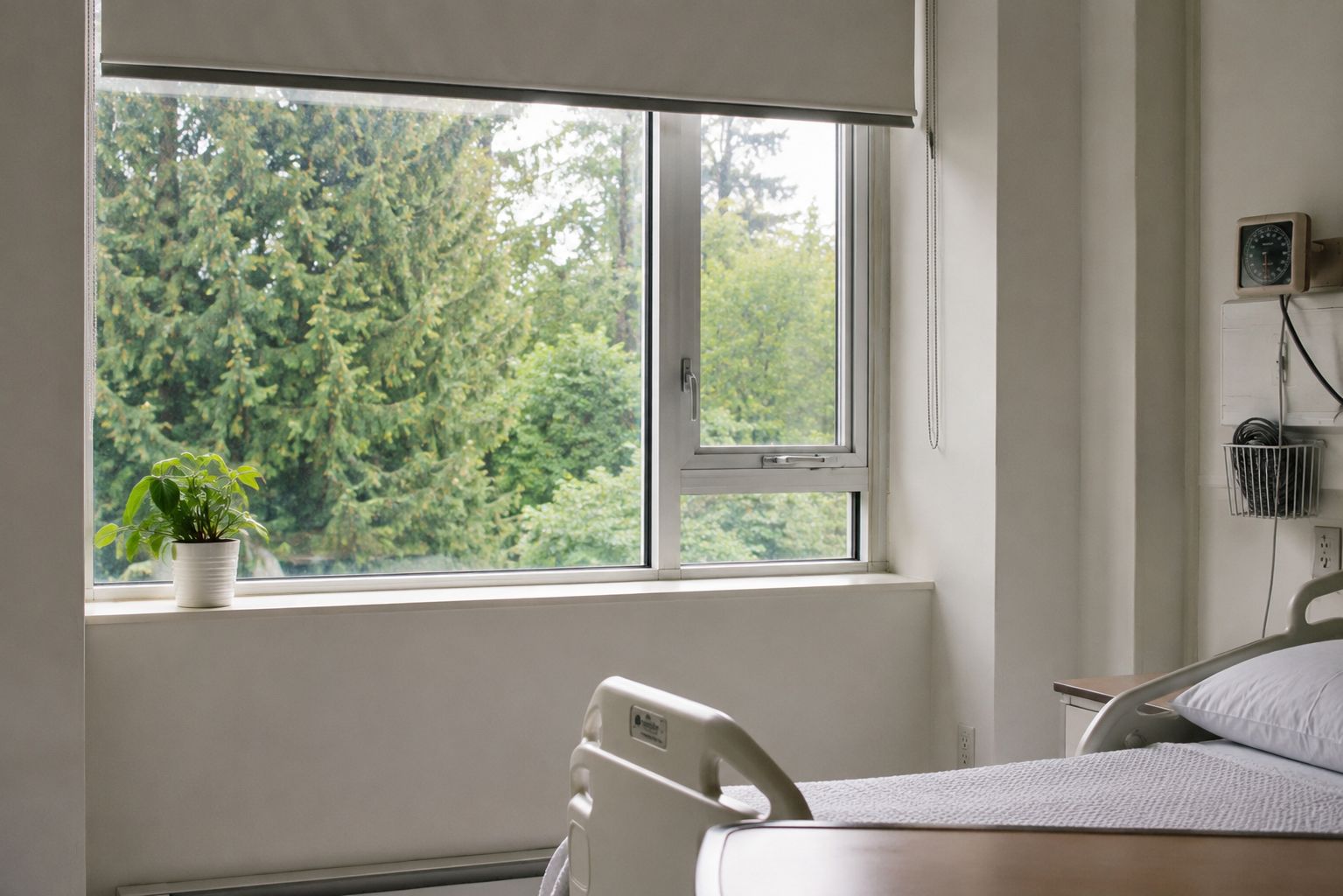
Roger Ulrich, a researcher then at the University of Delaware, published a paper in 1984 that has since become one of the most cited studies in environmental psychology. He examined records from a suburban Pennsylvania hospital over a nine-year period, comparing patients recovering from cholecystectomy surgery who had been assigned to rooms with windows overlooking a natural scene — trees, grass — against patients in otherwise identical rooms whose windows faced a brick wall.
The findings were striking. Patients with nature views had shorter post-operative hospital stays. They received fewer negative evaluations from nursing staff. They took fewer moderate and strong analgesic doses — meaning they needed less pain medication. And they made more positive comments in the nursing notes.
The two groups of patients were similar in age, weight, smoking history, and general health. The only difference was the view from the window.
Ulrich's study did not involve plants in a room. It was a view through glass. But its implications extended the evidence for what Wilson had proposed — that human beings respond to natural environments at a physiological level, and that this response has real, measurable health consequences.
Later research extended Ulrich's findings to interior plants. The Kansas State University study on surgical patients with plants in their rooms found results consistent with what Ulrich had found with nature views: lower blood pressure, less pain medication, faster discharge, greater comfort reported by patients. The mechanism differed slightly — actual plants versus a view — but the direction of the effect was the same.
What Six Square Feet Is Actually Doing
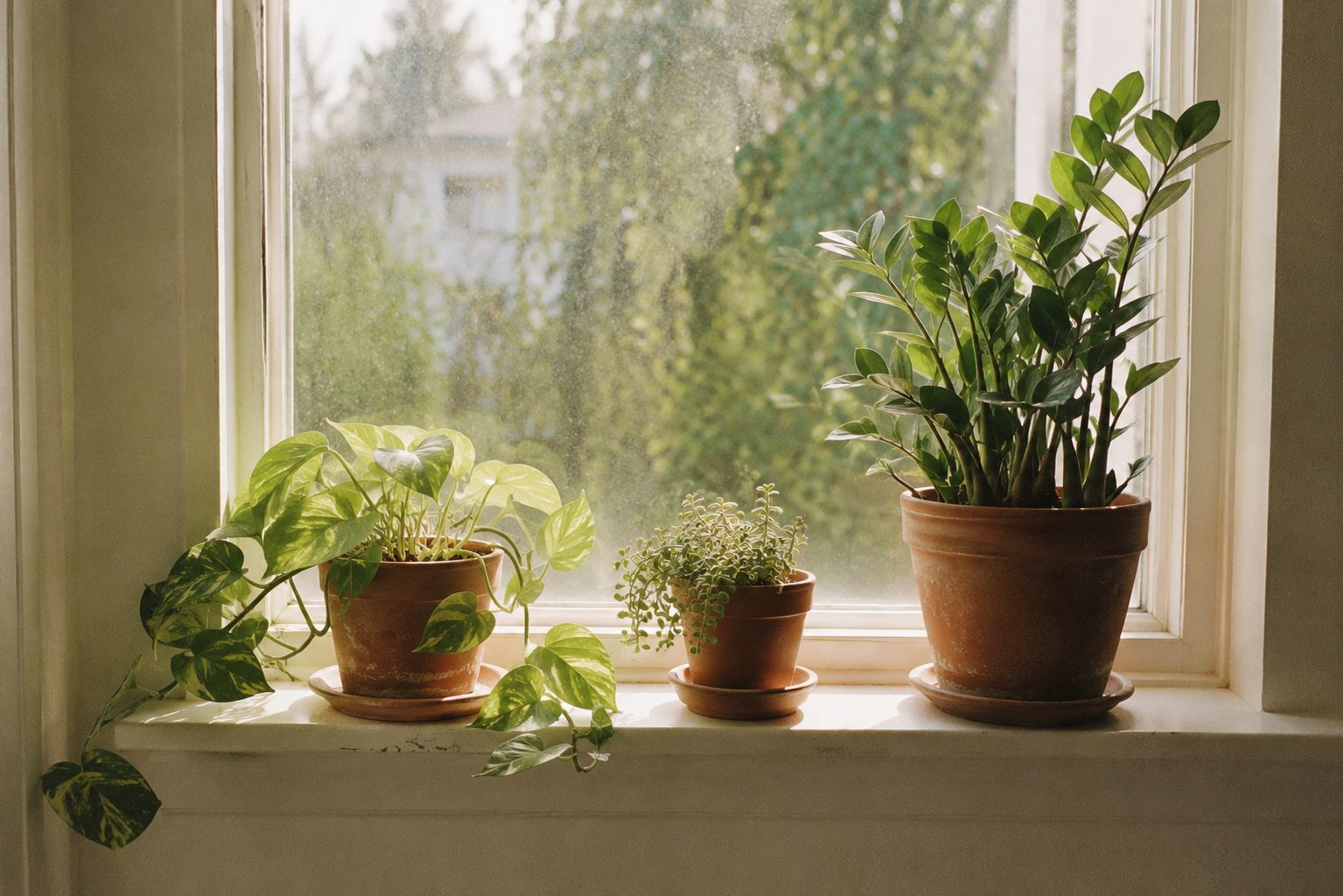
Six square feet is roughly the footprint of a medium-sized plant and the space immediately around it. It is the area you occupy when you sit at a desk. It is a windowsill. It is the corner of a bedroom. It is a small balcony with three pots.
The science suggests that within that space, several things are measurably happening. Cortisol production is slightly suppressed. Directed attention is periodically resting and recovering through involuntary engagement with living colour and movement. Blood pressure sits fractionally lower over the course of hours. Reported mood is better. Reported concentration is better. Anxiety levels, measured across multiple studies with multiple methodologies, are lower.
None of this is dramatic in isolation. A plant does not fix a difficult life. It does not treat depression the way medication does. It does not resolve stress the way therapy does. Researchers are careful about this — and the careful ones consistently note that the effect size of plant exposure on mental health is real but modest, and that confounding factors in many studies make precise quantification difficult.
But modest, consistent, and free is a combination worth paying attention to.
The human brain evolved in contact with living systems. It developed in forests, on plains, in spaces full of the movement and colour and quiet complexity of the natural world. That development did not stop mattering when we moved indoors. The brain still carries those original expectations. When it finds living green in its immediate environment — even a small amount, even on a windowsill — something in it recognises what it is looking at.
That recognition is not poetry. It is biology. And forty years of research suggests it is worth taking seriously.
What the Research Actually Recommends
The studies do not prescribe a specific number of plants or a particular species. They point more broadly at the presence of living green in the spaces where people spend most of their time. Given that the average person spends roughly 90 percent of their life indoors, those spaces are rooms — living rooms, bedrooms, home offices, kitchens.
A few practical observations from the research:
The effect appears to be related to the presence of living plants rather than artificial ones. Studies comparing real and artificial plants consistently find stronger physiological responses to living specimens. The brain responds differently to something that is alive.
Caring for a plant — watering it, repotting it, noticing new growth — appears to produce stronger psychological benefits than simply having one present. Active engagement with a living organism seems to matter beyond passive proximity. This may explain the therapeutic use of horticultural activities in mental health settings, which has a documented history stretching back decades.
The benefits appear to accumulate with continued exposure. This is not a one-time effect. The longer a plant is present in a living or working environment, the more normalised and effective the relationship becomes.
And finally: the size of the plant, the number of plants, and the species appear to matter less than the simple fact of having something living and green in the space. The research is not precious about which plant you choose. It is consistent about the value of choosing one.
By Seedora Store.
Sources: Journal of Physiological Anthropology, Chungnam National University and Chiba University (2015); Roger Ulrich, Science (1984); Rachel and Stephen Kaplan, Attention Restoration Theory (1989); Edward O. Wilson, Biophilia, Harvard University Press (1984); Melinda Knuth, North Carolina State University; University of Exeter workplace productivity study; Kansas State University surgical recovery study; Bulgarian lockdown mental health study (2022); NIHR Evidence, green space and mental health (2024).