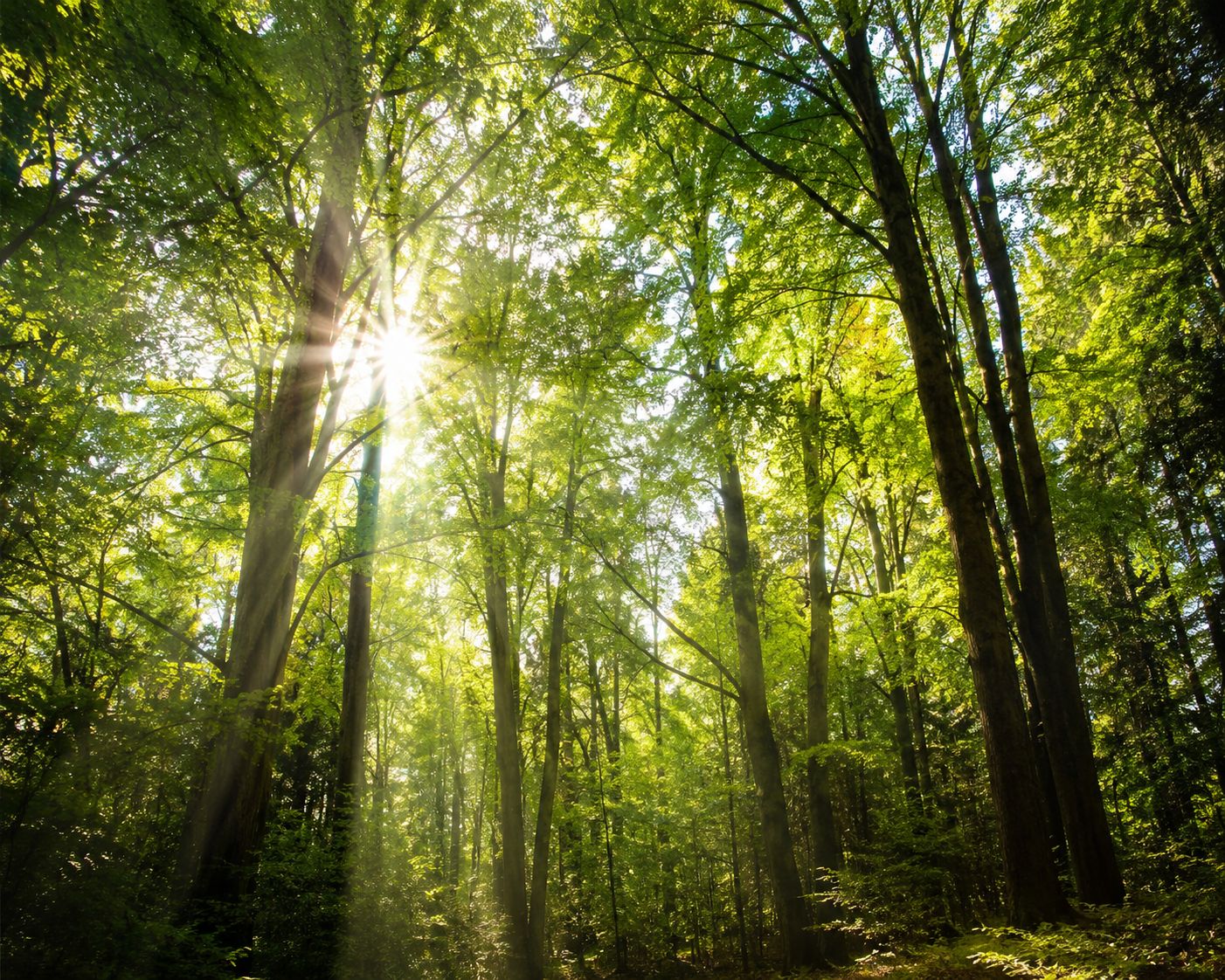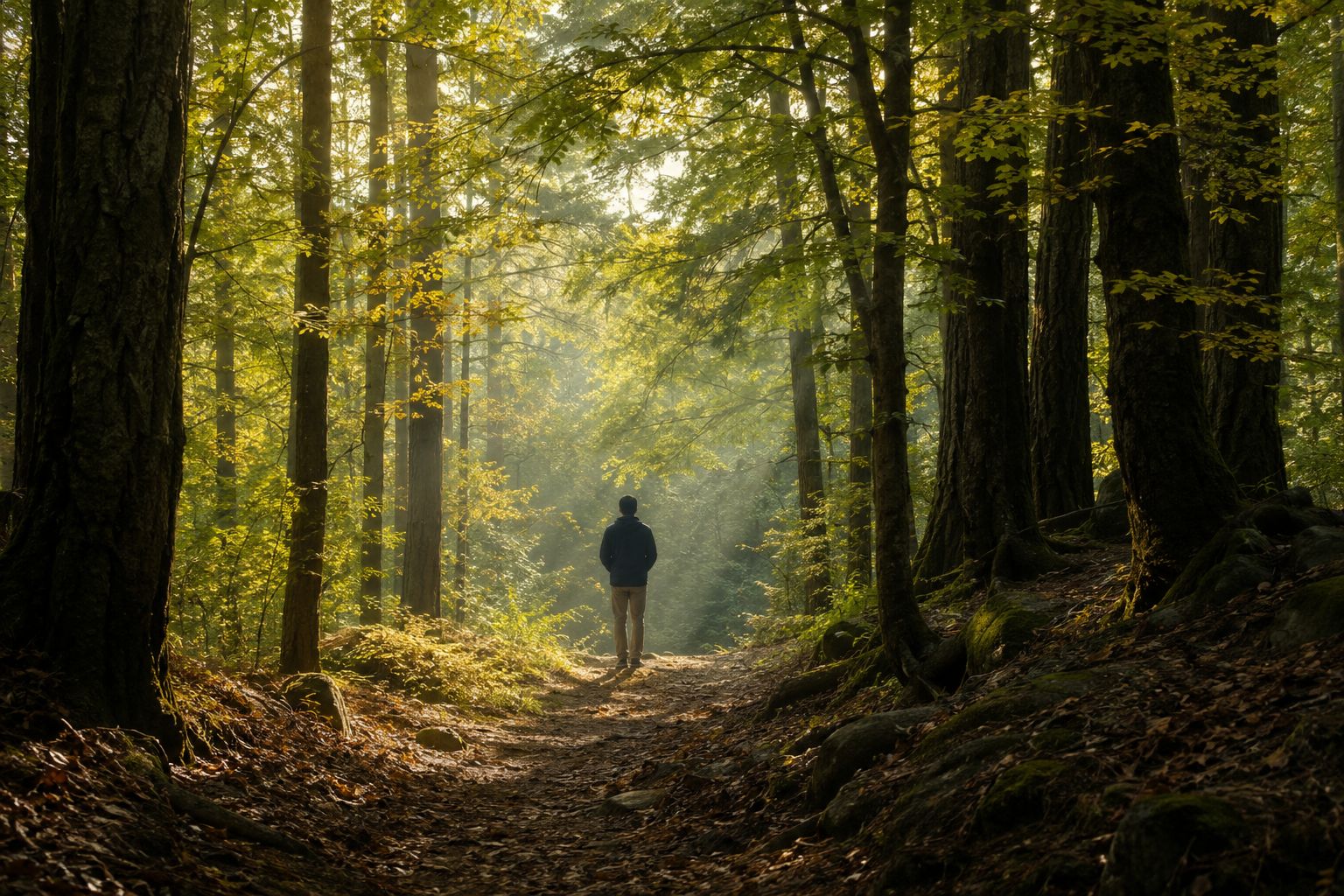
Japan has a word for a kind of medicine you don't take as a pill. You don't get it from a pharmacy. You don't need a prescription. You just need to walk into a forest and let your senses do the work.
The word is Shinrin-yoku. It means "forest bathing." And in the last few years, scientists have started proving something people probably already felt without needing a study to tell them.
What Forest Bathing Actually Is
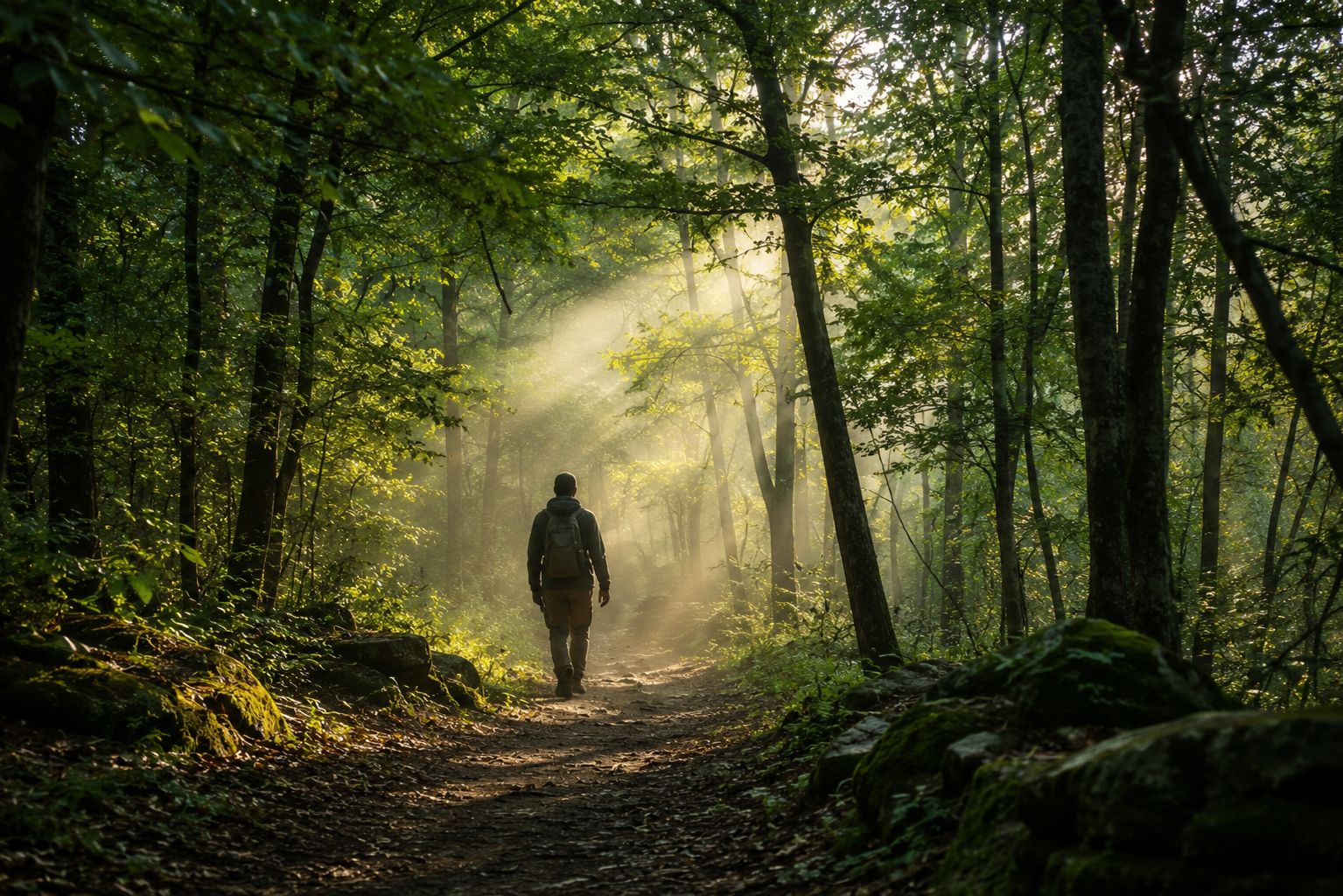
Forest bathing isn't hiking. There's no destination, no distance to cover, no fitness goal. It's simply the slow, quiet act of being in a forest — walking gently, breathing, noticing the trees, the light, the sounds, the smell of the air.
Japan's government first promoted the practice back in 1982, through its Forestry Agency. It wasn't invented as a wellness trend. It was created as a direct answer to something specific: burnout. A way to help people recover from a fast, screen-heavy, indoor way of life by giving them back something simple — unhurried time in nature.
What Scientists Actually Found
This is the part that makes the idea worth taking seriously. It isn't just a nice feeling. Researchers have measured it directly in the body.
In a 2025 study, women who spent two days walking in a forest — compared to a matched control group walking in a city — showed real, measurable changes in their blood. Their stress-related symptoms dropped, and the improvement lasted for a full week afterward. Their serotonin, a chemical closely tied to mood, went up. So did oxytocin, a hormone linked to calm and connection.
A broader 2024 scientific review looked across dozens of studies and found the same pattern again and again: people who spend time in forests show lower stress hormone levels, lower blood pressure, and a calmer nervous system compared to people who spend the same amount of time in a city.
None of this requires belief or faith. It's blood work. It's blood pressure cuffs. It's measurable biology, responding to something as simple as being outside among trees.
Why Would Trees Do This to Us?
Here's the part worth thinking about slowly.
Humans have lived closely surrounded by nature for almost the entire history of our species. Concrete, screens, offices, and traffic are incredibly recent — a tiny sliver of time compared to how long we spent living outdoors, close to soil, plants, and open sky. Our bodies simply haven't had time to catch up to how quickly the world around us changed.
Scientists call this an evolutionary mismatch — when your environment changes faster than your body can adapt to it. It may be the simplest explanation for why a walk in the woods feels like relief instead of just a nice view. Your nervous system isn't reacting to a beautiful forest. It's returning to the setting it was actually built for.
You Don't Need a Forest — A Garden Does the Same Thing
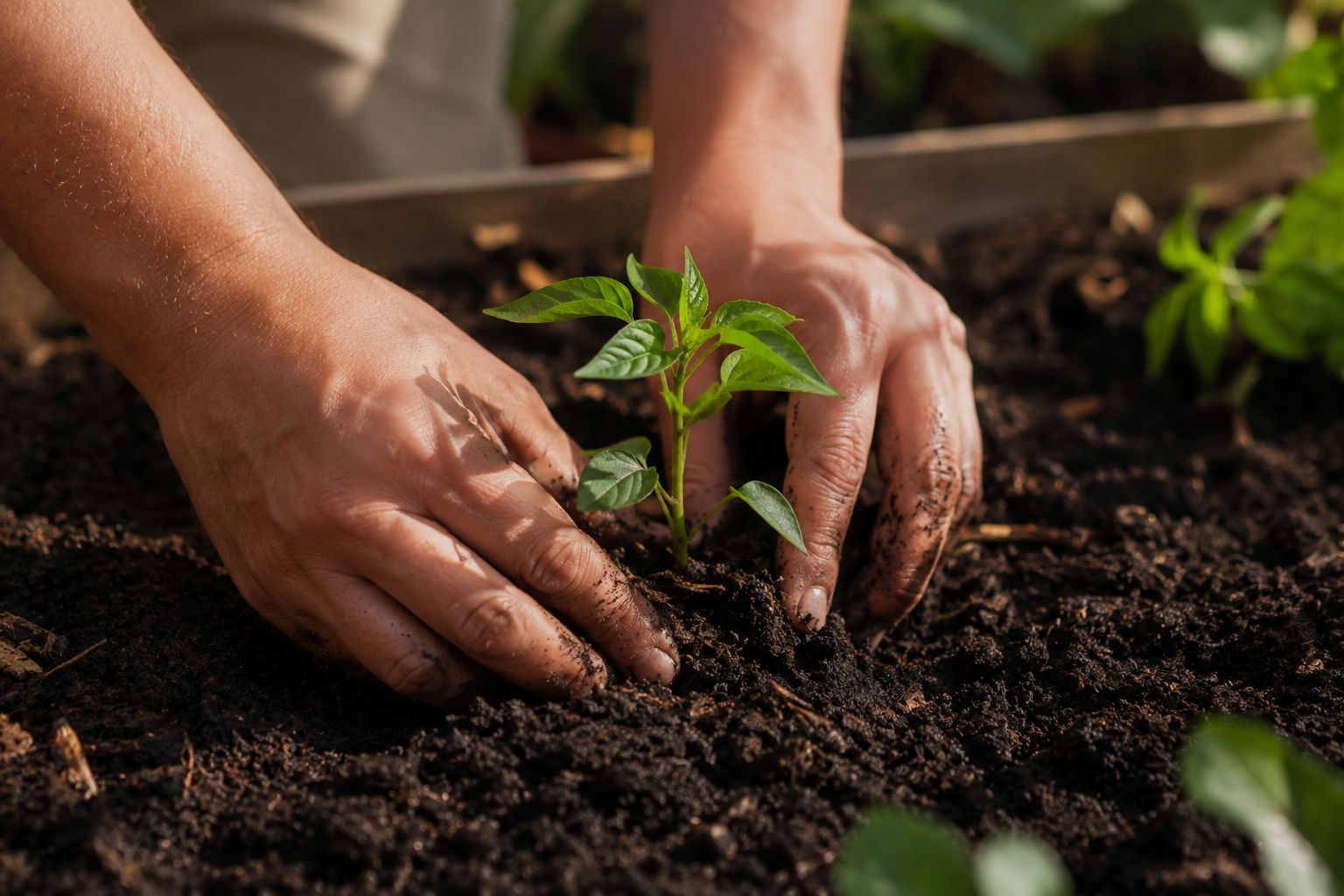
Here's the good news for anyone who doesn't live near a forest. You don't need one.
Multiple studies have found that just 30 minutes of gardening measurably lowers cortisol, the body's main stress hormone — in some studies, by more than reading a book indoors did. One well-known study had a group complete a stressful task, then split them into two groups: one read indoors, one gardened outside. The gardening group's stress hormone levels dropped further, and their mood improved more.
Other research has gone even smaller. One study found that simply adding a few plants to a front yard raised the number of residents with healthy stress-hormone patterns from 24 percent to 53 percent within a year — just from having a small patch of green nearby. Touching soil directly has even been linked to a rise in serotonin, likely through a mix of movement, sunlight, and simple contact with living things.
You don't need acres of land or a wilderness retreat. A few pots on a balcony, a small vegetable bed, or fifteen minutes with your hands in the dirt appears to trigger a very similar biological calm to a walk through a forest.
A Very Old Kind of Medicine
Forest bathing didn't need a scientific explanation to work. People have quietly known this for a very long time — that time spent close to living, growing things does something to us that a screen or a office chair never will. Science has simply started catching up to what a walk outside, or a few minutes in a garden, has always seemed to offer for free.
If you don't have a forest nearby, start smaller. A garden bed, a windowsill, or even a single pot of herbs works on the same principle — your hands in soil, something alive growing under your care. That's exactly the instinct Seedora is built around. If reading this made you want to start growing something of your own, sign up on our site — it's free, it helps us keep writing pieces like this, and if it resonated with you, sharing it with someone who needs a reason to slow down is the best thing you can do for us.
By Seedora Store — Health & Wellness Series.
Sources: Li et al., "Impacts of Forest Bathing (Shinrin-Yoku) in Female Participants with Depression/Depressive Tendencies," Diseases journal (2025); PMC review, "Forest Bathing and Preventive Medicine: Immune Modulation, Stress Regulation, Neurocognitive Resilience" (2026); Healthline, Forest Bathing overview (2025); Forbes, "How Gardening Can Fight Stress and Improve Your Life"; Columbia Center for Community Health, gardening and cortisol; BBC Science Focus, front-garden greening and stress hormones (2024); Abundance Therapy Center, gardening, soil contact and serotonin.