A packet of pepper seeds sitting in cold soil can take three weeks to sprout — or it can rot before it ever does. The same seed, kept at the right temperature, sprouts in seven to eight days. Nothing else changes. Same seed, same soil, same water. The only variable is heat, and it's the one most new gardeners skip entirely.
Why Soil Temperature Matters More Than Air Temperature
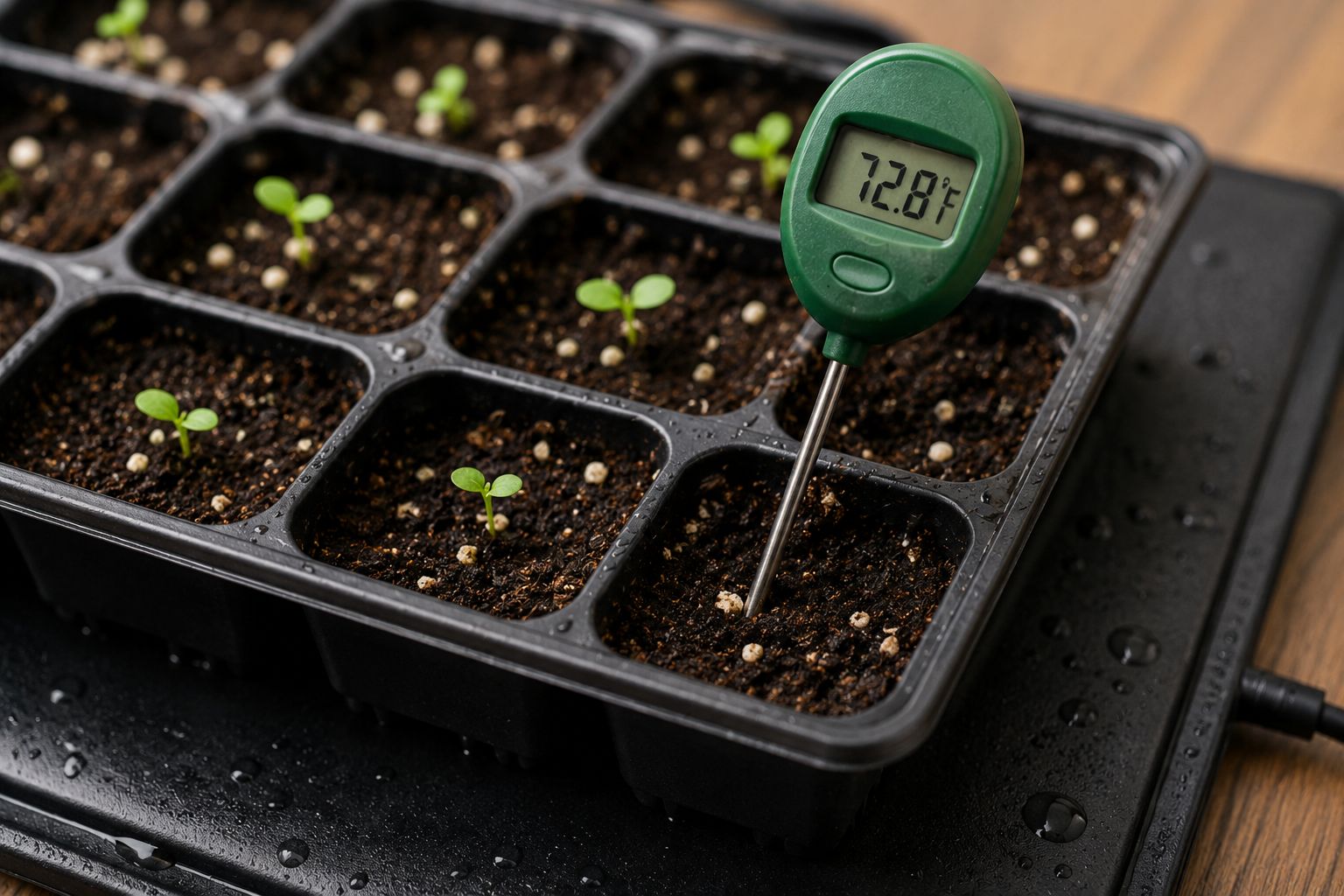
Most people check the thermostat on the wall and assume that's what their seeds are experiencing. It isn't. A sunny windowsill can look warm to a hand held above the soil while the actual planting depth, a half-inch down, stays several degrees colder. Seeds germinate based on the temperature directly around them, not the temperature of the room they're sitting in — which is why a soil thermometer, not a guess, is the only reliable way to know what a seed is actually experiencing.
Every crop has a different threshold. Lettuce germinates best in a cool 55–65°F range and can actually be inhibited by heat. Tomatoes need a steady 75–85°F. Peppers and eggplants sit at the warm end of the scale, wanting 75–90°F and struggling badly below 70°F. Cold soil doesn't just slow these seeds down — below their minimum threshold, many simply stay dormant indefinitely, or rot in damp soil before they ever sprout.
What a Heat Mat Actually Does
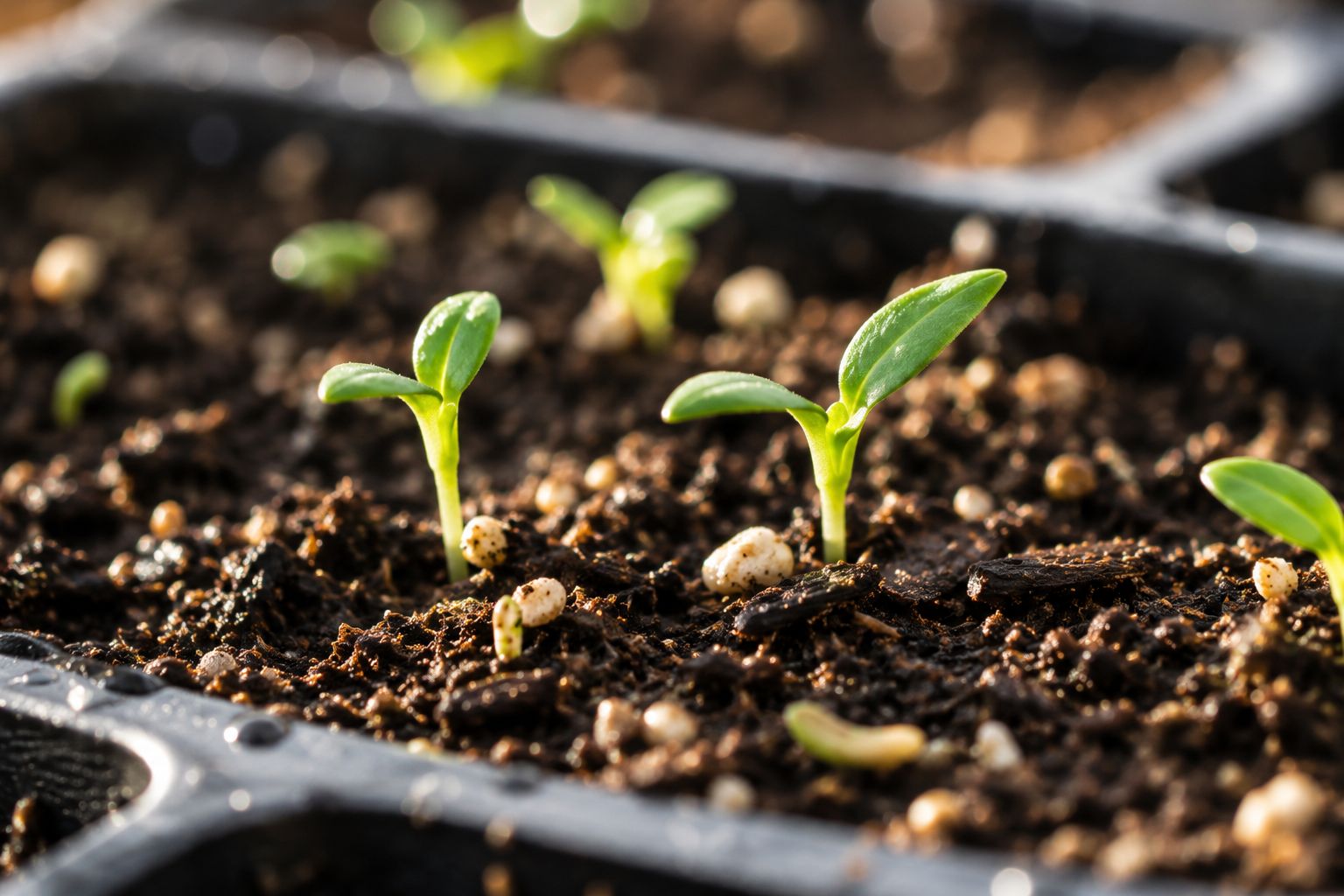
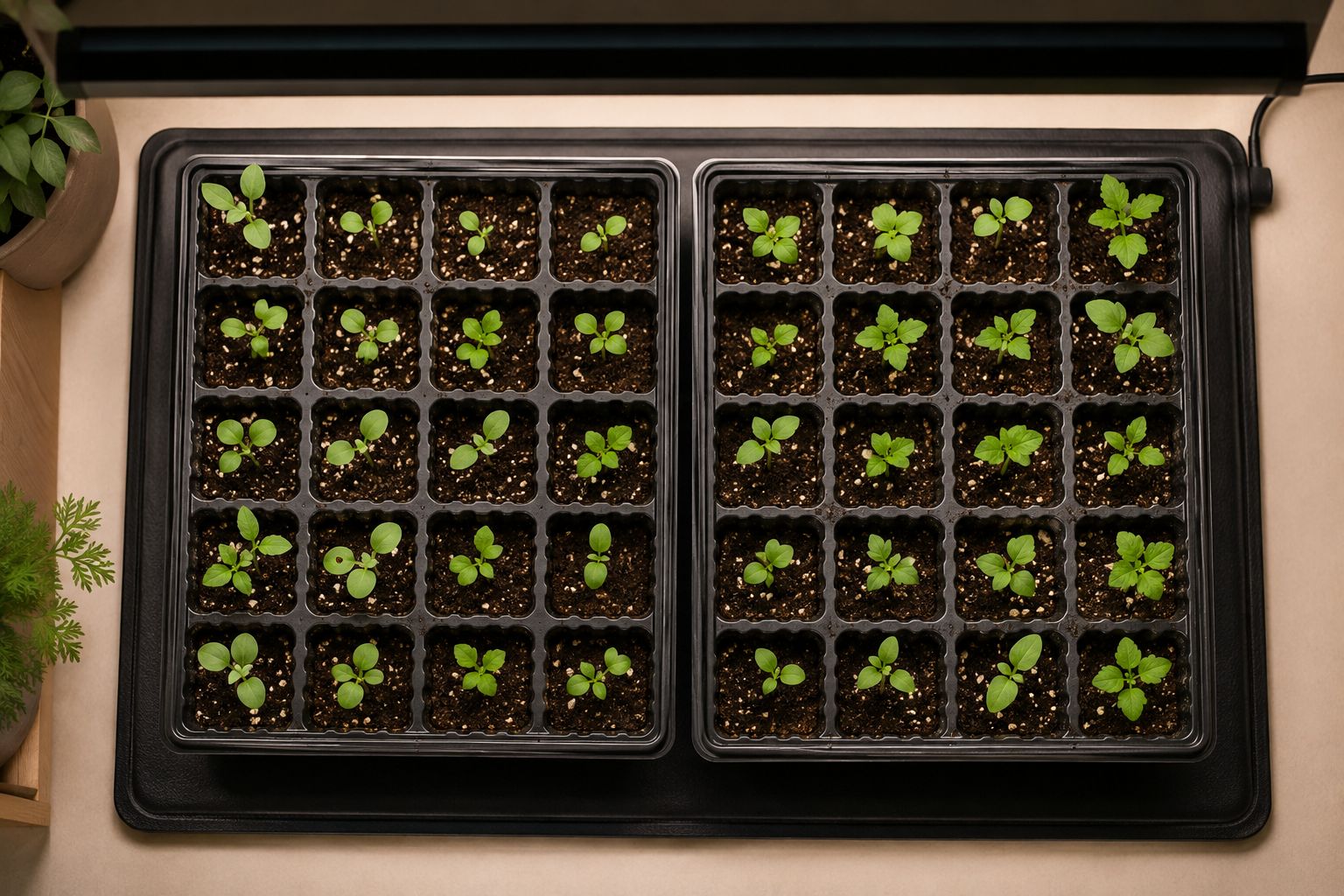
A seedling heat mat is a thin, waterproof pad that sits under a seed tray and applies gentle, even heat from below — usually raising the soil temperature 5 to 20°F above the surrounding air, depending on the model and whether it's thermostatically controlled. It isn't heating the room. It's warming the root zone directly, which is the only part of the equation a germinating seed actually responds to.
This matters most for a specific group of crops: tomatoes, peppers, eggplants, and okra are the classic heat-mat candidates, since all four are warm-season plants that germinate poorly, unevenly, or not at all in a cool room. Cool-season crops — lettuce, brassicas, spinach — generally don't need one at all, and in fact can germinate worse if the soil gets too warm.
Do You Actually Need One?
Not always. If you're only starting a handful of seedlings in a warm, south-facing window in a house that stays reliably above 70°F, you can often get by without one. But the moment you're starting a wider mix of crops — especially peppers, which are the slowest and fussiest of the bunch — a heat mat stops being optional and starts being the difference between a tray of healthy seedlings and a tray of nothing.
It's also worth separating two related but different tools: a heat mat warms the soil, while a grow light provides the light seedlings need once they've actually sprouted. A heat mat with no light will get seeds up, but the resulting seedlings will stretch and weaken searching for light they don't have. The two tools solve different problems and most serious indoor setups eventually use both.
Setting Up a Basic Indoor Station
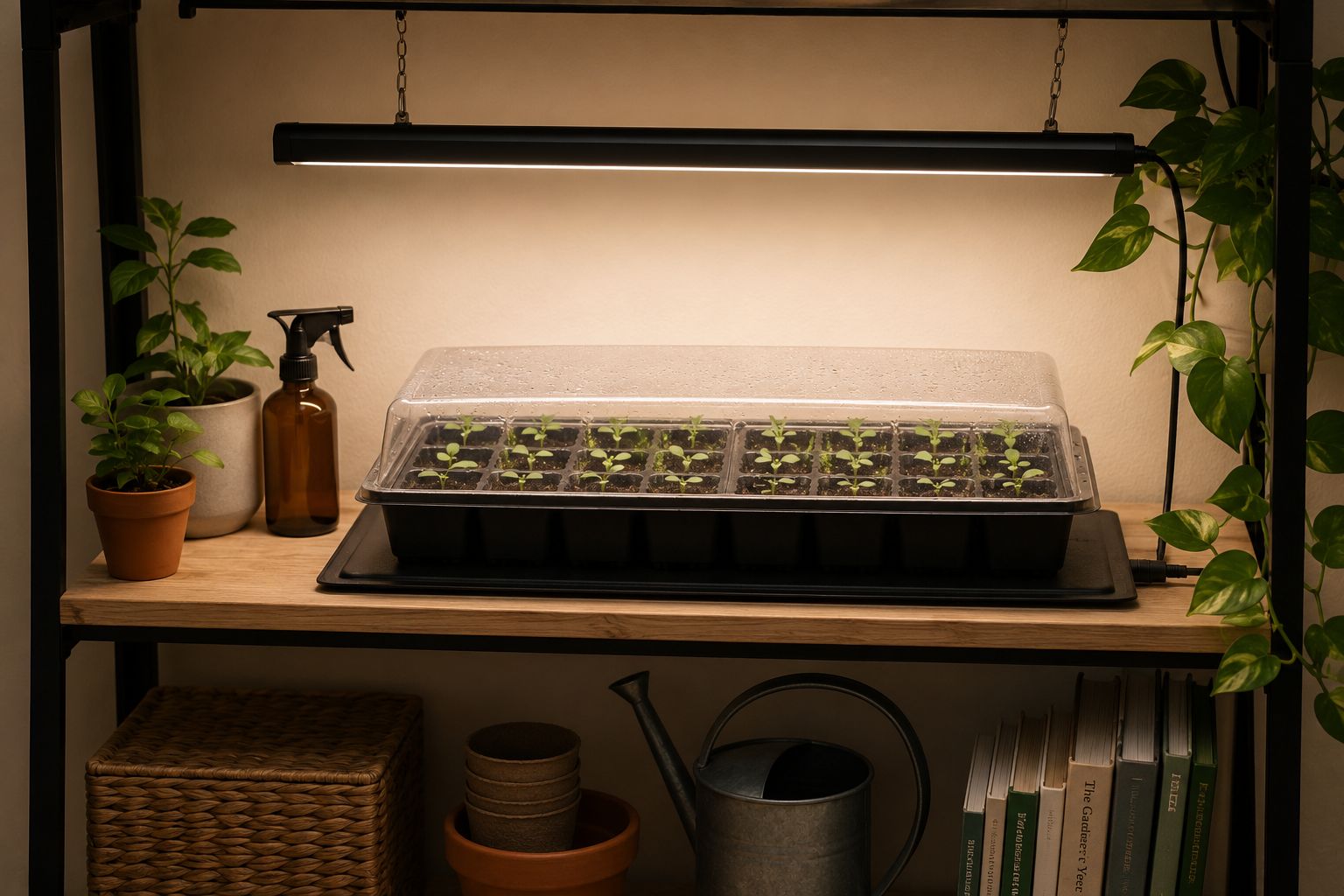
A functional indoor seed-starting setup doesn't need to be elaborate. At minimum:
- A seed tray with cell inserts or small pots, filled with a sterile seed-starting mix rather than garden soil, which can carry fungal spores that cause damping off
- A heat mat sized to your tray — most standard mats cover one or two 10×20 trays
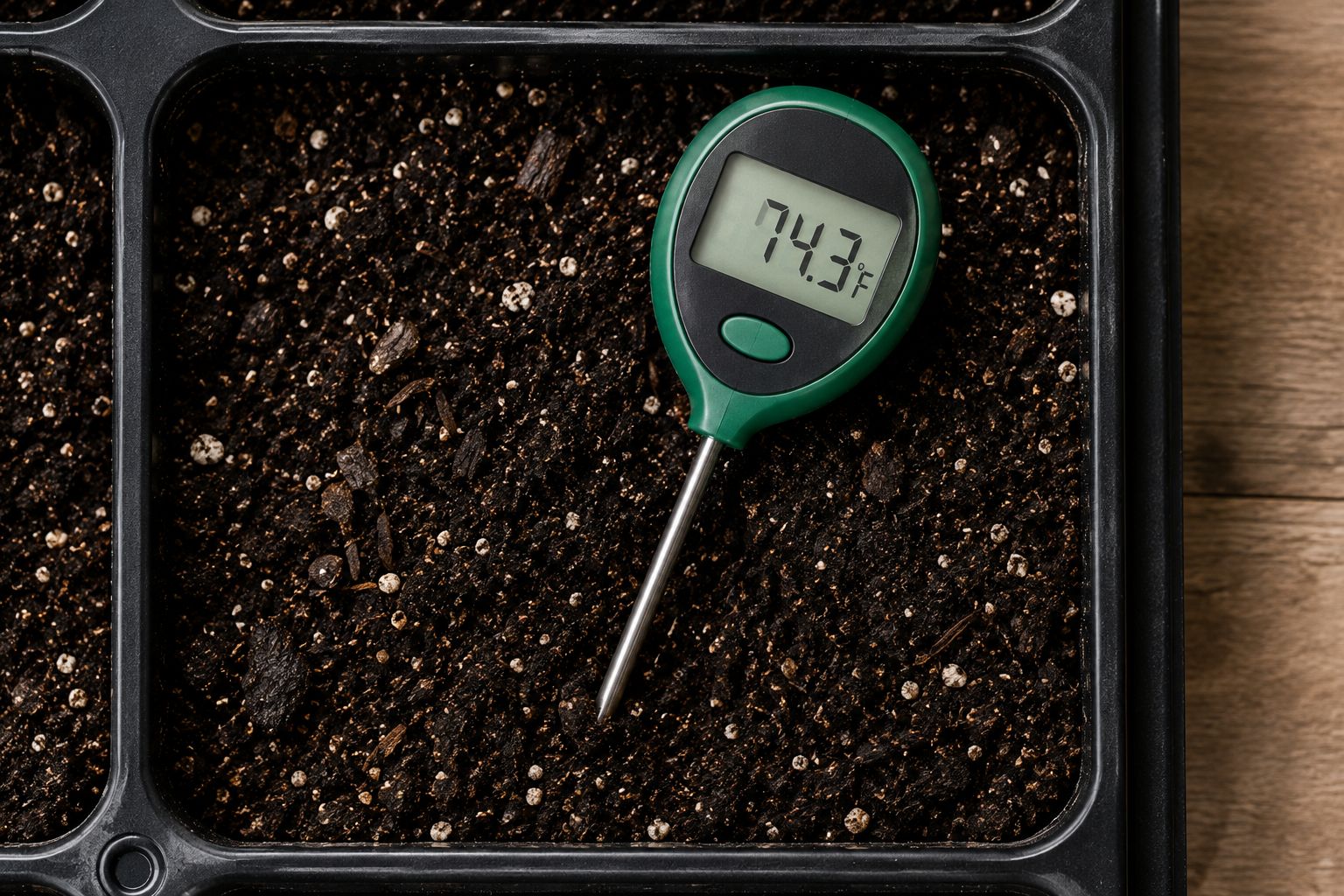
- A soil thermometer, pushed into the mix at planting depth, not just left on the surface
- A humidity dome or clear cover, to hold in moisture while seeds germinate
- A grow light, positioned close to the seedlings and raised as they grow, ready for the moment sprouts appear
The single most common mistake at this stage is leaving the heat mat running after germination. Once seeds sprout, that bottom heat should generally come off, or at minimum be dialed back — continued heat pushes leggy, weak growth and can encourage the exact fungal problems a heat mat was meant to prevent in the first place. A mat's job is to get seeds up. After that, light becomes the priority, not warmth.
A Quick Reference
| Crop | Ideal soil temp | Heat mat needed? |
|---|---|---|
| Peppers | 75–90°F | Yes |
| Tomatoes | 75–85°F | Yes |
| Eggplant | 75–80°F | Yes |
| Lettuce | 55–65°F | No |
| Brassicas (kale, broccoli) | 60–70°F | Usually not |
If a seed packet lists a range you can't easily hit with an unheated windowsill, that's your signal a mat is worth the investment — not as a general upgrade, but as the specific fix for the specific crops that need it.
By Seedora Store — Grow Guide Series.
Sources: Sow Right Seeds, soil temperature and germination guide; Bootstrap Farmer, heat mat usage guide; Almanac.com, seedling heat mats explainer; Homegrown Garden, seed germination temperature chart; Native Nurseries, starting tomatoes and peppers from seed; Lazy Dog Farm, optimal germination temperatures for vegetables; University of California, soil temperature conditions for vegetable seed germination.