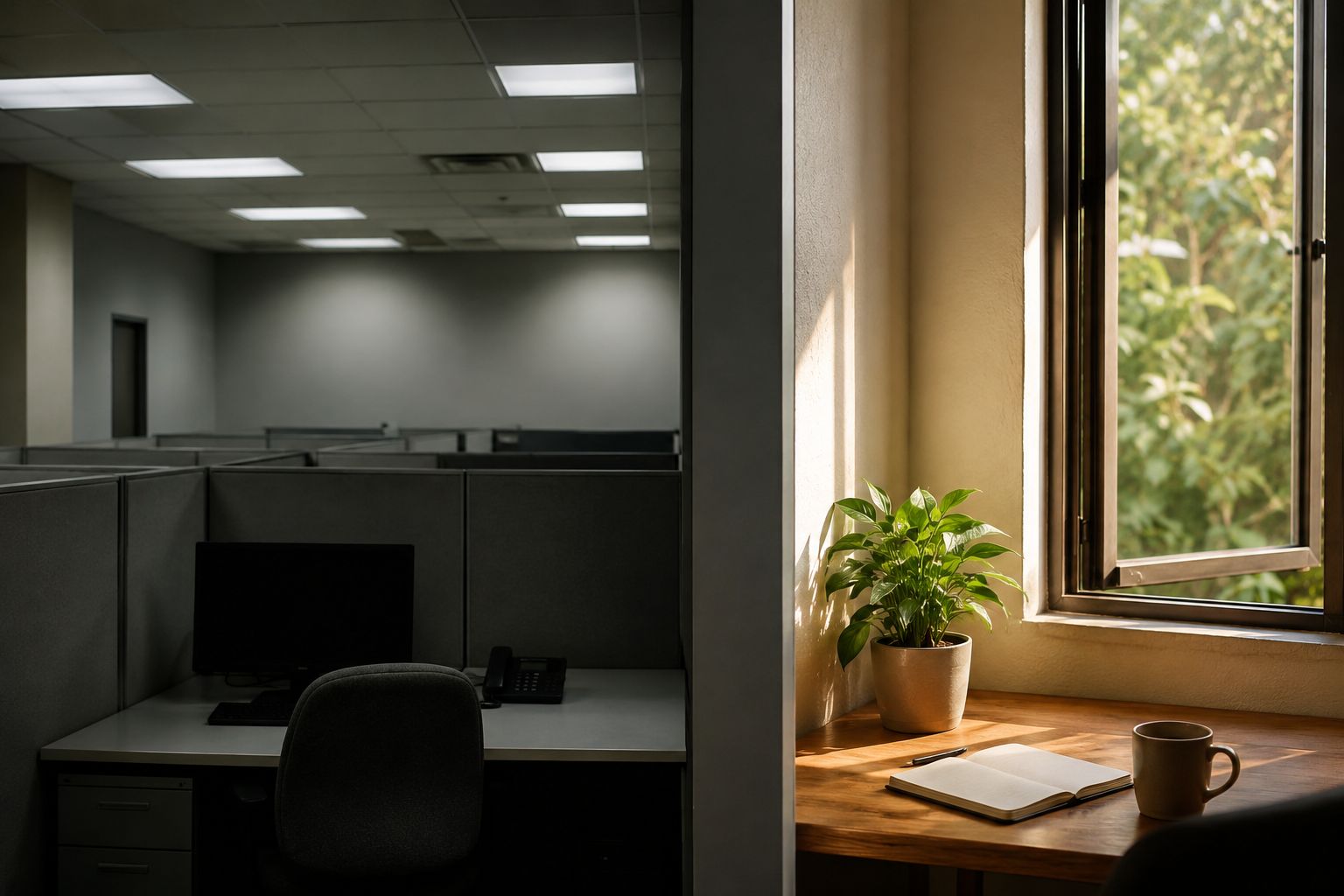
Somewhere in the last decade, a claim started spreading everywhere: sitting at your desk is quietly flooding your body with stress hormones, one hour at a time. It's repeated in wellness articles, standing-desk ads, and fitness influencer captions. It sounds true. It even sounds like the kind of thing science would confirm.
Here's the uncomfortable part: when researchers actually tested it directly, they didn't find that.
A 2019 study measured hair cortisol — a biomarker that reflects weeks of chronic stress, not just a single stressful moment — in desk workers tracked with movement sensors. The result: no meaningful link between how much people sat and their cortisol levels. A separate review of the evidence reached the same conclusion. Sitting, on its own, doesn't appear to be the thing quietly poisoning your stress hormones.
So if it's not the sitting — why does a day in an office still leave so many people feeling wrung out by 5pm? The answer researchers have actually found is more specific, and far more interesting, than "sitting is bad for you."
It's Not the Chair. It's What the Room Is Missing.
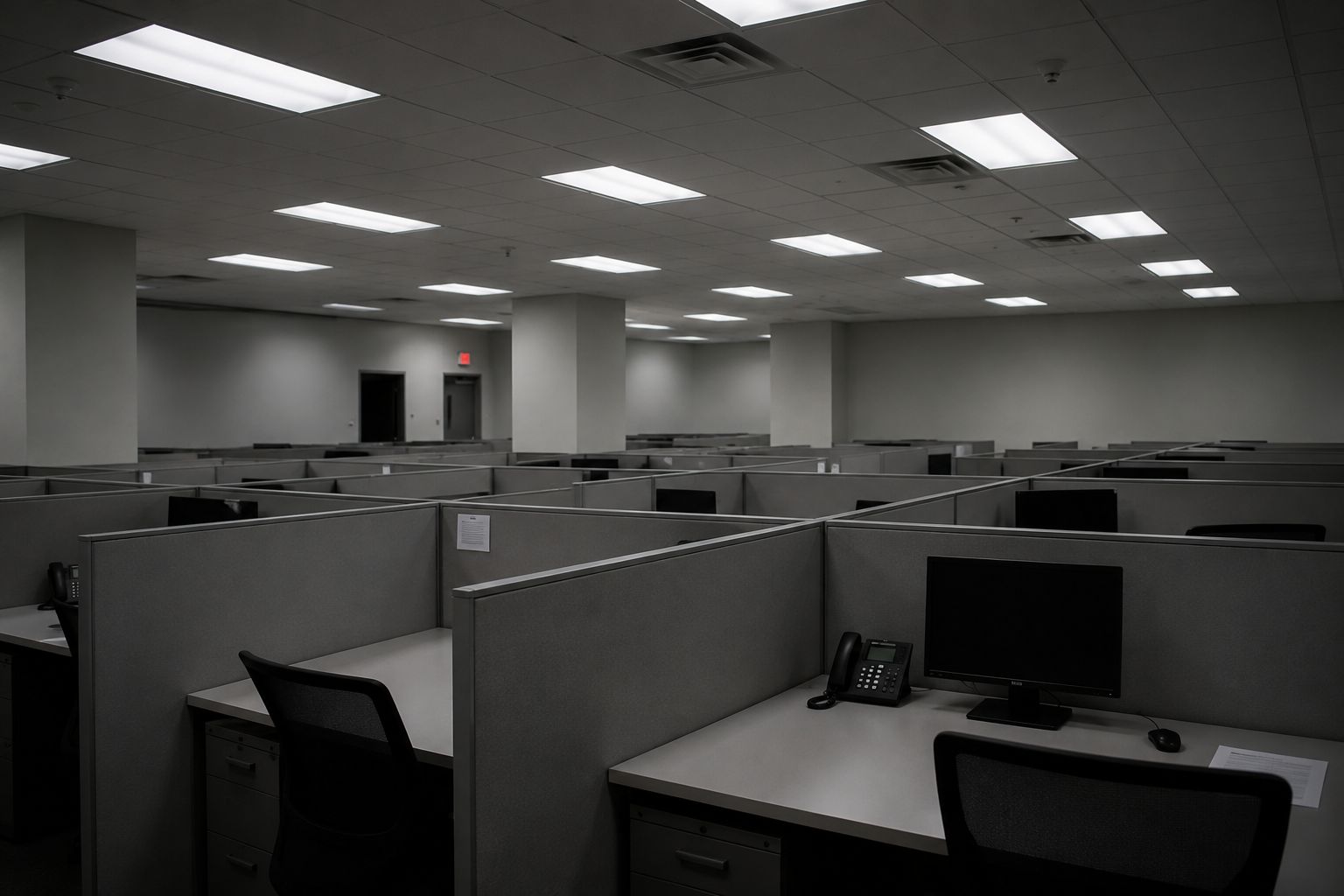
One study put this to a direct physiological test. Researchers compared workers in two kinds of government office space: one group sat in old-style individual offices and cubicles, the other in a modernized workspace with better lighting and better views. They measured two real biological signals — heart rate variability (a marker of how well the nervous system recovers) and the natural morning rise in cortisol that's supposed to happen when you wake up.
The workers in the older, more closed-off office space showed a measurably larger cortisol spike upon waking, and flatter heart-rate variability through the day — both signs of a nervous system under more sustained strain. The people in the space with better light and views did not show the same pattern.
Nobody in that study changed how much they sat. What changed was the room itself — how much daylight reached it, and how much of the outside world it let in.
The Term Has Existed Since the 1980s
This isn't actually a new discovery. Doctors have been describing a version of it since the 1980s, under a name that sounds almost too dramatic to be a real medical term: sick building syndrome. It refers to a documented set of symptoms — fatigue, headaches, poor concentration, low mood — that cluster in people working inside buildings with poor daylight, poor air, and little visual connection to the outdoors. The pattern was consistent enough, across enough buildings, that it earned its own name in medical literature decades before "wellness" was a marketing category.
Separately, a University of Michigan psychologist named Rachel Kaplan studied people working in genuinely windowless workstations, even when those spaces were modern and well-lit by artificial light. She found something she called directed attention fatigue — a kind of mental exhaustion that comes specifically from a brain that never gets a moment of effortless, unfocused rest. Workers with a view of almost any greenery, even a single tree and a patch of grass, reported meaningfully less frustration, more patience, and better job satisfaction than those staring at a blank wall or a neighboring building all day.
The stress response researchers keep finding isn't coming from your muscles staying still. It's coming from your eyes and your nervous system never getting a break from an environment with nothing alive in it.
Why a Brain Would React This Way
This lines up with something researchers have pointed to for a while now: your nervous system evolved across an enormous stretch of time spent almost entirely outdoors, surrounded by living things, shifting light, and open sky. Concrete walls, fixed fluorescent lighting, and a single unchanging view are — on that timescale — something your biology has barely had a chance to adjust to. A room with no plants, no daylight, and no window isn't neutral to a human nervous system. It's an environment your body still doesn't fully recognize as normal, even though your calendar says it's just Tuesday.
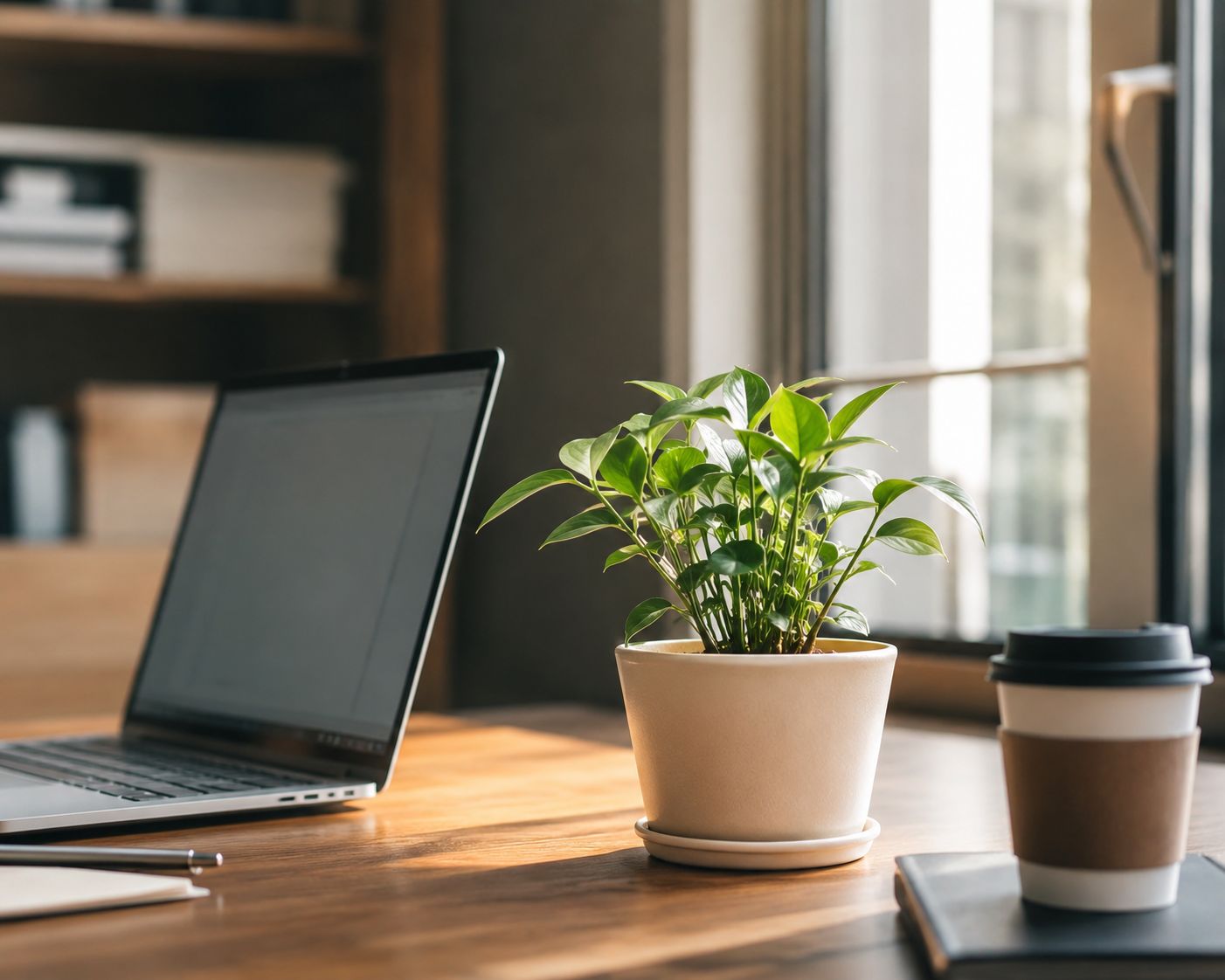
That may be why even a small amount of green in view changes things measurably. One study found that adding a single small potted plant to a work desk was enough to lower state anxiety scores in male participants during the workday. It's not a large intervention. It's a plant, sitting quietly on a desk, doing something to a nervous system that an empty desk apparently doesn't.
What Actually Seems to Help
Based on what's actually been measured — not assumed — a few things stand out:
- Natural light matters more than posture. Repeated research ties daylight exposure specifically to better mood and lower stress, independent of how much movement someone gets.
- A view of anything green helps, even a modest one. You don't need a forest outside your window. A tree, some grass, or a garden bed appears to be enough to give your attention a break it isn't getting from a screen.
- A single plant on a desk is not decoration — it may be doing real work. The nervous system seems to respond to the presence of something living nearby, not to how large or elaborate it is.
- Sitting less is still worth doing — for your joints, your circulation, your long-term health — but the evidence doesn't support blaming a stress hormone spike on your chair. That blame belongs somewhere else.
The Fix Was Never the Standing Desk
The wellness industry sold a lot of people a standing desk as the answer to a problem the science doesn't actually describe. The more interesting, better-supported answer is quieter and cheaper: your body seems to be asking for daylight, a view of something alive, and a small patch of green nearby — not a different way to hold your spine.
If your desk doesn't have a window, it can still have a plant. That's a small, deliberate way of giving your nervous system back a piece of what an office takes away by default. If you're looking for a place to start — a low-effort plant, an herb pot on a windowsill, something small enough for a desk but alive enough to matter — that's exactly the kind of growing Seedora is built to help with. Sign up on our site if you'd like more of this kind of research-backed growing content, and if this changed how you think about your own workday, send it to a coworker who's still convinced it's all about the chair.
By Seedora Store — Grow Guide Series.