Maximalist Garden Design: The Complete Guide to Bold, Lush, Unapologetic Outdoor Spaces
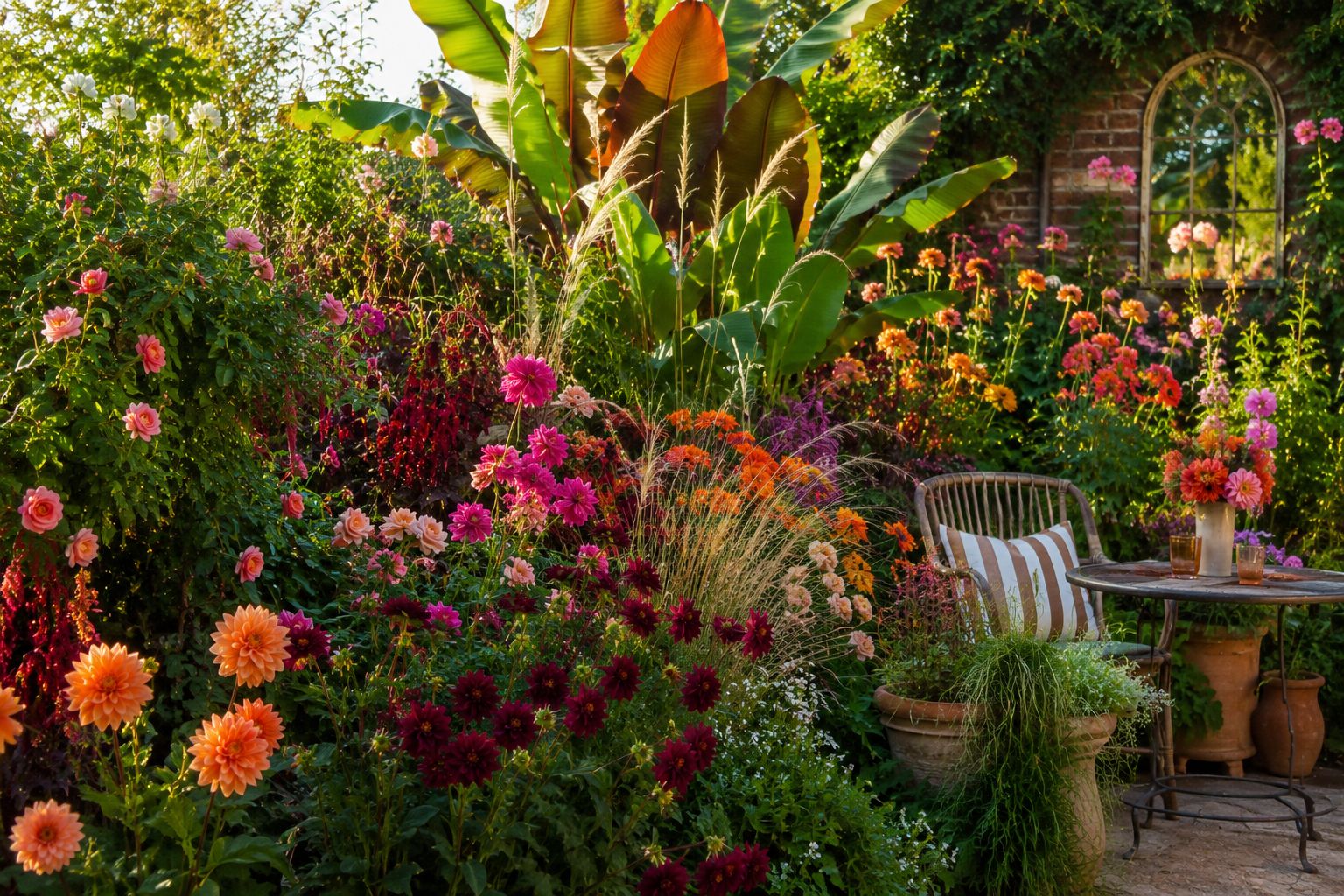
There is a moment — and if you have ever walked into the right garden, you will know exactly the one — where something shifts. You step through a gate or round a corner and suddenly you are standing inside what feels less like a garden and more like a painting that forgot to stop. Dahlias jostling up against banana leaves. Roses tumbling into ornamental grasses. Terracotta pots stacked three-deep against a painted wall. Climbing vines covering every surface that will hold still long enough to be covered.
That feeling — that particular combination of abundance and intention — is what maximalist garden design is built around.
And it is considerably harder to pull off than it looks. Which is exactly why most people who try it end up with something that feels more exhausting than exciting, more car boot sale than Capability Brown.
This guide will show you how to do it properly. How to design a garden that reads as intentional and alive — not as someone who just kept buying plants without a plan. Even if, honestly, that is sometimes exactly how it starts.
What Is Maximalist Garden Design?
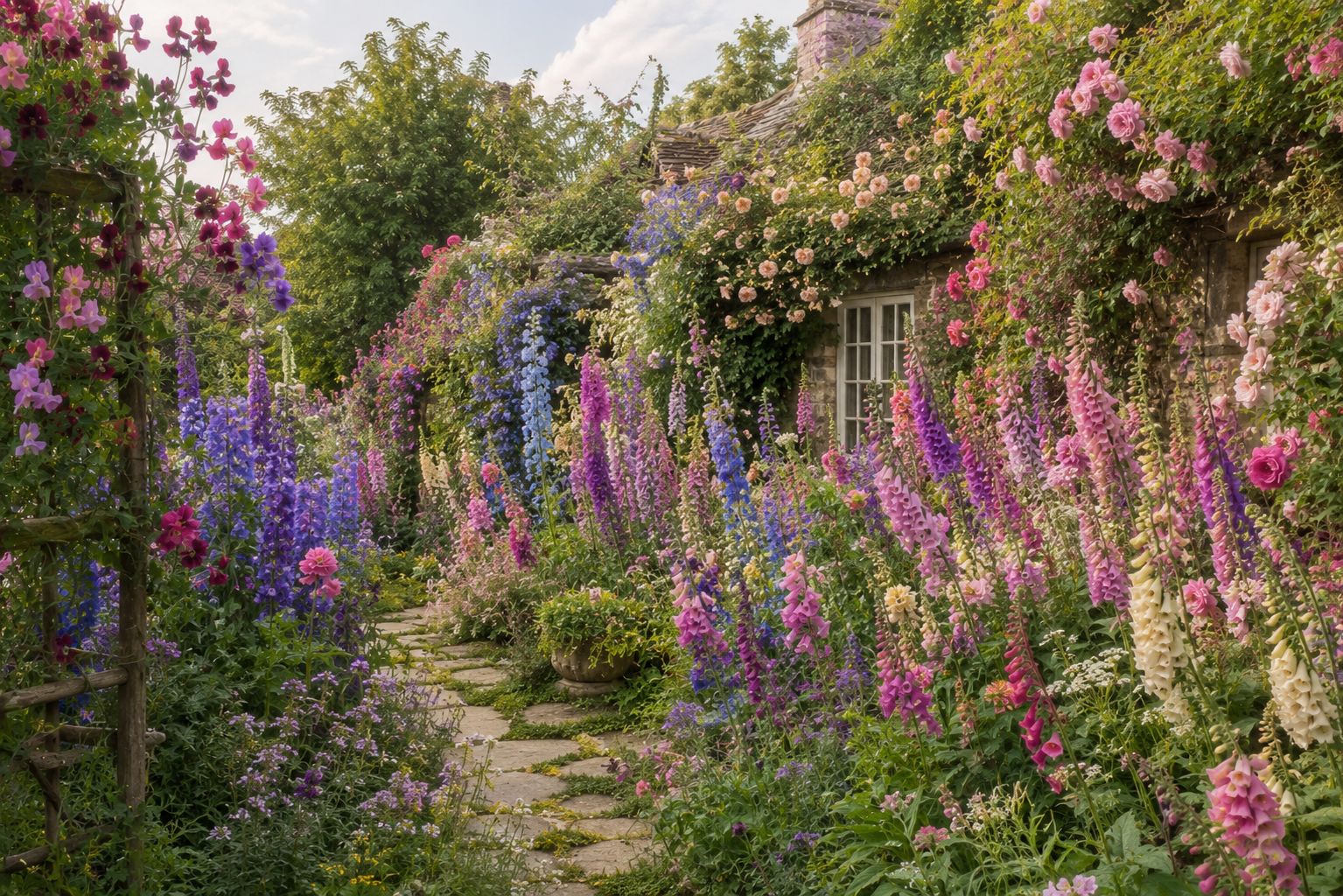
Let us clear something up before we go any further. Maximalism in garden design does not just mean a lot of plants. If it did, every untended verge and abandoned lot would qualify as a masterpiece. Maximalism is a design philosophy — not an accident.
At its core, maximalist garden design is the deliberate pursuit of abundance, layering, and sensory richness. Where minimalist gardens ask you to notice the single perfect stone in a raked gravel bed, a maximalist garden asks you to get lost in the whole space — and keep discovering new things every time you come back.
The movement has deep roots. The lush, overflowing cottage gardens of the English countryside. The riot of colour in traditional Indian and Pakistani courtyards. The humid, dripping abundance of tropical Indonesian gardens. The piled terracotta and bougainvillea of Moroccan riads. Historically, restrained gardens were often a luxury of those with enough space to leave parts of it empty. Everyone else grew things wherever things could possibly be grown — and it was beautiful.
🌿 Seedora Note: Maximalism is not the opposite of taste. It is taste applied at full volume. The best maximalist gardens have just as much structure as any formal garden — you just cannot see the skeleton because it is so beautifully clothed.
Why More People Are Choosing Maximalism Right Now
Something interesting has been happening in garden design over the last several years. The clean lines and restrained minimalism that dominated the 2010s have not disappeared — but they have been joined by something louder, greener, and considerably more interesting.
Part of it is the indoor plant movement. Millions of people who had never thought much about gardening found themselves raising houseplants and discovered, somewhat to their own surprise, that they were genuinely good at it. They started wanting more. More plants. More variety. More of that particular satisfaction that comes from tending something alive.
Part of it is a cultural reaction. After years of aspirational minimalism — the beige interiors, the capsule wardrobes, the neutral everything — people are genuinely hungry for colour. For mess and beauty and the particular wildness of a garden that has gone joyfully overboard.
And part of it, if we are being honest, is social media. A beautifully planted maximalist border stops thumbs. A tidy lawn does not.
| Why maximalism is growing | What it means for your garden |
|---|---|
| Indoor plant obsession crossing outdoors | People want more species, more variety, more density |
| Reaction to minimalist overload | Bold colour, texture and abundance feel genuinely exciting |
| Climate awareness | Dense planting supports wildlife, reduces water loss, cools the soil |
| Social media visual appeal | Lush, layered gardens photograph extraordinarily well |
| Mental health benefits | Studies consistently show dense greenery reduces stress and anxiety |
The 5 Core Principles That Make It Work
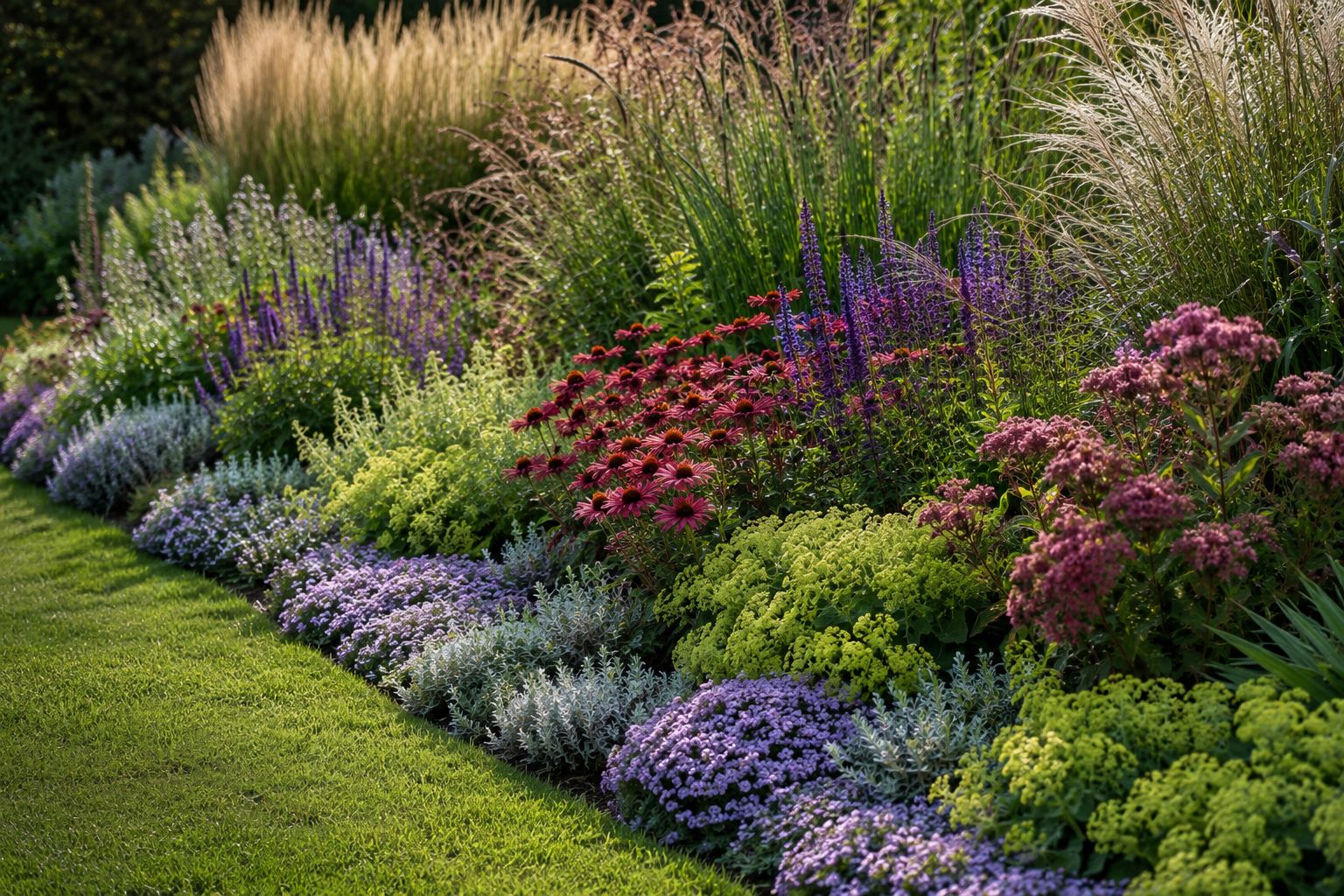
Here is the thing that most beginners miss about maximalist gardens: the ones that genuinely work have just as much underlying structure as any formal design. You just cannot see the skeleton because the planting is so beautifully, gloriously layered on top of it. Here is what that skeleton looks like.
Principle 01 — The Rule of Dominant Colour
Even in the most colour-saturated maximalist planting, there is almost always one dominant colour family — and everything else either harmonises or provides a deliberate contrast. Think of it like music. You need a bass line before you start adding instruments on top.
Pick your anchor colour first. Deep jewel burgundy? Electric violet? Acid chartreuse? Warm burnt orange? Then build everything else as a response to that decision. Without this anchor, you get visual noise. With it, you get controlled, intentional extravagance.
This does not mean every plant must be the same colour. It means the colours have a relationship with each other — they are part of a conversation rather than a crowd of strangers shouting simultaneously.
Principle 02 — Three Layers, Always
Every successful maximalist planting has three distinct levels working simultaneously:
- The canopy layer — tall trees, large structural shrubs, climbing plants on overhead structures
- The mid layer — medium-height perennials, ornamental grasses, bold-leaved statement plants
- The ground layer — low creeping plants, spreading groundcovers, bulbs pushing through
The moment you lose one of these three layers, the planting starts to feel thin and unsatisfying — regardless of how many individual plants you have crammed in. A border packed with medium-height plants and nothing low or high reads flat. The layering is what creates the sense of depth, mystery, and abundance that defines the style.
Principle 03 — Foliage First, Flowers Second
This is where beginners make their single biggest mistake. They fill their borders almost entirely with flowering plants — and wonder why the garden looks flat and one-dimensional for ten months of the year.
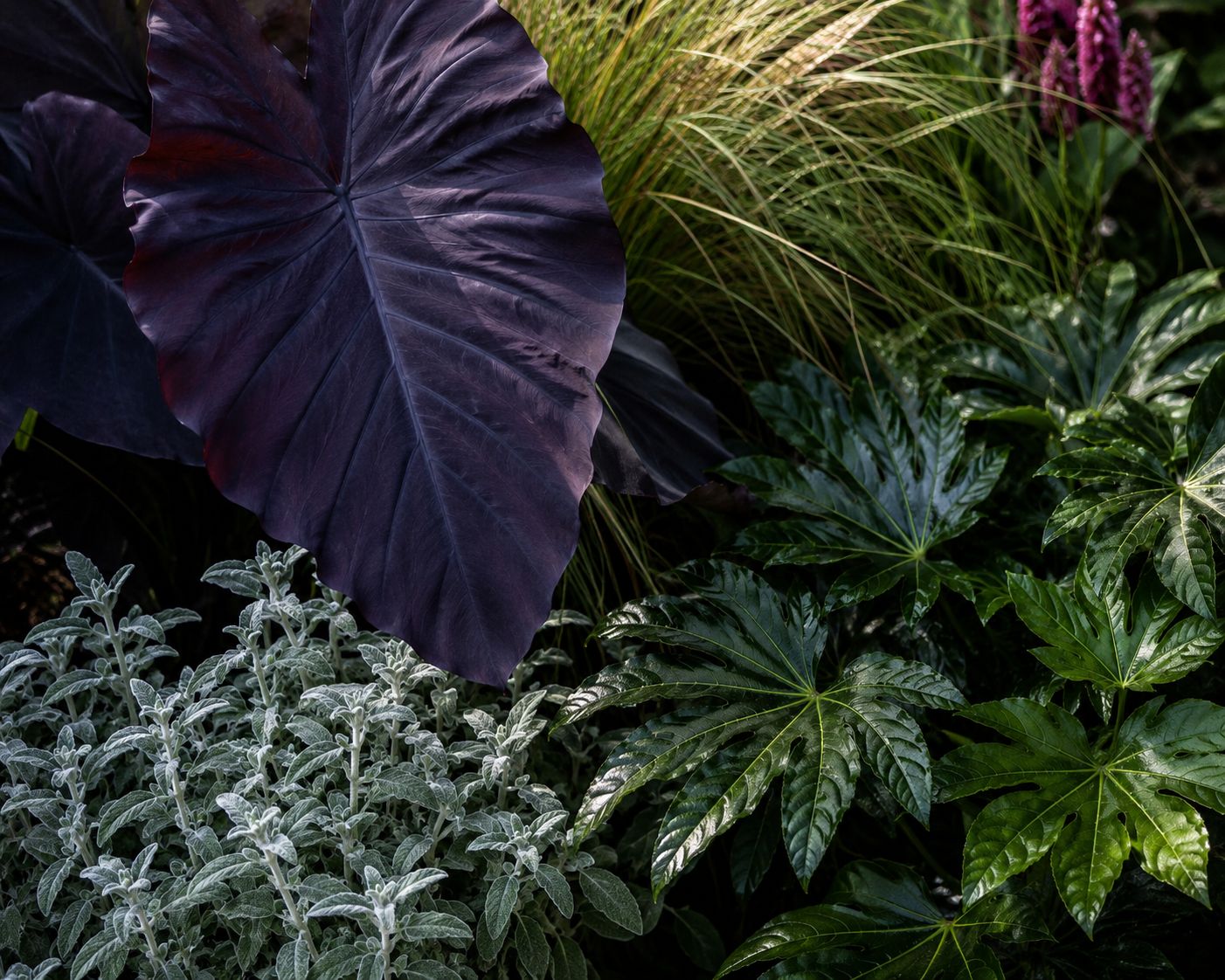
The secret is that the majority of your plant palette should be foliage. Big ribbed leaves next to fine feathery ones. Glossy next to matte. Bold structural shapes next to delicate tracery. Dark burgundy-black next to acid lime green. Flowers are the punctuation. Foliage is the sentence.
🌿 Seedora Rule of Thumb: Aim for at least 50-60% of your planting to be foliage-first plants — chosen for their leaves rather than their blooms. This is what carries the garden through the months when nothing is flowering and makes the whole composition hold together.
Principle 04 — Repetition Creates Rhythm
Maximalism does not mean every plant appears exactly once. In fact, the best maximalist plantings repeat a handful of key plants throughout the entire space. That silver-leaved Stachys byzantina at the front of one border? It appears again near the back of another. That deep burgundy Sambucus threading through the far corner? Its colour echoes in a cluster of dark-leaved Dahlias forty metres away.
Repetition is what transforms a collection of plants into a garden. Without it, however beautiful the individual plants, the eye has nowhere to rest and nothing to follow. With it, the whole space feels composed — like someone made a decision, rather than just accumulating.
Principle 05 — Embrace the Vertical Plane
In a maximalist garden, no vertical surface is neutral. Walls, fences, obelisks, arches, pergolas, old tree stumps — everything is an opportunity. Climbing roses, clematis, sweet peas, wall shrubs, espalier fruit trees, trained wisteria, jasmine tumbling from above.
Neglecting the vertical plane is one of the most common reasons maximalist gardens end up feeling chaotic rather than abundant. When all the density is concentrated at ground level, the eye has nowhere interesting to travel upward — and the whole planting looks cluttered rather than layered. The moment you start working the walls and structures, the space opens up vertically even as it fills horizontally.
Building Your Maximalist Plant Palette
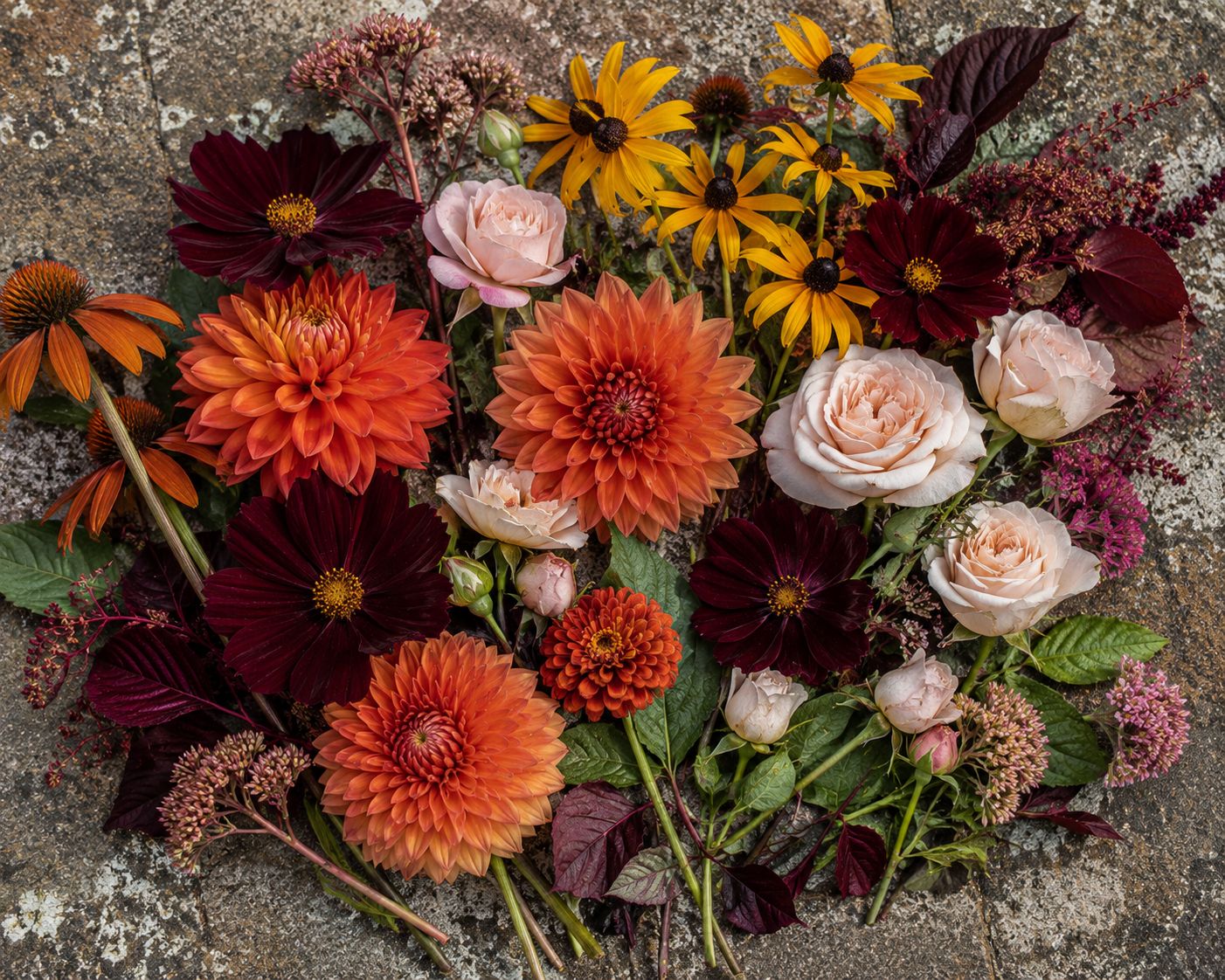
The most common question when designing a maximalist garden is: where on earth do I start? The answer is almost always the same. Start with structure. Not flowers.
Think of your plant palette like a recipe. You need base ingredients — the structural backbone plants that define the space year-round. You need flavouring — the mid-tier performers that bloom in succession through the seasons. And you need garnishes — the fleeting, spectacular things that appear briefly and make you catch your breath.
The Backbone Plants — Keep These Permanent
These are the plants that carry your garden through every month of the year. They should be chosen first, positioned deliberately, and given the space they need.
| Plant | Height | What It Adds | Best Position |
|---|---|---|---|
| Fatsia japonica | 1.5–2.5m | Year-round bold architectural leaves, thrives in shade | Borders, large pots, shaded corners |
| Miscanthus sinensis 'Gracillimus' | 1–2m | Graceful movement, feathery plumes, winter seed heads | Mid-border, open positions |
| Phormium tenax | 1–3m | Structural sword-like form, year-round dramatic presence | Borders, large focal pots |
| Sambucus nigra 'Black Lace' | 2–4m | Deep purple-black ferny foliage, incredible colour contrast | Back of border, focal shrub position |
| Canna indica | 1–2.5m | Enormous tropical paddle leaves + vivid flower spikes | Front-of-border focal point, large pots |
| Stipa tenuissima | 60–90cm | Fine silky texture, golden in sun, softens hard edges | Throughout borders, between bolder plants |
| Helleborus orientalis | 40–60cm | Blooms January–April, evergreen, shade-tolerant | Shaded front of border, under trees |
The Colour Performers — Change These Through the Seasons
These are the plants that provide the waves of colour that maximalist gardens are famous for. Plan them in succession so something is always happening.
| Plant | Season | Colour | Key Notes |
|---|---|---|---|
| Allium 'Purple Sensation' | April–May | Deep violet-purple | Architectural globe heads, pairs beautifully with late tulips |
| Rosa 'Gertrude Jekyll' | June–October | Deep warm pink | Repeat-flowering, intensely scented, classic cottage rose |
| Salvia 'Amistad' | June–November | Deep violet-purple | Long-flowering, bees adore it, reliably hardy in sheltered spots |
| Crocosmia 'Lucifer' | July–August | Fire red-orange | Spreads happily once established, dramatic arching stems |
| Dahlia 'Cafe au Lait' | July–October | Warm blush, cream, peach | Tuber, lift in very cold winters, staggeringly beautiful bloom |
| Helenium 'Moerheim Beauty' | July–September | Burnt orange and red | Easy perennial, pollinators love it, repeat-flowers if deadheaded |
| Cosmos bipinnatus | June–October | Pink, white, deep burgundy | Annual, trivially easy from seed, self-seeds reliably |
| Rudbeckia fulgida | August–October | Warm yellow with dark centre | Bulletproof perennial, late-season colour when much else is fading |
Maximalist Garden Styles — Which One Are You?
Maximalism is not a single look. It is a design philosophy that expresses itself very differently depending on the plants you choose, the climate you garden in, and — truthfully — the kind of person you are. Here are the four main expressions of it.
Style 01 — The Romantic Cottage Garden
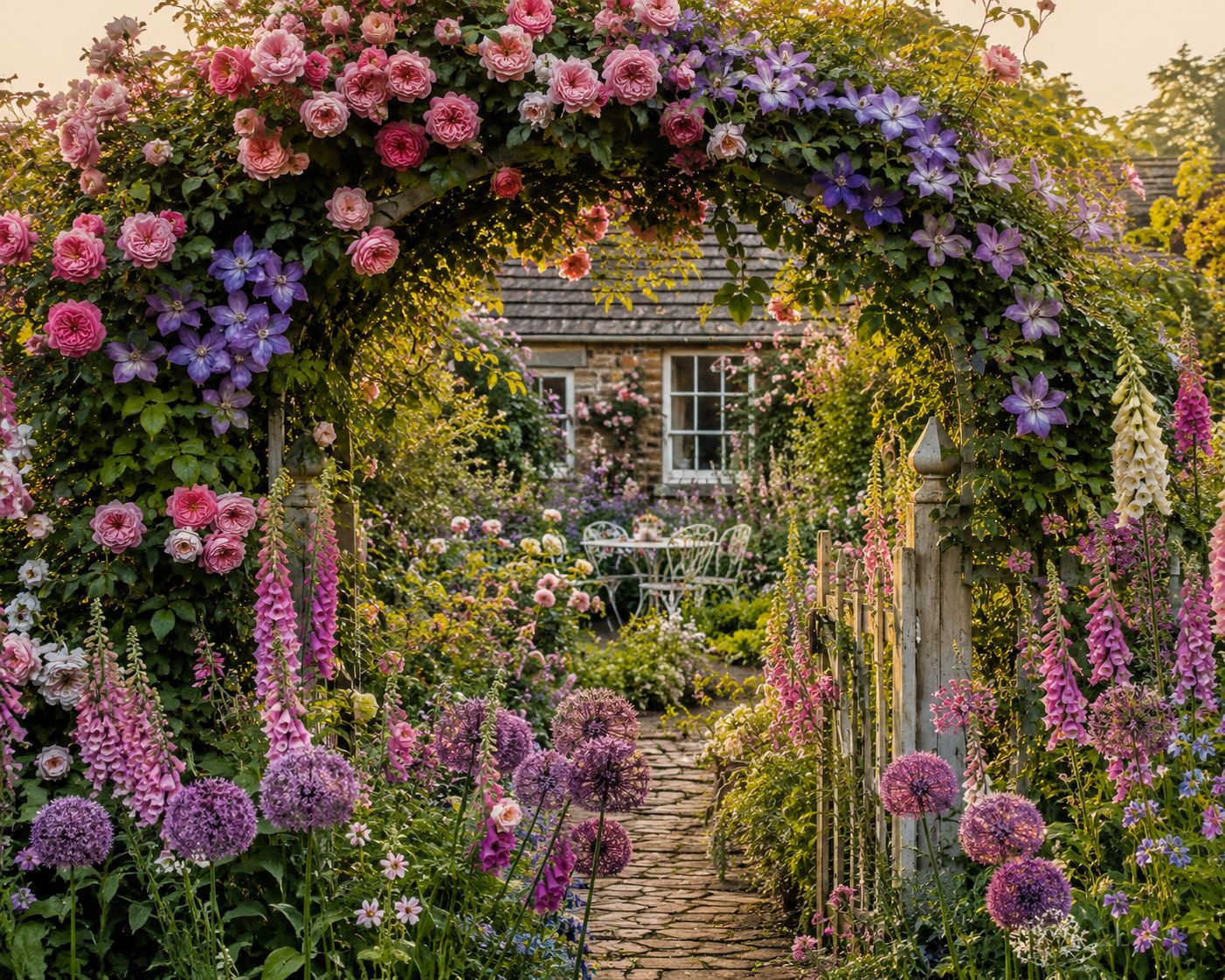
This is the English country garden pushed to its beautiful, slightly overwhelming extreme. Roses over every archway. Delphiniums and foxgloves competing to see who can grow tallest. Sweet peas trained up every available wigwam. Self-seeding not just tolerated but actively encouraged.
The palette is soft and romantic — pinks, purples, soft blues, creamy whites — with the occasional deep burgundy or rich plum for contrast. The effect feels effortless when it works. Getting it to work takes years and a willingness to accept that the garden will always be slightly more out of control than you planned.
🌿 Key Plants for This Style: Rosa, Delphinium, Digitalis, Allium, Geranium, Achillea, Salvia, Eryngium, Stachys, Nigella, Cosmos
Style 02 — The Tropical Maximalist Garden
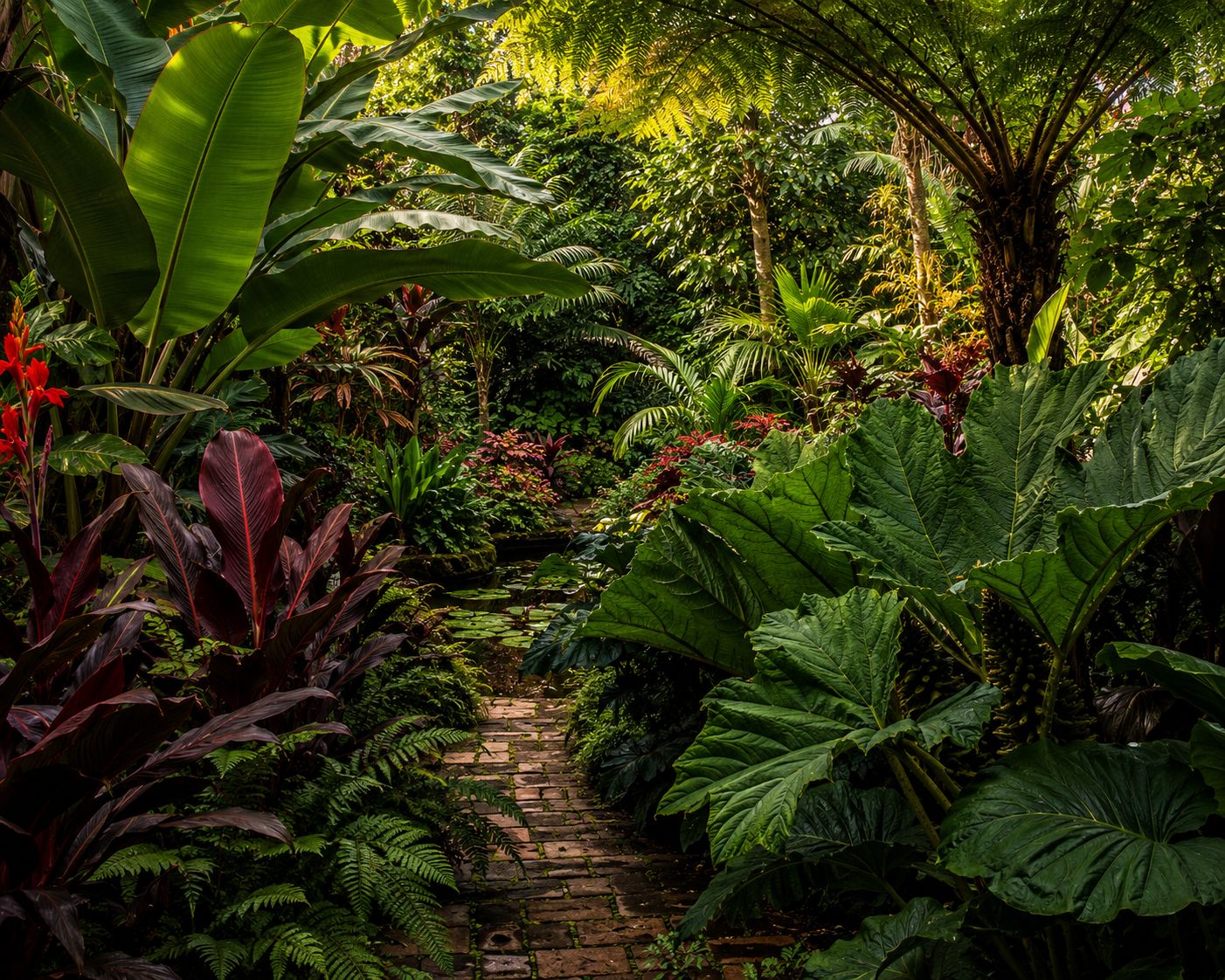
This style is about sheer scale and visual drama. Big leaves. Really big leaves. Banana plants. Cannas. Gunnera if you have the space and the nerve. Tree ferns. Palms. The planting makes you feel like you have stepped somewhere significantly more interesting than your back garden.
The remarkable thing is that it works in climates far colder than you would expect. Many convincingly tropical-looking plants are surprisingly frost-hardy. The colour palette here is deep, saturated, and uncompromising — emerald green, dark burgundy, acid yellow-green, with vivid scarlet and orange flower spikes cutting through the foliage.
🌿 Key Plants for This Style: Musa basjoo (hardy banana), Canna, Gunnera, Melianthus, Fatsia, Tetrapanax, Dicksonia (tree fern), Persicaria, Hedychium
Style 03 — The Plant Collector's Garden
Every plant in this style has a story. The rare Hellebore tracked down after three years of searching. The specimen magnolia that dominates the far corner. The collection of twenty different Salvias arranged by colour family. The Agapanthus that came as a small division from a friend's garden a decade ago.
This style is less about any single aesthetic and more about devoted, obsessive knowledge — the maximalism of someone who genuinely cannot stop learning and acquiring. It looks extraordinary when the underlying plant knowledge is there to support it. It requires the most editing of all the styles, because the temptation to add one more plant is always overwhelming and almost always a mistake.
Style 04 — The Mediterranean / Moroccan Maximalist Garden
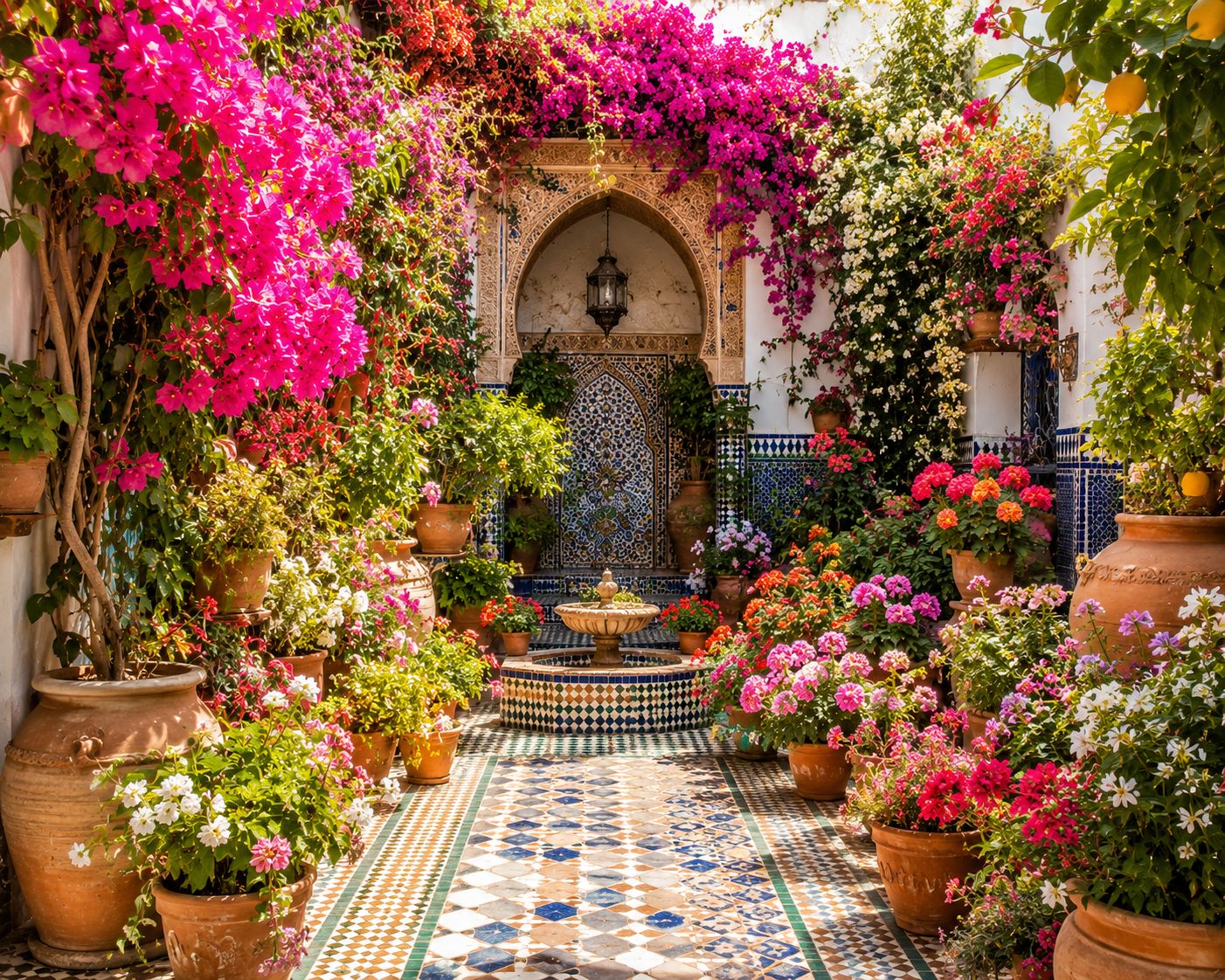
Terracotta everywhere. Pots of every size clustered and stacked in profusion. Bougainvillea in shades from deepest magenta to pure white. Lavender and rosemary and thyme tumbling over every edge. Tiles. Coloured glass. Ornate metalwork. The scent of jasmine at dusk.
A palette of saffron, turquoise, deep terracotta, and sun-bleached white. This style works brilliantly in hotter, drier climates — and in warmer regions like Pakistan, it is arguably the most achievable form of maximalism given the light and heat already available. The plants that define this style perform at their absolute best in exactly the conditions Pakistan provides.
🌿 Key Plants for This Style: Bougainvillea, Plumbago, Jasmine (Jasminum officinale), Pelargonium, Lavandula, Rosmarinus, Agave, Yucca, Nerium oleander, Lantana, Hibiscus
Step-by-Step: How to Design Your Maximalist Garden From Scratch
Designing a maximalist garden from nothing is not as overwhelming as it sounds — if you follow the right sequence. Do this in order.
Step 01 — Observe Your Space Before You Buy a Single Plant
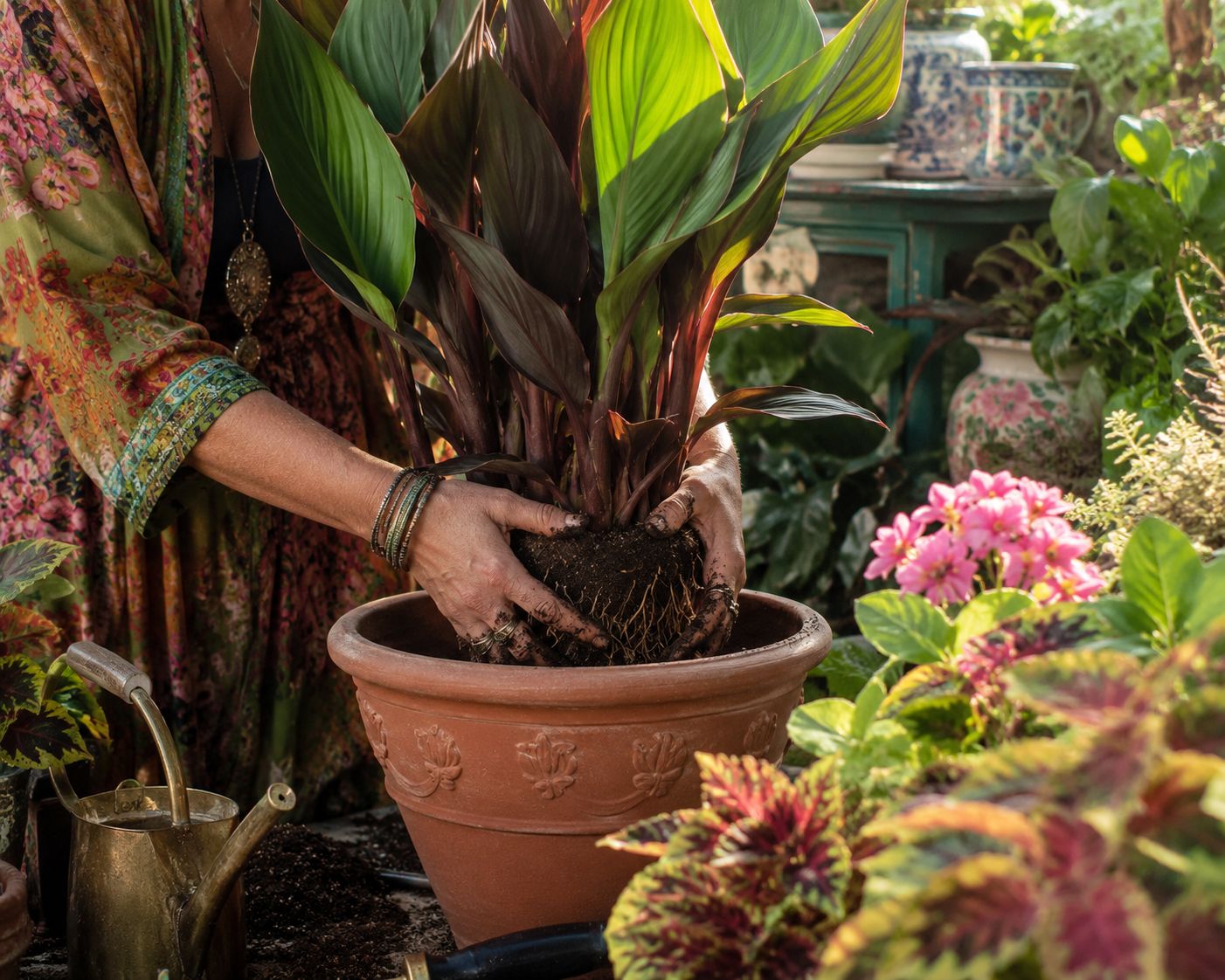
Before you buy anything, spend two weeks simply watching your space. Note where the sun falls in the morning and afternoon. Identify the shadiest spots, the hottest corners, the driest patches and the areas where water tends to pool. Photograph your garden from the spot where you spend the most time looking at it — usually through a window or from a main seating area.
That view is your composition. Every design decision you make should serve that view first.
What to record:
| Observation | Why It Matters |
|---|---|
| Sunlight hours per area | Determines which plants will actually thrive where |
| Prevailing wind direction | Affects which tall plants will need staking or shelter |
| Drainage — where water sits | Prevents planting moisture-haters in boggy spots |
| Existing structures and walls | Your vertical canvas — map what can be planted against |
| Views you want to keep or block | Shapes your planting height decisions |
| Views from inside the house | Your most important sight lines — design for these first |
Step 02 — Choose Your Style and Colour Anchor
Before you touch a plant list, make two decisions:
- Which of the four styles (cottage, tropical, collector, Mediterranean) resonates with you?
- What is your dominant colour family?
Write both of these down somewhere you will see them while shopping. They are your filter. Every plant that does not fit both criteria gets put back.
🌿 Seedora Tip: The most common mistake at this stage is choosing two or more incompatible styles and trying to merge them. A cottage garden border and a tropical border can coexist in the same garden — but they need to be separated by a clear transition, not blurred together.
Step 03 — Install Your Vertical Structure First
Before you plant a single thing in the ground, install every trellis, wire system, arch, obelisk and pergola your design calls for. This is the step most people skip — and it is why their borders end up looking flat.
Vertical structure goes in first because:
- Posts and supports need to be hammered into the ground before borders are planted
- Climbers take the longest to establish and need to start soonest
- Knowing your vertical frame in place helps you position everything else correctly
Step 04 — Plant Your Backbone Plants
Now plant your structural backbone plants — the Fatsia, the Miscanthus, the Phormium, the climbing rose. These are the anchors. Everything else will be positioned relative to them.
Backbone planting rules:
| Rule | Why |
|---|---|
| Plant backbone plants at final spacing, not close together | They will grow — resist the urge to crowd |
| Position tallest plants first, work forward | Ensures nothing gets buried behind a larger neighbour |
| Repeat at least 2–3 backbone plants across the space | Creates rhythm and the visual sense of a designed space |
| Water deeply after planting and mulch immediately | Establishes root system faster, suppresses weeds from day one |
Step 05 — Fill With Your Colour Performers
Once the backbone is in place, fill the gaps with your seasonal colour plants — the dahlias, salvias, cosmos, heleniums. Plant in drifts of three to five, not singles. Odd numbers always look more natural than even ones.
Allow for growth and spread. A border that looks slightly sparse in year one will be exactly right by year two and will need editing by year three. This is not a failure of planning — it is how good planting design works.
Step 06 — Fill the Ground Layer and Edges
Finally, fill the ground layer with low-spreading plants that cover bare soil, soften hard edges and prevent weeds. Geranium 'Rozanne', Stipa tenuissima, creeping Thyme, Alchemilla mollis, low Sedums.
The ground layer is the detail work. It is also what takes the planting from looking like a collection of plants to looking like a designed composition. Do not skip it.
Quick Maximalist Design Cheat Sheet
| Decision | What To Do |
|---|---|
| Colour palette | One dominant family + one contrast — stick to it |
| Border depth | Minimum 1.5m — preferably 2m or more |
| Layer ratio | Canopy 15% / Mid 50% / Ground 35% |
| Foliage vs. flowers | At least 50–60% foliage-first plants |
| Repetition | Repeat key plants minimum 3 times across the space |
| Verticals | At least two vertical features per garden area |
| Plant groupings | Groups of 3, 5 or 7 — never even numbers for naturalistic effect |
| Editing | Remove anything that does not serve the colour anchor or style |
The 6 Mistakes That Make Maximalism Look Messy
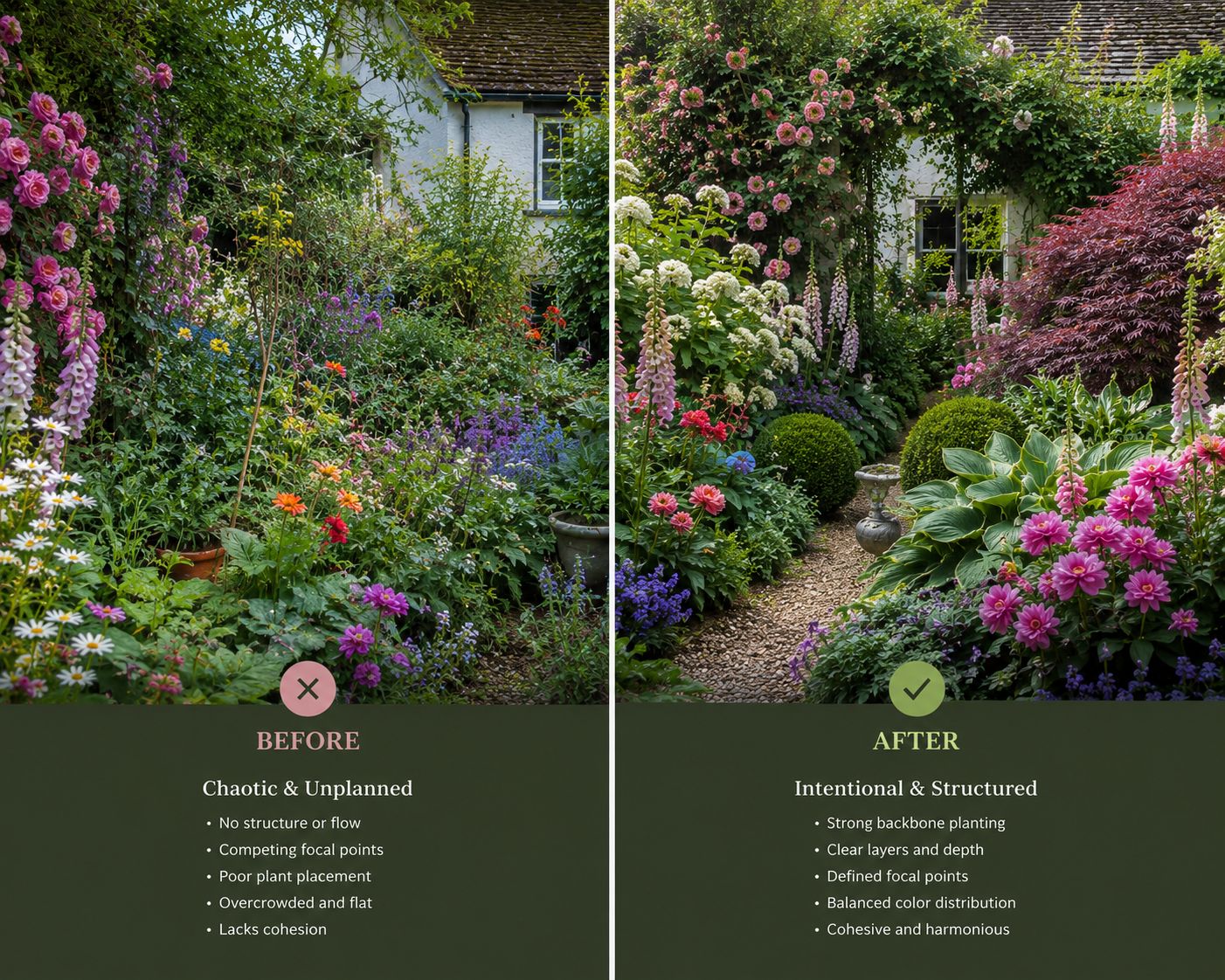
There is a version of maximalism that genuinely works and a version that just looks like nobody has weeded in three years. The difference between them is almost always one of these six things.
Mistake 01 — No Colour Anchor
One plant in every colour of the rainbow sounds maximalist. It looks like a closing-down sale at a garden centre. Choosing a dominant colour family and editing everything else to harmonise or deliberately contrast is what separates a designed maximalist border from an accidental one. This is the single most important decision you will make.
Mistake 02 — Borders Too Narrow
You cannot layer properly in a border that is 50cm deep. Maximalist planting requires depth — 1.5m at absolute minimum, preferably 2m or more. If your current borders are narrow, extend them. Sacrifice some lawn. A lawn is the most visually inert surface in any garden and maximalism has no use for it.
Mistake 03 — All Flowers, No Foliage Structure
A garden that relies entirely on flowering plants looks wonderful for three weeks and disappointing for the other forty-nine. At least half of your planting should be foliage-first — plants chosen primarily for the leaves they carry rather than the flowers they produce. This is the most important and most frequently ignored rule in the whole style.
Mistake 04 — No Clear Path or Navigation
Even in the most gloriously overgrown maximalist garden, people need to feel they can move through the space without anxiety — without feeling they might damage something by stepping the wrong way. A winding path, even informally laid stepping stones, gives structure and signals intention. Without it, visitors feel trapped rather than enveloped.
Mistake 05 — Ignoring Winter
Every maximalist planting has a difficult month or two — usually January or February — that tests whether the design has enough year-round substance. The answer is to build in enough plants with genuine winter interest: evergreen foliage, interesting bark, sculptural seed heads left standing, early bulbs, winter-flowering shrubs like Hamamelis or Sarcococca. A garden that is effectively empty for four months a year is not maximalist — it is a summer display with a disappointing off-season.
Mistake 06 — Collecting Without Editing
This is the subtlest mistake and the hardest one to admit. Maximalism is not about owning every plant that ever caught your eye. It is about making bold, confident choices and then executing them with real commitment. Every plant that does not serve the composition — however beautiful it is on its own — should find another home or be composted without guilt. Adding more is easy. Editing is where the real skill lives.
The Maximalist Plant Shopping List — What To Buy First
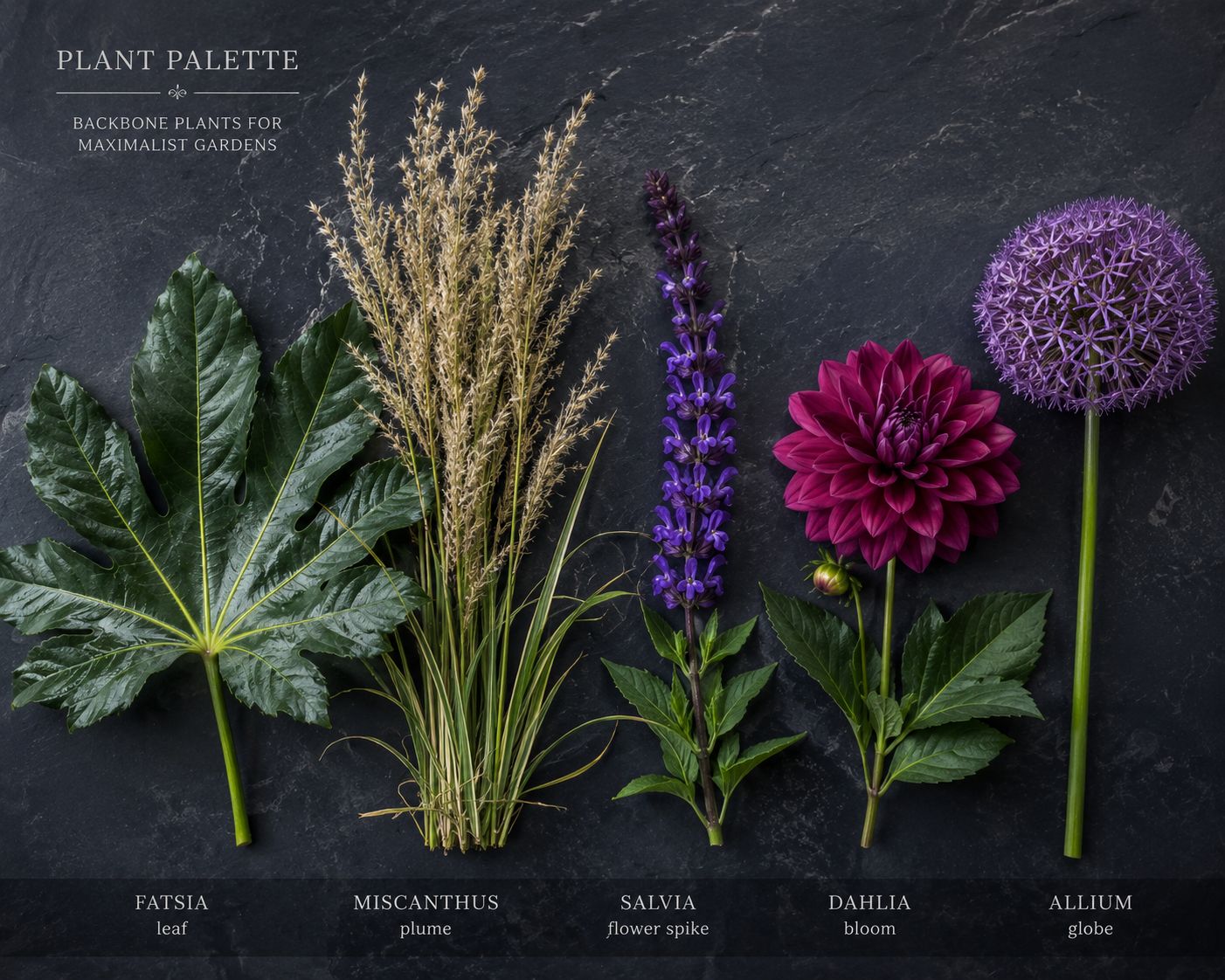
If you are starting from scratch or converting an existing garden, this is a practical first-year shopping list. It gives you structure, year-round foliage interest, succession colour, and texture variety without overwhelming your budget or your borders.
| Plant | Role | Quantity per 10m² border | Buy as |
|---|---|---|---|
| Fatsia japonica | Backbone structure | 1–2 | 2–3 litre pot |
| Miscanthus sinensis | Structural grass | 3–5 | 1–2 litre pot |
| Rosa (climbing variety) | Vertical romance | 1 per wall section | Bare root or 3L pot |
| Canna indica | Tropical drama | 3–5 | Rhizome or 2L pot |
| Sambucus 'Black Lace' | Dark foliage anchor | 1 | 3–5 litre pot |
| Dahlia (dark-foliaged mix) | Summer colour | 5–7 | Tubers |
| Salvia 'Amistad' | Long-season colour | 5–7 | 9cm or 1L pot |
| Geranium 'Rozanne' | Ground layer filler | 5–9 | 9cm pot |
| Verbena bonariensis | See-through filler | 5–7 | 9cm pot or seed |
| Allium 'Purple Sensation' | Spring punctuation | 20–30 bulbs | Dry bulbs in autumn |
| Stipa tenuissima | Ground texture | 5–9 | 9cm or 1L pot |
| Helleborus orientalis | Winter interest | 3–5 | 1–2 litre pot |
🌿 Seedora Budget Tip: Buy backbone plants at full size once — they will be there for years and the investment is worth it. Buy colour performers small — salvias, geraniums, cosmos, verbena grow fast and the smaller plants are just as good as large ones within a single season. Grow annuals from seed entirely — cosmos, nigella and verbena from a single seed packet give you dozens of plants for almost nothing.
Maximalist Gardening Calendar — Pakistan & Warmer Climates
| Month | What To Do |
|---|---|
| January | Plan your design, finalise your colour anchor, order seeds and bare-root plants from Seedora |
| February | Sow tender annuals (cosmos, zinnia) indoors. Order dahlia tubers and summer bulbs |
| March | Plant bare-root roses and climbing plants. Install trellis and vertical structures |
| April | Plant backbone shrubs and grasses outdoors. Direct-sow hardy annuals into borders |
| May | Plant Dahlias, Cannas and summer bulbs once nights are reliably warm. Begin feeding with balanced fertiliser |
| June | Borders filling out — first flush of roses. Stake tall plants before they lean. Begin deadheading to prolong flowering |
| July | Peak abundance — enjoy, photograph, cut for vases. Dahlias hitting their stride |
| August | Lush high summer. Continue deadheading. Water consistently during dry spells |
| September | Late season colour — Rudbeckia, Helenium, late Dahlias. Begin collecting seed from annuals |
| October | Lift Dahlia tubers after first frost. Plant spring bulbs — Alliums, Tulips, Narcissus |
| November | Cut back spent perennials but leave seed heads. Mulch borders deeply with compost |
| December | Rest and plan. Review what worked, what needs editing, what to add next year |
Troubleshooting Common Maximalist Garden Problems
| Problem | Most Likely Cause | Fix |
|---|---|---|
| Garden looks chaotic, not lush | No colour anchor or backbone structure | Identify dominant colour family — remove or move plants that fight it |
| Border looks flat and uninteresting | Missing one of the three layers | Add tall structural plants or low ground-layer plants depending on which is absent |
| Garden looks great in June, empty in September | Too many early-summer plants, not enough late season | Add Rudbeckia, Helenium, late Dahlias, Sedums for autumn colour |
| Everything is flowering but nothing looks good together | Plants chosen individually, not as a palette | Edit out conflicting colours — keep only what harmonises or deliberately contrasts |
| Weeds taking over between plants | Ground layer missing — bare soil is always colonised | Plant ground-cover layer densely: Geranium, Stipa, Alchemilla, creeping Thyme |
| Tall plants falling over or leaning | Staking not installed early enough or borders too narrow | Install stakes before plants need them — once leaning, they rarely fully recover |
| Garden looks the same every year | No seasonal succession planning | Layer spring bulbs under summer perennials; add autumn-flowering species deliberately |
| Climbers not covering wall | Wrong climber for the aspect or insufficient support | Match climber to wall aspect — shade-tolerant climbers for north walls, sun-lovers for south |
Frequently Asked Questions
Is a maximalist garden more work to maintain than a simpler one?
Not necessarily — and often less, once it is established. A densely planted border where plants are correctly matched to their conditions requires far less intervention than a formal, sparsely planted garden. Bare soil gets weeds. Dense, established planting crowds them out. The hard work is in the first two seasons. After that, a well-designed maximalist garden largely manages itself — your job shifts from maintenance to editing and refinement.
Can I design a maximalist garden on a small balcony or in a very small space?
Yes — and some of the most striking maximalist spaces I have ever seen were tiny balconies so densely planted you could barely see the walls behind them. Work all three layers — floor level, mid-height, and overhead or vertical — and cluster pots rather than spacing them out. A 6m² balcony planted this way can feel like a private jungle.
How do I stop my maximalist garden looking like a mess?
Three things: anchor your colour palette, repeat your key structural plants throughout the space, and ensure at least half your planting is structural foliage rather than flowers. Visual chaos comes from too many unrelated elements competing for attention equally. Repetition and a strong colour anchor are what separate a designed maximalist garden from one that just accumulated over time.
What is the best budget approach to a maximalist garden?
Grow everything you can from seed — cosmos, verbena, nigella, sweet peas, sunflowers are all trivially easy and produce dozens of plants for almost nothing. Divide plants from friends and fellow gardeners. Buy backbone structural plants at full size and spend your budget there. Buy colour-performing perennials small — they establish just as well. Resist buying everything in one season; a maximalist garden built over three or four years is always better than one installed instantly.
Does maximalist garden design work in Pakistan's climate?
Brilliantly — and in many ways Pakistan is better suited to maximalism than cooler European climates. The Mediterranean-Moroccan style is perfectly adapted to hot dry conditions. Bougainvillea, jasmine, plumbago, hibiscus, canna and lantana all perform at their absolute peak in Pakistani heat and light. The tropical maximalist style is equally achievable, given how well large-leaved plants perform in warmth. The main adjustment is water management — group pots together to reduce evaporation, mulch heavily to retain soil moisture, and irrigate deeply but less frequently rather than lightly every day.
How long does it take for a maximalist garden to look good?
Honestly? One good season for a promising start, two seasons for a genuinely exciting garden, three seasons for something that stops people in the street. This is not as long as it sounds — a well-chosen annual planting of cosmos, sunflowers, dahlias and salvias can make a border look magnificent in its very first summer. The layered, complex abundance that defines truly great maximalist gardens takes a little longer — but the journey there is half the pleasure.