15 Living Room Plant Styling Ideas
There is a reason every interior design photo you stop and save has a plant in it somewhere.
Plants do something to a room that furniture, lighting, and colour alone cannot. They add life — literal, growing, breathing life — to a space. They soften hard edges. They fill corners that nothing else fills properly. They make a room feel inhabited rather than staged.
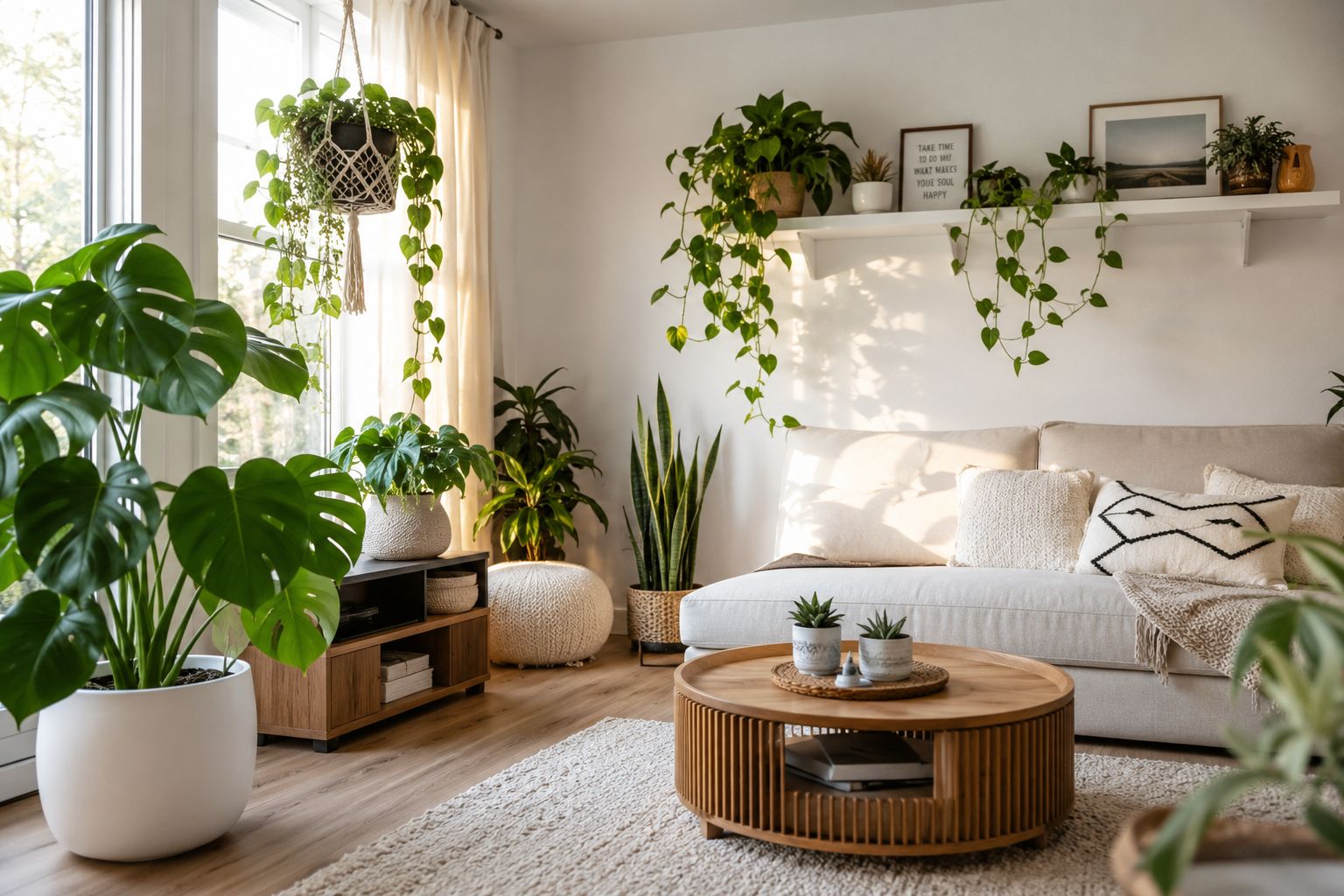
The challenge is knowing where to put them, how many, and which ones work for your specific space. This guide gives you fifteen ideas — from a single statement plant to a full living wall — ordered from the simplest to the most ambitious. At the end, you will find a list of free online 3D room design tools so you can visualise any of these arrangements in your own room before moving anything.
Before You Start: The Three Questions
Every good plant styling decision starts with three things. How much light does the spot actually get. How much space is available. And how much maintenance are you willing to commit to.
A beautiful trailing pothos cascading from a shelf in a dim corner looks stunning in a magazine and slow-dies in reality if that corner gets no light. Getting these basics right first saves money, plants, and frustration.
01 — The Single Statement Corner Plant
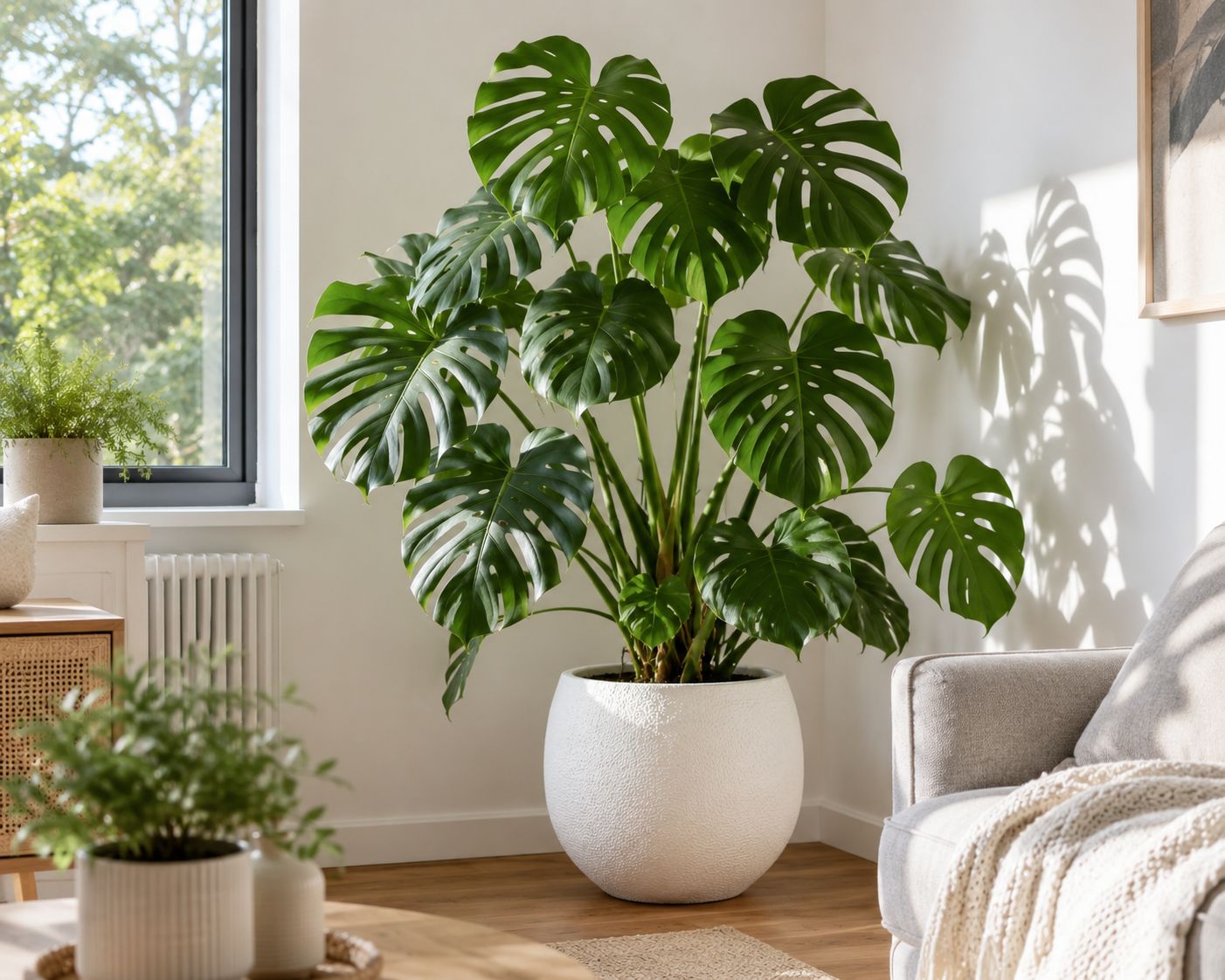
The simplest and most impactful thing you can do to a living room is put one large plant in the right corner.
One large Monstera, fiddle leaf fig, or areca palm in a beautiful pot immediately anchors the room and gives the eye somewhere to go. It works because large plants fill the dead space that every living room has — corners above sofa height, the space beside a bookshelf, the wall beside a window.
How to do it: Choose a pot that is proportional to the plant — too small looks precarious, too large looks awkward. A textured ceramic or terracotta pot in a neutral colour — white, cream, sand, terracotta — works with almost any interior palette. Position the plant so it is visible from the main seating position in the room.
Best plants for this: Monstera deliciosa, fiddle leaf fig, areca palm, bird of paradise, rubber plant.
Light needed: Bright indirect — position within 2 to 3 metres of a window.
02 — The Trailing Shelf Plant
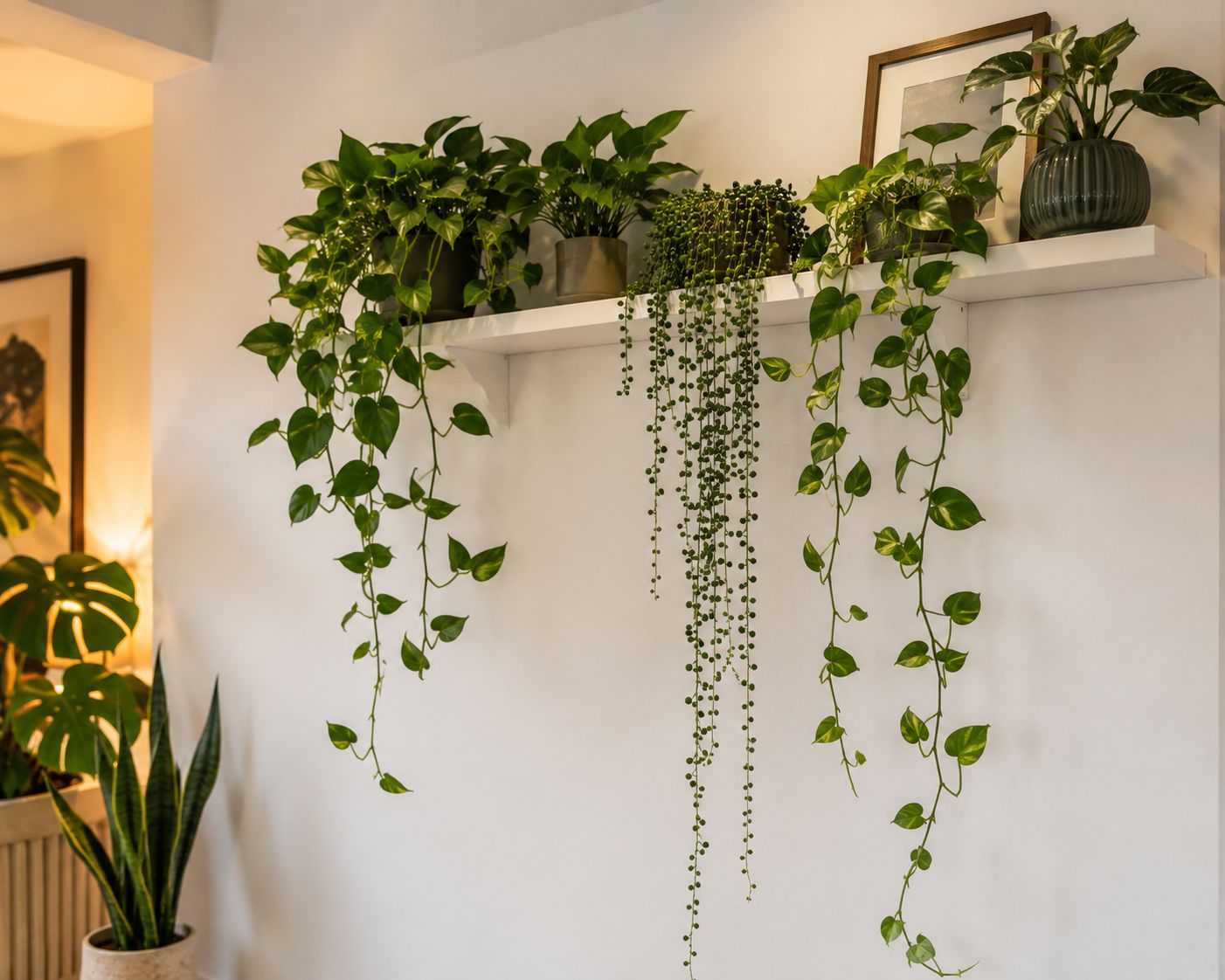
A high shelf with a trailing plant is one of the most elegant things you can do with a small amount of floor space. The plant grows upward and then trails downward, filling vertical space and adding movement to a wall that would otherwise be blank.
Pothos, string of pearls, string of hearts, and heartleaf philodendron all work exceptionally well because they grow fast and trail long, reaching impressive lengths within a single growing season.
How to do it: Fix a shelf at 180 to 200 cm height — above eye level when standing. A single trailing plant on each end of the shelf creates symmetry. A single trailing plant on one end creates an asymmetric effect that suits modern and eclectic interiors well.
Best plants for this: Pothos, heartleaf philodendron, string of pearls, string of hearts, tradescantia.
Light needed: Low to bright indirect — most trailing plants are adaptable.
03 — The Macrame Hanging Planter
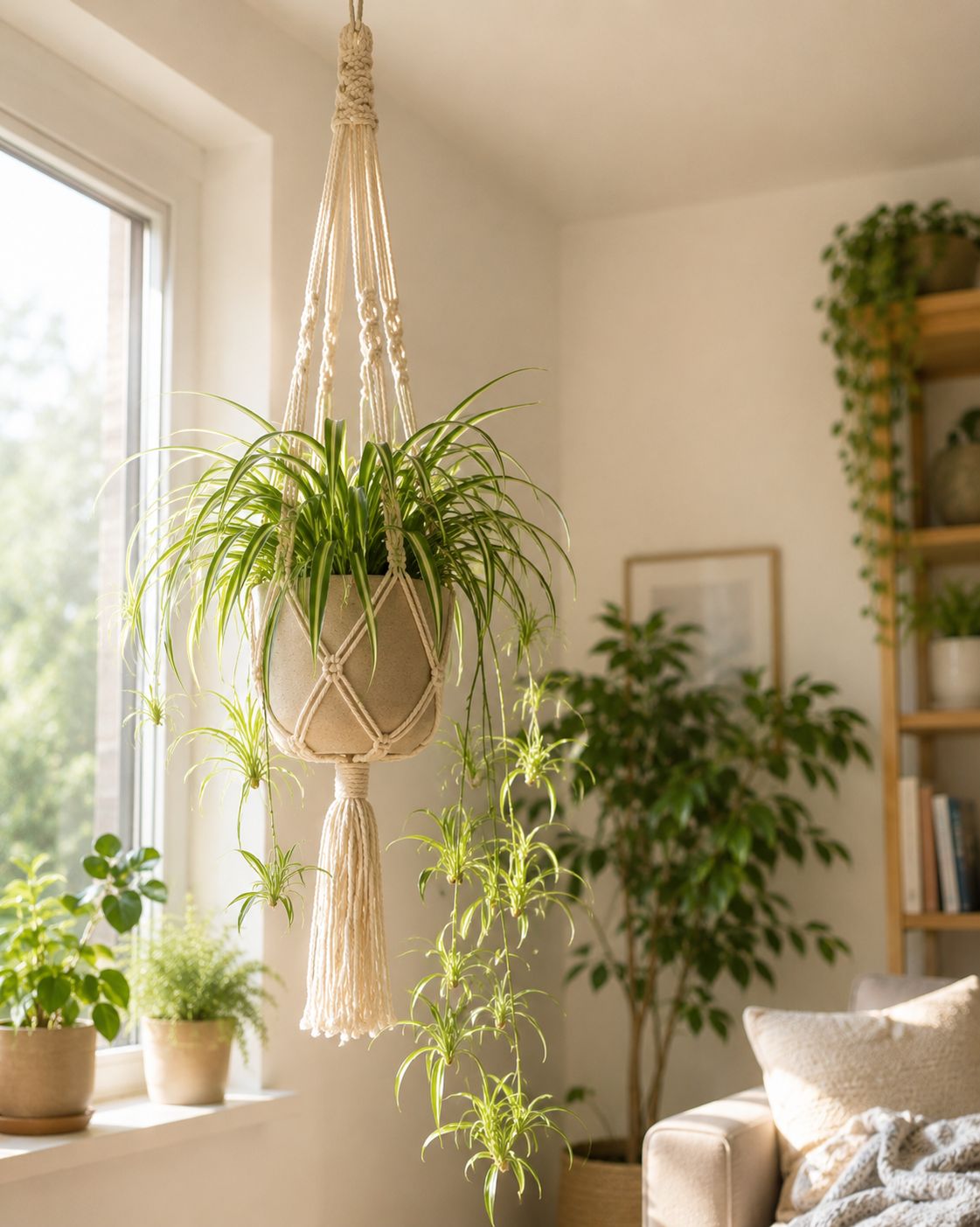
Hanging plants solve a problem that ground-level and shelf plants cannot — they bring greenery into the mid-air space of a room, between ceiling and floor, where nothing else goes. A macrame hanging planter in a corner near a window adds texture, warmth, and botanical life without using any floor space at all.
How to do it: Install a ceiling hook rated for at least 5 kg. Use a macrame or woven planter for warmth, or a minimal concrete or ceramic hanging pot for a cleaner look. Hang at a height where the trailing stems will not interfere with movement — typically 150 to 160 cm from floor to the base of the pot.
Best plants for this: Spider plant, string of pearls, trailing pothos, Boston fern, string of hearts.
Light needed: Position within reach of a window — hanging plants are often closer to ceiling light which helps those near windows.
04 — The Plant Cluster on the Floor
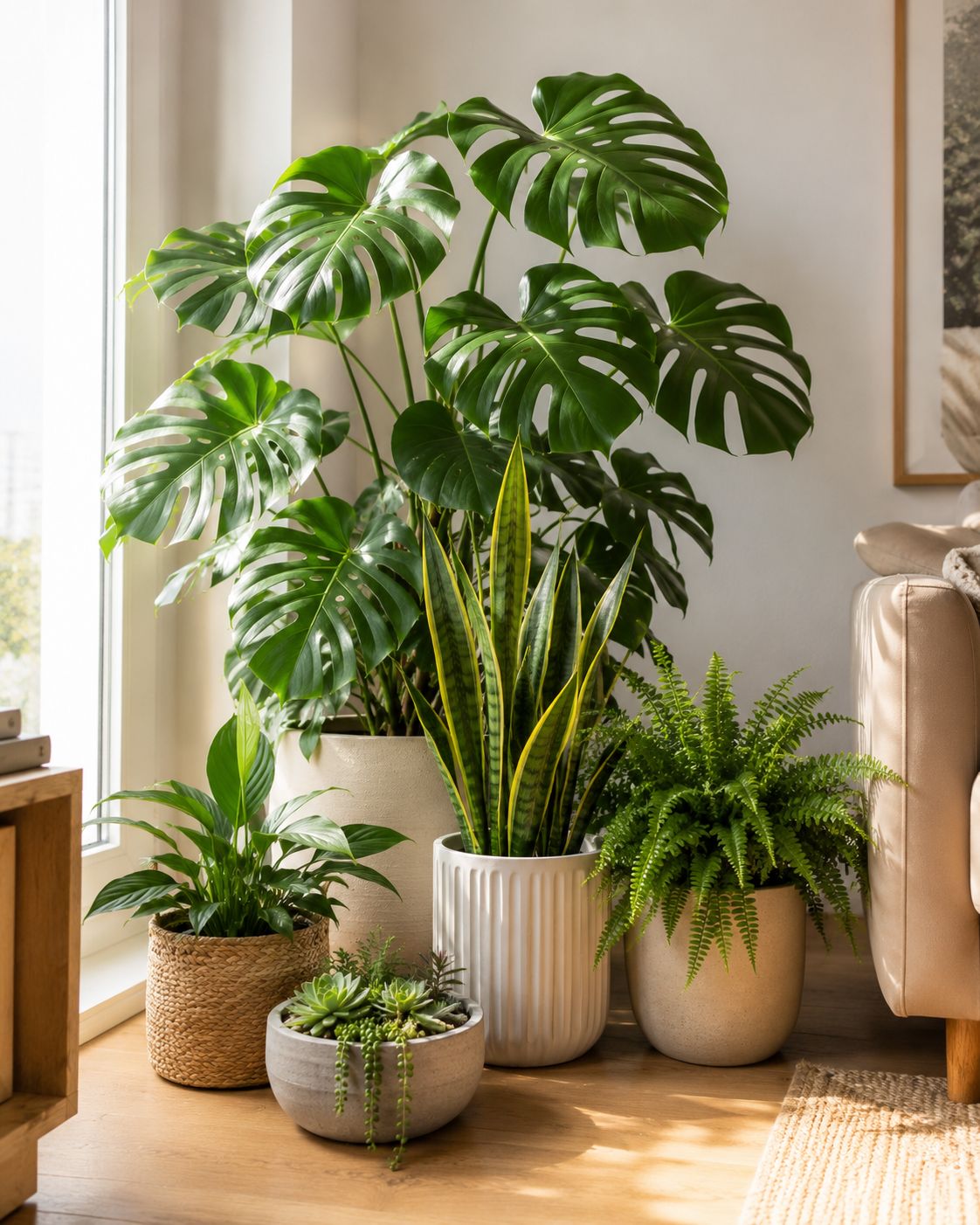
Rather than one large plant, a cluster of three to five plants of different heights grouped together in one area creates an indoor garden moment — lush, layered, and visually rich. The key is varying the heights dramatically so each plant is visible.
How to do it: Use a tall plant — 90 to 120 cm — as the anchor at the back. A medium plant — 45 to 60 cm — in front of it and to one side. Two or three small plants — 20 to 30 cm — at the front and sides. Mix leaf shapes: something large and bold like Monstera beside something delicate and feathery like an asparagus fern beside something upright like a snake plant.
Best plants for this: Mix of snake plant, monstera, ZZ plant, spider plant, and small succulents or ferns in the foreground.
Light needed: Depends on your selection — mix plants with compatible light requirements.
05 — The Window Sill Herb and Plant Bar
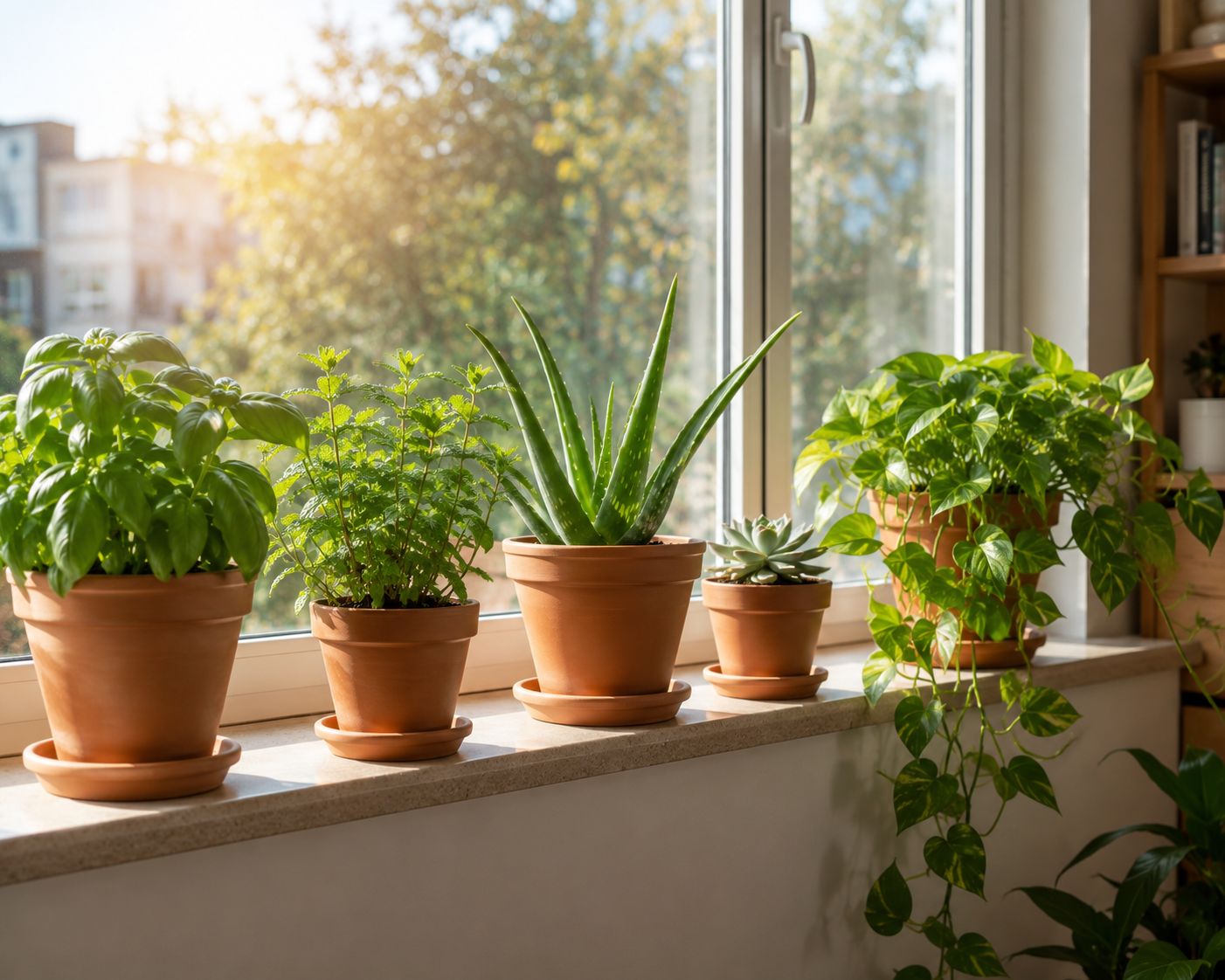
The windowsill is the most underused space in most living rooms. A collection of small plants — herbs, succulents, trailing plants — arranged along a wide windowsill turns dead space into a functional and beautiful feature.
This works particularly well in living rooms where the main window is wide enough to accommodate several pots. Mix edible herbs — basil, mint, thyme — with purely decorative plants for a collection that looks intentional and is genuinely useful.
How to do it: Use consistent pot sizes — all terracotta, or all white ceramic — for a cohesive look. Odd numbers feel more natural than even numbers. Five pots looks better than six. Vary the heights by choosing plants at different growth stages.
Best plants for this: Succulents, small aloe vera, pothos, basil, mint, thyme, small cacti, haworthia.
Light needed: Full sun to bright indirect — windowsill positions get the best light in the room.
06 — The Bookshelf Jungle
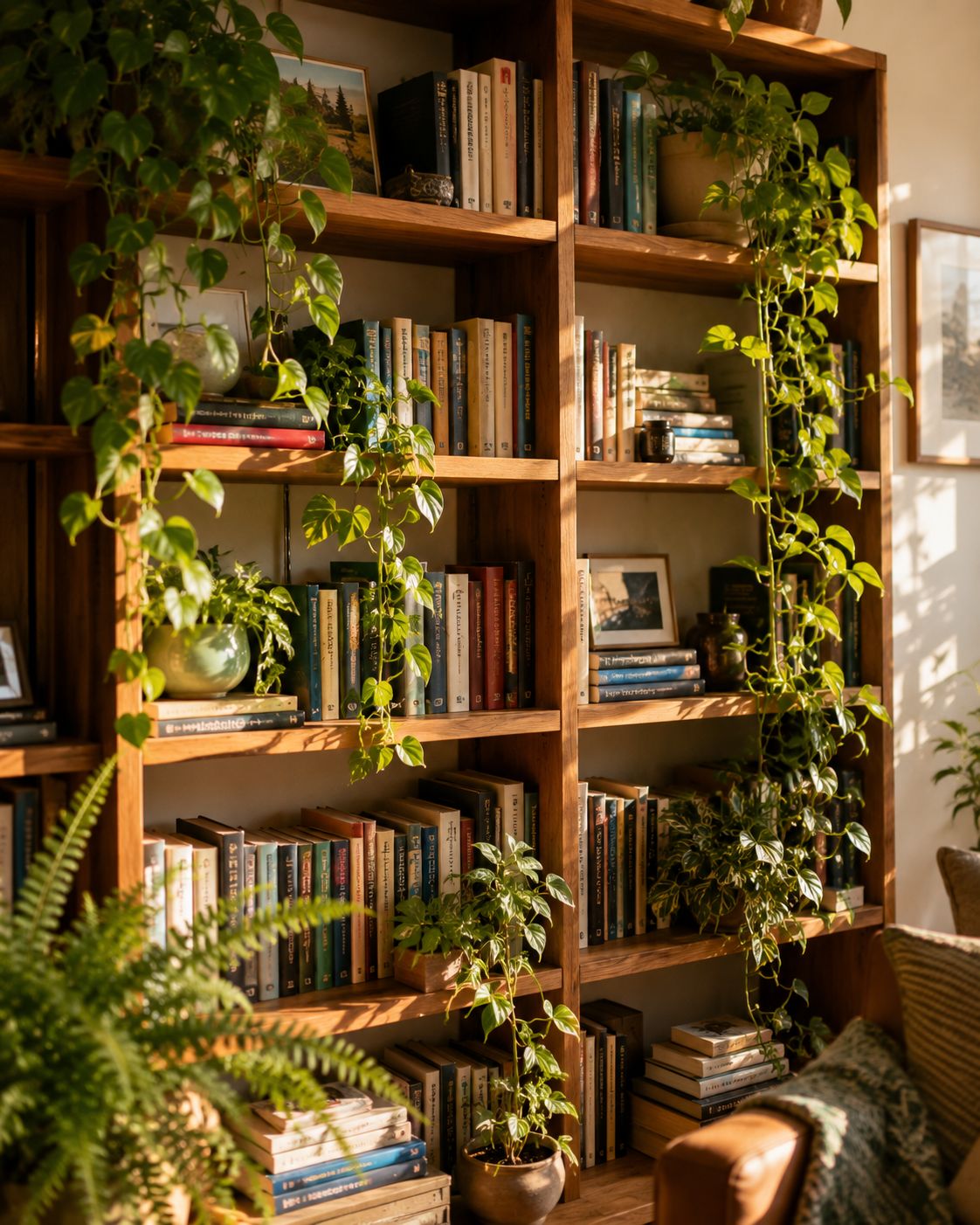
A bookshelf with plants woven between the books is one of the most characterful looks in interior design. The contrast between structured objects — books, frames, objects — and the organic, irregular growth of plants creates visual tension that feels collected and personal rather than designed.
How to do it: Place small trailing plants at the edge of every second shelf so the vines trail downward over the books below. Add upright small plants — haworthia, ZZ plant, small snake plant varieties — on alternate shelves. Leave some books visible. The mixture of book spines, plants, and objects is what makes this work.
Best plants for this: Small pothos, heartleaf philodendron, ZZ plant, haworthia, air plants, small succulents.
Light needed: Low to medium indirect — most books are not near windows so choose shade-tolerant varieties.
07 — The Sofa Side Plant
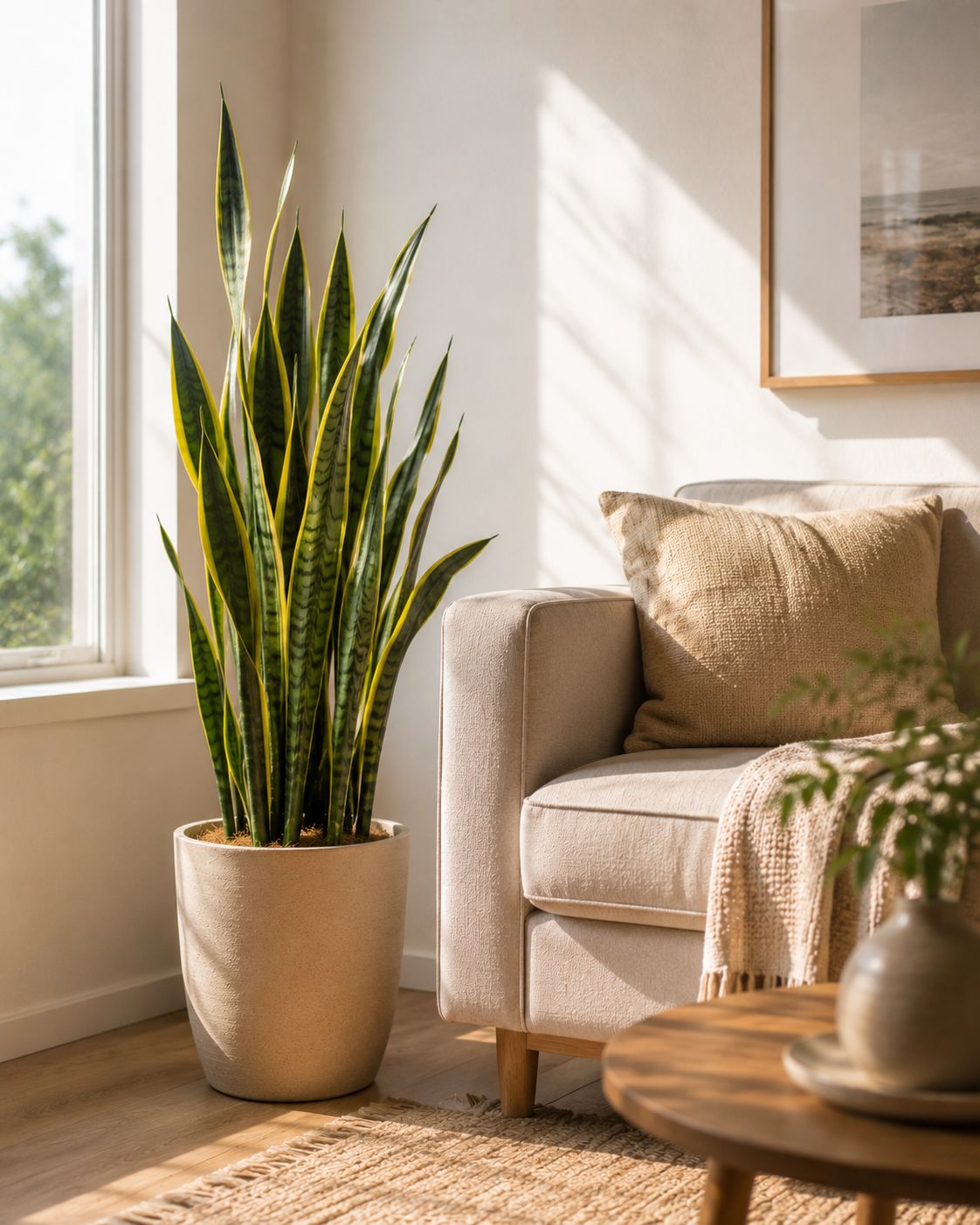
Placing a tall, architectural plant directly beside the sofa — like a bedside table but for the living room — adds intimacy to the seating area. It defines the zone, adds scale beside a low piece of furniture, and makes the sofa feel anchored.
The plant should be taller than the sofa back — roughly 90 to 120 cm to be visible above it — and in a pot that suits the sofa fabric and cushion colours.
How to do it: Choose a single-stemmed or compact plant so it does not overwhelm the seating area. Place it 30 to 40 cm from the sofa arm so movement is not obstructed. A simple floor pot in a material that complements the sofa — leather sofa pairs well with terracotta, linen sofa with textured ceramic — ties the pieces together.
Best plants for this: Snake plant, ZZ plant, rubber plant, small fiddle leaf fig, peace lily.
Light needed: Low to bright indirect depending on plant choice.
08 — The Coffee Table Mini Garden
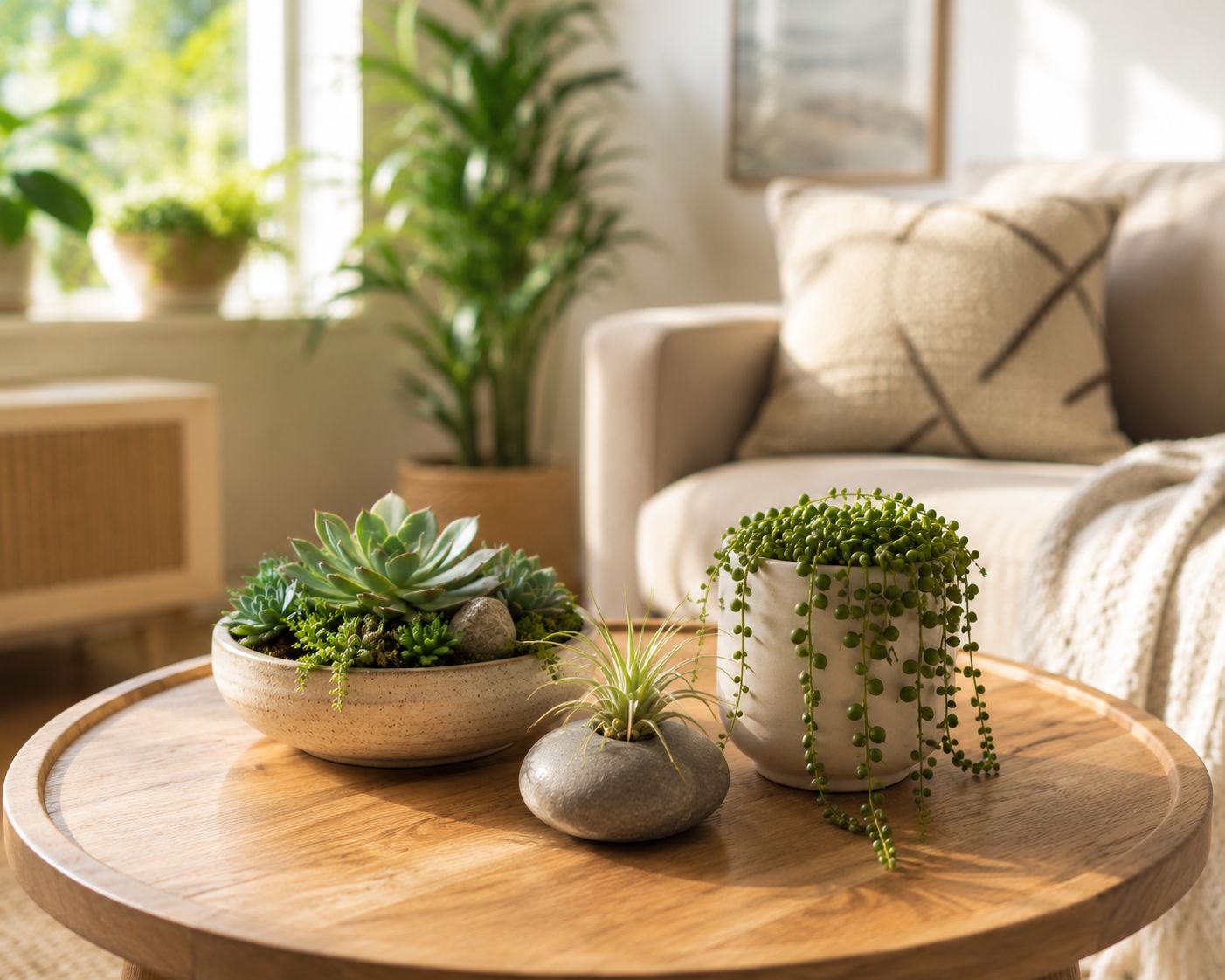
The coffee table is the centre of the living room — the point everyone faces, reaches toward, and looks at constantly. A small plant or plant arrangement on the coffee table makes that centre feel alive.
The key is scale. Coffee table plants should be low — 15 to 25 cm maximum — so they do not obstruct sightlines across the table or block the view of the room.
How to do it: A grouping of three works well on most coffee tables. One small trailing plant at the edge, one upright compact plant in the centre, one decorative object — a candle, a book, a stone — to anchor the arrangement. The rule of thirds makes even a small surface feel designed rather than cluttered.
Best plants for this: Succulent dish garden, air plants, small haworthia, string of pearls in a small pot, moss in a tray.
Light needed: Coffee tables are often away from windows — choose very low light tolerant species like air plants, moss, or haworthia.
09 — The Vertical Plant Wall Panel
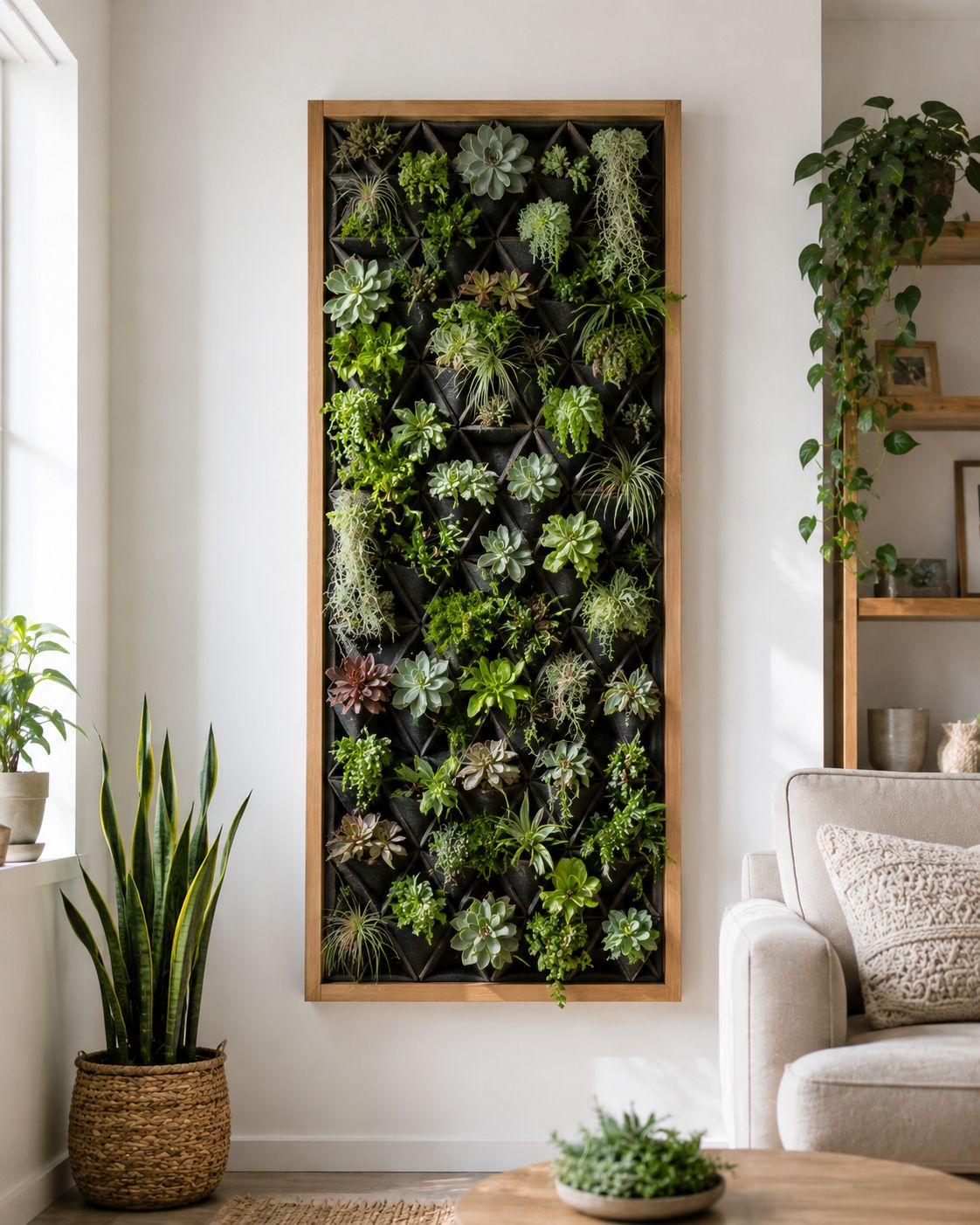
A vertical plant panel — a framed structure mounted on the wall and planted with live plants — brings the impact of a large artwork with the added dimension of something that is alive and growing. These range from small, self-contained frames with a few succulents to large modular systems covering an entire wall.
How to do it: For a beginner-friendly version, buy a pre-made succulent wall frame or living picture frame. Fill with succulents and air plants which need the least ongoing care. Mount on a wall that receives bright indirect light. Water by removing from the wall, soaking the frame, and letting it drain before replacing.
For a larger installation, modular felt pocket systems allow you to create a wall of herbs, ferns, or trailing plants with individual pockets for each plant.
Best plants for this: Succulents, air plants, small ferns, mind-your-own-business moss, heartleaf philodendron.
Light needed: Bright indirect — wall panels work best on walls receiving reflected window light.
10 — The Moss Wall Feature
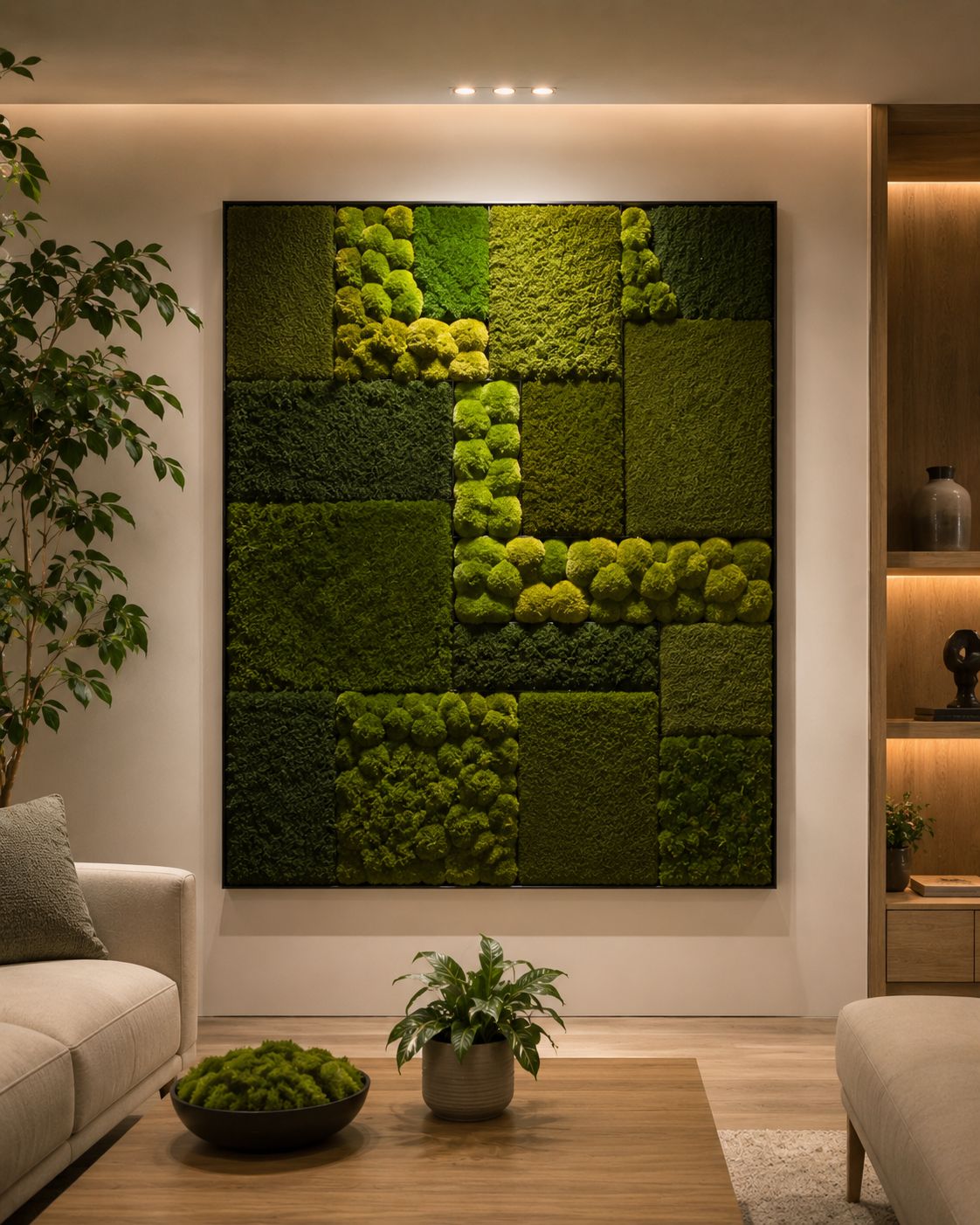
A preserved moss wall — using real moss that has been preserved and requires no watering — is the most low-maintenance way to bring large-scale natural texture into a living room. Preserved moss stays green and tactile indefinitely without water, light, or any care whatsoever.
How to do it: Preserved moss panels and kits are available from interior design suppliers. Mount panels directly on the wall in a pattern — a simple rectangle, a geometric arrangement, or a free-form organic shape. Mix different moss textures — flat sheet moss, cushion moss, reindeer moss — for visual depth.
The result is a feature wall with the warmth and texture of a natural material that requires zero maintenance.
Best for: North-facing walls, walls without natural light, feature walls in rooms with no window nearby.
11 — The Plant Ladder
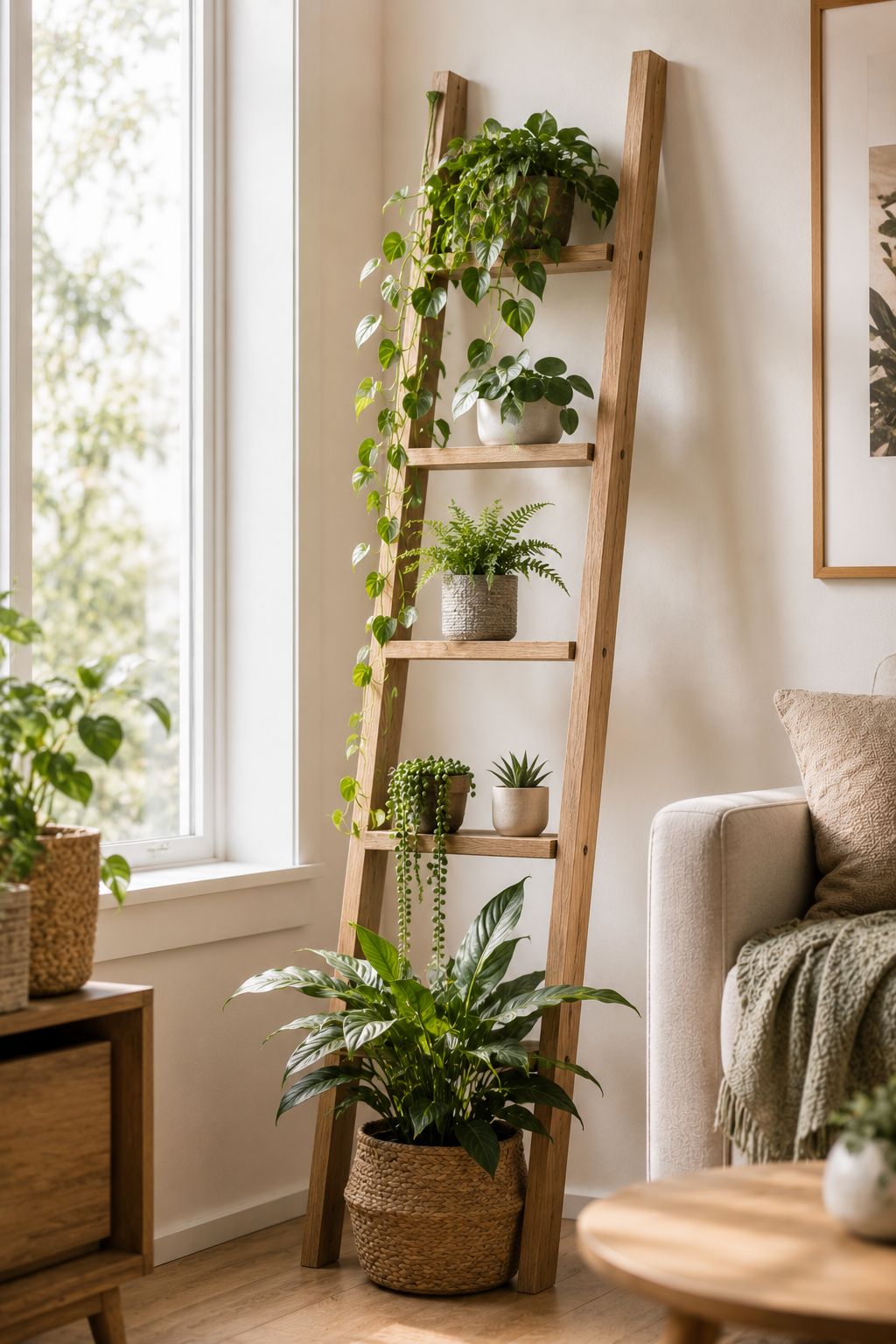
A wooden or metal ladder leaned against a wall and used as a plant stand gives you multiple levels of planting in a very small footprint. Each rung holds one or two pots. The ladder shape naturally creates the height variation that makes a plant grouping visually interesting.
How to do it: A simple wooden step ladder in natural oak or white works for most interiors. Position it against a wall near a window. Place the largest pots on the floor at the base, medium pots on the lower rungs, and small trailing plants on the upper rungs so their vines cascade downward over the ladder.
Best plants for this: Any combination — larger plants at base, trailing plants at top.
12 — The Terrarium Display
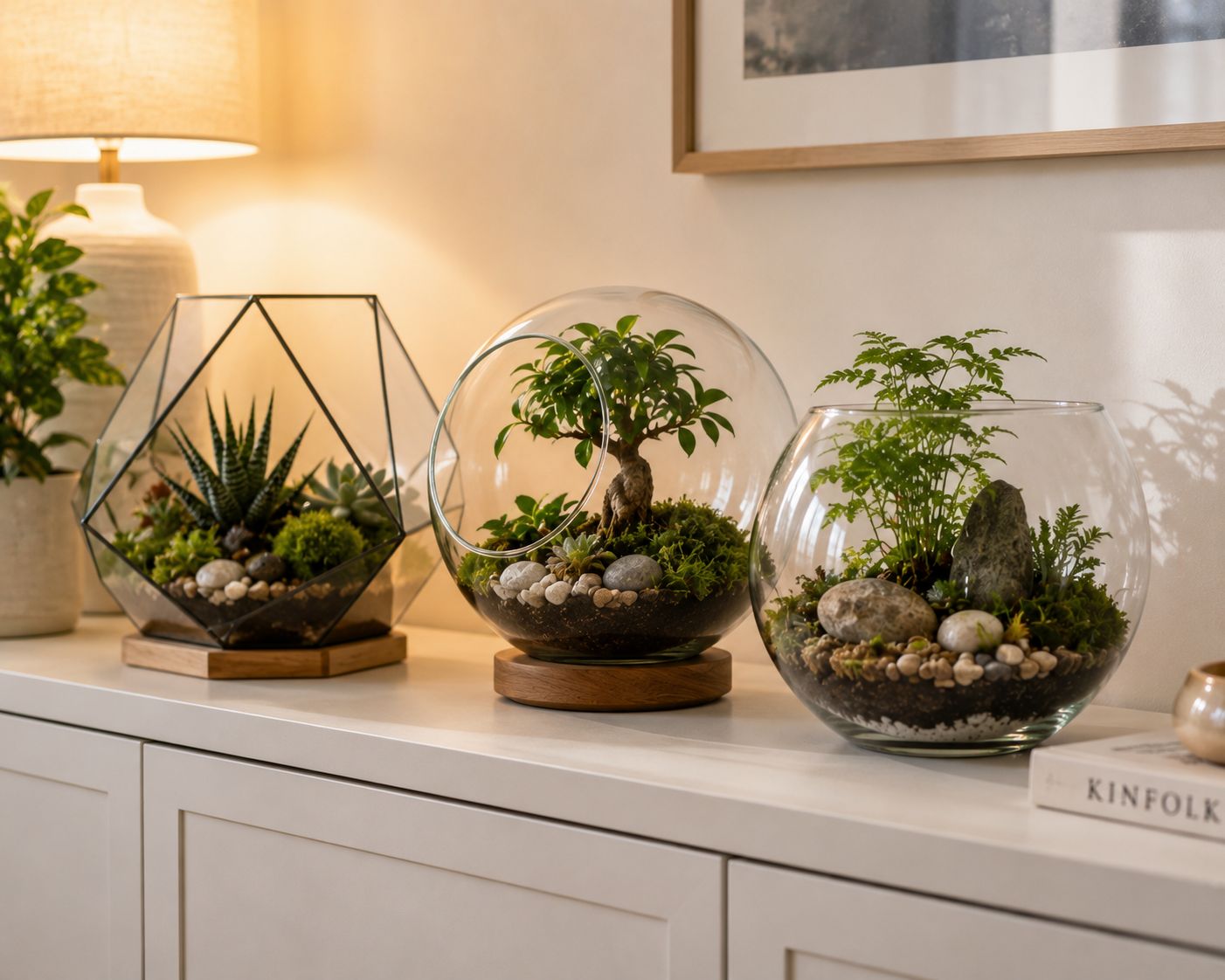
Glass terrariums turn plants into objects — self-contained miniature landscapes that work as living sculptures on a sideboard, console table, or shelf. They require minimal care once established and can be styled to suit any aesthetic from minimal geometric to wild and botanical.
How to do it: Open terrariums suit succulents and cacti — they need airflow and dry conditions. Closed terrariums suit ferns and mosses — they create their own humidity. Layer gravel at the base for drainage, activated charcoal above it, potting mix above that, then plants, then decorative moss, stones, or miniature figurines.
Best plants for this: Succulents and cacti for open terrariums. Ferns, moss, and small tropical plants for closed terrariums.
13 — The Plant Room Divider
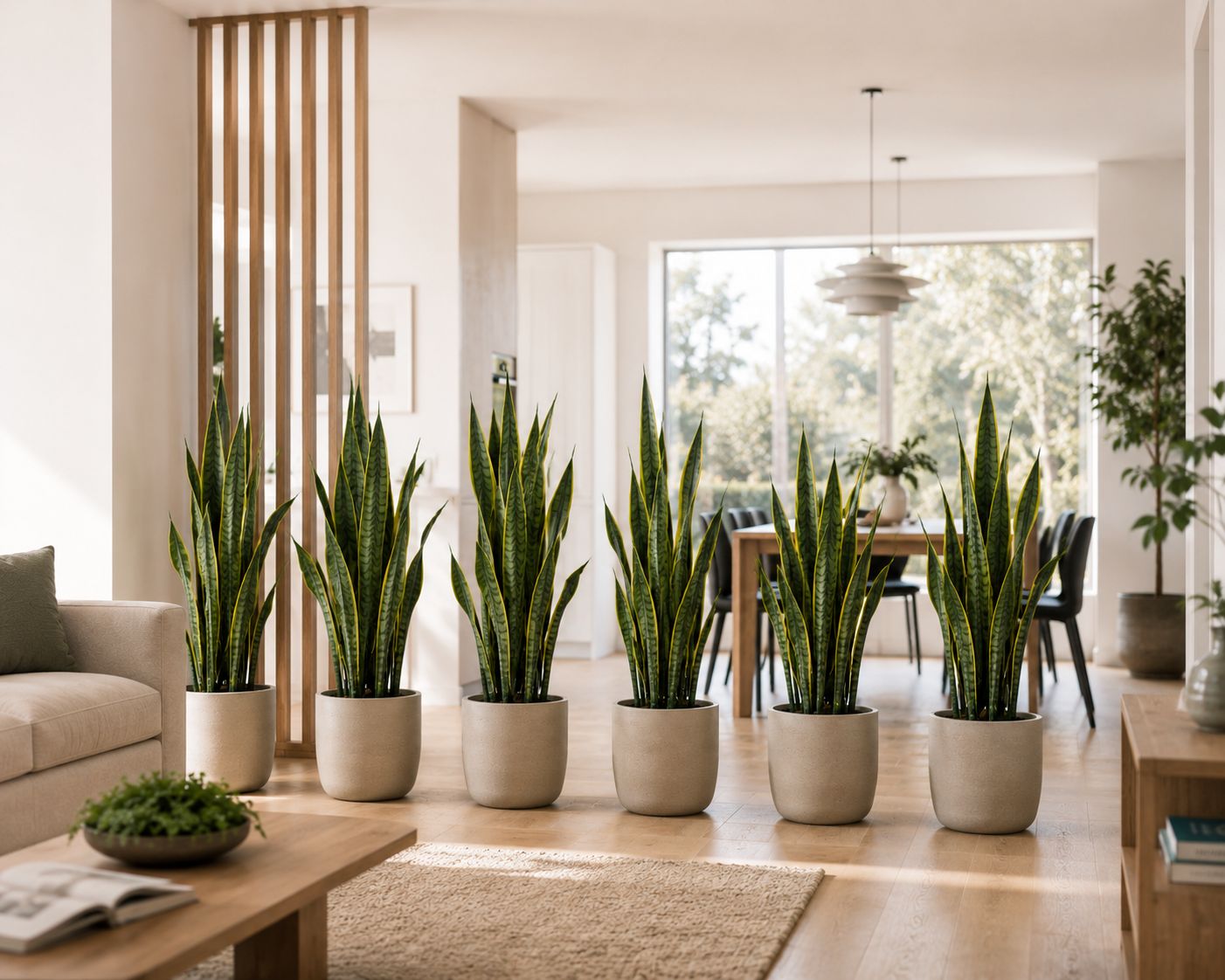
In open-plan living spaces, a row of tall plants — or a purpose-built shelving unit with plants — can define zones without the visual weight of a wall. A line of tall snake plants or a planter unit separates the living area from the dining area while keeping both spaces connected visually.
How to do it: Three to five tall plants in a line, spaced 40 to 60 cm apart, creates a soft boundary without blocking light or sightlines. Alternatively, a narrow open shelving unit filled with plants on all levels functions as a permeable, plant-covered partition.
Best plants for this: Snake plant, bamboo palm, areca palm, tall ZZ plant, dracaena.
14 — The Trailing Curtain
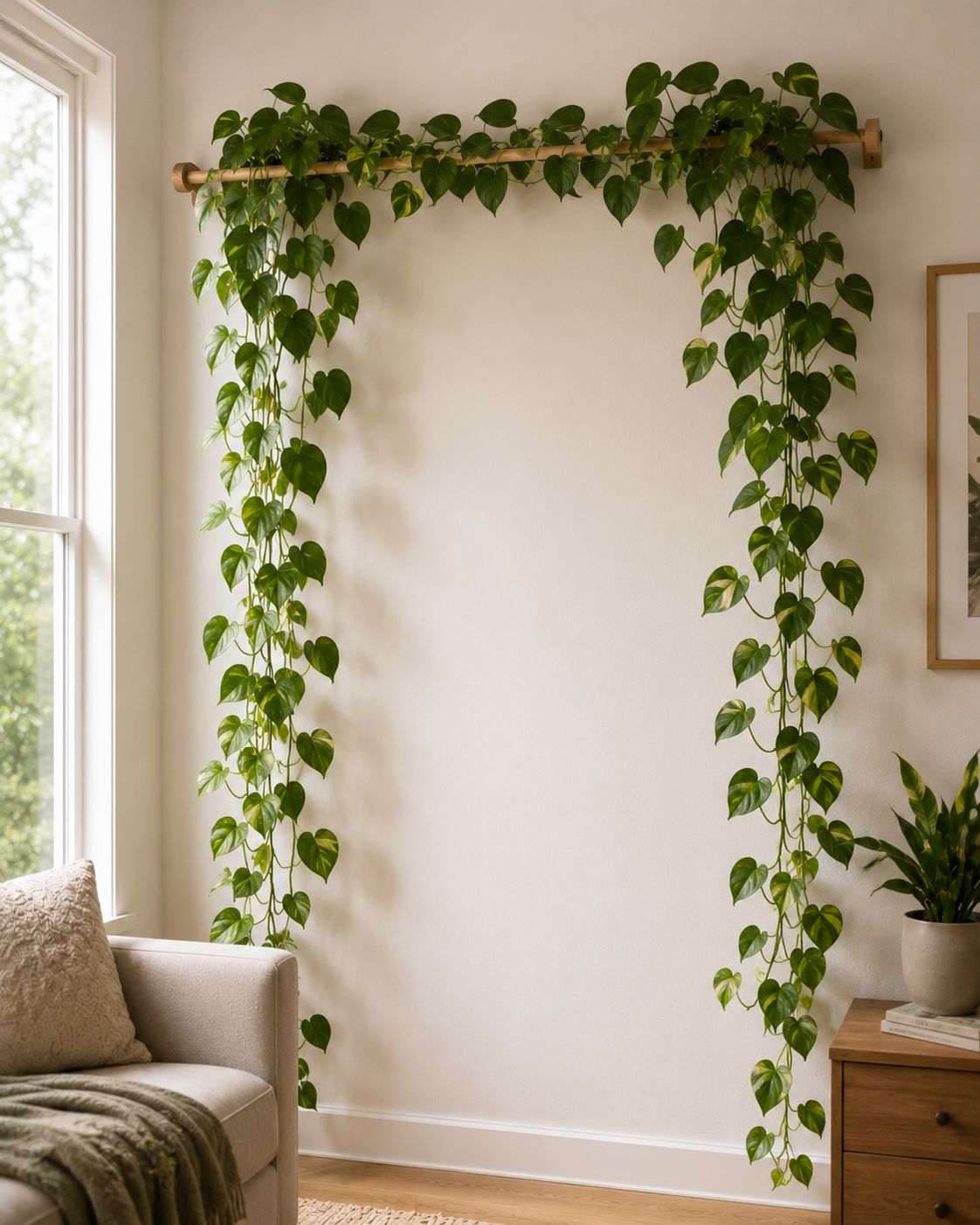
A single trailing plant positioned high on a wall bracket, trained along a horizontal rod, and allowed to trail down both sides creates the effect of a living curtain — a panel of green that frames a window, a doorway, or a seating nook.
Pothos is the ideal plant for this because of its fast growth, trailing habit, and tolerance of varied light conditions. Over one to two years, a trained pothos can cover a significant section of wall.
How to do it: Fix a wooden dowel or decorative rod horizontally on the wall. Place the plant in a pot on a bracket at the wall's edge. Guide the vines along the rod with small hooks or clips, then allow them to trail freely downward from there.
Best plants for this: Pothos, heartleaf philodendron, tradescantia.
15 — The Full Indoor Jungle
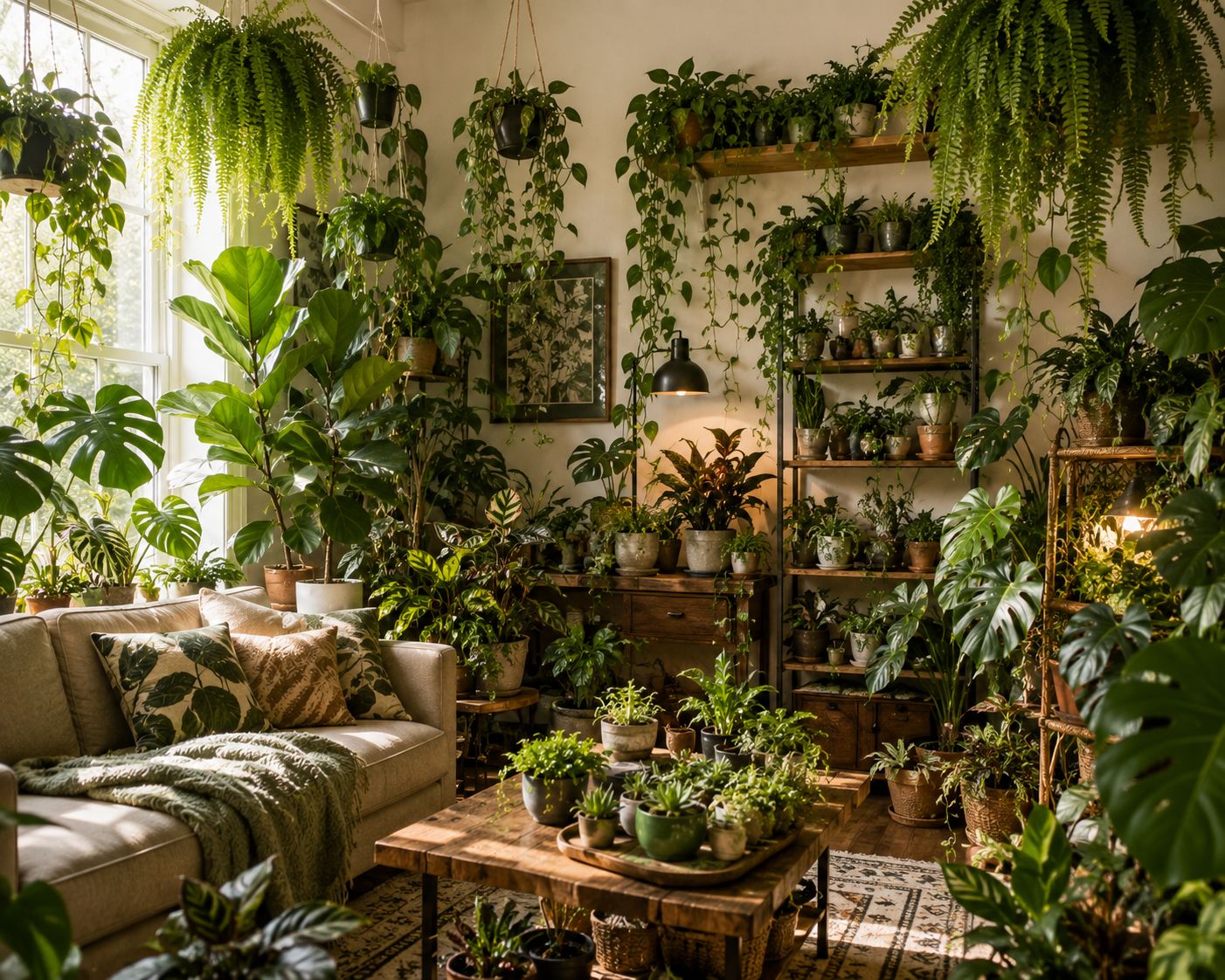
The most ambitious look — and the most rewarding once achieved. The indoor jungle is not a specific arrangement but a philosophy: more plants than seems reasonable, at every level, in every corner, with overlapping foliage and layered greenery that makes the room feel like it has been overtaken by the outside world.
How to do it: Work at three levels simultaneously. Floor level: large statement plants in every corner. Mid level: trailing plants from shelves, hanging plants from the ceiling, plants on side tables and stools. Surface level: small plants on every flat surface — coffee table, sideboard, window ledge. The density is what makes it work. Individual plants look like decoration. Many plants together create an environment.
Choose plants with contrasting leaf shapes — large and graphic beside small and delicate beside fine and feathery. Vary the green tones — dark forest green beside lime green beside silver-grey green.
Best plants for this: Everything. Monstera, pothos, snake plant, philodendron, ferns, spider plant, ZZ plant, succulents, trailing plants, hanging plants, floor plants. Yes to all of them.
The Free 3D Tools to Design Your Room First
Before you buy a single pot or move any furniture, use one of these free tools to see exactly how each styling idea will look in your specific room. All of these are browser-based — no download required.
Arcadium 3D — Best Overall for 2026
The top-rated free room design tool of 2025 by multiple design publications. Draw your room dimensions, drag and drop furniture including plants, and switch between 2D floor plan and full 3D walkthrough view instantly. Includes a library of plants and garden elements. Completely free for personal use, no account required to start.
Best for: Anyone who wants to test multiple plant arrangements quickly. The 3D walkthrough lets you stand inside your virtual room and see exactly how the plant styling will feel at eye level.
Planner 5D — Most Popular Worldwide
One of the most widely used free home design tools globally. Large catalogue of furniture and plants. Works on desktop and mobile. The free version provides full 2D and 3D design capability. Recognised by millions of users for its breadth and ease of use.
Best for: People who want the widest selection of furniture objects and plant varieties to choose from.
HomeByMe — Best for Realistic Renders
Create a 3D room plan and render it in 4K photorealistic quality. The rendered images look close to actual interior photography — useful if you want to share your plant styling vision with someone else or save it for reference. Free to design, small fee for 4K renders.
Best for: People who want to produce a realistic visual of the finished room to share or save as a reference.
Roomstyler — Best for Decorating Practice
Free account, 120,000 items in the catalogue, photorealistic 3D renders. Strong community of designers sharing finished room designs for inspiration. Good for browsing what others have created as well as designing your own space.
Best for: Finding inspiration from other people's designs and then adapting for your own room.
Roomtodo — Simplest to Use
The most straightforward interface of the group. Build a room, add furniture and plants, see it in 3D. No learning curve. Free to use with a Pro version available for expanded catalogue.
Best for: People who want to get a quick visual without learning any complex tool.
How to Use These Tools for Plant Styling
Open any of the tools above. Enter your room dimensions — length, width, and ceiling height. Place your existing furniture first so the room feels familiar. Then try each plant styling idea one by one.
The single most useful feature in all of these tools is the 3D walkthrough. Once you have placed a plant, switch to first-person view and walk around it. You will immediately see if it overwhelms the sofa, blocks the sightline to the television, or actually looks exactly right in the corner you had in mind.
This takes fifteen minutes. It saves you from buying the wrong plant, putting it in the wrong place, and spending months looking at something that does not work the way you pictured it.
By Seedora Store — Home and Living Series.
Sources: Arcadium 3D, free room planner tool; Planner 5D, room design; HomeByMe 3D interior design; Roomstyler 3D planner; Roomtodo room planner; Arcadium 3D, free room planner apps comparison 2025.