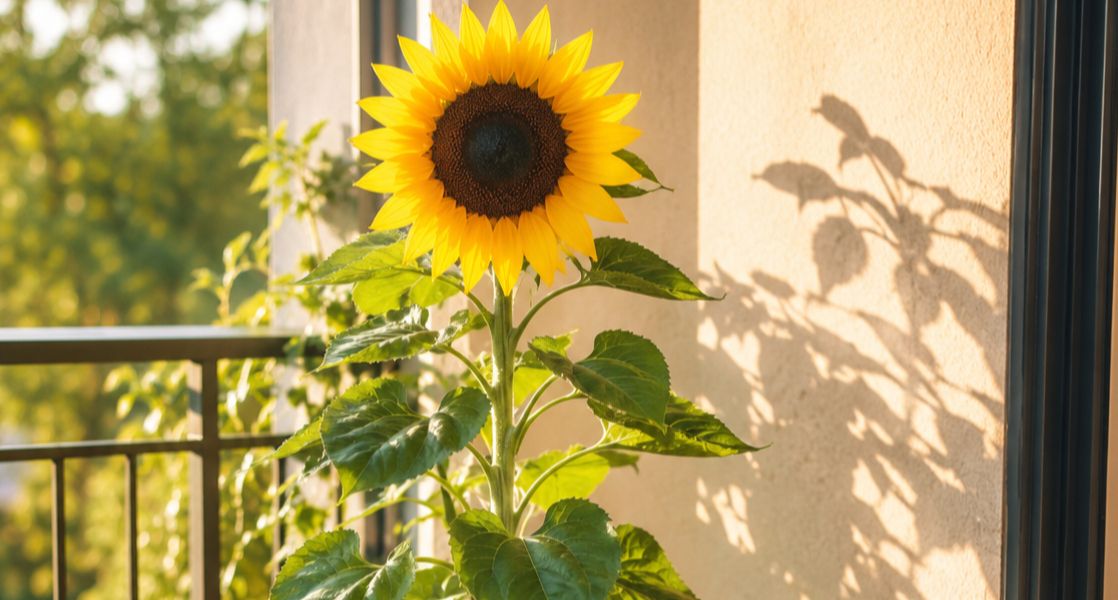
How to Grow Sunflowers at Home — The Happiest Plant You'll Ever Grow
There is no plant on earth that makes people smile quite like a sunflower. That enormous golden head turning toward the sun, those tall proud stems, those seeds that feed birds and humans alike — sunflowers are pure joy in plant form. And the best part? They are one of the easiest plants you will ever grow. One seed. One pot. A few weeks of basic care. And you will have a flower so beautiful people will stop and stare at your balcony.
This is your complete guide to growing sunflowers at home — from seed to full bloom.
Meet the Sunflower (Helianthus annuus)
Sunflowers are native to North America and have been grown for over 5,000 years — originally for food, oil, and medicine. Today they are one of the most loved ornamental and edible plants in the world. They are annual plants, meaning they complete their full life cycle — from seed to flower to seed — in a single growing season. They are fast, dramatic, and endlessly rewarding.
☀️ The word Helianthus comes from the Greek helios (sun) and anthos (flower). Sunflowers genuinely track the sun when young — a behaviour called heliotropism. Once they mature and bloom, they face east permanently to attract morning pollinators.
What It's Called Around the World
| Common Name | Scientific Name | Pakistan/Urdu | Arabic | Hindi | UK/US |
|---|---|---|---|---|---|
| Sunflower | Helianthus annuus | سورج مکھی (Suraj Mukhi) | عباد الشمس (Abbad Al-Shams) | सूरजमुखी (Surajmukhi) | Sunflower |
Why You Should Grow Sunflowers at Home
☀️ Pure Visual Impact — A blooming sunflower on your balcony is the most eye-catching thing in any neighbourhood. Bold, tall, and unapologetically beautiful.
🐝 Attracts Pollinators — Sunflowers are a magnet for bees and butterflies, which also helps your other plants grow better through increased pollination.
🌱 Fastest Flowering Plant — From seed to bloom in just 60–80 days. Perfect for impatient growers who want results fast.
🫀 Edible & Nutritious — The seeds are packed with healthy fats, vitamin E, magnesium, and protein. You can roast and eat the seeds from your own plant.
🎨 Dozens of Varieties — Giant 3-metre tall monsters, compact dwarf pots varieties, red and burgundy bi-colours, multi-headed branching types — there is a sunflower for every space.
💸 Incredibly Affordable — A packet of seeds costs almost nothing. One packet gives you 10–20 plants. Few investments in gardening pay off as visually as sunflowers do.
👨👩👧 Perfect for Kids — Children love growing sunflowers because the growth is fast and dramatic. Measuring how tall it gets every day is one of the great joys of home gardening.
Best Varieties for Home Growing
| Variety | Height | Best For | Notes |
|---|---|---|---|
| Dwarf Sunspot | 40–60 cm | Pots & balconies | Most popular for containers, large flower head |
| Big Smile | 30–45 cm | Small pots & window boxes | Very compact, blooms quickly |
| Teddy Bear | 60–90 cm | Medium pots | Fluffy double petals, no dark centre, unique look |
| Mammoth | 2–3 metres | Garden beds & large containers | Classic giant, edible seeds, dramatic presence |
| Autumn Beauty | 1–1.5 m | Garden beds | Mix of yellow, orange, red — stunning colour range |
| Ruby Eclipse | 90–120 cm | Large pots | Deep burgundy petals, dark centre — very striking |
🌿 Seedora Tip: For balconies and pots in Karachi and Lahore — Dwarf Sunspot or Big Smile are your best choices. They stay compact, produce large blooms, and don't need staking.
Step 01 — Get Your Seeds & Choose the Right Pot
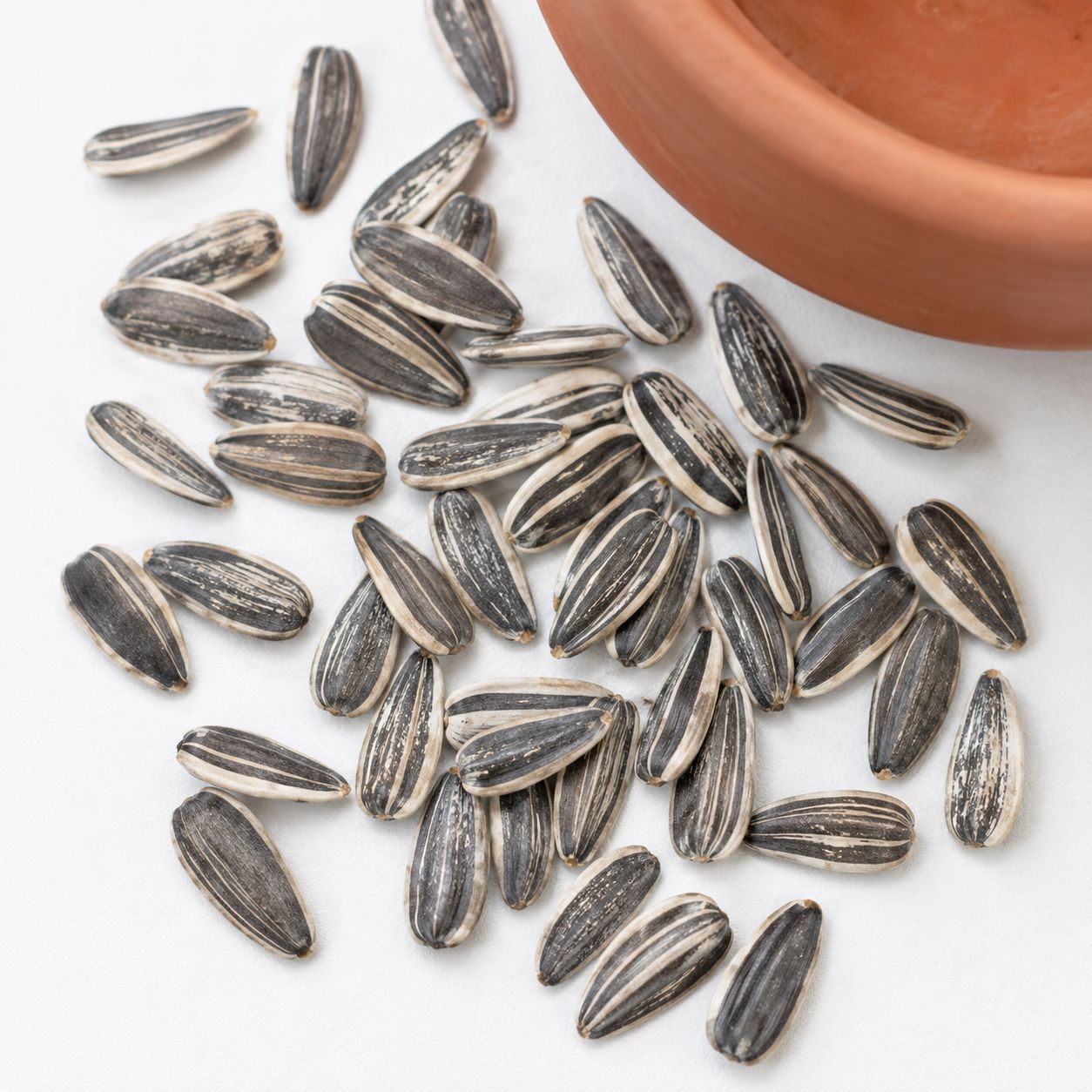
Start with quality sunflower seeds from Seedora. For pot growing, always choose a dwarf or compact variety — giant varieties need serious root space and can become unstable in containers.
Pot requirements:
| Plant Size | Minimum Pot Size | Notes |
|---|---|---|
| Dwarf varieties (30–60 cm) | 25–30 cm diameter | One plant per pot |
| Medium varieties (60–120 cm) | 35–45 cm diameter | Needs depth for roots |
| Giant varieties (150 cm+) | 50 cm+ or garden bed | Very heavy — ensure stability |
Choose a pot with drainage holes — sunflowers hate sitting in water. Terracotta pots are ideal because they breathe and prevent overwatering naturally.
🌿 Pro tip: If you want that classic tall, single-stem sunflower look — one seed, one pot. If you want a bushier plant with multiple blooms — pinch the main growing tip when the plant is 30 cm tall.
Step 02 — Sow Your Seeds the Right Way
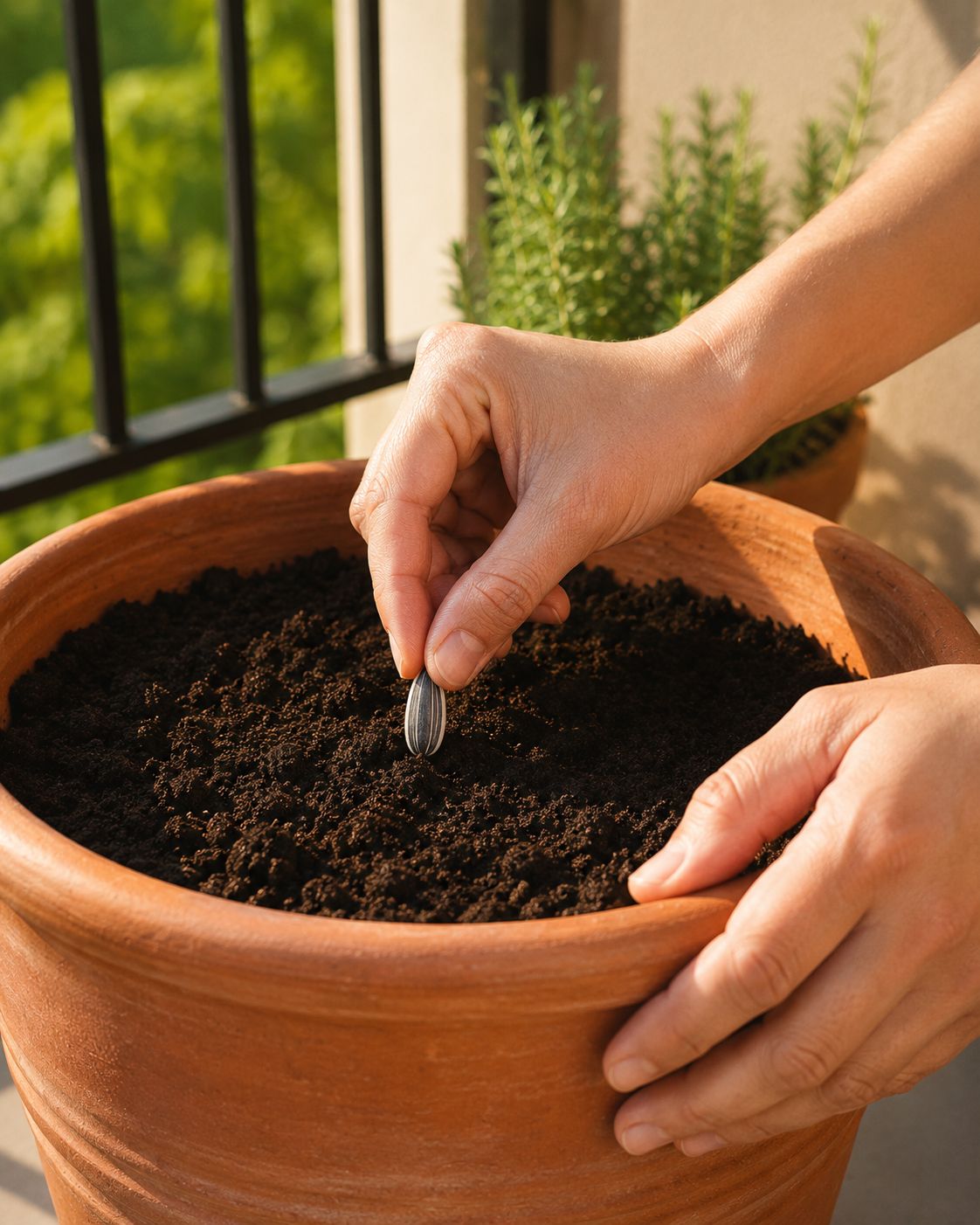
Sunflowers are best direct sown — they don't like being transplanted because their taproots go deep fast. Sow directly into the pot they'll live in.
Soil mix:
Use a mix of potting soil + compost + a little sand (3:1:1). Sunflowers need nutrient-rich but well-draining soil. Waterlogged roots cause stem rot — the most common sunflower killer.
Sowing steps:
- Fill pot with soil mix, leaving 3 cm from the top
- Make a hole 2–3 cm deep in the centre
- Drop 1–2 seeds per pot
- Cover with soil and press gently
- Water thoroughly and place in full sun immediately
- Germination takes 5–10 days in warm conditions
- If both seeds sprout, snip the weaker one at soil level — don't pull
☀️ Temperature tip: Sunflowers germinate best when soil temperature is above 18°C. In Pakistan, this means sowing from mid-February onwards in Karachi and March onwards in Lahore and Rawalpindi.
Step 03 — Give It Full Sun & Consistent Water
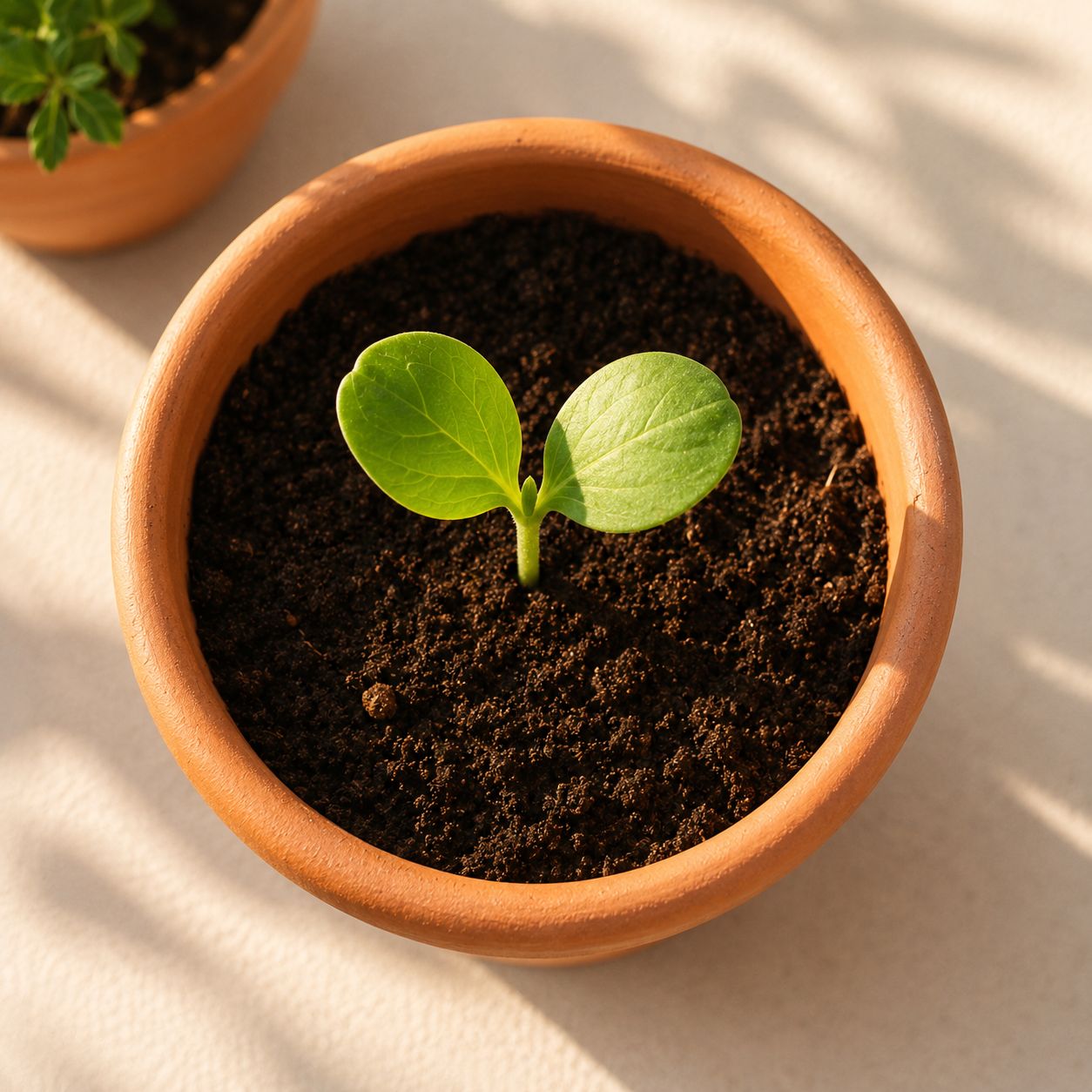
Here is the single most important rule for sunflowers — full sun, all day, no compromise.
Light requirements:
Sunflowers need 6–8 hours of direct sunlight daily. Not indirect. Not bright shade. Direct sun. A sunflower growing in partial shade will be tall, weak, and will produce a disappointingly small flower — or no flower at all.
Place your pot in the sunniest spot you have. South or west-facing balconies in Pakistan are ideal.
Watering guide:
| Growth Stage | Watering Frequency | Key Rule |
|---|---|---|
| Germination (week 1–2) | Every 1–2 days | Keep moist but not soggy |
| Seedling (week 2–4) | Every 2 days | Let top 2 cm dry slightly |
| Active growth (week 4–8) | Every 2–3 days | Deep watering at base |
| Budding & Blooming | Every 1–2 days | Consistent moisture critical |
💧 Watering rule: Always water at the base of the stem, never on the leaves or flower. Wet leaves in strong sun causes scorch. Wet flowers cause rot. Keep it at the roots.
Feeding:
- Weeks 1–4: No fertiliser needed — seeds carry their own nutrients
- Week 4 onwards: Apply a balanced liquid fertiliser (like NPK 10-10-10) every 2 weeks
- Once the bud appears: Switch to a low-nitrogen, high-potassium feed to encourage bigger blooms
Staking:
Medium and tall varieties will need a stake once they reach 50–60 cm. Tie loosely with soft string — never tight, as the stem needs to flex in wind to build strength.
Step 04 — Watch It Bloom & Know When to Harvest Seeds
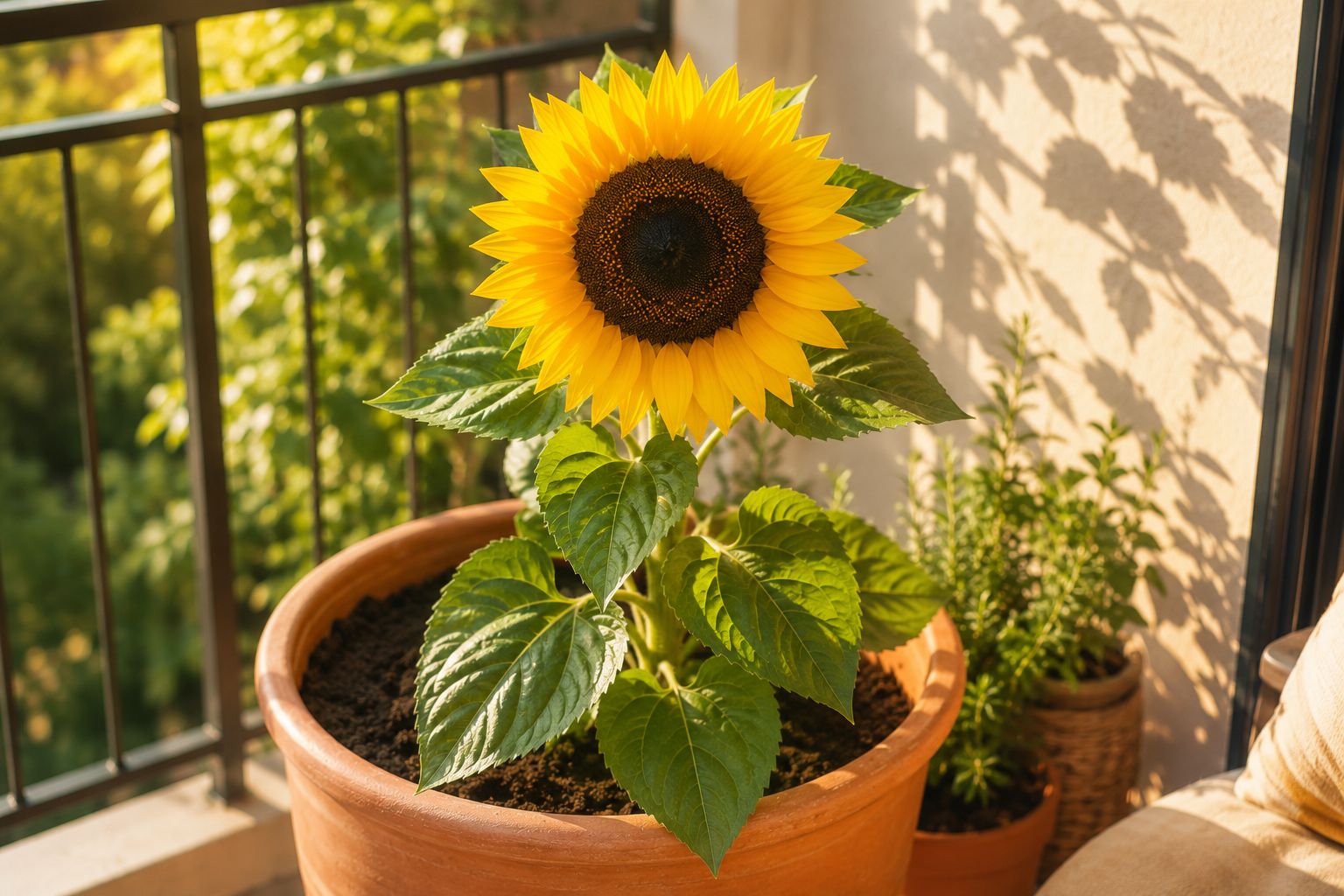
This is the moment that makes every bit of effort worth it. Your sunflower will bud, then slowly unfurl into that glorious golden face — usually around 8–12 weeks after sowing.
Enjoying the bloom:
- The bloom lasts 2–3 weeks on the plant
- Cut some for indoor vases — they last 5–7 days in water
- Leave the rest to attract bees and set seeds
Harvesting the seeds:
If you want to save seeds for next season or eat them:
- Wait until the back of the flower head turns yellow then brown
- The petals will dry and fall off naturally
- Cover the head loosely with a paper bag to catch falling seeds
- Once fully dry and brown, cut the head and rub seeds out by hand
- Dry seeds in a single layer for 1–2 weeks before storing or roasting
🌻 Roasted sunflower seeds: Toss with a little oil and salt, roast at 180°C for 15–20 minutes. One of the most satisfying things you'll ever eat from your own garden.
Growing Calendar — Pakistan & Karachi
| Month | Activity |
|---|---|
| January | Plan varieties, order seeds from Seedora |
| February | Sow in Karachi — soil is warm enough |
| March | Sow in Lahore / Rawalpindi / Islamabad |
| April | Seedling to rapid growth phase — feed begins |
| May | Budding stage — increase watering, stake tall varieties |
| June | Peak bloom — enjoy, photograph, cut for vases |
| July | Seed harvest — dry flower heads for seeds |
| August | Season ends — compost stalks, save seeds for next year |
| September–January | Rest season — plan next year's grow |
Quick Care Cheat Sheet
| Care | What To Do |
|---|---|
| Pot Size | Minimum 25 cm deep — bigger for taller varieties |
| Soil | Well-draining, nutrient-rich, compost-heavy |
| Sunlight | 6–8 hours full direct sun — non-negotiable |
| Watering | Every 1–3 days — water at base only |
| Temperature | Best at 20–30°C — tolerates heat well |
| Feeding | Every 2 weeks from week 4 — switch to K+P at budding |
| Staking | Needed for varieties over 60 cm |
| Bloom Time | 60–80 days from sowing |
Troubleshooting Common Problems
| Problem | Cause | Fix |
|---|---|---|
| Leggy, tall, weak stem | Not enough sunlight | Move to full sun immediately |
| No flower bud forming | Too much shade or nitrogen fertiliser | Full sun + switch to low-N, high-K feed |
| Yellowing lower leaves | Overwatering or nutrient deficiency | Let soil dry; apply balanced fertiliser |
| White powdery coating on leaves | Powdery mildew — too humid, poor airflow | Remove affected leaves; improve air circulation |
| Drooping head | Underwatering or too much heat | Deep water immediately; provide afternoon shade in extreme heat |
| Holes in leaves | Caterpillars or beetles | Check undersides of leaves; remove by hand |
| Stem rotting at base | Overwatering or waterlogged soil | Reduce watering; ensure drainage holes are clear |
| Seeds not forming | Poor pollination | Hand pollinate by brushing centre with a soft paintbrush |
Frequently Asked Questions
Can I grow sunflowers in a pot on my balcony?
Absolutely. Dwarf varieties like Sunspot and Big Smile are perfect for pots and produce full-sized, gorgeous blooms in containers as small as 25–30 cm wide.
How long do sunflowers take to bloom?
From seed to first bloom is typically 60–80 days depending on variety and weather. Dwarf varieties tend to be faster. Giant varieties take longer.
Do sunflowers come back every year?
No — sunflowers are annual plants. They grow, bloom, set seed, and die in one season. But if you save the seeds, you can grow them again next year from your own harvest.
How many sunflowers can I grow in one pot?
For best results — one plant per pot. Sunflowers are hungry, thirsty plants that compete aggressively for nutrients and root space.
Can I grow sunflowers in Karachi's summer heat?
Yes — sunflowers actually love heat. Sow in February or early March in Karachi to get blooms before the most intense heat of June–July. They handle temperatures up to 35°C well with consistent watering.
My sunflower grew tall but the flower is tiny — why?
Almost always a light issue. Not enough direct sun causes the plant to put energy into stem height (reaching for light) rather than flower development. Always ensure 6–8 hours of full direct sun.
Can I eat my homegrown sunflower seeds?
Yes — and you should. Wait for the head to fully dry on the plant, harvest the seeds, dry them for 1–2 weeks, then roast with salt. Delicious and nutritious.
Part of the Instantly Grow Series by Seedora Store — bring nature indoors, one plant at a time.