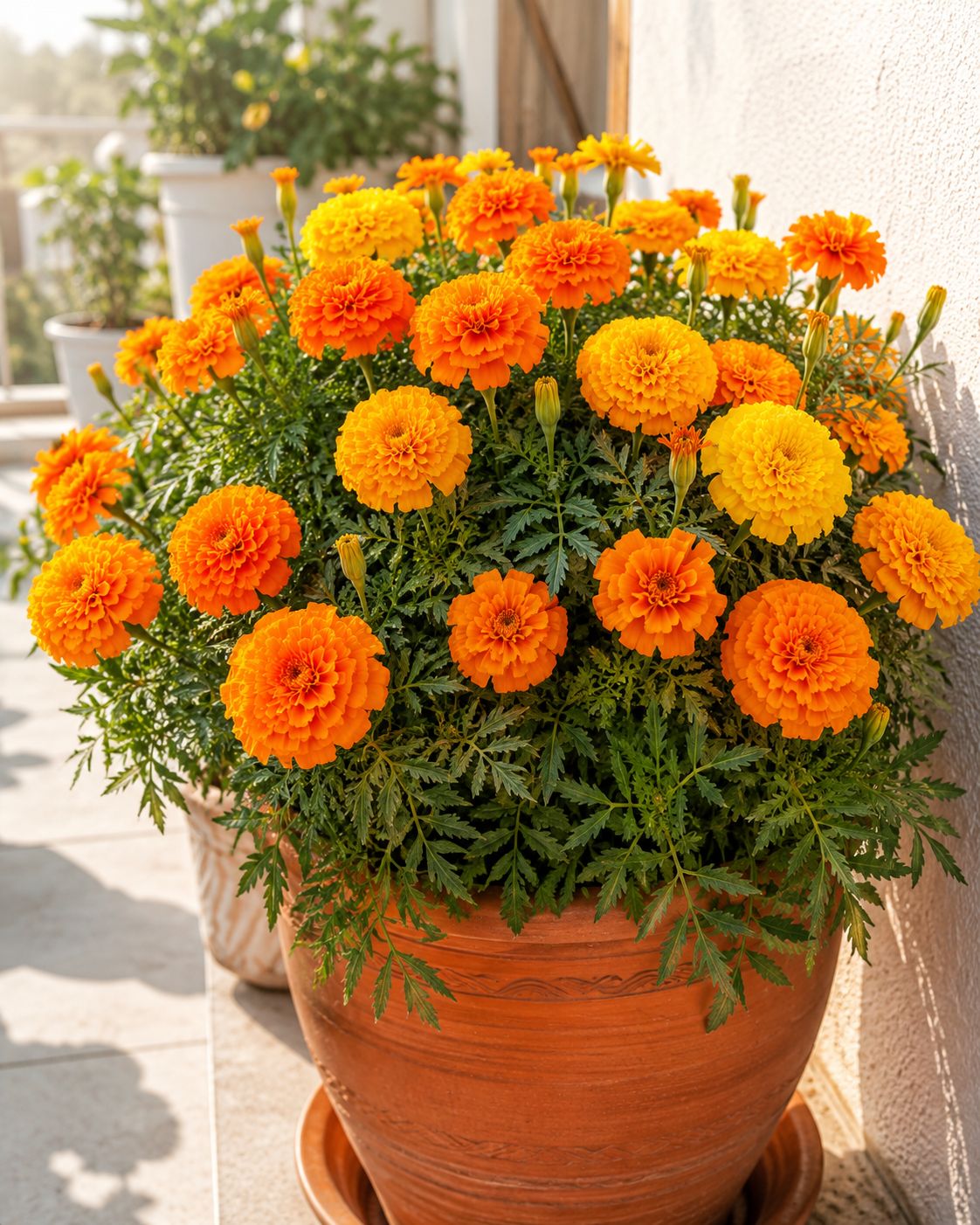
There is a flower that appears at every Pakistani wedding, every Eid decoration, every roadside garland stall and religious occasion. Bright orange, intensely fragrant, bold and cheerful in a way that no other flower quite matches. You know exactly what it is before you are told.
Genda phool. Marigold.
And here is something most people do not know — that same flower that goes into garlands and decorations at fifty rupees a bunch is one of the easiest things you will ever grow at home. Sow seeds into a pot today and you will have blooms in eight weeks. Those blooms keep coming, wave after wave, from spring through autumn without stopping. The plant self-seeds freely — drop one plant's worth of seeds and you will find new marigold seedlings popping up around the pot every following season, almost without effort.
Beyond beauty, marigolds are one of the most practically useful flowers in any kitchen garden. They repel aphids, whiteflies, and soil nematodes — the exact pests that attack your shimla mirch, tomatoes, and coriander. Plant them beside your vegetables and they work quietly as a natural pesticide around the clock.
French, African, Signet — three types, each with its own character. Stunning in pots. Stunning in garden beds. Stunning in a vase on your kitchen table.
Here is exactly how to grow them.
What Is Marigold Called Around the World?
| Region | Local Name |
|---|---|
| 🇵🇰 Pakistan / Urdu | گیندا پھول (Genda Phool) |
| 🇮🇳 Hindi | गेंदा फूल (Genda Phool) |
| 🇸🇦 Arabic | قطيفة (Qatifa) |
| 🇮🇷 Persian / Farsi | همیشه بهار (Hamisheh Bahar) |
| 🇫🇷 French | Souci |
| 🇲🇽 Mexico / Spanish | Cempasúchil |
| 🇬🇧 British English | Marigold |
| 🌐 Scientific | Tagetes spp. |
🌿 Marigolds are native to Central and South America — not Africa or France, despite the common variety names that suggest otherwise. The Aztecs used them in sacred Day of the Dead ceremonies, and they were introduced to Europe and Asia through Spanish trade routes in the 16th century. In South Asia they became deeply embedded in Hindu and Muslim cultural traditions — used in garlands, religious offerings, wedding decorations, and festivals. In Pakistan, genda phool garlands are woven at weddings and religious ceremonies across every province. It is one of the most culturally significant flowers in the subcontinent despite being a relative newcomer from the Americas.
Which Marigold Should You Grow?
This is the first real decision — and it changes what your garden looks like, how big your plant gets, and how it performs in Pakistani conditions.
| Type | Size | Flower | Bloom Time | Best For | Pakistan Notes |
|---|---|---|---|---|---|
| French Marigold (Tagetes patula) | 20–45 cm | Medium, ruffled, prolific | 50–60 days from seed | Pots, borders, companion planting, pest control | ✅ Best for balconies and pots — compact and very heavy-flowering |
| African Marigold (Tagetes erecta) | 60–90 cm | Large, pom-pom, dramatic | 70–90 days from seed | Garden beds, back of borders, garlands | ✅ Beautiful but needs more space — ideal for rooftop beds |
| Signet Marigold (Tagetes tenuifolia) | 20–30 cm | Small, single, delicate | 50–60 days from seed | Edging, borders, window boxes | ✅ Most heat-tolerant — good for Pakistani summers |
💡 For Pakistani pots and balconies, French marigold is the clear winner. It stays compact, produces the most blooms per plant, has the strongest pest-deterring scent, and blooms the fastest. It handles Pakistan's warm climate well and looks spectacular spilling over the edges of a terracotta pot. Start here before trying the taller African varieties.
Why Marigold Belongs in Every Pakistani Garden
🌸 Blooms Continuously for Months — Unlike many flowers that bloom once and finish, marigolds keep producing new buds from the moment they start flowering right through to cold weather. Deadhead the spent blooms regularly and the plant never stops. One pot delivers colour for five to six months without interruption.
🦟 Natural Pest Repellent — The strong scent of marigold foliage and roots repels a remarkable range of garden pests. French marigolds in particular have the most powerful pest-deterring ability — they repel aphids, whiteflies, and nematodes from surrounding vegetables. Plant them beside your shimla mirch, tomatoes, dhaniya, and hari mirch and they form a fragrant, beautiful defensive barrier.
🦋 Attracts Beneficial Insects — While repelling harmful pests, marigolds attract ladybugs, hoverflies, and parasitic wasps — the beneficial insects that prey on garden pests naturally. They also attract bees and butterflies, improving pollination for every flowering and fruiting plant nearby.
💰 Almost Free After Year One — Each marigold plant produces hundreds of seeds at the end of the season. If you let a few flowers go to seed and dry on the plant, you can collect enough seeds to sow your entire garden next year for free — or simply let them self-seed and watch new plants emerge from the soil next spring without doing anything at all.
🎨 Pure Joy to Look At — Orange, yellow, gold, deep mahogany, bicolour combinations. There is no flower that delivers this level of vibrant, saturated colour more reliably and for longer. A pot of marigolds on a balcony or a border of them around a rooftop garden changes the whole mood of a space.
💊 Soil Health Benefits — Marigold roots release chemicals that suppress weed growth and help break down organic matter in the soil. They have a relatively shallow root system that does not compete heavily with neighbouring plants for nutrients. Growing marigolds near root vegetables reduces nematode damage — the microscopic worms that attack roots of carrots, potatoes, and onions.
🌿 Incredibly Easy for Beginners — Marigolds germinate in seven to fourteen days. They are forgiving of poor soil. They are somewhat drought tolerant once established. They bounce back from neglect, heat, and irregular watering better than almost any other flower. If you have never successfully grown a flowering plant before, start with marigolds.
Step 01 — Choose Your Seeds and Timing
Getting seeds:
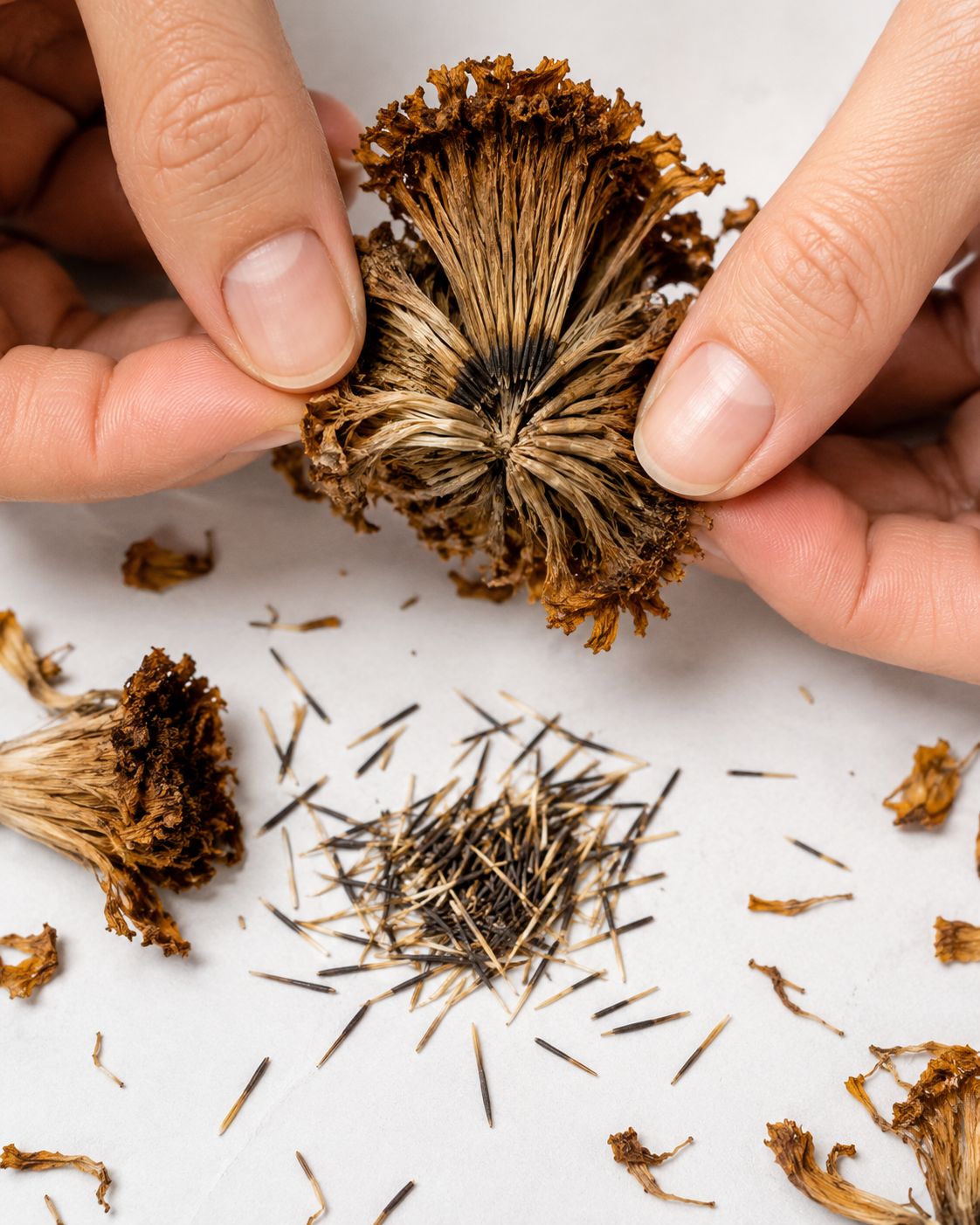
Seeds are available from Seedora and every nursery in Pakistan. You can also collect your own — from dried flowers at the end of season or even from a fresh market marigold. Pull a dried flower head apart and you will find the long, thin, needle-like seeds clustered at the base. Those are your seeds.
Timing for Pakistan — two seasons:
Marigolds love warmth but can be sensitive to peak summer heat above 35°C, which can temporarily slow flowering. Pakistan has two ideal marigold-growing windows:
| Season | Sow Seeds | First Blooms | Notes |
|---|---|---|---|
| 🌸 Spring / Summer | February – March | April – May | Long blooming season through summer |
| 🍂 Autumn / Winter | August – September | October – November | Peak season — cooler weather produces the best, most vibrant blooms |
💡 The autumn sowing is the best. Marigolds sown in August and September bloom through October, November, and into December — the exact months when Pakistani weddings and Eid celebrations fill the calendar. The cooler autumn temperatures also produce significantly larger, more deeply coloured flowers than summer heat does.
Step 02 — Sow Seeds: Direct or Indoors
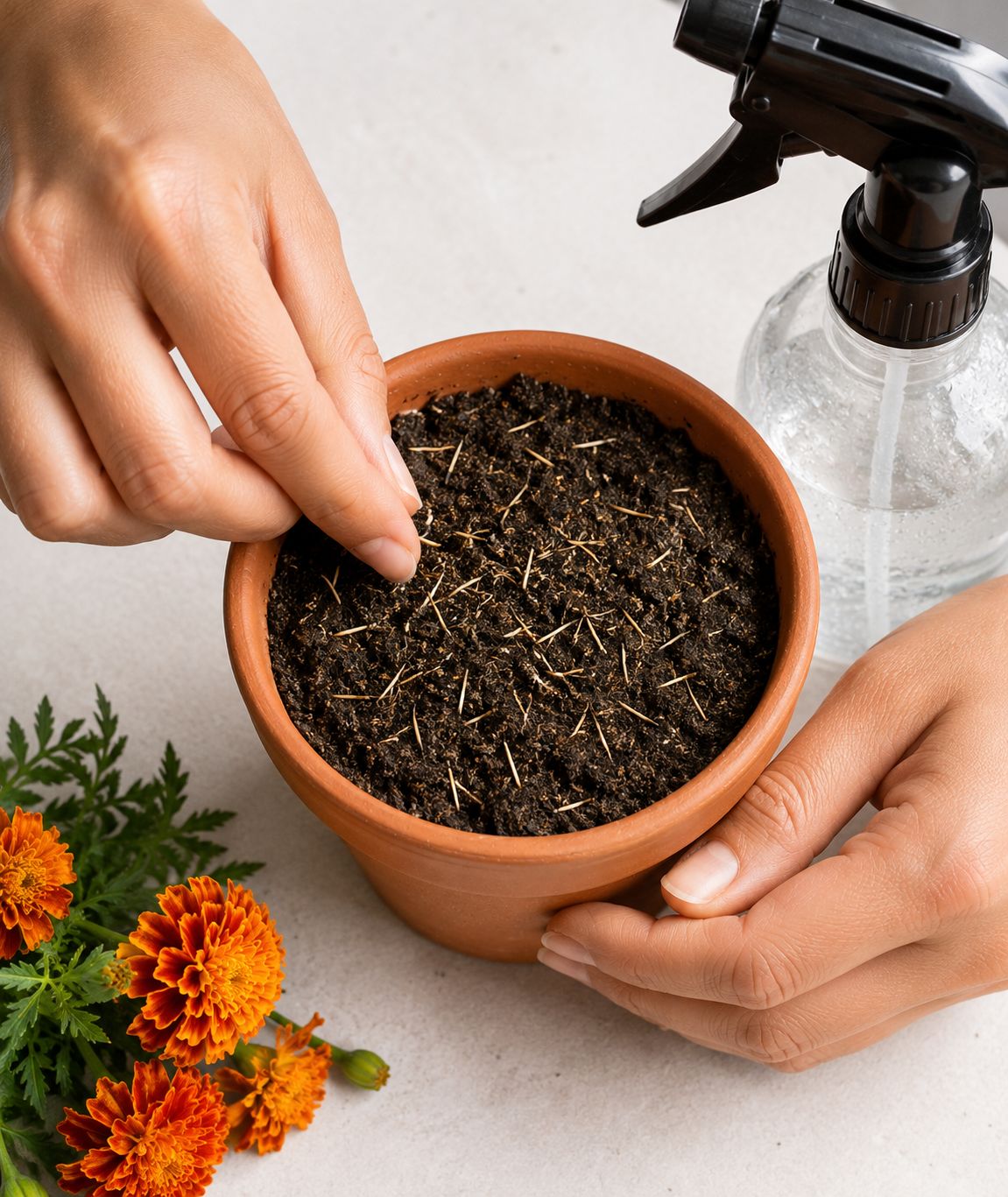
Marigolds are one of the easiest seeds to germinate. They are large enough to handle easily, they sprout quickly, and they tolerate a wide range of conditions. You have two sowing options.
Option A — Direct Sow into Final Pot (Easiest)
Fill your pot with good potting mix to within 3 cm of the rim. Scatter seeds on the surface, spacing them about 5–7 cm apart. Press seeds gently into the soil for good contact — do not bury them deep. Cover with just a thin dusting of soil, no more than half a centimetre. Marigold seeds need light to germinate — covering them too deeply prevents sprouting.
Water gently with a spray bottle or a watering can with a rose head. Keep moist but not wet. Place in a warm spot with good light. Germination happens in 7 to 14 days in warm conditions — often faster in Pakistani spring temperatures.
Once seedlings reach 5–7 cm, thin them out — remove the weaker seedlings, leaving the strongest ones spaced about 15–20 cm apart for French varieties.
Option B — Start Indoors, Transplant Later
Fill small cups or seed tray cells with seed starting mix. Sow two to three seeds per cell about half a centimetre deep. Cover loosely with clear plastic or a plastic bag to retain humidity. Place in a warm spot — marigold seeds need at least 18–24°C to germinate well.
Once seedlings have two sets of true leaves — the real, serrated marigold-shaped leaves rather than the first rounded seed leaves — they are ready to transplant to their final pot. Handle gently and disturb roots as little as possible when transplanting.
Step 03 — Pot, Spacing, and Soil
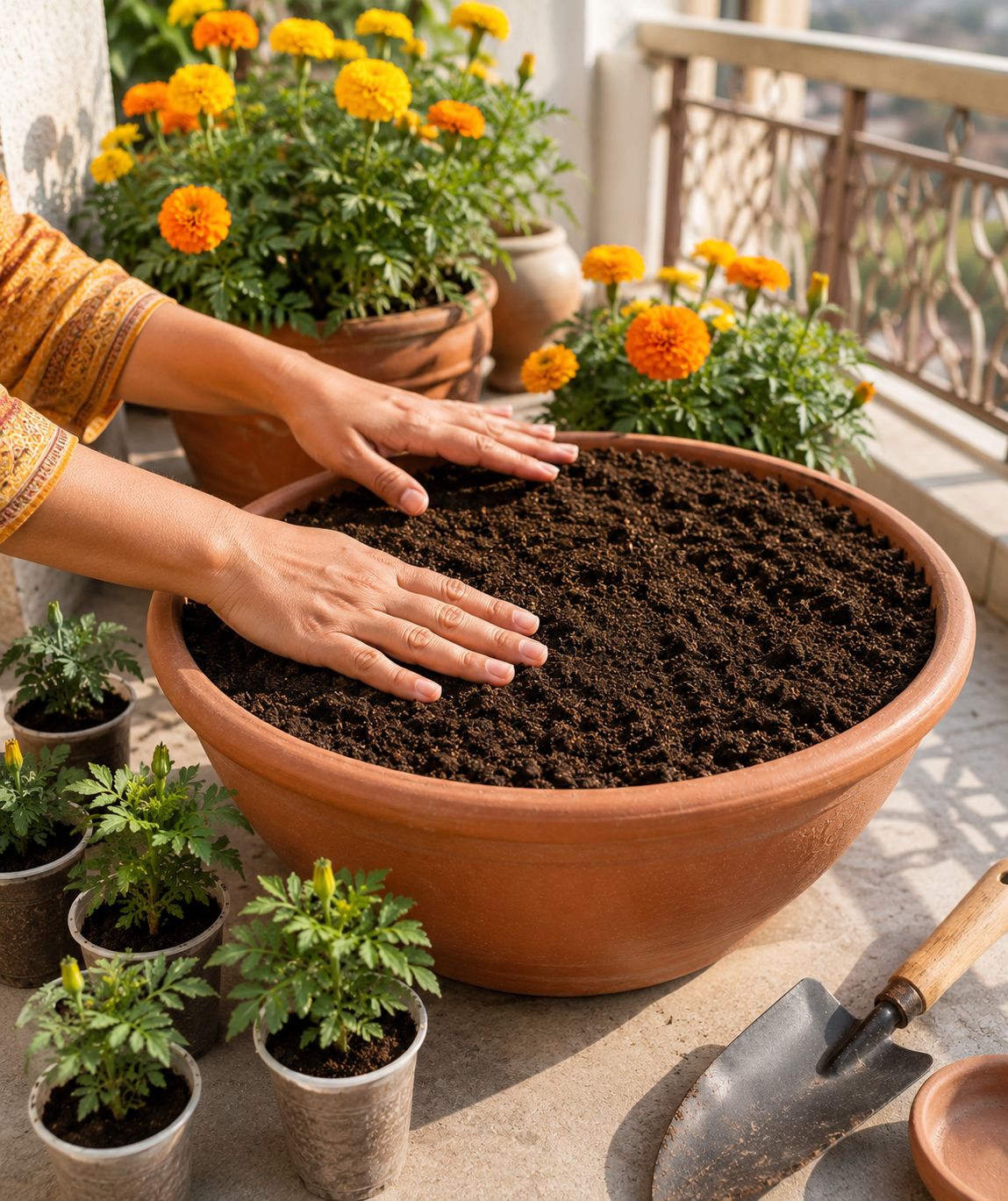
Pot size:
Choose a pot at least 25–30 cm wide and 20 cm deep for French marigolds. Larger African marigolds appreciate a pot at least 35 cm wide and 30 cm deep to support their taller, bushier growth. Make sure the pot has drainage holes — marigolds like water to drain from the soil quickly and do not tolerate waterlogging.
A wide terracotta pot works beautifully. The material breathes, prevents overwatering, and looks naturally at home with the warm tones of orange and yellow marigold blooms.
Spacing:
Give each plant room. Crowding marigolds creates weaker airflow between plants, which leads to fungal issues and a shorter, less impressive bloom show. For French marigolds in a pot, space plants 15–20 cm apart. For African marigolds, 25–30 cm. It feels like a lot of space when the seedlings are small — but the plants will fill it completely within a few weeks.
Soil:
Marigolds are forgiving of poor soil — this is one of their great strengths. But they grow best, bloom most prolifically, and last longest in rich, well-draining soil with good organic content.
Use a quality potting mix with compost mixed in. A layer of fresh compost on the surface before planting improves soil health significantly over the season. Marigolds in containers benefit from soil that holds enough moisture to stay consistently damp without becoming waterlogged — a mix of 60% potting soil and 40% compost works very well.
| Care | Requirement |
|---|---|
| ☀️ Sunlight | Full sun — 6 hours minimum, more is better |
| 💧 Watering | When top inch of soil is dry — every 2–3 days |
| 🌡️ Temperature | 18–30°C ideal — best blooms in cool weather |
| 🪴 Pot | 25 cm wide minimum with drainage holes |
| 🌱 Soil | Well-draining, compost-rich potting mix |
| 📅 Best time to plant (Pakistan) | Feb–March / Aug–September |
Step 04 — Care, Watering, and Feeding
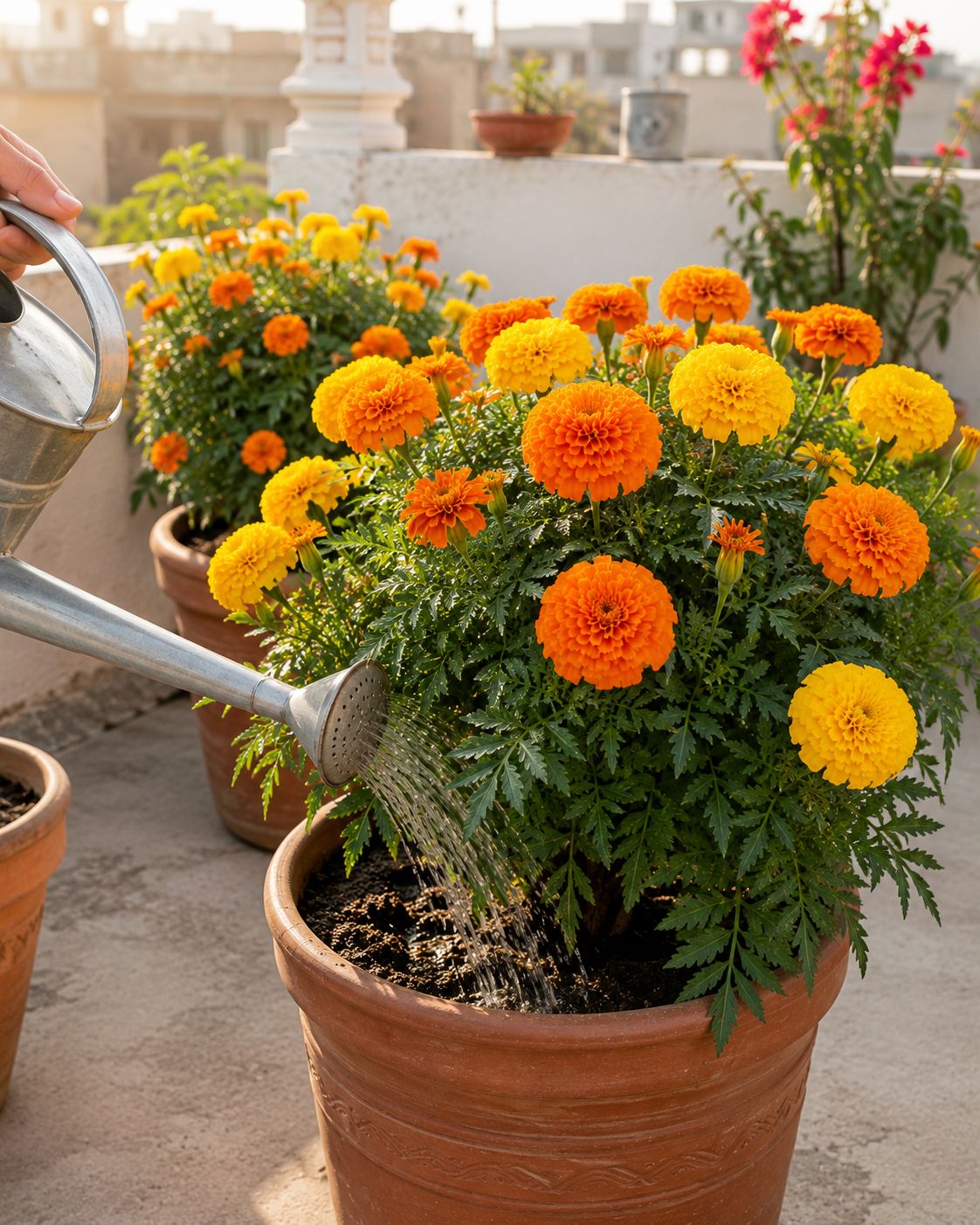
Once your marigolds are established and growing, the care is minimal — which is exactly what makes this flower so satisfying to grow.
Sunlight:
Marigolds are sun worshippers. They need at minimum six hours of direct sun a day — but more is always better. In partial shade they will grow leaves but produce far fewer blooms. Put them in your sunniest spot. In Pakistani winters they can handle full all-day sun comfortably. In peak summer, some afternoon shade on the hottest days can help them during extreme heat above 38°C.
Watering:
Container plants dry out faster than those in the ground, so check the soil regularly. Water when the top inch of soil feels dry — typically every two to three days during spring and autumn, possibly daily during the hottest summer months. Water at the base of the plant, never on the foliage or flowers. Wet leaves are an invitation for powdery mildew, and wet petals can cause flowers to brown and rot prematurely.
Feeding:
Marigolds do not need heavy feeding. In fact, too much fertiliser — especially nitrogen-rich feeds — produces lush, dark green, leafy plants with noticeably fewer flowers. This is not what you want from a flowering plant.
Feed lightly with a balanced fertiliser once every four to six weeks during the growing season. If your soil was amended with compost at planting, you may need very little additional feeding at all. If you notice flowers slowing mid-season, a diluted liquid fertiliser gives the plant a gentle boost to push new buds.
🌿 The golden rule for marigold feeding: less nitrogen, more potassium and phosphorus. These two nutrients encourage flower production rather than leaf growth. Banana peel water — soaked overnight and diluted — is a perfect free potassium boost that encourages continuous blooming.
Step 05 — Deadheading: The Secret to Non-Stop Blooms
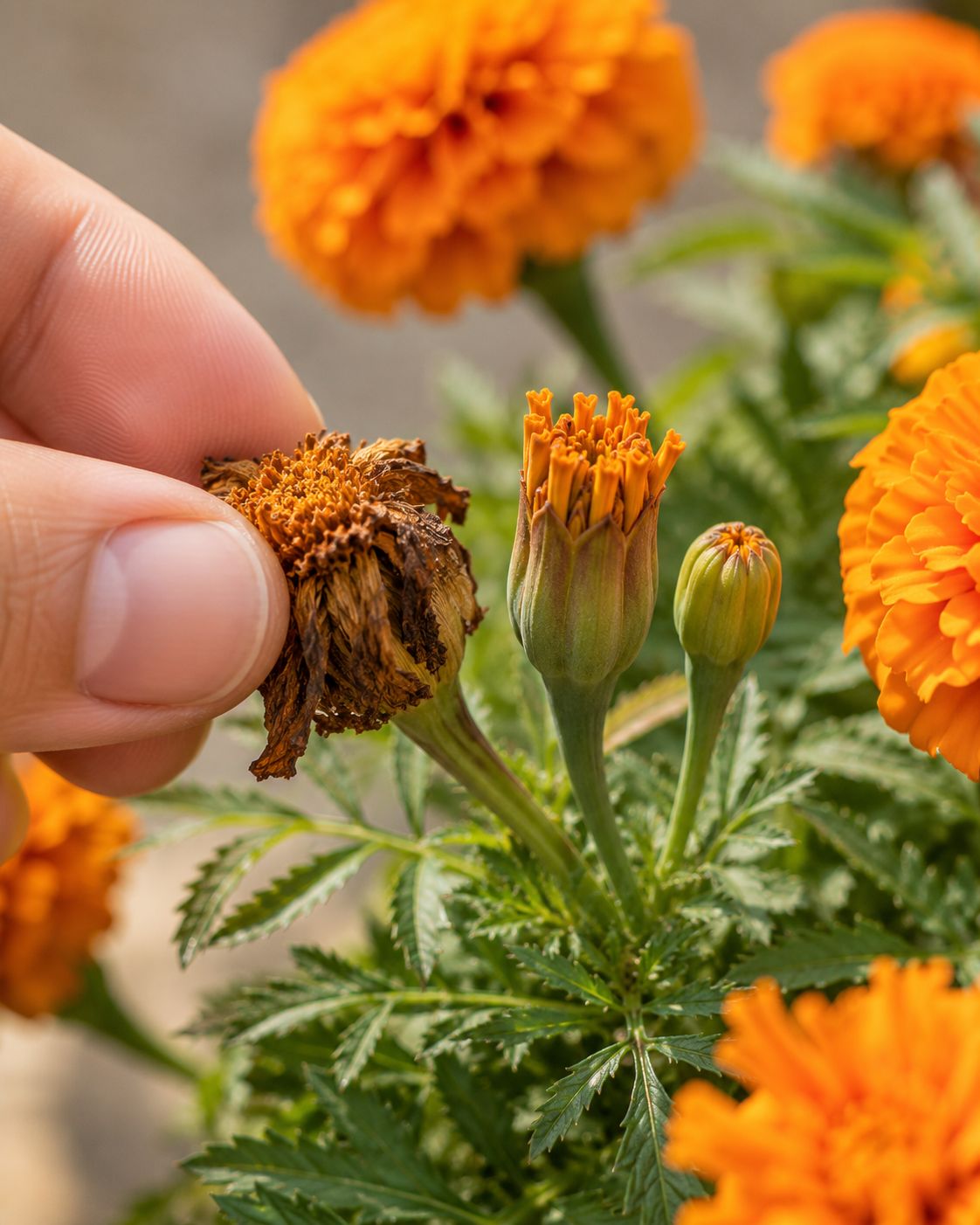
This is the single technique that separates a marigold plant that blooms for two months from one that blooms for six. It takes thirty seconds per plant and makes an enormous difference.
Deadheading means removing spent, finished flower heads from the plant before they set seed. When a marigold flower fades, the plant's energy shifts from producing new buds to producing seeds in the old flower head. By removing those spent blooms before seeds develop, you tell the plant its work is not finished — it needs to keep producing flowers.
How to deadhead:
Pinch or cut the spent flower head off with your fingers or scissors, removing it back to the nearest set of leaves or the next developing bud. Do this every few days on a walk past the plant. It takes no time. The result is a plant that keeps pushing out new buds continuously, without pause, for the entire season.
It might seem counterintuitive, but pinch off your very first little blossoms before they even open fully on a young plant. This encourages the plant to grow bushier and produce more flowering stems before committing to its first blooms. One week of patience at the start produces a much more productive plant for the rest of the season.
When blooms slow in midsummer:
If your plant slows down during peak heat — which is normal — cut it back by about one-third, water well, and give it a little time. Marigolds usually respond with a clean flush of fresh growth and new buds once the plant is not carrying every spent stem from early summer.
✂️ Leave a few blooms to finish at season end. When you are ready to collect seeds for next year, stop deadheading a few flower heads and let them mature fully, dry on the plant, and turn brown. Those dry flower heads are packed with next season's seeds.
Step 06 — Seed Saving: Free Marigolds Forever
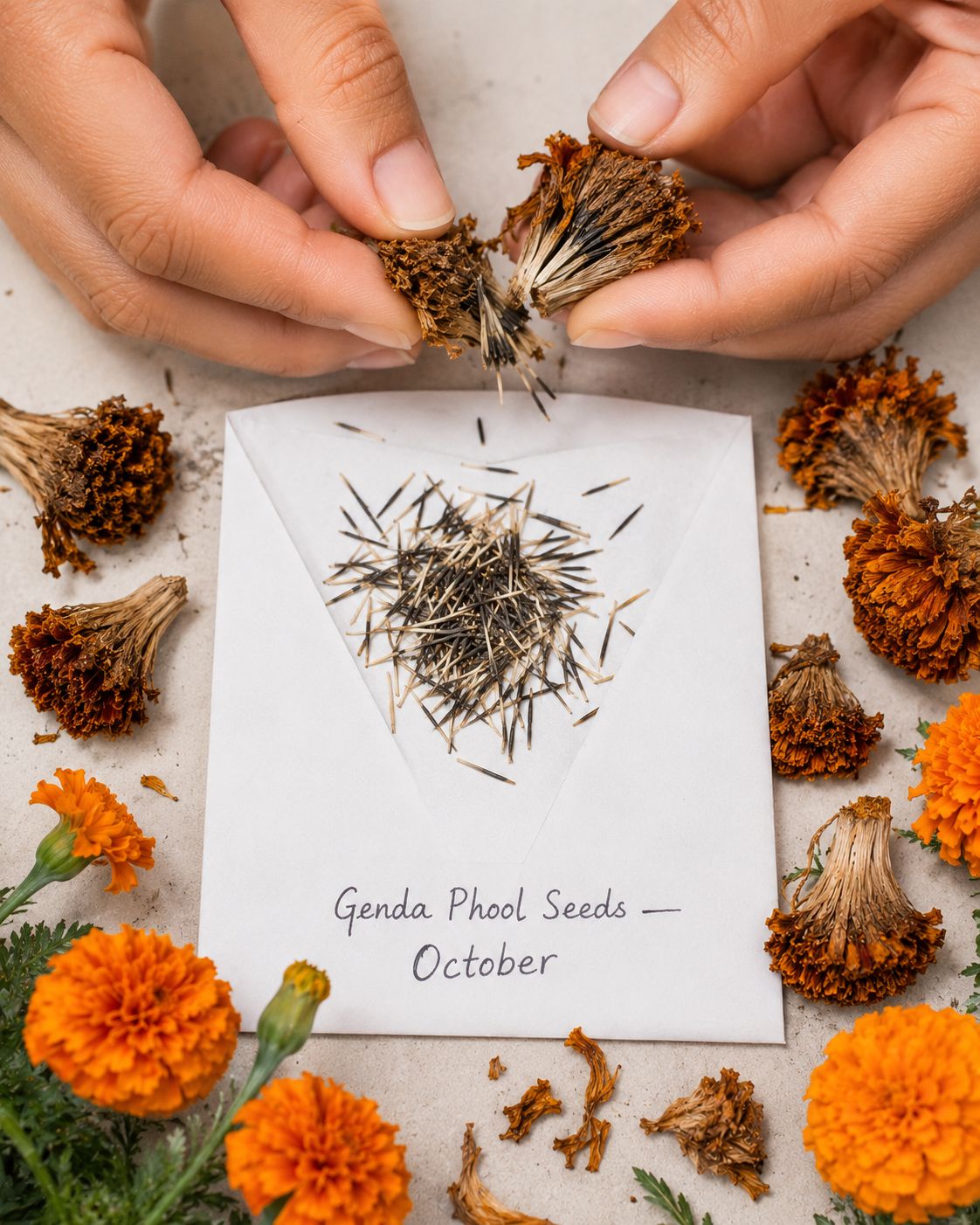
Marigolds are one of the most generous self-seeders in the plant world. Understanding this means you will likely never need to buy marigold seeds again after your first packet.
How to save seeds:
Several weeks before cold weather arrives, stop deadheading on a few chosen flower heads and allow them to complete their natural cycle. The petals will fade and fall. The base of the flower will begin to dry and darken. When the base is dry and papery and the flower head feels completely dry and light, it is ready.
Pull the flower head apart gently. The long, thin, needle-shaped seeds are packed inside at the base — dozens per flower head. Spread them on a paper towel for one to two days to dry completely, then store in a small paper envelope in a cool, dark place.
Label with: variety name, colour, date collected. Store away from moisture and heat. Seeds stay viable for one to two years stored this way.
Self-seeding: If you simply leave dried flower heads on the plant or let fallen petals and seeds land in the soil below, marigolds self-seed prolifically. New seedlings will emerge in the same area the following spring without any effort from you. This is one of the great joys of growing marigolds — each plant drops so many seeds that new plants often pop up on their own, providing free marigold plants for years.
Companion Planting — The Bonus That Changes Your Whole Garden
This is the section that turns a beautiful balcony flower into a working part of your kitchen garden.
Marigolds are the most well-known companion plant in home gardening — and for good reason. Planted near your vegetables, they provide real, documented pest protection alongside their beauty.
What marigolds repel:
- Aphids — the strong marigold scent confuses and deters aphids from settling on nearby plants
- Whiteflies — particularly effective when French marigolds are planted alongside tomatoes and shimla mirch
- Soil nematodes — marigold roots release a chemical called alpha-terthienyl that kills microscopic nematodes in the soil. This particularly benefits root crops like garlic, onions, and carrots
Best companion pairings in a Pakistani kitchen garden:
| Marigold Placed Near | Benefit |
|---|---|
| Shimla mirch | Repels whiteflies and aphids |
| Tamatar (Tomato) | Repels whiteflies — the classic pairing |
| Hari mirch | Deters aphids |
| Lehsan / Pyaaz | Nematode protection in the soil |
| Dhaniya | General pest deterrent and pollinator attraction |
💡 Practical tip: You do not need many marigolds to get the companion planting benefit. One or two French marigold plants at the edge of a pot of shimla mirch, or at the corners of a rooftop vegetable bed, provides meaningful protection to surrounding plants throughout the season.
Common Mistakes to Avoid
| Mistake | What Happens | The Fix |
|---|---|---|
| Covering seeds too deep | Poor germination | Press seeds to surface, cover with just a thin dusting |
| Watering on leaves and flowers | Powdery mildew, rotted blooms | Always water at the base only |
| Too much nitrogen fertiliser | Lush green leaves, very few flowers | Feed lightly — compost only if possible |
| Not deadheading | Plant stops producing new blooms | Remove spent flowers every few days |
| Crowding plants | Poor airflow, fewer blooms, fungal issues | Space 15–20 cm apart minimum |
| Pulling up at season end | Lose all seeds for next year | Let a few flowers dry and save seeds first |
| Too much shade | Leggy growth, very few flowers | Full sun minimum 6 hours — non-negotiable |
| Overwatering | Root rot, yellowing lower leaves | Water only when top inch of soil is dry |
Marigold vs Other Balcony Flowers
| Marigold | Pansy | Petunia | Zinnia | Calendula | |
|---|---|---|---|---|---|
| Bloom time (weeks from seed) | 8 weeks | 10–12 weeks | 8–10 weeks | 8 weeks | 8–10 weeks |
| Season | Spring + Autumn | Winter–Spring | Summer | Summer | Winter–Spring |
| Pest repellent | ✅ Yes — strong | ❌ | ❌ | ❌ | 🔶 Mild |
| Self-seeds | ✅ Freely | 🔶 Sometimes | 🔶 Sometimes | 🔶 Sometimes | ✅ Yes |
| Pakistan heat tolerance | ✅ Good | ❌ Dislikes heat | 🔶 Medium | ✅ Excellent | 🔶 Medium |
| Fragrant | ✅ Strongly | 🔶 Mildly | ✅ Yes | ❌ | 🔶 Mildly |
| Difficulty | ⭐ Easiest | ⭐ Easy | ⭐ Easy | ⭐ Easiest | ⭐ Easy |
Marigold is the most practically useful flower in this list. It is beautiful, it works as a pest repellent, it self-seeds freely, it blooms for the longest season, and it is the easiest of all to grow from seed. For Pakistani gardens — whether a single balcony pot or a full rooftop flower and vegetable bed — it is the right flower to start with and the right one to keep growing every single year.
Quick Care Summary
| Care | Requirement |
|---|---|
| Sunlight | Full sun — 6 hours minimum |
| Watering | Top inch dry = water time. At base only |
| Temperature | 18–30°C — best in cool weather |
| Pot | 25 cm wide + drainage holes |
| Soil | Compost-rich, well-draining |
| Feeding | Light — low nitrogen, balanced monthly |
| Deadheading | Every few days — the key to continuous blooms |
| Seed saving | Let a few heads dry fully, pull apart, store in paper envelope |
| Best Pakistan season | August–September sowing for October–December blooms |
Part of the Instantly Grow Series by Seedora Store — grow the flowers and vegetables your garden and kitchen actually love, every single day.