Starting Your First Vegetable Garden in Pakistan's Heat
If you've ever looked at Lahore's June forecast — 42°C, sun like a physical weight — and assumed that ruled out growing your own vegetables, you had it backwards. That heat isn't the obstacle. It's exactly what a whole category of vegetables is waiting for.
You don't need a farm, a greenhouse, or years of experience. You need the right seeds, a basic understanding of why they work in this climate, and about twenty minutes a day. That's genuinely it. Here's everything Seedora Store has learned about getting a beginner's warm-climate garden from seed packet to dinner table.
Why Most Seed Advice Fails in Pakistani Summers
Here's the part most guides skip: why heat-tolerant seed choice actually matters, not just that it does.
Above roughly 35°C in the day and 24°C at night, something specific happens inside a tomato or pepper flower — its pollen simply stops working. The flower opens, fails to pollinate, and drops off the plant. This is called blossom drop, and it's the single most common reason a "healthy-looking" plant in a Pakistani summer garden produces almost nothing. The plant isn't sick. It's just been handed a job its flowers can't do in that heat.
This is exactly why the vegetables below aren't a random top-seven list. Every one either tolerates that heat without losing its flowers, or — like tomatoes and chilies — has been bred into hardier local varieties that push through it anyway.
One more thing worth knowing before you sow a single seed: Punjab and Sindh don't run on the same clock. Central Punjab (Lahore, Faisalabad) typically starts nursery sowing in February; Sindh's warmer plains can often start a few weeks earlier, in December–January. If your seed packet says "February," and you're gardening in Karachi or Hyderabad, you likely have more room to move than you think.
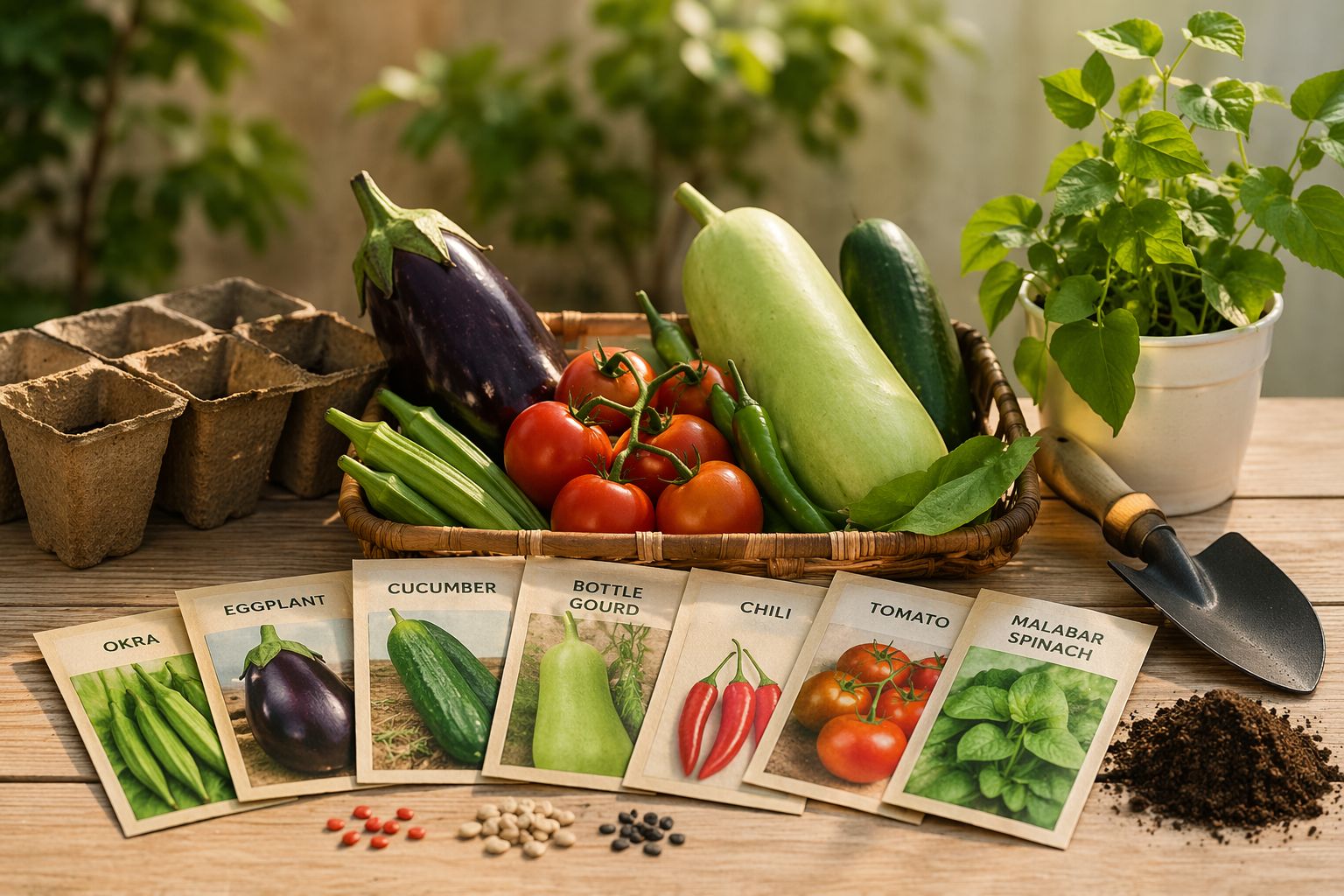
The 7 Vegetables Worth Your First Season
Okra (Bhindi)
The single most forgiving vegetable on this list. Okra doesn't just tolerate heat above 35°C — it performs better in it. Direct-sow it, give it full sun, water it moderately, and it will largely take care of itself. First pods in 50–60 days.
Eggplant (Baingan)
A slower, steadier grower that rewards a little extra soil prep. Give it nutrient-rich soil and enough space to spread, and it produces heavily from June onward. 60–70 days to first harvest.
Cucumbers
The fastest payoff on this list, and the best fit if your space is tight — cucumbers grow beautifully up a trellis instead of sprawling across the ground. Consistent moisture is non-negotiable here; let them dry out and the fruit turns bitter. 45–55 days.
Bottle Gourd (Lauki)
Genuinely drought-tolerant once established, and it thrives in the humidity that makes other vegetables struggle. A reliable monsoon-season crop. 55–65 days.
Chilies (Mirch)
Low-maintenance once established, but give it a head start indoors before transplanting outside — chilies germinate more reliably in a controlled seed tray than direct in hot, inconsistent outdoor soil. 60–75 days.
Tomatoes (Tamatar)
The one crop on this list actually fighting the heat, not working with it — which is exactly why variety choice matters more here than anywhere else on this list. Cherry and hybrid varieties tolerate Pakistani summers noticeably better than large slicing tomatoes, and staking them isn't optional — it keeps airflow moving through the plant, which measurably reduces blossom drop and fungal problems. About 60 days to harvest.
Malabar Spinach
Regular spinach gives up in real heat. This doesn't. It's a vining leafy green that climbs instead of sprawling, keeps producing in conditions that would bolt normal spinach within a week, and is ready to start harvesting in just 40–50 days.
At a Glance
| Vegetable | Days to Harvest | Heat Tolerance | Space Needed | Popular in Pakistan |
|---|---|---|---|---|
| Okra | 50–60 | Excellent | Medium | Yes |
| Eggplant | 60–70 | High | Medium | Yes |
| Cucumbers | 45–55 | High | Large (vining) | Yes |
| Bottle Gourd | 55–65 | Excellent | Large | Yes |
| Chilies | 60–75 | Excellent | Small | Yes |
| Tomatoes | 60 | Good | Medium | Yes |
| Malabar Spinach | 40–50 | Excellent | Small (climbing) | Growing fast |
The Details That Actually Move the Needle
Soil that won't cook your roots. Mix 50% garden soil, 30% compost, and 20% sand. This isn't a random ratio — it's what keeps roots from sitting in trapped, overheated moisture, which is the real killer in summer beds, not the heat itself.
Water like the sun is your enemy, not your friend. Water early morning, before the heat starts pulling moisture back out of the soil. A layer of mulch on top does double duty — it holds that moisture in and keeps root-zone temperature down several degrees, which matters more than people expect.
Let neem oil do the work chemicals shouldn't have to. It's genuinely effective against the pests that show up in warm, humid conditions, and pairing it with companion planting (marigolds near your chilies, for instance) cuts down pest pressure further without a single spray bottle of anything synthetic.
Start chilies and tomatoes indoors first. Both germinate far more reliably in a seed tray held at 25–30°C than sown directly into inconsistent outdoor soil. Transplant once they've got a few true leaves.
The three mistakes that undo everything else on this list: overwatering (root rot shows up fast in warm soil), too much shade (these are sun-hungry plants, full stop), and poor drainage (pooling water in a 40°C bed is worse than not enough water at all).
Get the basics right, and most beginners see 2–5 kg per plant in a single season — a genuinely solid return for twenty minutes of daily attention.
Your First Season Starts With One Seed Packet
You don't need to plant all seven at once. Pick two — okra and chilies are the most forgiving starting pair — and see how they do in your specific balcony, rooftop, or backyard before scaling up.
Explore the full range of warm-climate seeds at SeedoraStore.com, with delivery across Pakistan and support at every stage of your first season.
Follow along and share your progress with us: instagram.com/seedorastore
What are you planting first?