AFFILIATE DISCLOSURE
This post contains Amazon affiliate links. If you purchase through these links, Seedora earns a small commission at no extra cost to you. We only recommend products we genuinely believe in.
15 Gardening Tools and Pots Every Home Gardener Actually Needs
Walk into any garden centre — or scroll through Amazon for five minutes — and you will feel overwhelmed instantly. There are hundreds of tools, dozens of pot types, and every product claims to be the one thing you absolutely cannot garden without.
Most of it is noise.
After years of growing herbs, vegetables, and houseplants — on balconies, rooftops, and kitchen windowsills — the truth is that only a small set of tools and containers actually moves the needle. Everything else is either a niche upgrade for later or a solution to a problem most beginners do not even have yet.
This is that small, honest set. Fifteen products — tools and containers — that cover everything from your first seed to your last harvest of the season. Each one is linked directly on Amazon so you can find it, read the reviews, and decide for yourself.
Let us start with the tools, then move to containers, and end with the most exciting growing system in home gardening right now.
🔧 THE TOOLS
1. Hand Trowel — The One Tool You Use Every Single Time
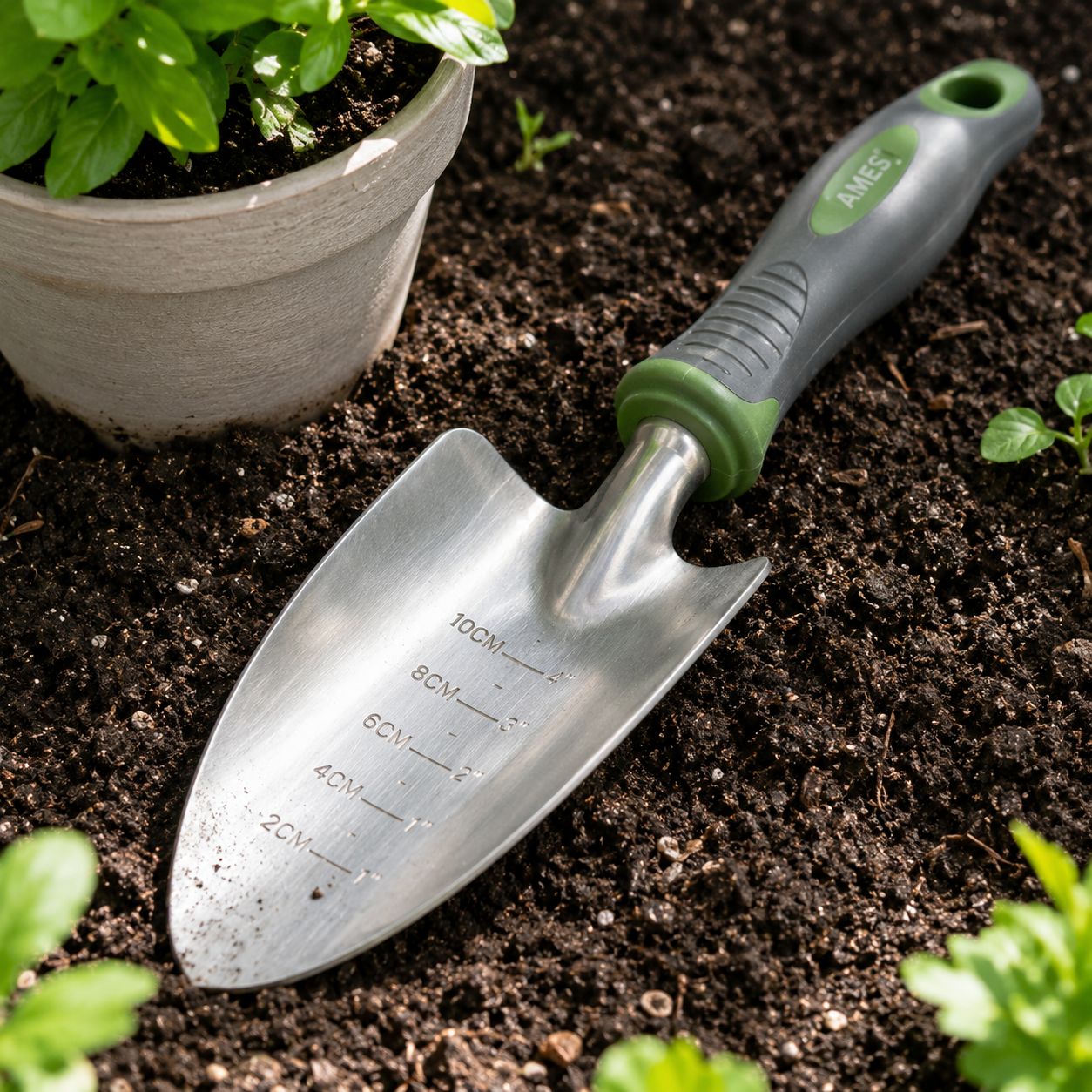
A trowel helps in digging small holes for planting and transplanting, while a hand fork is ideal for loosening soil and removing weeds. If you only ever buy one gardening tool, this is the one. It is used at every stage — sowing seeds, transplanting seedlings, loosening soil, removing stubborn weeds, and mixing in compost.
A trowel should be one of your first tool purchases. Use it when transplanting, moving plants, breaking up strong roots, or digging up deep-rooted weeds. An ergonomic design will alleviate wrist and hand pain.
What to look for: Stainless steel blade — rust-resistant and much stronger than painted steel. Comfortable rubber or foam grip. Depth markings on the blade are a bonus — they help you plant seeds at exactly the right depth without guessing.
Avoid: Cheap painted-steel trowels from budget bins. The coating peels within a season and the blade bends when it hits a root. A good stainless trowel bought once lasts years.
2. Bypass Pruning Shears — The Most-Reached-For Tool in Any Garden
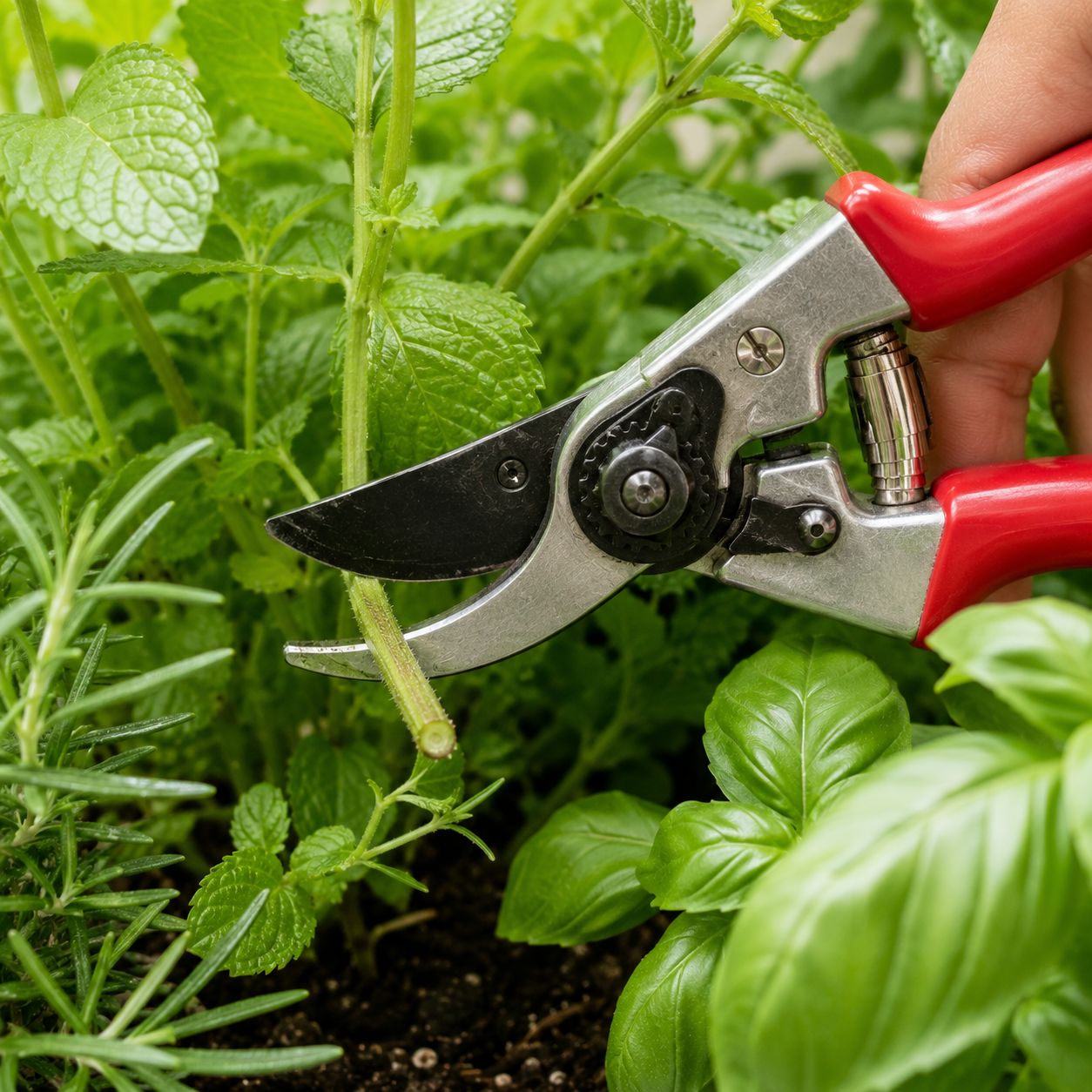
If we had to pick our most essential tool, it would be the garden pruner. A hand pruner is extremely versatile to cut or trim small branches from perennial plants, shrubs, and trees. Choose a bypass-style pruner, meaning the top blade slices past the bottom blade, resulting in very quick, tear-free cuts so plants can heal quickly.
Pruners are used for harvesting herbs and vegetables, cutting back leggy growth, deadheading flowers, and trimming stems when propagating cuttings. Every gardener has their favorite pair of hand pruners or garden scissors. Use them to harvest, deadhead, prune, and do general cleanup.
What to look for: Bypass style — always. The blade slices cleanly past the counter-blade like scissors. Anvil pruners (the other type) crush the stem rather than cutting — this damages the plant and slows healing. Look for a safety lock, replaceable blades, and a comfortable spring-loaded grip that does not fatigue your hand.
Avoid: Anvil-style pruners for plants. Avoid very cheap options — dull blades tear stems instead of cutting them, which invites disease.
3. Hori Hori Knife — The Tool Most Beginner Lists Miss
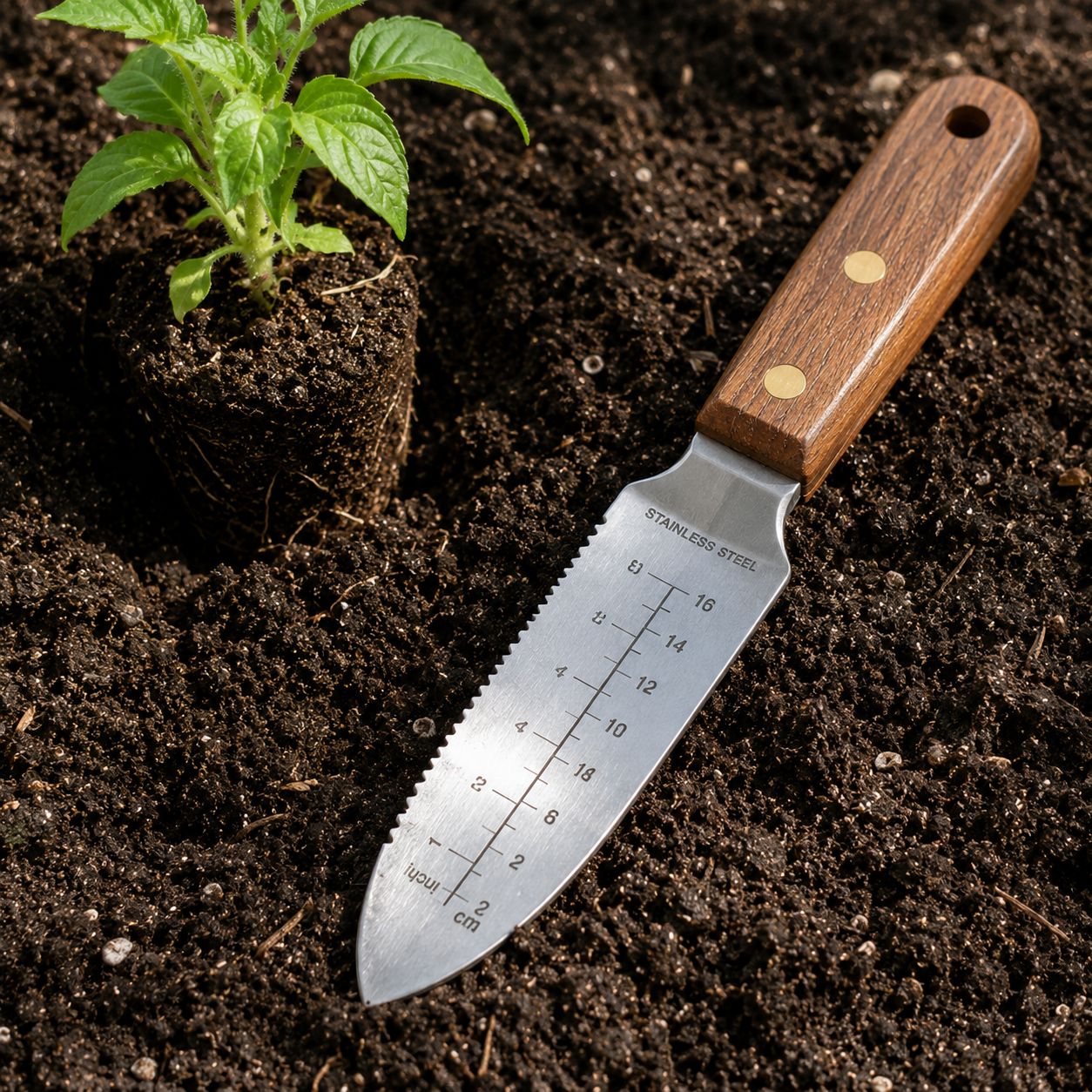
Hori hori knife: this is one of the best gardening tools that most beginner guides miss. A good hori hori handles transplanting, weeding, dividing, and soil probing in one.
A hori hori knife is basically three tools in one. It has a long blade that creates narrow but deep holes in the soil. It also has a serrated edge you can use to cut twine or even plant stems and then markings on the blade to tell you how deep you're planting something.
This one tool replaces your trowel for deep planting, your knife for cutting, and your ruler for depth. Once you use it, you will not understand how you gardened without it. It is especially useful in Pakistani conditions where soil can be compacted and hard — the narrow blade cuts through clay soil that would defeat a trowel.
What to look for: Full-tang stainless steel blade — meaning the metal runs the full length through the handle. Depth markings. A comfortable wood or rubber handle. A leather sheath is a bonus for safe storage.
4. Hand Fork / Cultivator — For Soil That Stays Alive
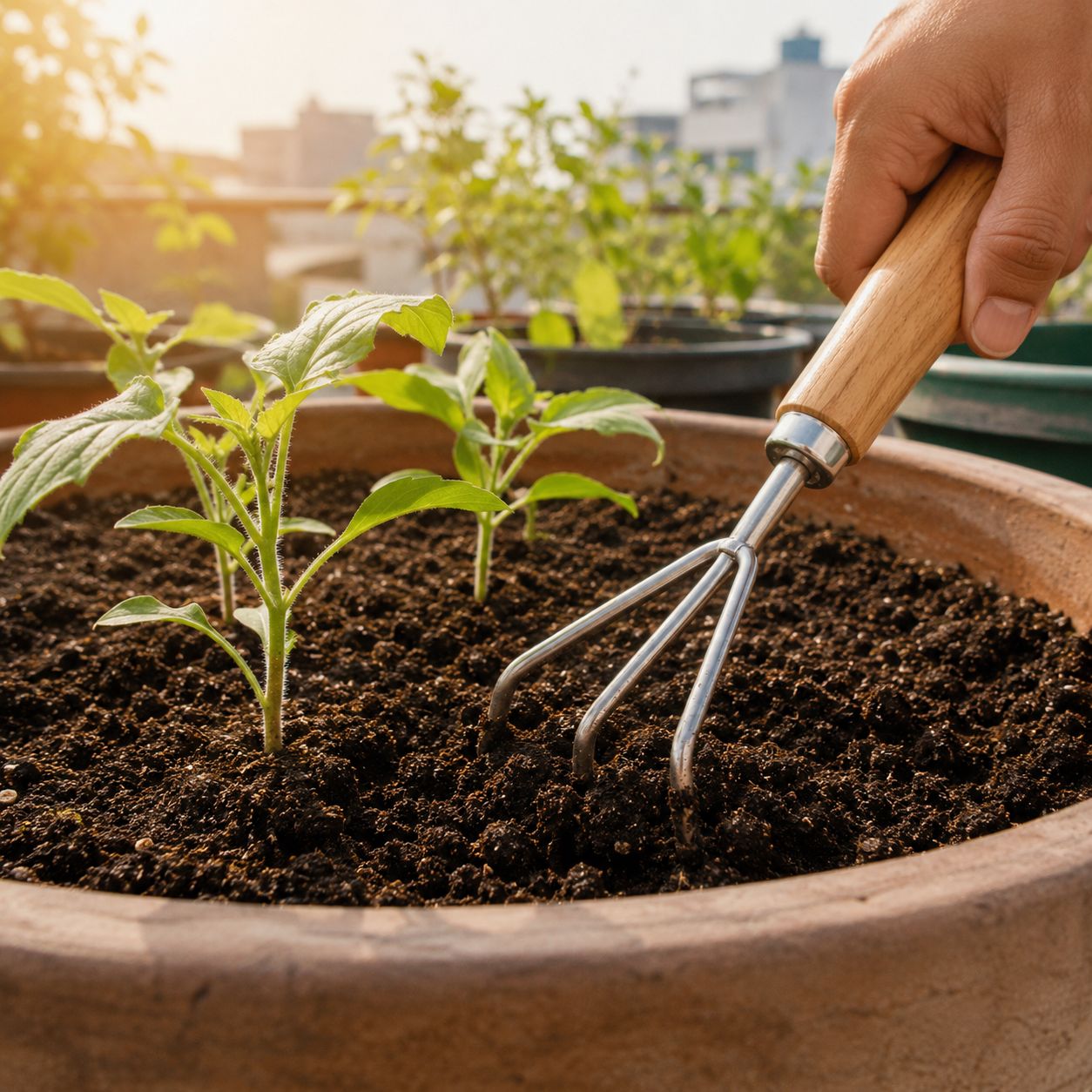
Use a hand fork or cultivator to break up the soil in the spring, reduce small weeds, and pull strong roots from beneath the soil. Select one with metal tines and a comfortable handle.
In pot gardening — which is how most Pakistani home gardeners grow — soil compacts over time. Water hits the surface and runs off instead of soaking in. Roots cannot breathe. A hand cultivator loosens the top 5–8 cm of soil in seconds, breaks up compaction, improves drainage, and lets air reach the roots.
Use it every time you water if the surface soil looks hard. Use it to mix in compost around established plants without disturbing roots. Use it to remove small weeds before they establish. It takes thirty seconds and makes a real difference.
What to look for: Three to five metal tines — not plastic, which break against compacted soil. Rust-resistant coating or stainless. Comfortable grip. Same brand or set as your trowel so the handles match and feel consistent.
5. Gardening Gloves — The Ones That Actually Fit and Last
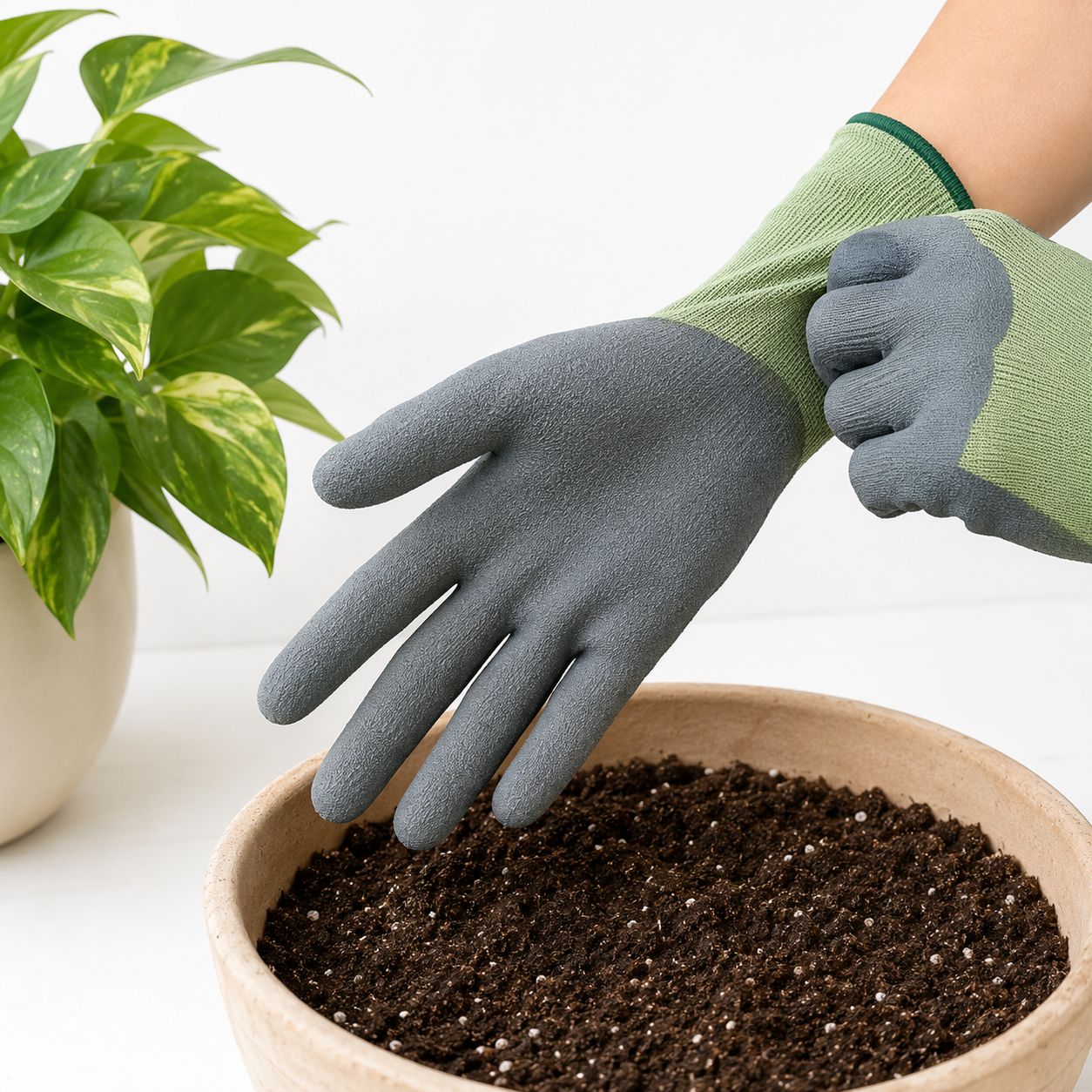
While gardening can be a wonderful hobby, it can quickly turn into a thorny and splintery hassle without the right pair of gloves. Gloves should be durable but not too bulky, especially for working with seeds or transplanting seedlings.
Protect your hands from thorns, blisters, and dirt with a pair of durable garden gloves. Opt for gloves made from breathable materials that provide a good grip without sacrificing comfort.
The problem with most gardening gloves is that they are too thick. You lose all feel and end up dropping seeds, tearing seedlings, and fumbling with small tools. Good gloves are form-fitting — rubber-coated fingertips for grip, breathable fabric back, thin enough that your hands feel what they are doing.
What to look for: Nitrile or rubber-coated fingertips and palm. Breathable fabric on the back of the hand. Snug fit — not baggy. If you are working with thorny plants like roses or doing heavy digging, a thicker leather option is worth having separately.
Avoid: One-size-fits-all gloves. They never fit well and you end up not wearing them at all.
6. Soil Moisture Meter — Stop Guessing, Start Knowing
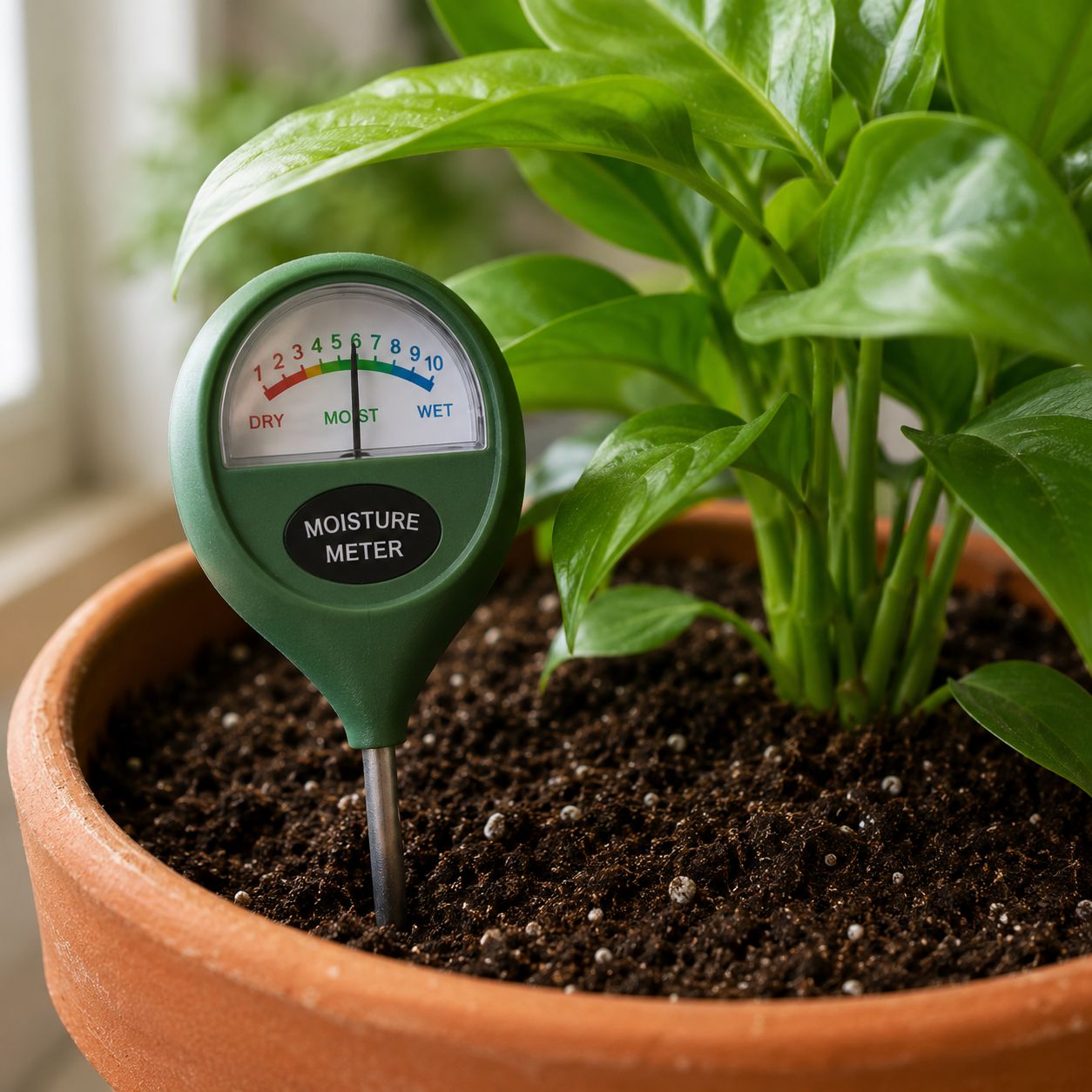
A very handy and inexpensive extra is a small soil monitor that you stick in the ground to read water, sun, and pH value. You'll know when it's time to water, whether the plant is getting enough sun, and if the soil is acidic or alkaline.
Overwatering is the number one killer of home garden plants. And the finger test — sticking your finger into the soil — is unreliable because different soils hold moisture very differently. A moisture meter removes all the guesswork. Insert it into the soil, read the dial, and you know immediately whether to water or wait.
The 3-in-1 versions that also measure light and pH are especially useful for balcony and rooftop gardening in Pakistan — where soil pH can vary significantly and light conditions change by season.
What to look for: 3-in-1 models that measure moisture, light, and pH. No batteries required (analog dial). Probe long enough to reach the mid-level of a medium pot. Read reviews — some cheap versions read inaccurately.
Avoid: Very cheap no-name versions. For such a low price, getting a slightly more reviewed option makes a significant accuracy difference.
7. Neem Oil Spray — One Bottle, 200 Pest Problems Solved
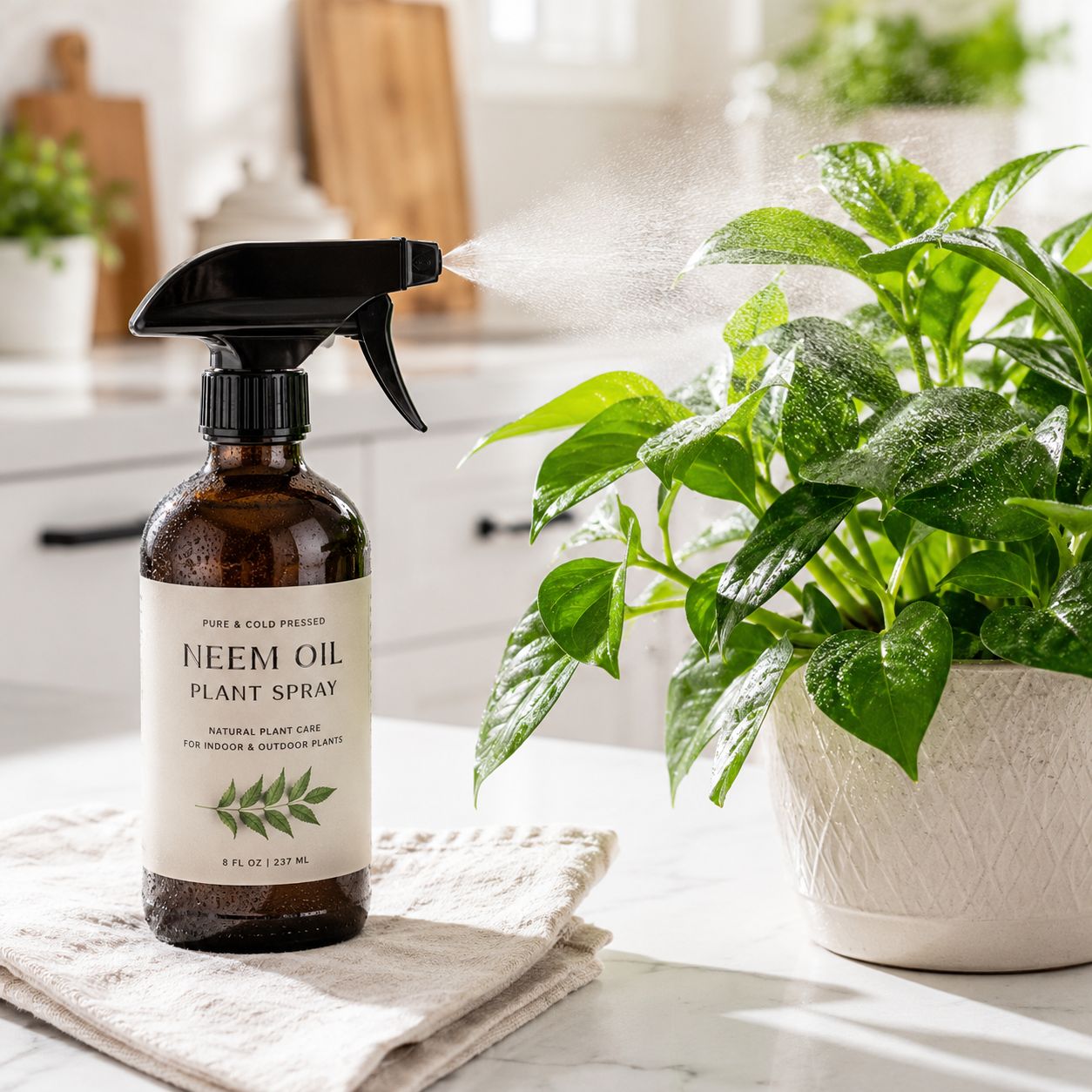
Neem oil is the one product every home gardener should have in their kit at all times. It is not a single-purpose spray — it is an all-in-one organic pest control and fungal treatment. Neem oil works against aphids, spider mites, whiteflies, mealybugs, fungus gnats, and it also prevents powdery mildew when used as a preventative spray.
It is safe for edible plants when applied correctly. It does not harm beneficial insects like bees when applied in the morning or evening, outside of active pollination hours. And it is available in concentrated form on Amazon — one bottle, properly diluted, makes litres of spray and lasts a full growing season.
How to use it: Mix one to two tablespoons of concentrated neem oil per litre of water. Add a few drops of liquid dish soap to emulsify. Spray on leaves — top and bottom — in the early morning or evening, never in direct midday sun. Apply every seven to fourteen days as prevention, or every five to seven days for active infestations.
What to look for: 100% cold-pressed neem oil concentrate. The higher the concentration, the more uses per bottle. Avoid pre-diluted sprays — they cost more per use and go off faster once diluted.
8. Watering Can with Long Spout — Precision Watering That Saves Plants
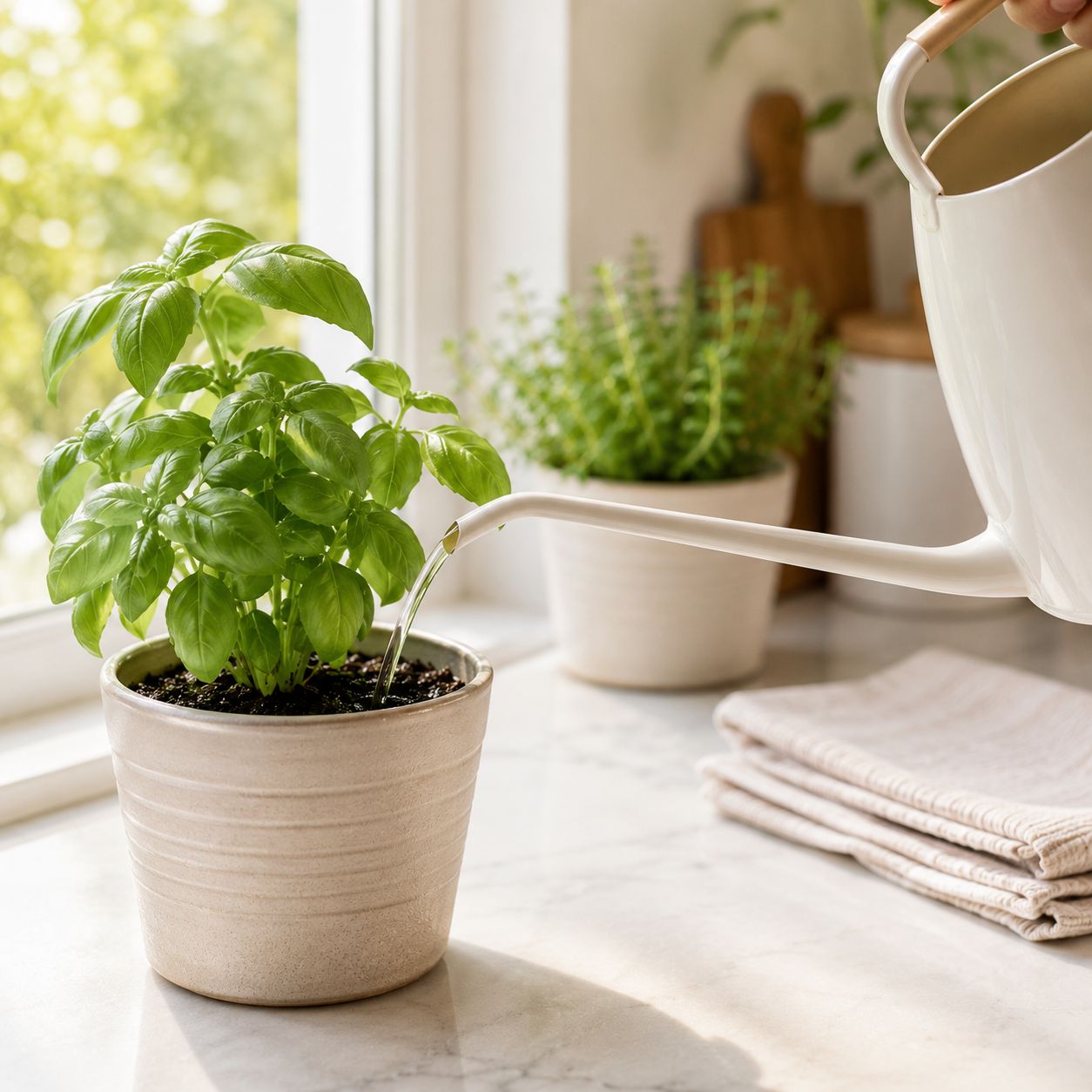
Watering seems simple. It is not. Most beginners water from above — dumping water on leaves, splashing soil everywhere, missing the root zone completely. A watering can with a long, narrow spout lets you direct water precisely to the base of each plant, keeping leaves dry (which prevents fungal disease), and avoiding soil splash (which spreads disease between plants).
For small balcony and indoor gardens — which is most home gardening in Pakistani cities — a 1 to 2 litre metal or plastic can with a long spout is ideal. Easy to carry, easy to control, easy to fill at a kitchen tap.
What to look for: Long, narrow spout for precision. 1–2 litre capacity for apartment and balcony use. Comfortable handle. Metal cans look better and last longer — they are worth the small price difference over plastic.
Avoid: Very large cans (5 litres+) for balcony gardening — they are heavy, hard to control, and usually not necessary unless you have many large pots.
🪴 THE CONTAINERS
9. Fabric Grow Bags — The Best Container for Vegetables, Period
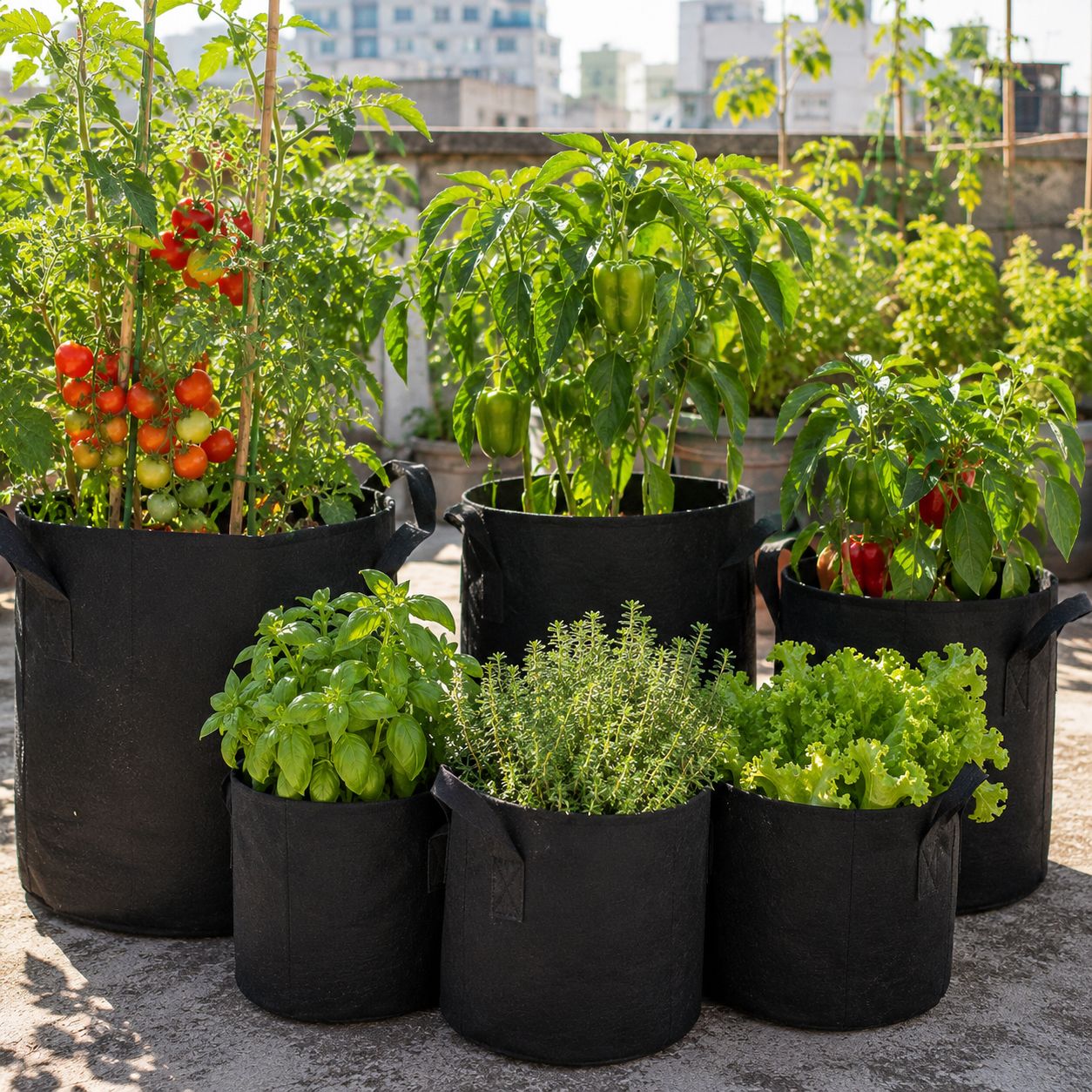
If you are growing vegetables — shimla mirch, tomatoes, lehsan, mint, coriander, chili — in pots on a Pakistani balcony or rooftop, fabric grow bags are the single biggest upgrade you can make.
Here is why they are genuinely better than regular plastic pots:
Air pruning happens when roots grow through the fabric pot and come into contact with air, then they die back at the ends. This encourages the plant to grow another root directly from the source. That means you are doubling the plant's root mass and eliminating the tendency for roots to become potbound.
With a fabric bag, the breathable fabric easily allows excess moisture to pass through, helping to prevent issues associated with overwatering, like root rot, which is a big killer of plants grown indoors.
In plain language: fabric grow bags prevent the two most common problems in Pakistani container gardening — roots becoming pot-bound and root rot from waterlogging. They also cool roots through evaporation, which matters enormously in Pakistani summers.
Grow bags have been gaining popularity over the last few years as more growers see the benefits of growing plants in containers with air pruning and superior drainage capabilities. They are versatile, inexpensive, and hold up to years of use.
Size guide for Pakistani home gardeners:
| Plant | Recommended Bag Size |
|---|---|
| Mint, coriander, herbs | 3–5 gallon |
| Shimla mirch, chili | 5–7 gallon |
| Tomatoes | 10–15 gallon |
| Garlic (multiple bulbs) | 10 gallon wide |
| Small fruit trees | 20–25 gallon |
What to look for: Non-woven polypropylene fabric — not burlap or jute, which degrade too quickly. Reinforced handles. BPA-free material. Double stitching at seams.
10. Terracotta Pots — Classic, Breathable, and Still the Best for Herbs
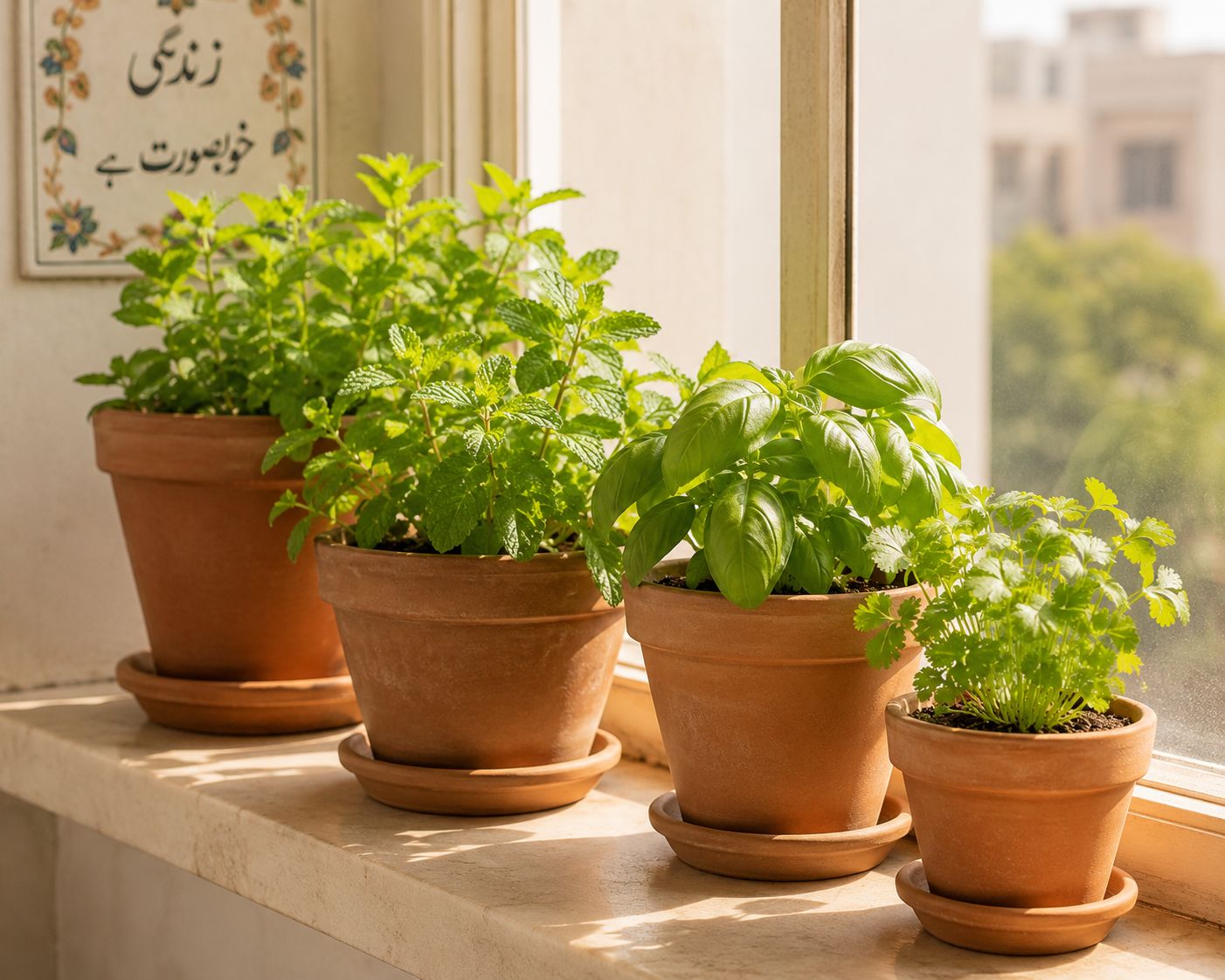
Unglazed terracotta containers were the OGs of container gardening — these porous pots are able to insulate the root zone from hot and cold temperatures as well as allow the root zones to breathe with the very small amount of air that is able to pass through the clay walls.
For herbs — mint, basil, coriander, parsley — terracotta is still one of the best choices. It is breathable, it wicks away excess moisture through the walls, and it provides natural insulation for roots. It also looks beautiful on a windowsill or kitchen shelf, which matters when you are growing indoors.
The practical reality in Pakistan: terracotta is widely available locally at very low cost. But for more decorative or specific sizes, Amazon offers glazed ceramic options that add colour and style while still breathing reasonably well.
What to look for: Unglazed terracotta for maximum breathability. Drainage hole at the bottom — essential, not optional. For outdoor rooftop use in Pakistani heat, consider glazed ceramic which handles temperature swings better and does not dry out as rapidly.
Important note: Terracotta dries out faster than plastic. This is usually a benefit (prevents overwatering) but in Pakistani summer heat, you may need to water herbs in terracotta every day. Factor this into your choice.
11. Self-Watering Planter — For People Who Travel or Forget to Water
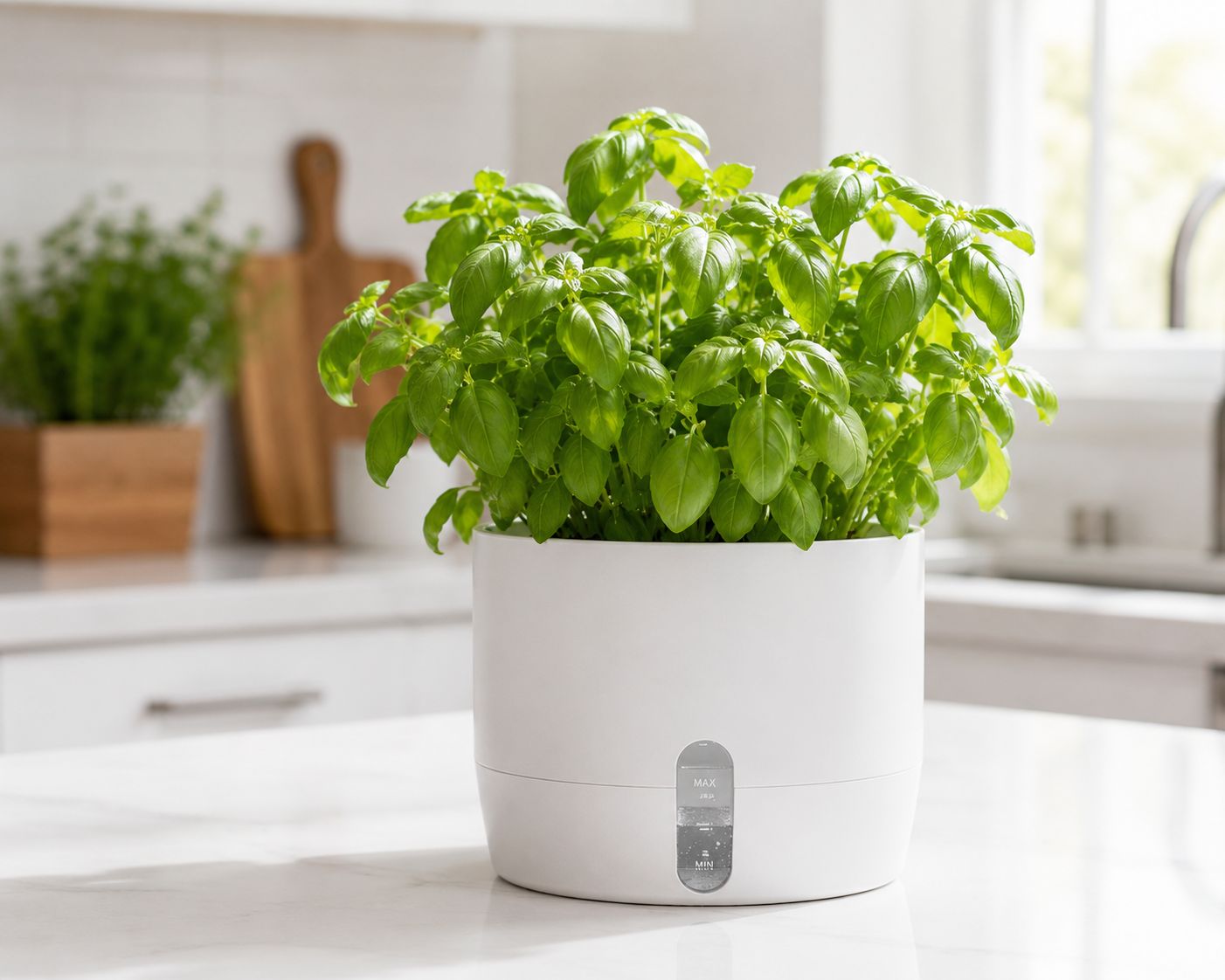
Self-watering planters have a built-in reservoir at the bottom. You fill the reservoir, and the plant draws water up through the soil from below — a process called sub-irrigation — taking only what it needs, when it needs it.
This is genuinely useful for three types of people: those who travel frequently and cannot water daily, those who consistently forget to water, and anyone growing water-sensitive herbs like basil that wilt dramatically with inconsistent moisture.
Plants in self-watering planters almost never experience drought stress or the cycle of bone-dry-then-drowned that kills so many balcony plants in Pakistani summers. The reservoir typically holds enough water for five to fourteen days depending on plant size and temperature.
What to look for: Visible water level indicator so you know when to refill. Overflow drainage hole so roots never sit permanently in water. Large enough reservoir for your plant size. Look for ones with a wicking medium or soil column that connects soil to reservoir.
12. Deep Rectangular Window Box — Grow a Row of Herbs in One Container
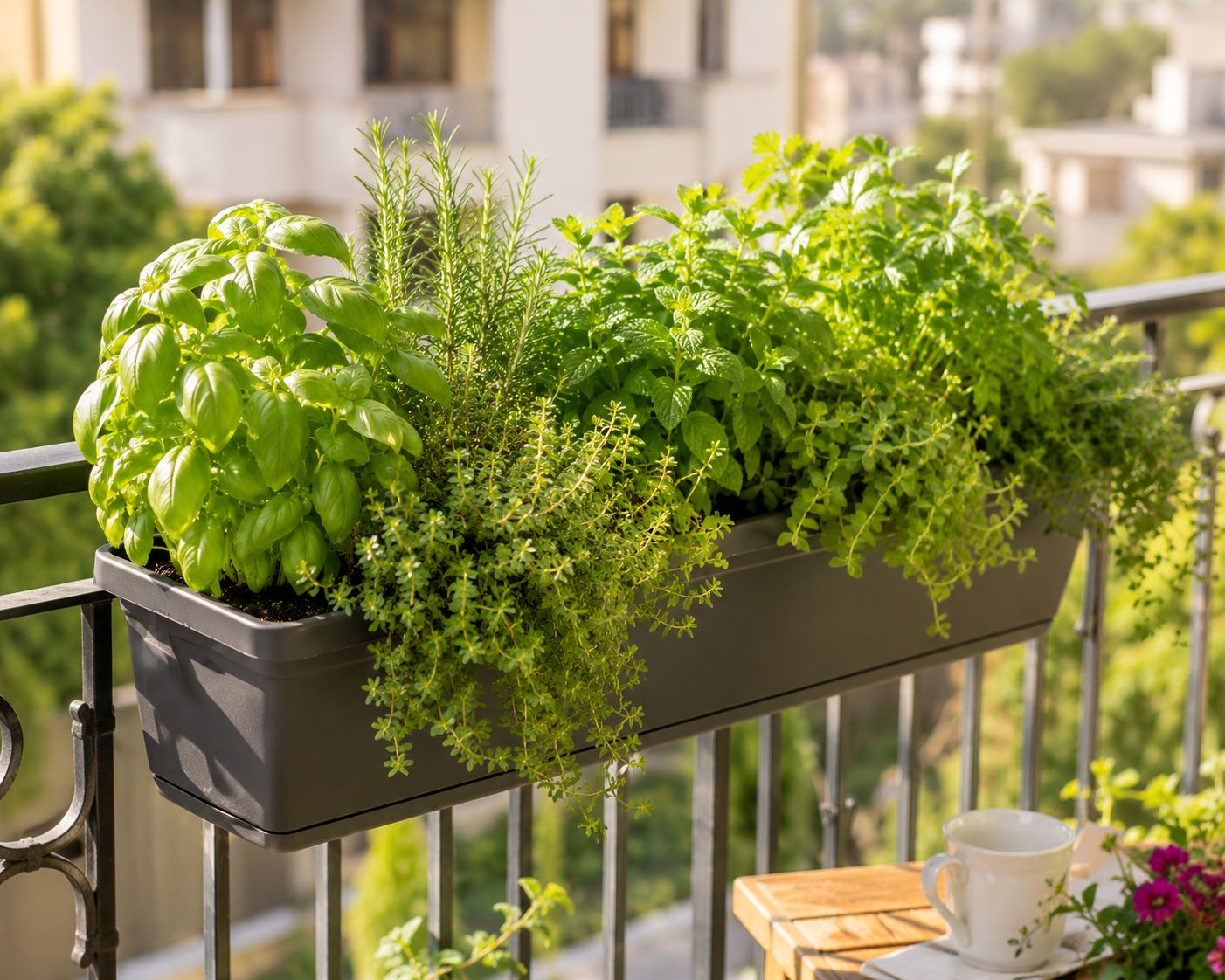
A single rectangular window box on a balcony railing or windowsill can hold four to six different herb plants simultaneously. For a Pakistani household that uses mint, coriander, green chili, and parsley daily — this is the most space-efficient setup possible.
Choose one that is at least 20 cm deep — shallow boxes dry out too fast and restrict root growth. Wall-mounted or railing-mounted options are ideal for balconies where floor space is limited. Make sure the material is UV-resistant if it will be in direct sun — cheap plastic window boxes crack within one season under Pakistani summer sun.
What to look for: Minimum 20 cm depth. UV-stabilized material. Built-in drainage holes. Railing mounting brackets if needed. Sizes from 60 cm to 100 cm give the best variety per box.
🚀 THE UPGRADE — ADVANCED GROWING
13. Aeroponic Tower Garden — The Future of Balcony Growing
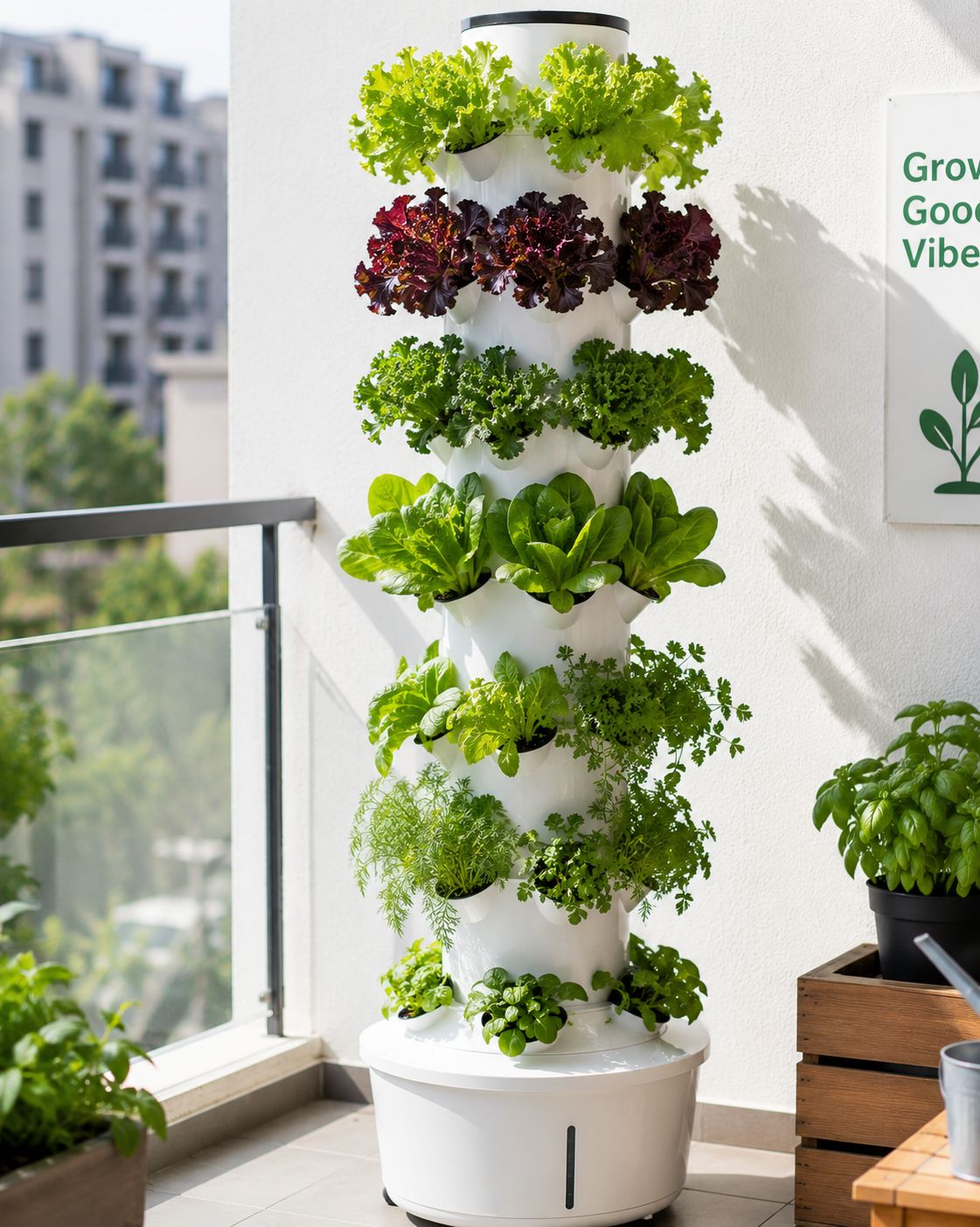
If you want to understand where home gardening is going — and you want to grow more plants in less space using less water than any traditional pot — this is it.
Aeroponic growing has gained popularity for the ability to produce healthy, fast-growing and heavy-yielding crops without the use of any growing medium or substrate for roots. The roots are periodically misted with a nutrient-rich spray or fog. Because there is no growing medium in between the roots and the fertilizer formulation dissolved into the water, crop roots have direct access to oxygen, water and vital elements.
In plain words: instead of soil, plant roots hang in air inside a sealed tower. A pump mists them with nutrient-rich water every few minutes. The roots get maximum oxygen, maximum nutrients, and produce significantly faster growth than soil.
The numbers are genuinely impressive:
Studies show that aeroponic seedlings grow up to 60% faster and develop 30–50% larger root masses than those started in soil.
Aeroponic systems can save 98% of water, 60% of nutrients, and 100% pesticides and herbicides.
For Pakistani balcony gardeners dealing with limited space, water scarcity in summer, and the desire to grow more — an aeroponic tower is the single highest-impact upgrade available.
What grows well in aeroponic towers:
- Lettuce, spinach, rocket, and salad greens — fastest results
- Herbs — mint, basil, coriander, parsley
- Strawberries
- Small chili and pepper plants
- Kale, chard, and most leafy greens
What does not work: Root vegetables (garlic, carrots, radish) and large fruiting plants (tomatoes, shimla mirch) need more root space than most tower systems provide.
What to look for: A pump with a timer built in. Enough planting ports for your needs (20–44 ports is typical). An LED grow light option if you plan to use it indoors without direct sun. Look for systems with full nutrient kits included.
14. Indoor Hydroponic Herb Garden Kit — For Kitchen Windowsills With No Natural Light
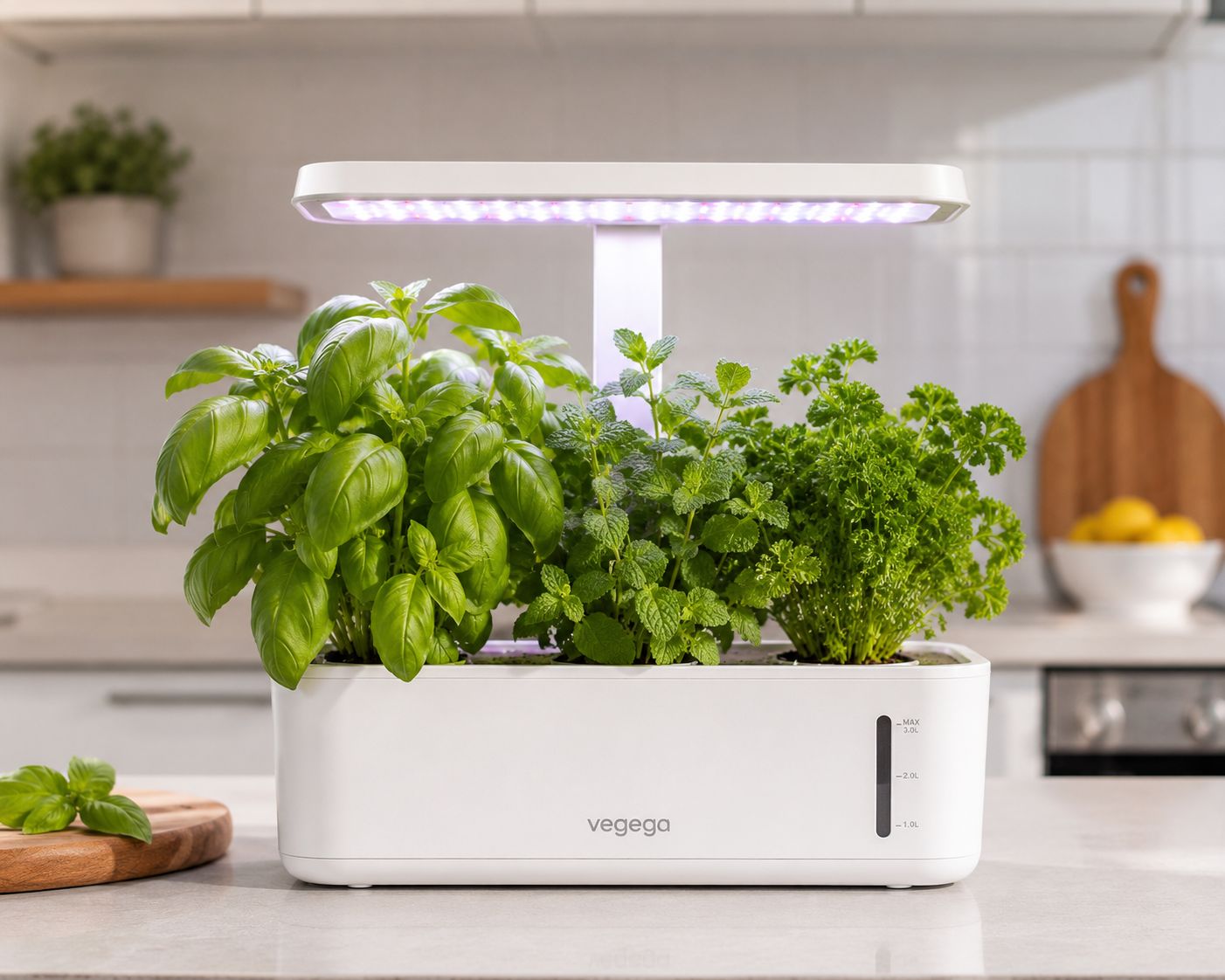
Not every Pakistani home has a south-facing balcony or a sunny kitchen windowsill. Some apartments face north. Some windows are shaded by buildings. If your natural light is genuinely limited, a countertop hydroponic herb garden with built-in LED grow lights is the most practical solution.
These compact units sit on a kitchen counter, grow herbs in water and nutrient solution without soil, and provide exactly the right spectrum of light for 16 hours a day automatically. No soil. No mess. No watering schedule — the reservoir holds enough for one to two weeks.
They are particularly good for: mint, basil, parsley, coriander, chives, and other fast-growing culinary herbs. The herbs grow quickly — often ready to harvest in two to three weeks — and continue producing for months.
What to look for: Full-spectrum LED with timer. Reservoir capacity of at least 1 litre. Pod slots of six or more for variety. Adjustable light arm height as plants grow. Brands like AeroGarden have strong track records — look for them by name.
15. Seed Starting Tray with Dome — Start Every Seed Right
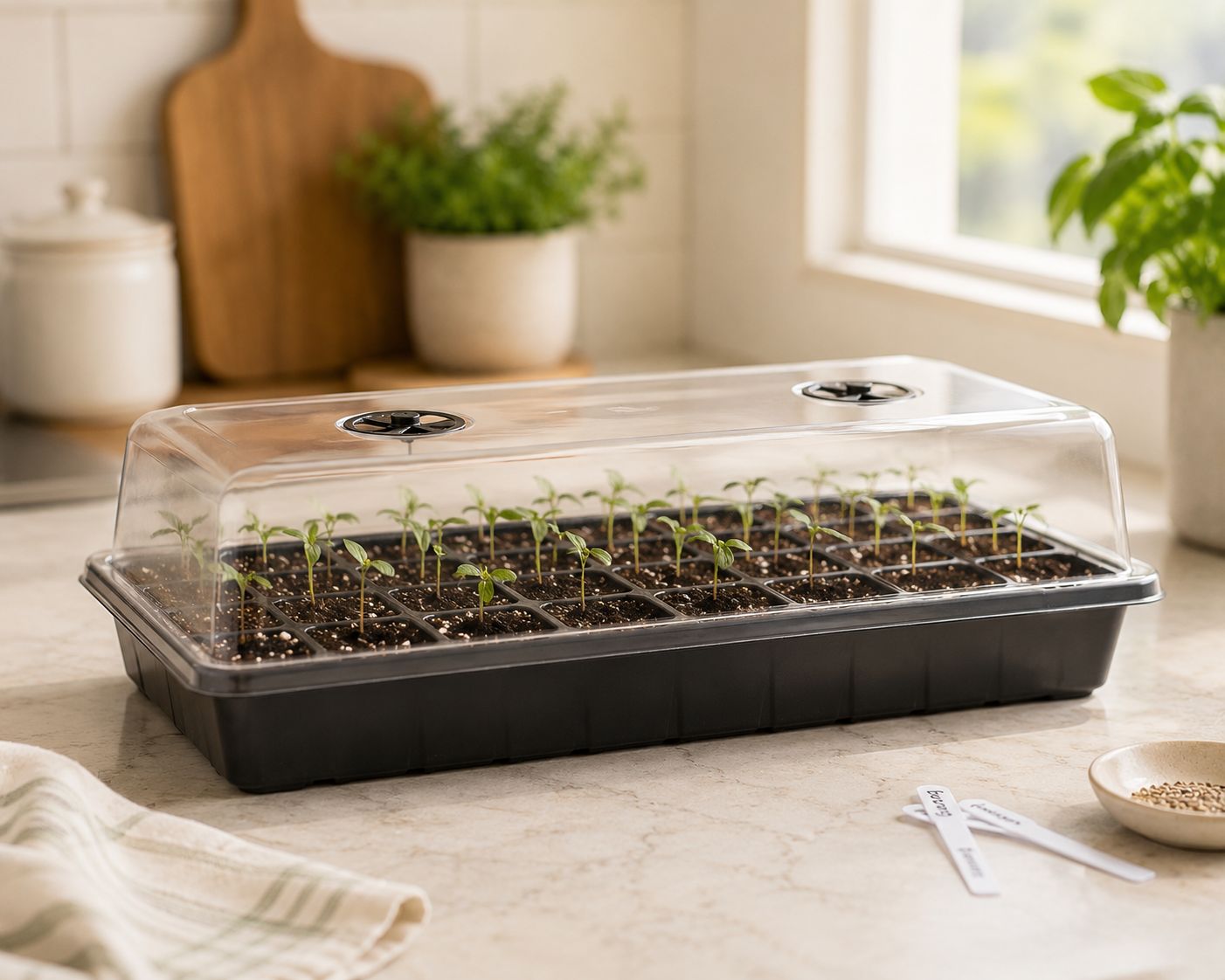
Seed starting trays with dome lids: if you're starting seeds indoors before transplanting, you need seed starting trays with clear dome lids. The domes hold humidity during germination and lift off once seedlings are established.
Starting seeds directly in large pots wastes soil, makes watering difficult, and gives you no control over germination conditions. A seed starting tray lets you germinate 12 to 24 seeds in a compact space, under consistent humidity (provided by the dome), and transplant only the strongest seedlings once they are established.
For Pakistani conditions — shimla mirch, tomatoes, chili, and most vegetables are best started in trays before transplanting to final pots — this is a small investment that dramatically improves your seedling success rate.
What to look for: 12-cell or 24-cell trays — not 72-cell, which is too small for large-seeded crops. Clear humidity dome that fits the tray exactly. Drainage holes in each cell. Reusable — good trays last many seasons.
Complete Shopping Checklist
| # | Product | Amazon Link | Priority |
|---|---|---|---|
| 1 | Hand Trowel | → Link | 🔴 Essential |
| 2 | Bypass Pruning Shears | → Link | 🔴 Essential |
| 3 | Hori Hori Knife | → Link | 🟡 High Value |
| 4 | Hand Cultivator | → Link | 🔴 Essential |
| 5 | Gardening Gloves | → Link | 🔴 Essential |
| 6 | Soil Moisture Meter | → Link | 🟡 High Value |
| 7 | Neem Oil Spray | → Link | 🔴 Essential |
| 8 | Long-Spout Watering Can | → Link | 🔴 Essential |
| 9 | Fabric Grow Bags | → Link | 🔴 Essential |
| 10 | Terracotta Pots | → Link | 🟡 High Value |
| 11 | Self-Watering Planter | → Link | 🟢 Upgrade |
| 12 | Rectangular Window Box | → Link | 🟡 High Value |
| 13 | Aeroponic Tower Garden | → Link | 🟢 Upgrade |
| 14 | Indoor Hydroponic Kit | → Link | 🟢 Upgrade |
| 15 | Seed Starting Tray + Dome | → Link | 🔴 Essential |
🔴 Essential = buy these first
🟡 High Value = worth it early on
🟢 Upgrade = add once you are comfortable growing
The Honest Beginner's Starter Kit (Under Budget)
If you are just starting and want to spend wisely, here is the minimum kit that covers everything:
Tools: Hand trowel + bypass pruners + gardening gloves + neem oil + watering can
Containers: Fabric grow bags (5-gallon for herbs, 10-gallon for vegetables)
Bonus: Soil moisture meter — this one small purchase prevents the most common beginner mistake of overwatering.
That is it. With these seven things you can grow mint, coriander, shimla mirch, tomatoes, garlic, chili, and almost every herb in the Seedora Instantly Grow series — successfully, on a balcony or rooftop, from seed to harvest.
Everything else on this list is an upgrade you add when you are ready to grow more, grow faster, or grow in more challenging conditions.
By Seedora Store — every tool linked above is on Amazon. Use the SiteStripe bar to get your specific affiliate link for each product and replace the # placeholders above.
Part of the Seedora Home Garden Resources series — paired with the Instantly Grow Series blogs on mint, shimla mirch, garlic, coriander, and more.