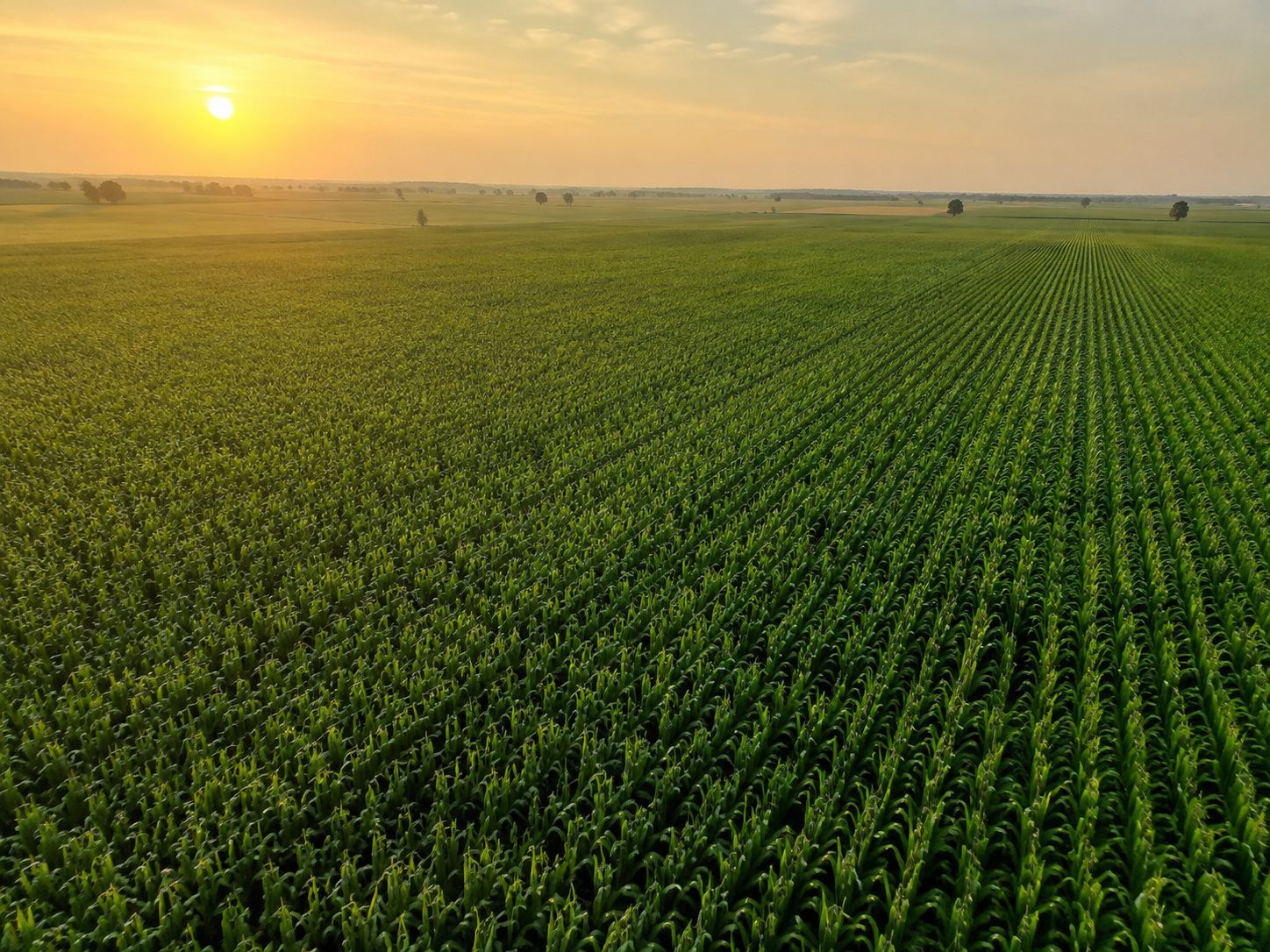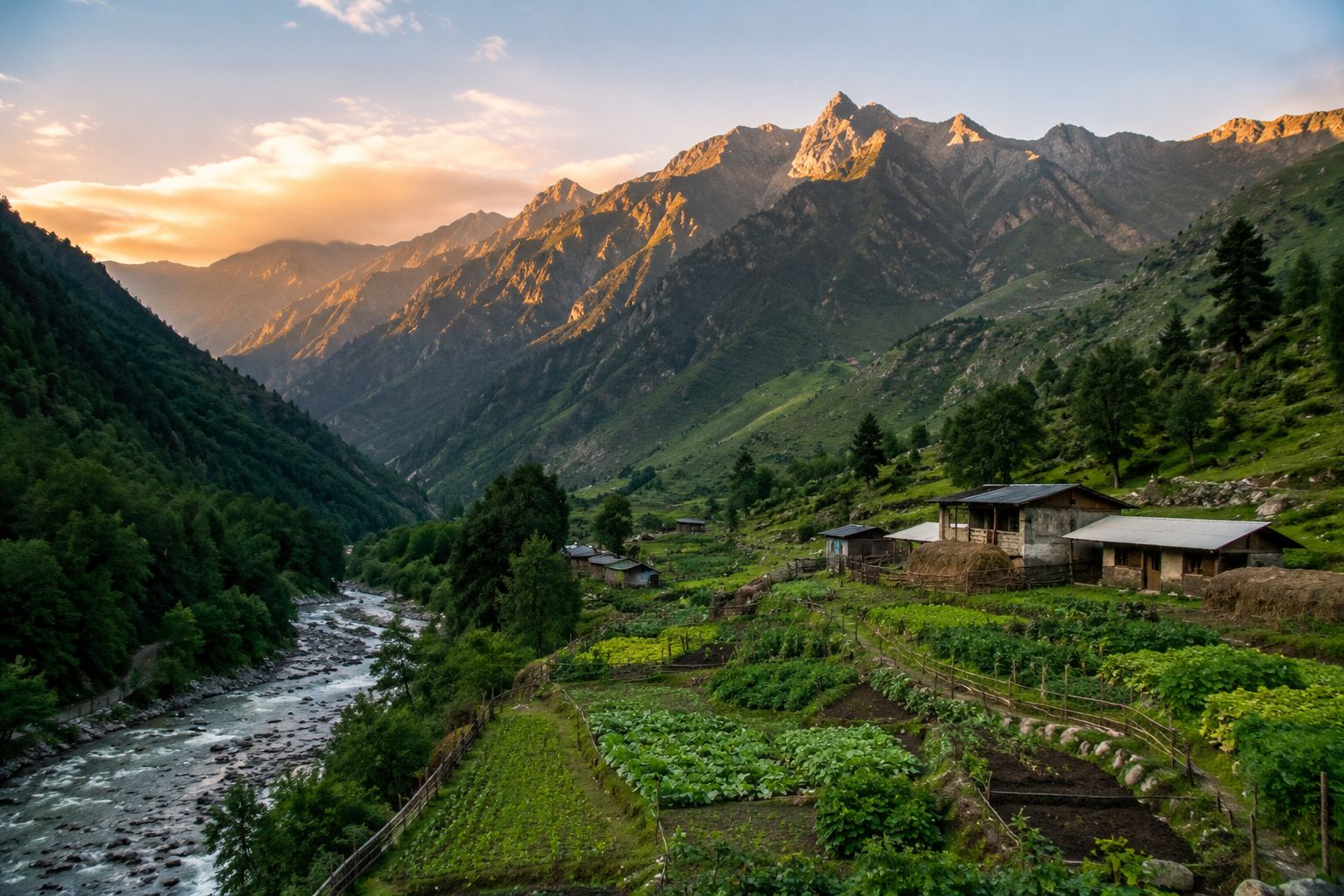
For almost all of human history, there was no such thing as "going back to nature." There was no away to go back to. People lived close to soil because soil was where food came from, and food was the whole game. Cities, skyscrapers, and traffic are so recent, on the timeline of our species, that they barely register. If all of human history were compressed into a single day, cities would appear in the last few minutes before midnight.
That's worth sitting with, because it might explain something a lot of people are feeling right now and struggling to put into words.
The Numbers Behind the Feeling
Something is shifting. Quietly, but at scale.
Nearly 15 million Americans moved to a new home in 2025, and a large share of them weren't chasing a bigger city — they were leaving one. Around 88 percent said saving money was their main reason, but 76 percent also said they specifically wanted better access to the outdoors. Rural areas are now the second most-wanted type of place to live in the US, right behind the suburbs, and for the first time in almost a decade, America's rural population is actually growing again instead of shrinking.
This isn't only about money. More than half of full-time employees say they'd take a pay cut just to keep working remotely or hybrid, rather than go back to commuting into an office. And separately, in a completely different corner of the same trend, a 2025 survey found 44 percent of American families now plan to grow at least some of their own food this year. Home food production has risen 24 percent over the last five years. Roughly 40 percent of people currently homesteading only started within the past three years — this isn't an old movement slowly continuing, it's a new one rapidly forming.
Put plainly: a large and growing number of people are choosing quieter, smaller, more self-grown lives, on purpose, even when it costs them convenience.
Why This Might Not Be New at All
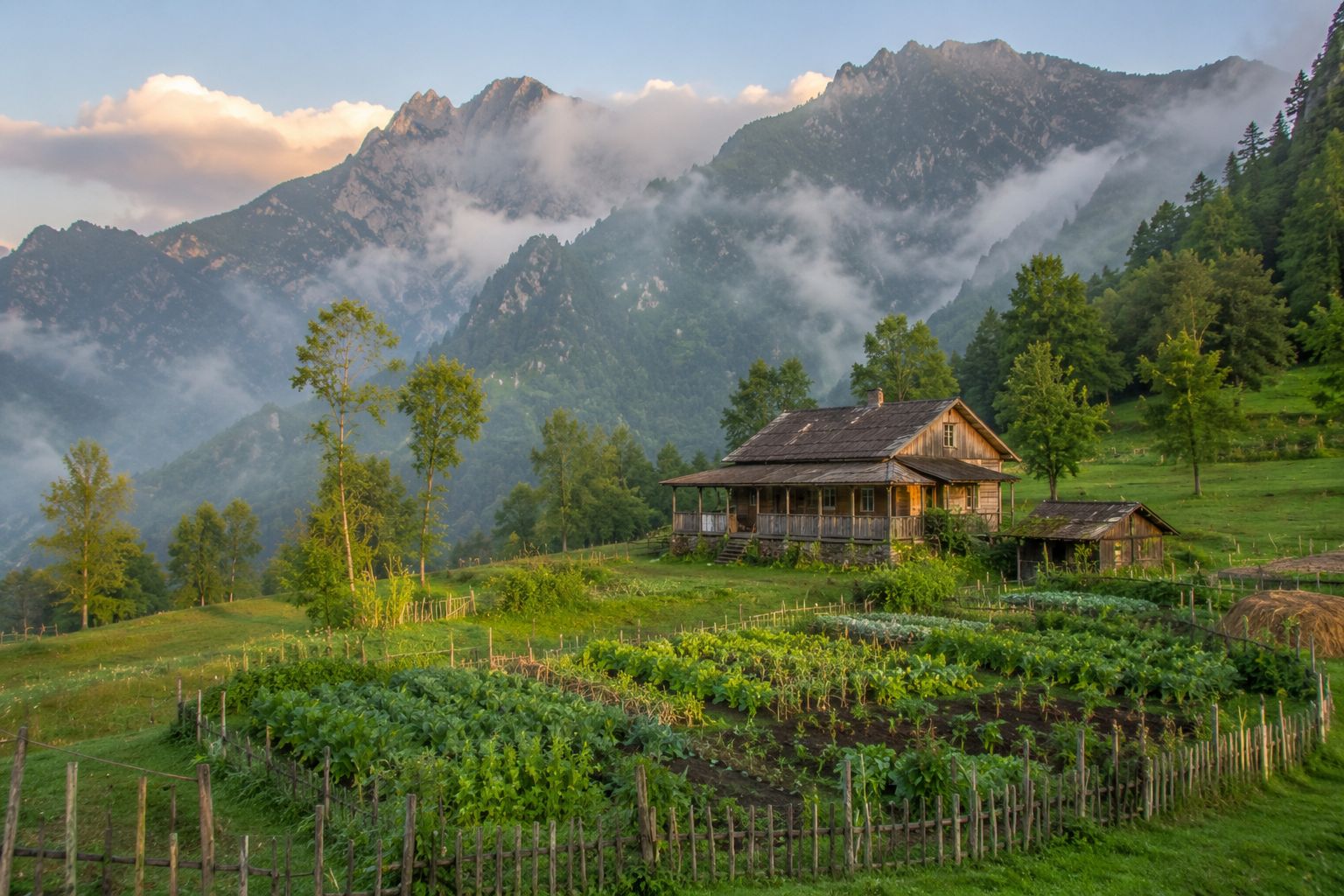
There's a simple way to think about why this is happening, and it doesn't require any conspiracy or grand theory. It's just biology catching up with culture.
Human beings evolved over hundreds of thousands of years in small groups, close to land, growing or gathering food with their own hands, surrounded by open sky and natural light. That environment shaped our nervous systems, our stress responses, our sense of what feels calm and what feels overwhelming. The office building, the highway commute, the fluorescent light, the notification pinging every few minutes — all of that is, on an evolutionary timescale, brand new. Too new for our biology to have caught up with it.
Researchers have a name for this gap: evolutionary mismatch — when the environment we live in changes faster than the bodies and minds we live in can adapt. Biologists have also long pointed to something called the biophilia hypothesis, the idea that humans carry an innate pull toward nature and living things, because for the overwhelming majority of our history, closeness to nature wasn't a lifestyle choice — it was survival itself.
That may be part of why time in a garden, a forest, or open farmland so reliably lowers stress and lifts mood in study after study. It isn't a trend. It might just be a return to the baseline our bodies were built for.
An Old Story, Told Twice
You don't need science to notice this pattern — it's sitting in plain sight in two of the world's oldest and most widely followed traditions.
In the Book of Genesis, shared by both Judaism and Christianity, the first human being is placed directly into a garden with a job to do: "the LORD God took the man, and put him into the garden of Eden to dress it and to keep it" (Genesis 2:15, King James Version). Life didn't begin in a palace, a city, or a marketplace. It began in cultivated ground, with the first human as its gardener. Later in the same account, after being sent out of that garden, the instruction is to keep working the earth directly for food: "in the sweat of thy face shalt thou eat bread" (Genesis 3:19, KJV).
The Quran tells a closely related story about Adam and his wife, and it places them, too, in a garden — Jannah — with abundance freely available to them: "O Adam! dwell thou and thy wife in the Garden; and eat of the bountiful things therein as... ye will" (Surah Al-Baqarah 2:35, Yusuf Ali translation). As in Genesis, their descent to earth afterward comes with a life of labor and sustenance drawn directly from the ground.
Two traditions, developed centuries apart, telling people across enormous parts of the world the same basic thing: that human life was never meant to start in a tower or a marketplace. It started in a garden, with dirt under the fingernails.
Whether you read that as scripture, as inherited memory, or simply as very old wisdom, it points in the same direction as the psychology already discussed above. Long before anyone had the language of "evolutionary mismatch" or "biophilia," these traditions were already describing the same instinct: that a garden, not a tower, is where a person is supposed to feel most at home.
What People Say They're Actually Looking For
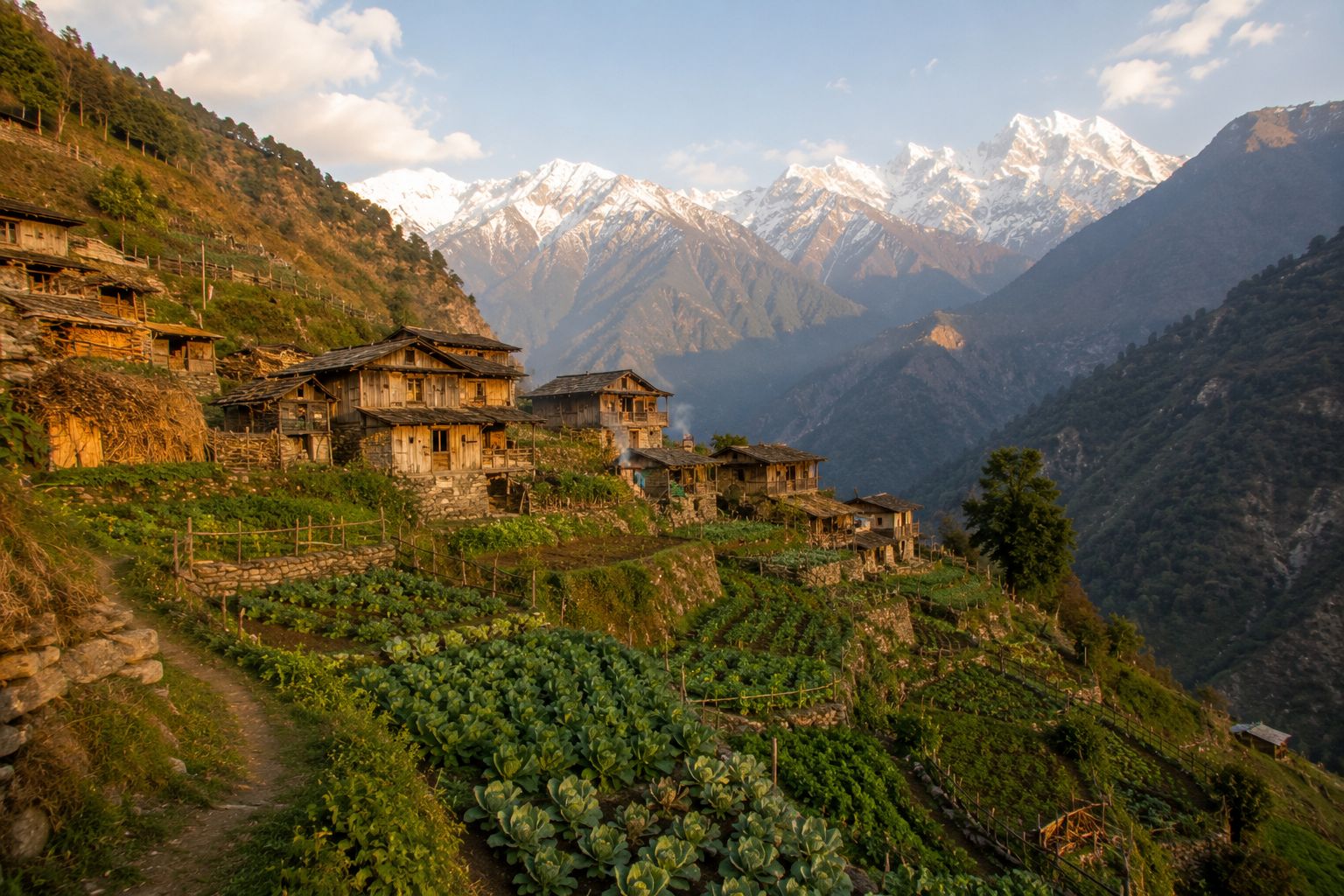
Ask people who've made this move why they did it, and the answers rarely sound like an escape from something. They sound like a return to something.
Space to breathe. A slower pace. Food that came from soil they touched themselves, not a supply chain they'll never see. A community small enough that people actually know each other's names. Fewer screens between them and the sky.
None of that requires abandoning modern life entirely. Most people making this shift aren't disappearing into the wilderness — they're simply rebalancing. A smaller home. A vegetable patch instead of a lawn. A weekend at a slower pace. A little more self-sufficiency, a little less dependency on systems they never chose and don't fully understand.
So — Would You Want This?
If someone offered you a life with a little more land, a little more sky, and a garden that fed your own table — even in a small way — would you take it?
You don't have to move to a mountain valley to start. Growing a single pot of herbs on a windowsill, or a few vegetable beds in a backyard, is the same instinct at a smaller scale — the same pull back toward something older and steadier than the pace most of us were handed.
That instinct is exactly what Seedora exists for. Every blog we publish is built to help you understand your food, your seeds, and the systems around them a little more clearly, so you can grow more of your own life on your own terms. If that's a direction you're curious about, sign up on our site — it costs nothing, it helps us keep writing for people like you, and if this piece meant something to you, sharing it with a friend who feels the same pull is the best thing you can do for us.
By Seedora Store — Grow Guide Series.
Sources: American Home Shield, 2026 State of Moving Forecast Survey; moveBuddha, 2026 and 2025 Moving Surveys; Fox News/Stora, US rural migration analysis (2026); The World Data, Rural & Urban Migration Statistics 2026 (US Census Bureau, USDA ERS); Action Council, young Americans moving to rural areas (2026); Coop'd Up Life, Homesteading Statistics & Trends; Park Seed, Modern Homesteading guide; E.O. Wilson, the biophilia hypothesis.