🌱
Loading plant details...
Loading plant details...
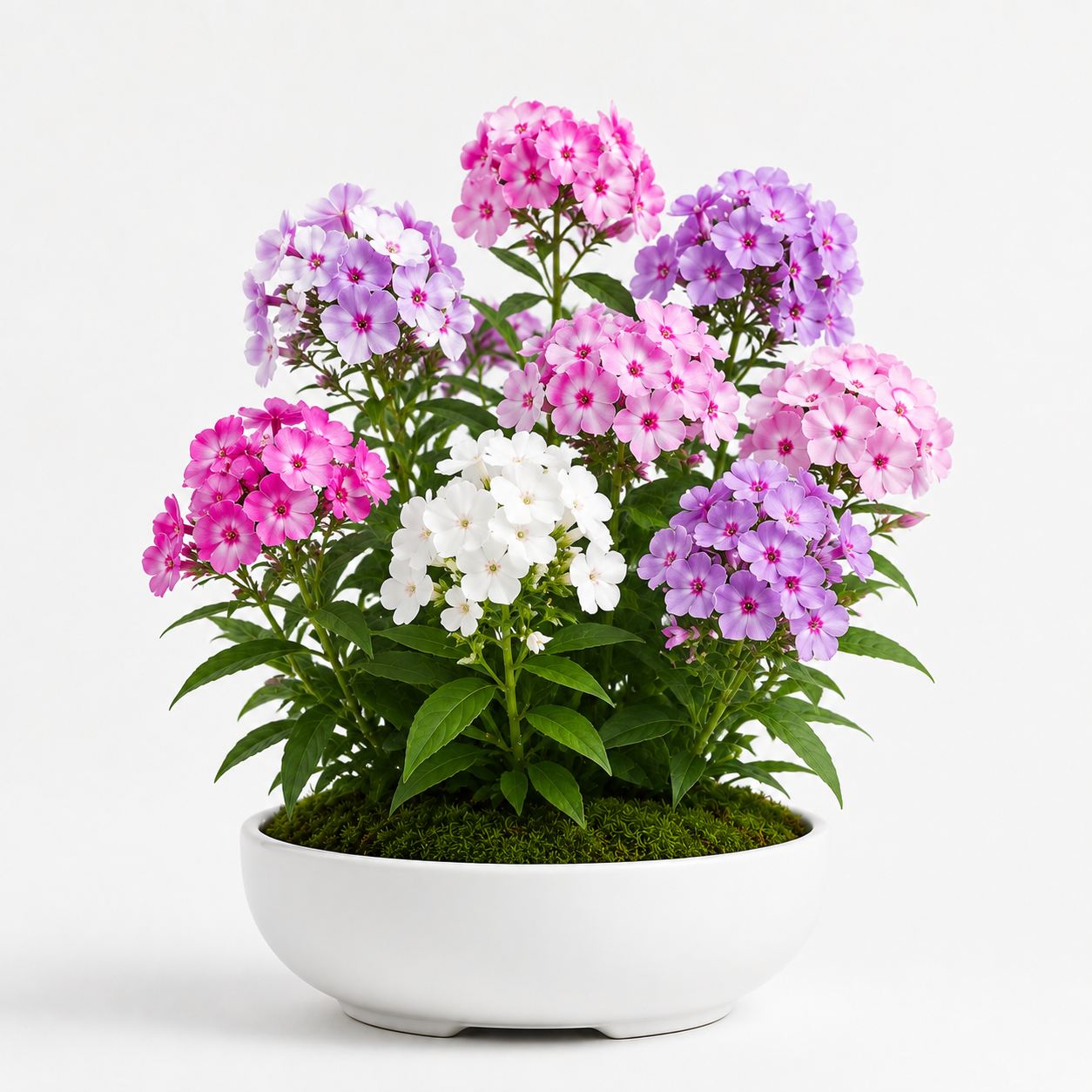
Phlox paniculata (Garden Phlox)
A fragrant, cottage-garden classic that bursts into billowing clusters of pink, purple, white, and red flowers all summer long. Phlox is a magnet for butterflies and hummingbirds, blooms for months, and makes gorgeous cut flowers — a true garden showstopper with minimal fuss.
You'll be asked to sign in
easy
Full Sun to Partial Shade (6+ hours; afternoon shade in hot climates)
Regular — ~1 inch per week; water at the base, never overhead; keep soil evenly moist but not waterlogged
Blooms in 60–90 days from transplant; perennial, returns every year
Plant phlox in spring after frost danger has passed, spacing plants 18–24 inches apart in rich, well-drained soil amended with compost. Once stems are about six inches tall, eliminate all but five or six stems per plant, then pinch back the growing tips of those remaining stems — they become more robust, produce larger flower clusters, and are less bothered by powdery mildew. Deadhead spent flowers regularly to extend blooming and prevent unwanted self-seeding. Clip stems to within 2 inches of soil level in late fall when foliage begins to fade. Divide clumps every 3–4 years in early spring to keep plants vigorous.
Establishment (2–3 weeks)
Roots settle in; shoots emerge from soil after planting
Vegetative (4–6 weeks)
Rapid stem and leaf growth; thin to 5–6 stems and pinch tips
Bud Formation (2–3 weeks)
Tight clusters of flower buds appear at stem tips
Full Bloom (6–8 weeks)
Fragrant flower clusters open in waves; deadhead to extend
Late Season (Ongoing)
Cut back after flowering; side shoots may produce a second flush
Estimate how many seed packs of Phlox you need.
Every seed lot is tested for germination and purity, sourced from trusted growers, and labelled with variety, lot number, and sowing instructions. If you have any concern about seed quality, our support team will make it right. Read our full Seed Quality & Warranty policy.
Community Interest
Real-time — updates when others show interest
No reviews yet. Be the first to review!